Luke 11
Abureni NT Portions · Tap a verse to see its cross-references.
A̠zizo̠s atu̠ghu̠me̠ni̠ ma̠ agu̠o̠ Osiseiny A̠siseiny
1Odi a̠d̠a̠ma̠, A̠zizo̠s na̠ a̠siseiny odi esi, sa̠ obhel bho̠ i̠na na̠ a̠siseiny awe̠le̠ bho̠, sa̠ odi o̠ni̠ atu̠ghan d̠o̠yo̠ a̠fugh a̠nigha̠ i̠na ma̠a̠, “Wa̠nwuna̠, tu̠ghu̠me̠ni̠ i̠yar agu̠o̠ o̠sisieny a̠sisieny, ma̠ agu̠o̠ Azo̠n a̠tu̠ghu̠me̠ni̠ ma̠ ogbo atu̠ghan d̠o̠yo̠ bho̠.”
2Sa̠ A̠zizo̠s awo̠ran awa ma̠a̠, “Igiel inyin na̠ osiseiny, ifughe ma̠a̠:
“ ‘O̠we̠de̠,
a̠d̠ien d̠oyom aro̠ ma̠ ola̠ e̠tu̠tu̠.
Irileghom d̠oyom eru.
3Ed̠ia̠n ya̠ eb̠la̠ ra̠d̠a̠ma̠ bho̠, nigha̠ i̠yar ya̠ a̠didon.
4We̠le̠mane̠ ma̠ i̠karabh d̠i̠yar,
agu̠o̠ bho̠ i̠yar na̠ o̠we̠le̠man i̠karabh ya̠ ipa̠n ogbo na̠ ed̠ighi i̠yar bho̠.
Ya̠a̠, ko oma̠ra̠ i̠yar omel d̠a̠ ad̠agi̠an.’ ”
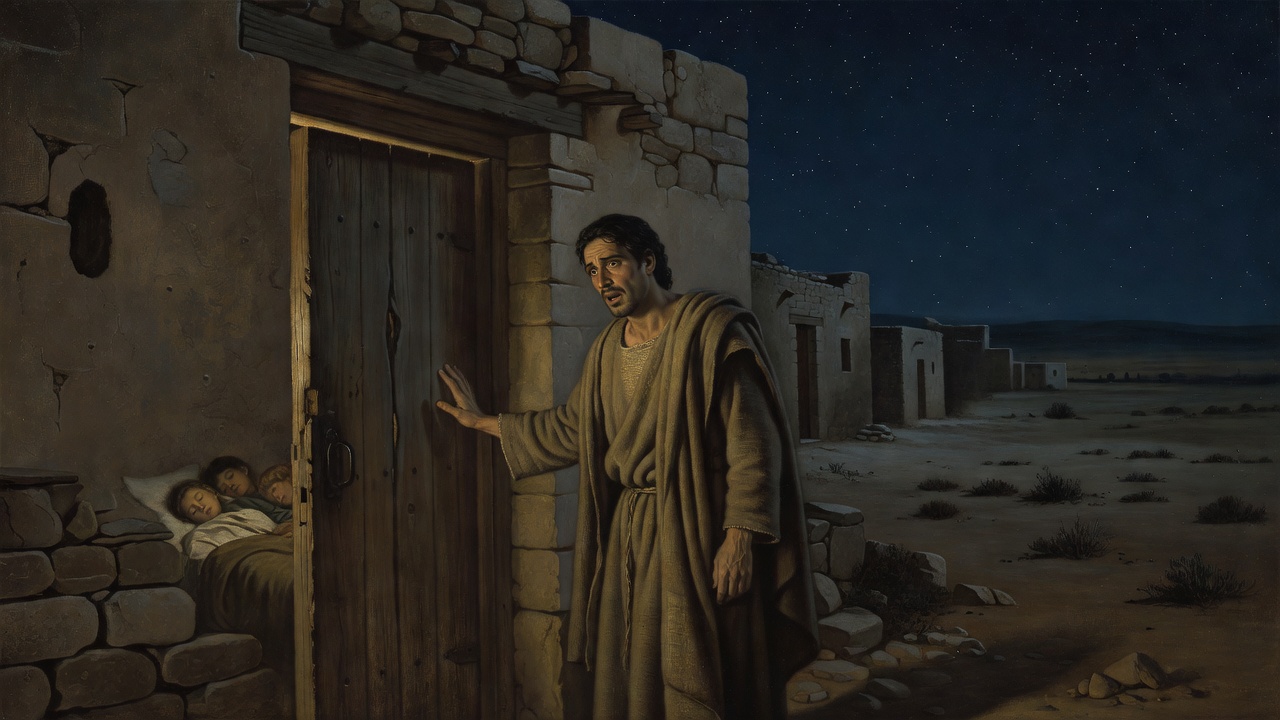
5Sa̠ i̠na a̠fugh a̠nigha̠ a̠wa̠ ma̠a̠, “A̠nyen inyin ola̠ a̠nwuna̠ ma̠ a̠tologha̠n, sa̠ agi̠ d̠o̠yo̠ ma̠ egum a̠d̠io ka̠ a̠fugh a̠nigha̠ i̠na ma̠a̠, ‘O̠mo̠lo̠l, wo̠lo̠ni̠ane̠ ami̠ ma̠ i̠sar ikpokpogh abe̠re̠di̠. 6Ezin bho̠, a̠tologha̠n olami̠ na̠ ad̠u̠a ma̠ e̠gi̠ a̠ru ra̠ a̠suloma̠ ami̠, ya̠a̠ ami̠ inwuna̠ d̠o̠ ma̠ abar ola̠ obhi̠n o̠ki̠o̠m o̠yo̠.’ 7Ku̠gba ma̠ i̠na wa̠ od̠i d̠a̠ ologi otu bho̠ awo̠ran ma̠a̠, ‘Ko onyegi ami̠, na̠ o̠du̠ ma̠ otu bho̠, anwi̠i̠ny d̠ami̠ na̠ ami̠ na̠ od̠igh o̠managhan. Ami̠ ko orue d̠o̠ a̠b̠etina̠ a̠ru ra̠ a̠nigha̠ nyam abar.’ 8Ami̠ na̠ agba na̠ a̠nigha̠ inyin ma̠a̠, i̠na ko o̠tu̠n d̠o̠ ma̠ awa ra̠tologha̠n be̠le̠ni̠ a̠nigha̠ i̠na; ya̠a̠, d̠a̠ agu̠o̠ bho̠ i̠na od̠igh d̠o̠ ma̠ ari̠ghe̠l sa̠ aro̠ ma̠ okpukpu okpukpu bho̠, i̠na ta̠ a̠b̠etina̠ ka̠ a̠nigha̠ i̠na kabar kabar ola̠ i̠na na̠ a̠puru.
9“Ebula̠ o̠ku̠a, ami̠ na̠ agba na̠ a̠nigha̠ inyin ma̠a̠: ipuru sa̠ ta̠ onigha̠ inyin, i̠bho̠ro̠ghane̠ sa̠ inyin ta̠ o̠bi̠gh, ikpukpu sa̠ ta̠ a̠guron. 10Ezin bho̠, o̠ni̠ ola̠ a̠puru ta̠ onigha̠; ola̠ abho̠ro̠ghan ta̠ abi̠gh; ola̠ a̠kpukpu ta̠ oguron onigha̠.
11“D̠a̠ esa̠d̠io d̠inyin, ka̠ oken o̠we̠de̠ ola̠ ka̠ o̠nyi̠ d̠o̠yo̠ a̠puru ma̠ ena̠ sa̠ ta̠ a̠nigha̠ ma̠ o̠karabh abar? 12Bo̠d̠o̠, ka̠ a̠puru ma̠ aga e̠nu̠r, sa̠ ta̠ a̠nigha̠ ma̠ id̠ekebi? 13Ku̠gba ma̠ inyin rod̠ighi ma̠ i̠karabh bho̠, ologhom agu̠o̠ onigha̠ ib̠eb̠i i̠di̠ar anwi̠i̠ny d̠inyin, a̠dina̠mu ma̠ O̠we̠de̠ d̠inyin wa̠ od̠i d̠a̠ ote̠nai̠ny bho̠! I̠na ta̠ a̠nigha̠ inyin E̠mu̠gh E̠tu̠tu̠ bho̠ ka̠ inyin upuru i̠na.”
A̠zizo̠s na̠ A̠belzibul
14Odi a̠d̠a̠ma̠, A̠zizo̠s a̠ze ma̠ o̠karabh e̠mu̠gh emua̠ asi̠ghe̠ d̠a̠ ozu odi o̠ni̠. Igiel bho̠ o̠karabh e̠mu̠gh bho̠ ad̠u̠a bho̠, sa̠ emua̠ o̠ni̠ bho̠ ake̠ ma̠ ofugh abar, sa̠ a̠d̠igh ilologia̠n o̠lo̠gh a̠nwunom bho̠. 15Ya̠a̠, idi awa d̠a̠ o̠lo̠gh bho̠ ifugh ma̠a̠, “I̠na na̠ a̠bhin a̠limon ta̠ Abe̠lzi̠bu̠l, we̠mu̠ a̠ruru na̠ i̠karabh aru̠mu̠gh, na̠ a̠ze ma̠ i̠karabh aru̠mu̠gh bho̠.” 16Ya̠a̠, ipa̠n ogbo, d̠a̠ agu̠o̠ ola̠ o̠d̠a o̠yo̠ okpon, sa̠ i̠bho̠ro̠ghan i̠na ma̠ omutiom elegh ola̠ d̠a̠ ote̠nai̠ny oleriom awa.
17Ya̠a̠ A̠zizo̠s a̠loghom rologi d̠awa, sa̠ a̠fugh a̠nigha̠ awa ma̠a̠, “Irileghom ola̠ aru̠gi̠an na̠ a̠wia̠n ozu d̠o̠yo̠ ta̠ ago̠gu̠an a̠mel. Onin agu̠o̠ bho̠, eghun ola̠ na̠ a̠wia̠n ozu ta̠ a̠mel. 18Ku̠gba ma̠ Eru bho̠ na̠ a̠wia̠n ozu d̠o̠yo̠, ka̠ irileghom d̠o̠yo̠ ta̠ a̠d̠ighi eka̠ amara? Ezin bho̠, inyin na̠ o̠gba ma̠ ami̠ na̠ a̠bhin a̠limon ta̠ Abe̠lzi̠bu̠l na̠ a̠ze ma̠ a̠ruru. 19Ku̠gba ma̠ ami̠ na̠ a̠bhin a̠limon ta̠ Abe̠lzi̠bu̠l na̠ a̠ze ma̠ a̠ruru, ka̠ anwi̠i̠ny d̠inyin na̠ e̠bhin ere na̠ eze na̠ e̠se̠ghe̠gi̠? O̠ku̠a a̠d̠ighi be̠le̠ni̠, awa ta̠ e̠ro̠ ma̠ ogbo osobh ase̠ d̠inyin. 20Ya̠a̠, ku̠gba ma̠ ami̠ na̠ a̠bhin a̠limon ta̠ A̠zib̠a̠ na̠ a̠ze ma̠ a̠ruru bho̠, bha̠ iloghome ma̠ irileghom ta̠ A̠zib̠a̠ na̠ a̠ru ra̠ ate̠i̠ inyin.
21“Ku̠gba ma̠ omoma̠na̠n o̠ni̠ amar a̠kokod̠ia̠n o̠kpo̠ erorobhi d̠o̠yo̠, sa̠ a̠kponom otu d̠o̠yo̠; i̠di̠ar d̠o̠yo̠ ta̠ e̠ro̠ d̠a̠ ekima̠. 22Ya̠a̠, ku̠gba ma̠ o̠ni̠ ola̠ a̠mon a̠pu i̠na a̠wia̠n i̠na, sa̠ ane̠gi̠me̠ni̠ i̠na, o̠ni̠ bho̠ ta̠ a̠ghumi ma̠ eb̠la̠ o̠kpo̠ erorobhi d̠o̠yo̠ ya̠ i̠na a̠bhin a̠b̠em ologi bho̠ a̠bhin. Sa̠ i̠na ta̠ aru̠gi̠ ma̠ a̠nwunom eb̠la̠ i̠di̠ar ya̠ i̠na a̠ghumi bho̠.
23“O̠ni̠ ola̠ o̠ri̠la d̠o̠ na̠ ami̠ bha̠ na̠ a̠wia̠n ami̠; ya̠a̠, o̠ni̠ ola̠ od̠igh d̠o̠ na̠ ami̠ a̠kokod̠i bha̠ na̠ asasaragi̠.
A̠zizo̠s anyagh a̠to a̠gboloma̠ ma̠ // omula̠ oru ta̠ o̠karabh e̠mu̠gh bho̠
24“Igiel o̠karabh e̠mu̠gh ad̠u̠a d̠a̠ ozu o̠ni̠, ta̠ ad̠u̠a ma̠ esi a̠ten esi abho̠ro̠gh esi ola̠ a̠sora̠n od̠igh o̠ro̠. Ya̠a̠, ka̠ i̠na o̠bi̠gh d̠o̠ ma̠ esi o̠ro̠, sa̠ i̠na ta̠ a̠fugh ma̠a̠, ‘Ami̠ ta̠ a̠mula̠ agi̠ d̠a̠ otu wa̠ ami̠ i̠d̠u̠a bho̠.’ 25Igiel i̠na a̠misi sa̠ abi̠gh ma̠ otu bho̠ na̠ o̠mar ogber o̠b̠ab̠alame̠ni̠, oselegi ma̠ i̠di̠ar, 26sa̠ i̠na ta̠ ka̠ a̠bhin od̠ua̠l ipa̠n i̠karabh aru̠mu̠gh ya̠ i̠bho̠ru̠ ipu i̠na, sa̠ awa ta̠ ka̠ ed̠igh erugh d̠a̠ ozu o̠ni̠ bho̠. Sa̠ e̠do̠lo̠ghu̠ma o̠ni̠ bho̠ ta̠ a̠gurom a̠pu ma̠ agu̠o̠ aro̠ ma̠ o̠pu̠r igiel bho̠.”
A̠ga̠i Itutumeni
27Igiel bho̠ A̠zizo̠s od̠id̠ia̠ na̠ agba ma̠ i̠di̠ar i̠nye̠n bho̠, sa̠ odi ani̠ d̠a̠ o̠lo̠gh bho̠, a̠b̠eton okoroko ma̠a̠, “Itutumeni e̠ro̠ enigha̠ ma̠ otu-i̠mara wa̠ a̠rol anwa bho̠ na̠ amu̠mam ya̠ anwa i̠mam bho̠.” 28Sa̠ i̠na awo̠ran ma̠a̠, “Itutumeni ta̠ e̠ro̠ enigha̠ kuma̠ ogbo ya̠ i̠nagha ma̠ o̠nu̠o̠kpe̠ ta̠ A̠zib̠a̠ sa̠ igir o̠ku̠a bho̠.”
Elegh ta̠ A̠zona̠
29Agu̠o̠ o̠lo̠gh bho̠ na̠ abu̠gh bho̠, sa̠ A̠zizo̠s a̠fugh ma̠a̠, “Onon amu̠m rod̠ighi ma̠ i̠karabh. Na̠ e̠bho̠ro̠gh elegh; ya̠a̠, elegh ola̠ ta̠ oleriom awa bo̠, a̠ten elegh ta̠ A̠zona̠. 30Agu̠o̠ A̠zona̠ aro̠ ma̠ elegh a̠nigha̠ ma̠ a̠nwunom A̠ninive bho̠, obha̠ agu̠o̠ O̠nyi̠ ta̠ O̠ni̠ ta̠ aro̠ ma̠ elegh a̠nigha̠ ma̠ amu̠m onon. 31D̠a̠ a̠d̠a̠ma̠ osobh ase̠ bho̠, ani̠ebhom O̠li̠la ebhugh Ase̠ba ta̠ a̠b̠etina̠ agba ma̠ a̠nwunom amu̠m onon e̠mar egir e̠pi̠e̠; ezin bho̠, i̠na ad̠u̠a d̠a̠ ekunuguma̠ e̠mara̠nwunom a̠ru ra̠ atu̠ghan eloghom abar ta̠ Aso̠lo̠mo̠n. Ya̠a̠, o̠ni̠ ola̠ abu̠gh a̠pu ma̠ Aso̠lo̠mo̠n od̠i ma̠ i̠se̠n! 32D̠a̠ a̠d̠a̠ma̠ osobh ase̠ bho̠, a̠nwunom A̠ninive ta̠ e̠mara, sa̠ awa ta̠ e̠gba ma̠a̠ a̠nwunom amu̠m onon e̠mar egir e̠pi̠e̠; ezin bho̠, awa e̠mu̠gho̠n asu̠gbagba ta̠ A̠zona̠ sa̠ awa itiba̠ra̠ d̠a̠ i̠karabh d̠awa. Ya̠a̠, o̠ni̠ ola̠ abu̠gh a̠pu ma̠ A̠zona̠ od̠i ma̠ i̠se̠n!
Ato̠di̠ ozu bho̠
33“O̠ni̠ ola̠ ta̠ asu̠o̠m ato̠di̠ sa̠ ta̠ alo̠gh esi awo̠gi̠, bo̠d̠o̠ ta̠ a̠guri d̠a̠ ekpukpu abo̠di̠ bo̠. Kpe̠le̠me̠ni̠, i̠na ta̠ agbam d̠a̠ anyu̠ abar, b̠o̠ka̠ ogbo ya̠ na̠ ed̠igh esi bho̠ e̠bi̠gh e̠b̠alab̠al. 34Ekpo-a̠d̠ien d̠oyom bha̠ ato̠di̠ ozu d̠oyom. Ku̠gba ma̠ ekpo-a̠d̠ien d̠oyom a̠bhon, bha̠ eb̠la̠ ozu d̠oyom ta̠ a̠muzo na̠ e̠b̠alab̠al. Ya̠a̠, ku̠gba ma̠ ekpo-a̠d̠ien d̠oyom na̠ obhon d̠o̠, bha̠ eb̠la̠ ozu d̠oyom ta̠ a̠muzo na̠ azi̠m. 35O̠ku̠a a̠d̠ighi be̠le̠ni̠, mare̠ ma̠ a̠kpona̠ ma̠ a̠d̠ighi ma̠ agu̠o̠ ola̠ e̠b̠alab̠al wa̠ od̠i d̠a̠ ozu d̠oyom bho̠ ko o̠ro̠ d̠o̠ ma̠ azi̠m. 36Ku̠gba ma̠ eb̠la̠ ozu d̠oyom a̠muzo na̠ e̠b̠alab̠al, sa̠ azi̠m o̠ro̠ d̠o̠ ma̠ esi, bha̠ ta̠ a̠muzo na̠ e̠b̠alab̠al kesikesi woma̠ ato̠di̠ na̠ awar e̠b̠alab̠al na̠ a̠zuom anwa.”
A̠zizo̠s ali̠o̠m Rafarisi na̠ ogbo oloko bho̠
37Igiel bho̠ A̠zizo̠s na̠ agba ma̠ asu̠gbagba bho̠, sa̠ odi Afarisi ale̠gh i̠na ma̠ oru ra̠ od̠igh na̠ o̠yo̠ od̠e abar. Sa̠ i̠na agi̠ ka̠ aro̠ ma̠ a̠dila̠de ab̠e̠d̠i̠an d̠a̠ akpata od̠e bho̠. Ibura̠ a̠siseiny Afarisi|alt="Pharisee and phylactery" src="Louise Bass" size="col" loc="Luke 11:37" copy="LB00276" ref="11:37" 38Sa̠ a̠d̠igh ilologia̠n o̠ni̠ Afarisi bho̠ ma̠ o̠bi̠gh ma̠ A̠zizo̠s na̠ od̠ia̠ d̠o̠ a̠tita̠la̠ ma̠ aru̠gu̠o̠ d̠o̠yo̠ kisa̠ i̠na aro̠ ma̠ a̠dila̠de ma̠ od̠e ed̠ia̠n bho̠. 39Sa̠ Wa̠nwuna̠ bho̠ a̠fugh a̠nigha̠ i̠na ma̠a̠, “Inyin Rafarisi bho̠, inyin na̠ otitol aman okpa̠ko bho̠ na̠ e̠kpa bho̠; ya̠a̠, d̠a̠ rologi d̠inyin bha̠ o̠ku̠ku̠ na̠ i̠karabh imuzo! 40Sa̠ rema̠! Wale̠m aman bho̠ na̠ o̠b̠aram d̠o̠ na̠ ologi bho̠ ale̠m ke̠re̠? 41O̠ku̠a a̠d̠ighi be̠le̠ni̠, ibhine ma̠ onyen ologi ma̠ ebhin i̠di̠ar ya̠ inyin unwuna̠ bho̠ ma̠ e̠ne̠ghe̠ ma̠ e̠ne̠ghe̠ ma̠ enigha̠ ma̠ ronyigoiny bho̠, sa̠ eb̠la̠ i̠di̠ar ta̠ e̠b̠ab̠ala enigha̠ inyin.
42“Ekulom inyin Rafarisi! Ezin bho̠, inyin na̠ obhin aghan-od̠od̠ua̠ na̠ u̠ki̠a na̠ a̠d̠ien kerekere i̠gho̠gho̠ a̠mubobh, na̠ onigha̠ ma̠ A̠zib̠a̠ ma̠ odi a̠bin d̠a̠ a̠d̠iobh, sa̠ inyin ugin a̠ma̠rugh igielake̠ na̠ etula̠n ta̠ A̠zib̠a̠. I̠nye̠n i̠di̠ar ya̠ i̠kpe̠ inyin ogir, ya̠a̠ o̠ni̠ ko o̠we̠le̠ ma̠ onigha̠ a̠bin a̠d̠iobh ta̠ A̠zib̠a̠.
43“Ekulom inyin Rafarisi bho̠! Ezin bho̠ inyin uba̠ra̠ ma̠ ra̠dila̠de idoni d̠a̠ ru̠gala A̠zu, na̠ ipelegima̠ d̠a̠ regbolom a̠b̠ua̠ bho̠.
44“Ekulom inyin Rafarisi bho̠! Ezin bho̠, inyin od̠i ka̠ ranyu̠od̠i ya̠ elegh o̠to̠, ya̠ a̠nwunom ologhom d̠o̠ sa̠ na̠ erile d̠a̠ anyu̠ na̠ eten.”
45Sa̠ odi o̠ni̠ awa ola̠ na̠ aku̠ro̠m d̠a̠ oloko bho̠ awo̠ran i̠na ma̠a̠, “O̠ni̠ atu̠ghu̠me̠ni̠, anwa i̠b̠aram na̠ i̠yar a̠rogi d̠a̠ a̠fugh i̠nye̠n.”
46Sa̠ A̠zizo̠s awo̠ran i̠na ma̠a̠, “Ekulom inyin ogbo ya̠ na̠ e̠ku̠ro̠m d̠a̠ roloko bho̠! Ezin bho̠, inyin na̠ obhin a̠dol ya̠ i̠mu̠mo̠r na̠ o̠gbam d̠a̠ aru̠mu̠ a̠nwonom orol; ya̠a̠, inyin ub̠eton d̠o̠ ma̠ ad̠u̠nu̠ agu̠o̠ okula̠n a̠dol bho̠ o̠lo̠gh agu̠o̠.
47“Ekulom inyin! Ezin bho̠, inyin na̠ ob̠olob̠ol na̠ oburi ma̠ ranyu̠od̠i a̠riwil ya̠ ro̠we̠de̠ d̠inyin igigh bho̠. 48Ebula̠ o̠ku̠a, sa̠ inyin na̠ oleriom ma̠a̠, inyin oma̠ra̠ ma̠ i̠di̠ar ya̠ ro̠we̠de̠ d̠inyin igir bho̠. Awa i̠ze̠ ma̠ a̠riwil bho̠, sa̠ inyin na̠ ob̠olob̠ol ranyu̠od̠i d̠awa. 49O̠ku̠a a̠d̠ighi be̠le̠ni̠, d̠a̠ ibom eloghom abar ta̠ A̠zib̠a̠ sa̠ a̠fugh ma̠a̠, ‘Ami̠ ta̠ afi̠ri̠ma ma̠ a̠riwil sekina̠ ogbo ogir agi̠o̠m a̠wa̠. Idi sa̠ a̠wa̠ ta̠ egigh, ipa̠n sa̠ a̠wa̠ ta̠ egbikimeni.’ 50O̠ku̠a a̠d̠ighi be̠le̠ni̠, ta̠ osibh a̠nwunom a̠mu̠m onon odinom ebula̠ asi̠ ta̠ eb̠la̠ a̠riwil ya̠ u̠ze̠gi̠ bho̠, d̠a̠ o̠pu̠r ob̠eton e̠mara̠nwunom bho̠ tu̠tu̠n ate̠i̠ i̠se̠n; 51ob̠eton d̠a̠ asi̠ ta̠ Ebe̠l ka̠ ate̠i̠ d̠a̠ asi̠ ta̠ Azakaraya wa̠ ugigh d̠a̠ esa̠d̠io enwen i̠ko̠l bho̠ na̠ a̠lukpesi e̠tu̠tu̠ bho̠. Ya̠gia̠ga̠i, ta̠ opuru ma̠ amu̠m onon ma̠ asi̠ i̠nye̠n.
52“Ekulom inyin ogbo ya̠ na̠ e̠ku̠ro̠m d̠a̠ roloko A̠zu bho̠! Ezi̠n bho̠, inyin na̠ o̠si̠ghe̠ ma̠ i̠sabi̠ eloghom abar bho̠. Inyin na̠ agu̠o̠ ud̠igh d̠o̠ ya̠a̠ inyin na̠ okigima̠ ma̠ ipa̠n a̠nwunom od̠i̠gh.”
53Igiel bho̠ A̠zizo̠s na̠ ad̠u̠a bho̠, sa̠ Rafarisi bho̠ na̠ ogbo a̠tu̠ghu̠me̠ni̠ oloko bho̠ i̠ke̠ ma̠ owia̠n o̠yo̠, opupura̠n o̠yo̠ a̠d̠i̠zo i̠di̠ar, 54opoiny o̠yo̠ ma̠ o̠nu̠ ka̠ i̠na ta̠ a̠fugh abar ola̠ awa ta̠ edin esibh i̠na.
Did you know?
Prayer, Signs, and Woes
- Jesus speaks of the blood of all the prophets, from the blood of Abel to the blood of Zechariah, who was killed between the altar and the sanctuary. Abel was the second son of Adam and Eve and was killed by his brother Cain. Easton's Bible Dictionary (1897) identifies this Zechariah as the son or grandson of the high priest Jehoiada, stoned at the king's command in the court of the house of the Lord after he condemned the king and the people, and notes that Jesus alludes to that murder in this chapter.Sources: the Bible text itself · Abel · Zacharias
- Jesus says this generation will be given no sign except the sign of Jonah: as Jonah was a sign to the Ninevites, so the Son of Man will be a sign to this generation, and the men of Nineveh, who repented at his preaching, will condemn it at the judgment, because someone greater than Jonah is here. Easton's Bible Dictionary (1897) describes Jonah, son of Amittai of Gath-hepher, as a prophet of Israel and a missionary to Nineveh, and calls him a type of the Son of Man. It describes Nineveh as a great and populous city, the flourishing capital of the Assyrian empire.Sources: the Bible text itself · Jonah · Nineveh
- After Jesus drives out a demon that was mute, some say he does it by Beelzebul, the prince of the demons. Easton's Bible Dictionary (1897) explains the name Satan as adversary or accuser, says the New Testament uses it interchangeably with the devil, and lists Beelzebub among his titles. Jesus answers that every kingdom divided against itself will be laid waste, and asks how Satan's kingdom can stand if Satan is divided against himself.Sources: the Bible text itself · Satan
Notes written with AI assistance from open sources (Theographic Bible Metadata, CC BY-SA 4.0; Easton’s Bible Dictionary, public domain) and reviewed before publishing.
Places in this chapter
Only places identified with high confidence are shown (90% or more according to the scholarly sources compiled by OpenBible). Period map: DARE (Digital Atlas of the Roman Empire), CC BY 4.0; modern map: © OpenStreetMap contributors; places: OpenBible.info (CC BY 4.0).
Credits and license for this translation
Abureni NT Portions
Abureni: Abureni NT Portions (New Testament)
copyright © 2022 Luke Initiative for Scripture Translationand The Seed Company
Language: (Abureni)
Contributor: The Seed Company
This translation is made available to you under the terms of the
Creative Commons Attribution Share-Alike license 4.0.
You have permission to share and redistribute this Bible translation in any format and to make reasonable revisions and adaptations of this translation, provided that:
You include the above copyright and source information.
If you make any changes to the text, you must indicate that you did so in a way that makes it clear that the original licensor is not necessarily endorsing your changes.
If you redistribute this text, you must distribute your contributions under the same license as the original.
Pictures included with Scriptures and other documents on this site are licensed just for use with those Scriptures and documents.
For other uses, please contact the respective copyright owners.
Note that in addition to the rules above, revising and adapting God's Word involves a great responsibility to be true to God's Word. See Revelation 22:18-19.
2025-07-02
Source: http://ebible.org/mgj/ · eBible.org