Malachi 1
Biblica® Ochiw Thuolo Motingʼo Loko Manyien™ · Tap a verse to see its cross-references.
About this book
About Malachi
- Easton's Bible Dictionary (1897) presents Malachi, a name meaning "messenger" or "angel," as the last of the minor prophets and the writer of the last book of the Old Testament canon. Nothing is known of him beyond what is contained in his book of prophecies.Sources: Easton: Malachi · Malachi
- Some have supposed that the name is simply a title for a messenger of Jehovah, not a proper name. Easton's Bible Dictionary (1897) concludes, however, that there is reason to regard Malachi as the prophet's ordinary name.Sources: Easton: Malachi · Malachi
- Easton's Bible Dictionary (1897) dates the prophecies to about 420 B.C., after Nehemiah's second return from Persia, or possibly before that return. Because Ezra does not mention him and he does not mention the restoration of the temple, the dictionary infers that he prophesied after Haggai and Zechariah.Sources: Easton: Malachi
- Easton's Bible Dictionary (1897) treats Malachi as a contemporary of Nehemiah, comparing Malachi 2:8 with Nehemiah 13:15 and Malachi 2:10-16 with Nehemiah 13:23. It also notes that the temple services were still in existence, citing Malachi 1:10, 3:1 and 3:10.Sources: Easton: Malachi
Notes written with AI assistance from open sources (Theographic Bible Metadata, CC BY-SA 4.0; Easton’s Bible Dictionary, public domain) and reviewed before publishing.
1Ma e ote mane Jehova Nyasaye omiyo Malaki mondo omi jo-Israel.
Jakobo oher, to Esau ok oher
2Jehova Nyasaye wacho niya, “Aseherou.
“Un to upenjo ni, ‘Ere kaka iseherowa?’
“Donge Esau ne en owadgi Jakobo?” Jehova Nyasaye wacho. “To kata kamano asehero Jakobo 3to asin gi Esau kendo aseketho godege, malokogi thim ma ondiegi odakie.”
4Edom to nyalo wacho niya, “Kata obedo ni miechwa osetieki kamano, to wabiro chako gerogi.”
To ma e gima Jehova Nyasaye Maratego wacho: “Gibiro gedo to abiro muko miechgigo. Ibiro luong-gi ni oganda jopiny onjawre, jogo mosiko e bwo mirimb Jehova Nyasaye. 5Ununegi gi wengeu uwegi kendo unuwachi ni, ‘Jehova Nyasaye Duongʼ Moloyo kata gwenge mokiewo gi Israel!’ ”
Misango ma ok owinjore
6Jehova Nyasaye Maratego wacho niya, “Wuowi miyo wuon mare luor kendo jatich bende timo kamano ne ruodhe. Omiyo ka an wuoro, to ere luor mowinjore koda? To ka an Ruoth, to ere luor mowinjore koda?”
“Yaye, jodolo, un ema ujaro nyinga.
“To upenjo ni, ‘Ere kaka wajaro nyingi?’
7“Uketo chiemo mogak ewi kendona mar misango.
“To pod upenjo ni, ‘Ere kaka wasenjawi?’
“Kuom wacho ni mesa mar Jehova Nyasaye en gima nono. 8Ka ukelona chiayo ma muofni kaka misango, donge mano rach? Ka uchiwo misango mar chiayo mongʼol kata matuo, donge mano rach? Temaneuru uchiwgi ne ruodhu! Bende dobed mamor kodu? Kata bende doyie kodu?” Jehova Nyasaye Maratego owacho.
9Jehova Nyasaye Maratego wacho niya, “Koro kwanwauru Nyasaye mondo otimnwa ngʼwono. To ka chiwo ma aye lwetu, chalo kamano, bende dorwaku adier?
10“Yaye, mad ne ngʼato kuomu lor dhoudi mag hekalu, mondo kik umok mach manono e kendona mar misango! Ok amor kodu ngangʼ, kendo ok anakaw chiwo moro amora moa e lwetu,” Jehova Nyasaye Maratego osewacho. 11“Nyinga nobed marahuma e kind ogendini, kochakore yo wuok chiengʼ nyaka yo podho chiengʼ. Kuonde duto giniwangʼ ubani mangʼwe ngʼar ni nyinga kendo ginikel chiwo mopwodhi maler, nimar nyinga nobed marahuma e kind ogendini duto,” Jehova Nyasaye Maratego owacho.
12“To unjawe kuom wacho ni, ‘Mesa Ruoth Nyasaye ogak,’ kendo, ‘Chiembe en gima nono.’ 13To uwacho kendu ni, ‘Mano tingʼ mapek manade!’ kendo utwenyo umu ka ujare,” Jehova Nyasaye Maratego owacho.
“Ka ukelo jamni mohinyore, ma rangʼonde kata matuo kendo uchiwogi kaka misango, bende darwak gik moa e lwetu adier?” Jehova Nyasaye owacho. 14“Okwongʼ ngʼat masingore ni nigi chiayo mowinjore ochiwna, to kar timo kamano to ochiwo man-gi songa ne Ruoth Nyasaye. Nikech an ruoth maduongʼ, kendo nyinga nyaka mi luor e kind ogendini duto,” Jehova Nyasaye Maratego owacho.
Did you know?
Honoring God and Defective Offerings
- The name Malachi means messenger or angel. While some have suggested it was a title rather than a proper name, scholars and traditions widely treat it as the prophet's personal name, placing his ministry during the period of Nehemiah, after Haggai and Zechariah.Sources: Malachi
- The opening dispute recalls the twin brothers Jacob and Esau, the ancestors of Israel and Edom. The text contrasts God's covenant love for Israel with the judgment and desolation coming upon the mountainous region of Edom.Sources: Esau (Edom) · Jacob (Israel) · Edom · the Bible text itself
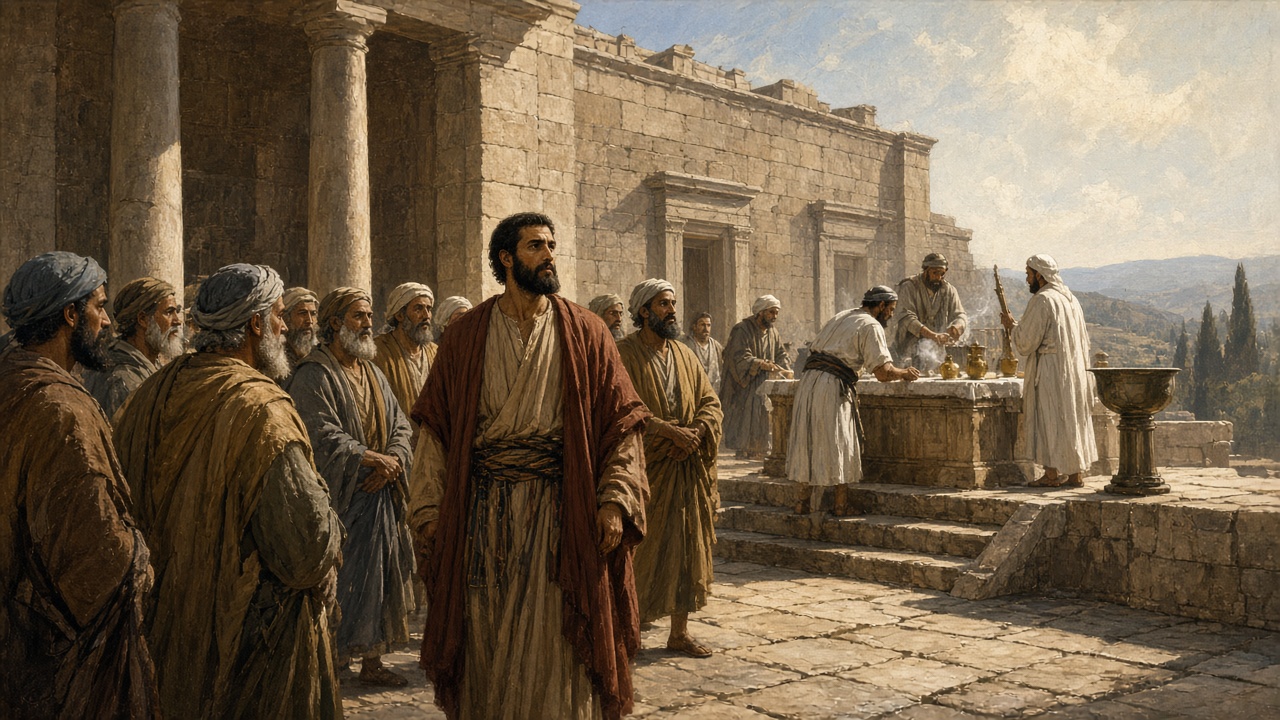
- The priests are rebuked for offering blind, lame, and diseased animals on the altar rather than unblemished livestock. Malachi exposes their disrespect by asking whether a civil governor would accept such inferior gifts.Sources: the Bible text itself
Notes written with AI assistance from open sources (Theographic Bible Metadata, CC BY-SA 4.0; Easton’s Bible Dictionary, public domain) and reviewed before publishing.
Places in this chapter
- Edom · 30.746, 35.604 · verse 4
Only places identified with high confidence are shown (90% or more according to the scholarly sources compiled by OpenBible). Period map: DARE (Digital Atlas of the Roman Empire), CC BY 4.0; modern map: © OpenStreetMap contributors; places: OpenBible.info (CC BY 4.0).
Credits and license for this translation
Biblica® Ochiw Thuolo Motingʼo Loko Manyien™
Dholuo: Biblica® Ochiw Thuolo Motingʼo Loko Manyien™ (Bible)
copyright © 2020 Biblica, Inc.
Language: Dholuo
Translation by: Biblica, Inc.
Biblica® Open New Luo Translation™
Copyright © 1980, 2002, 2003, 2020 by Biblica, Inc.
Used with permission. All rights reserved worldwide.
“Biblica” is a trademark registered in the United States Patent and Trademark Office by Biblica, Inc. Used with permission.
All content on open.bible is made available under a Creative Commons Attribution-ShareAlike 4.0 License ( http://creativecommons.org/licenses/by-sa/4.0/ ).
You are free to:
Share — copy and redistribute the material in any medium or format
Adapt — remix, transform, and build upon the material for any purpose, even commercially
Under the following conditions:
Attribution — You must attribute the work as follows: “Original work available for free at www.biblica.com and open.bible” Attribution statements in derivative works should not in any way suggest that we endorse you or your use of this work.
ShareAlike — If you remix, transform, or build upon the material, you must distribute your contributions under the same license as the original.
Use of trademarks: Biblica® is a trademark registered in the United States Patent and Trademark Office by Biblica, Inc. and may not be included on any derivative works. Unaltered content from open.bible must include the Biblica® trademark when distributed to others. If you alter the content in any way, you must remove the Biblica® trademark before distributing your work.
This translation is made available to you under the terms of the
Creative Commons Attribution Share-Alike license 4.0.
You have permission to share and redistribute this Bible translation in any format and to make reasonable revisions and adaptations of this translation, provided that:
You include the above copyright and source information.
If you make any changes to the text, you must indicate that you did so in a way that makes it clear that the original licensor is not necessarily endorsing your changes.
If you redistribute this text, you must distribute your contributions under the same license as the original.
Pictures included with Scriptures and other documents on this site are licensed just for use with those Scriptures and documents.
For other uses, please contact the respective copyright owners.
Note that in addition to the rules above, revising and adapting God's Word involves a great responsibility to be true to God's Word. See Revelation 22:18-19.
2025-05-10
Source: http://ebible.org/luo/ · eBible.org