John 8
Biblica® Ochiw Thuolo Motingʼo Loko Manyien™ · Tap a verse to see its cross-references.
1Yesu nodhi e Got Zeituni.
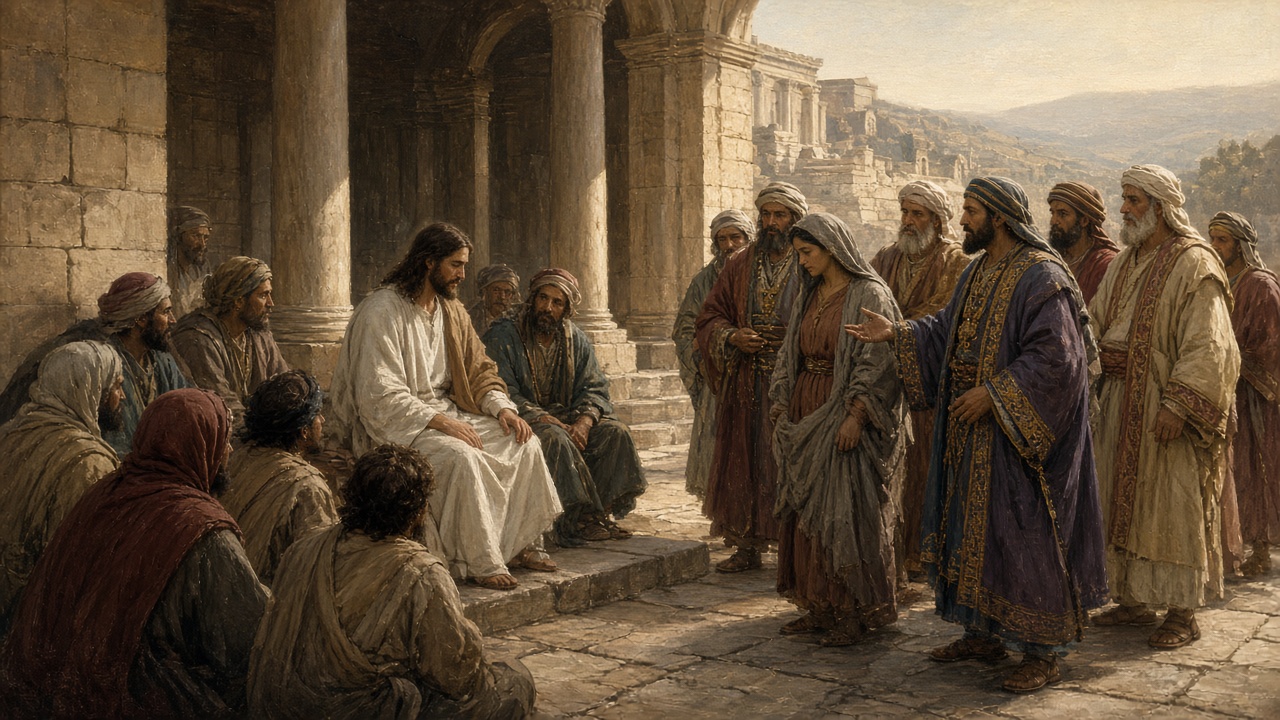
2Kinyne gokinyi nochak odok e hekalu, kama ji duto nochokore kolwore, kendo nobet piny mopuonjogi. 3Jopuonj Chik kod jo-Farisai nokelo dhako moro mane onwangʼ ka terore. Negikete ochungʼ e nyim joma ne ni kanyo duto, 4bangʼe negiwachone Yesu niya, “Japuonj, dhakoni nende omaki rando ka terore. 5Musa to nomiyowa chik mondo wachiel mon ma kamago gi kite. In to iwacho angʼo kuom wachni?” 6Negiketo wachno e nyim Yesu mondo gigajego kendo giyud yo mane ginyalo donjonego.
Yesu to nokulore piny kendo nochako ndiko e lowo gi lith lwete. 7Kane gimedo dhi nyime gipenje, noa malo mowachonegi niya, “Ngʼato kuomu mapok otimo richo ema okuong goye gi kidi.” 8Eka nochako okulore piny mondiko e lowo.
9Gikanyono, joma nowinjo gima nowachono nochako wuok achiel kaachiel, chakre jomadongo nyaka nyithindo mi dhakono ema nodongʼ kende kochungʼ but Yesu. 10Yesu noa malo kendo nopenje niya, “Nyarwa, eregi? Onge ngʼama odongʼ ma pod donjoni?”
11Nowacho niya, “Jaduongʼ, onge ngʼat modongʼ.”
Yesu nokone niya, “Kata an bende ok angʼadni bura. Wuogi idhi, to kik ichak itim richo kendo.”]
Gimomiyo nend Yesu en adier
12Yesu nochako owuoyo kodgi, kowacho niya, “An e ler mar piny, ngʼato angʼata ma luwa ok nyal wuotho e mudho, to enobed gi ler mar ngima.”
13Omiyo jo-Farisai nokwede kagiwacho niya, “Itimo mana nendi iwuon, omiyo ok wanyal yie ni gik miwacho gin adier.”
14Yesu nodwokogi niya, “Kata obedo ni atimo nenda awuon to nenda pod en mana adier nimar angʼeyo kuma ne aaye gi kuma adhiye. Un to ukia kuma aaye kata kuma adhiye. 15Ungʼado bura gi rieko mar dhano, an to ok angʼad bura ni ngʼato. 16To ka angʼado bura to paro ma angʼadogo bura nikare nikech ok atime kenda, to atime gi paro mar Wuoro mane oora. 17Ondiki e chiku ni nend ji ariyo nyalo bedo adiera mi yiego. 18An atimo nenda awuon, to ngʼama chielo matimo nenda en Wuoro mane oora.”
19Eka negipenje niya, “Wuonuno nikanye?” Yesu nodwokogi niya,
“Ukiaya kendo Wuora bende ukia. Ka dine bed ni ungʼeya, to Wuora bende dine ungʼeyo.” 20Ne owacho wechegi kane oyudo opuonjo e laru mar hekalu, but kama ji ne ketoe sadaka. To onge ngʼama nomake, nikech kindene ne pok ochopo.
21Yesu nowachonegi kendo niya, “Abiro dhi aweyou, kendo ubiro manya, to unutho mana e richou. Kuma adhiye ok unyal bire.”
22Wachneno nomiyo jo-Yahudi openjore niya, “Dibed ni ngʼatni dwaro dere? Dipo mano emomiyo owacho ni, ‘Kuma adhiye ok unyal bire?’ ”
23To nomedo wachonegi niya, “Unua mwalo e piny, an to aa malo e polo. Un jopinyni, to an ok an japinyni. 24Ne asenyisou ni ubiro tho e richou. Ka utamoru yie ni an ngʼama asebedo ka awachonu ni an, to ubiro tho e richou adier.”
25Negipenje niya, “In ngʼa?”
Yesu nodwokogi niya, “An mana ngʼama asebedo ka awacho ni an nyaka aa chakruok. 26An gi gik mangʼeny monego awachnu mondo angʼadnugo bura. To Jal mane oora en ja-adiera, kendo anyiso piny gik ma asewinjo kuome.”
27Ne ok gingʼeyo ni ne owuoyonegi kuom Wuoro. 28Omiyo Yesu nowachonegi niya, “Bangʼ ka useguro Wuod Dhano eka unungʼe ni an ngʼama asebedo ka anyisou ni an, kendo ni onge gima atimo kenda, to awacho mana gik ma Wuora opuonja. 29Jal mane oora ni koda kendo pok oweya kenda, nimar atimo gik malongʼone kinde duto.” 30Ji mangʼeny noyie kuome seche ma nowuoyono.
Nyikwa Ibrahim
31Yesu nowacho ni jo-Yahudi manoyie kuome niya, “Ka usiko kumako puonjna, eka un jopuonjrena adier. 32Kutimo kamano, to ubiro ngʼeyo adiera kendo adiera nomi ubed thuolo.”
33To negidwoke niya, “Wan koth Ibrahim kendo pok ne wabedo wasumb ngʼato nyaka nene. Ere gima omiyo iwachonwa ni ibiro miyowa wabed thuolo.”
34Yesu nodwokogi niya, “Awachonu adier, ni ngʼato ka ngʼato matimo richo, en misumba richo. 35To ongʼere ni misumba ok luong ni wuod dala, to wuod wuon dala ema iluongo kamano nyaka chiengʼ. 36Omiyo ka Wuowi ema omiyo ubedo thuolo, to ubiro bedo thuolo chutho. 37Angʼeyo ni un koth Ibrahim, kata kamano udwaro nega, nikech udagi miyo Wachna thuolo e chunyu. 38An awachonu gik ma aseneno kuom Wuora wangʼ gi wangʼ, to un usiko utimo mana gik ma useneno kuom wuonu.”
39Negidwoke niya, “Wan Ibrahim e Wuonwa.”
Yesu nowachonegi niya, “Ka dine bed ni un nyithind Ibrahim adier, to dine utimo gik ma Ibrahim notimo; 40to kar timo kamano to udwaro mana nega nikech asebedo kanyiso weche mag adiera mane Nyasaye omiya. Ibrahim to ne ok otimo gik ma kamago. 41Un timbe wuonu ema utimo.”
Ne gikone ka gikwere niya, “Wan ok wan kimirwa. Wuoro ma wan-go en Nyasaye owuon.”
Nyithind Satan
42Yesu nowachonegi niya, “Ka dine bed ni Nyasaye en Wuoru, dine uhera, nimar ne aa ir Nyasaye kendo koro an ka, ok asebiro kenda awuon, to en ema noora. 43Angʼo momiyo gik mawacho ok nyal donjonu kendo ok unyal winjo tiendgi? 44Un nyithind wuonu ma Satan kendo dwach wuonuno ema uhero timo. Ne en janek nyaka aa chakruok, kendo ok odwar adiera nikech adiera onge kuome. Koriambo to otimo gima ongʼiyogo, nimar en ja-miriambo, kendo en e wuon miriambo duto. 45To an ok uyie kuoma nikech awacho adiera! 46Ere ngʼato kuomu ka manyalo ngʼengʼa ni an jaricho? To ka awachonu adier to angʼo momiyo udagi yie kuoma? 47Ngʼat Nyasaye winjo weche Nyasaye, to un ok uwinj wach Nyasaye nikech ok un joge.”
Gik ma Yesu nowacho kuome owuon
48Jo-Yahudi nodwoke niya, “Donge wan kare ka wawacho ni in ja-Samaria kendo ni in gi jachien?”
49Yesu nodwokogi niya, “Aonge gi jachien. Wuora ema amiyo duongʼ to un to uchaya. 50An ok adwar mondo umiya duongʼ, to nitie Jal machielo madwaro mondo ayud duongʼ, kendo en e jangʼad bura. 51Awachonu adier ni ka ngʼato orito wachna, to ok notho nyaka chiengʼ.”
52Kane jo-Yahudi owinjo wachno, negiwachone niya, “Koro wangʼeyo maonge kiawa ni in gi jachien! Ibrahim notho, kendo jonabi bende notho, to in to iwacho ni ka ngʼato orito wachni to ok notho. 53Iparo ni iduongʼ moloyo kwarwa Ibrahim? Ka en notho, to jonabi bende notho, in to iparo ni in ngʼa?”
54Yesu nodwokogi niya, “Ka dipo ni amiyora duongʼ kenda, to duongʼna onge tich. Wuora, ma un bende uluongo ni Nyasachuno ema miya duongʼ. 55Kata obedo ni ok ungʼeye, anto angʼeye. Ka anyalo wacho ni ok angʼeye, to anyalo bedo ja-miriambo mana ka un, to angʼeye adier kendo pile angʼeyo wachne. 56Ibrahim kwaru ne mor koneno ndalona; adier, nonene mobedo mamor.”
57Jo-Yahudi nowachone niya, “Pok ichopo kata higni piero abich, to Ibrahim to iseneno kanye!”
58Yesu nowachonegi niya, “Awachonu adier ni kane pok onywol Ibrahim, to ne Antie!” 59Gikanyono ne gikwanyo kite mondo gichielgo Yesu, to nopondonigi, mopusore oa e laru mar hekalu.
Did you know?
Light, Law, and Abraham
- John 8 opens as Jesus goes to the Mount of Olives and returns early in the morning to the temple courts, where he sits and teaches the people who gather. The Mount of Olives is a ridge east of Jerusalem, separated from the city by the Kidron valley and named for the olive trees that cover its sides.Sources: the Bible text itself · Mount of Olives
- Scribes and Pharisees bring in a woman caught in adultery and ask Jesus what he says about Moses' command in the Law to stone such a woman, seeking to test him and to gain a basis for accusing him. Still in the temple courts, near the treasury, Jesus later says, "I am the light of the world." A dated event list places both episodes in AD 29, each lasting one day.Sources: the Bible text itself · Woman Caught in Adultery · Light of the World/I am discourse
- When Jesus says that the truth will set them free, his hearers answer that they are Abraham's descendants and have never been slaves to anyone. Abraham is called "father of a multitude"; he was the son of Terah and the heir of the promises. After Jesus declares, "before Abraham was born, I am," they pick up stones to throw at him.Sources: the Bible text itself · Abraham
Notes written with AI assistance from open sources (Theographic Bible Metadata, CC BY-SA 4.0; Easton’s Bible Dictionary, public domain) and reviewed before publishing.
Places in this chapter
- Mount of Olives · 31.778, 35.246 · verse 1
Only places identified with high confidence are shown (90% or more according to the scholarly sources compiled by OpenBible). Period map: DARE (Digital Atlas of the Roman Empire), CC BY 4.0; modern map: © OpenStreetMap contributors; places: OpenBible.info (CC BY 4.0).
Credits and license for this translation
Biblica® Ochiw Thuolo Motingʼo Loko Manyien™
Dholuo: Biblica® Ochiw Thuolo Motingʼo Loko Manyien™ (Bible)
copyright © 2020 Biblica, Inc.
Language: Dholuo
Translation by: Biblica, Inc.
Biblica® Open New Luo Translation™
Copyright © 1980, 2002, 2003, 2020 by Biblica, Inc.
Used with permission. All rights reserved worldwide.
“Biblica” is a trademark registered in the United States Patent and Trademark Office by Biblica, Inc. Used with permission.
All content on open.bible is made available under a Creative Commons Attribution-ShareAlike 4.0 License ( http://creativecommons.org/licenses/by-sa/4.0/ ).
You are free to:
Share — copy and redistribute the material in any medium or format
Adapt — remix, transform, and build upon the material for any purpose, even commercially
Under the following conditions:
Attribution — You must attribute the work as follows: “Original work available for free at www.biblica.com and open.bible” Attribution statements in derivative works should not in any way suggest that we endorse you or your use of this work.
ShareAlike — If you remix, transform, or build upon the material, you must distribute your contributions under the same license as the original.
Use of trademarks: Biblica® is a trademark registered in the United States Patent and Trademark Office by Biblica, Inc. and may not be included on any derivative works. Unaltered content from open.bible must include the Biblica® trademark when distributed to others. If you alter the content in any way, you must remove the Biblica® trademark before distributing your work.
This translation is made available to you under the terms of the
Creative Commons Attribution Share-Alike license 4.0.
You have permission to share and redistribute this Bible translation in any format and to make reasonable revisions and adaptations of this translation, provided that:
You include the above copyright and source information.
If you make any changes to the text, you must indicate that you did so in a way that makes it clear that the original licensor is not necessarily endorsing your changes.
If you redistribute this text, you must distribute your contributions under the same license as the original.
Pictures included with Scriptures and other documents on this site are licensed just for use with those Scriptures and documents.
For other uses, please contact the respective copyright owners.
Note that in addition to the rules above, revising and adapting God's Word involves a great responsibility to be true to God's Word. See Revelation 22:18-19.
2025-05-10
Source: http://ebible.org/luo/ · eBible.org