1 Samuel 9
Biblica® Ochiw Thuolo Motingʼo Loko Manyien™ · Tap a verse to see its cross-references.
Samuel owiro Saulo mondo obed Ruoth
1Ne nitie ja-Benjamin moro mongʼere ma nyinge Kish wuod Abiel, ma wuod Zeror, ma wuod Bekorath, ma wuod Afia ma ja-Benjamin. 2Ne en gi wuowi miluongo ni Saulo, ne en rawera ma jaber e kind jo-Israel bende ne en rabora ma ji moko ne rem mana e goke.
3Chiengʼ moro punde mag Kish wuon Saulo nolal kendo Kish nowachone wuode ma Saulo niya, “Kaw achiel kuom jotich mondo udhigo udwar punde.” 4Omiyo nokadho e piny got mar Efraim kod alwora mar Shalisha, to ok ne giyudogi. Negidhiyo ma gichopo e gwenge mag Shaalim, to punde ne onge kuondego. Eka nokadho e piny Benjamin, to ne ok giyudogi.
5Kane gichopo e gwenge mag Zuf, Saulo nowachone jatich mane ni kode niya, “Bi wadogi, dipo ka wuora oweyo paro punde kendo mochako mana parowa.”
6To jatich nodwoke kawachone niya, “Iwinjo, e dalano nitiere ngʼat Nyasaye moro marahuma kendo gik mowacho duto timore mana kaka owacho. Bi wadhi ire koro nikech onyalo nyisowa yo monego waluw.”
7Saulo nowachone jatich niya, “To ka wadhi, en angʼo ma wabiro miyo ngʼatni? Chiemo mane ni e mifukewa oserumo. Waonge kod mich ma wanyalo tero ne ngʼat Nyasaye. En angʼo ma wan-go?”
8Jatich nowachone kendo niya, “An-gi pesa moko manok. Abiro miye ngʼat Nyasaye mondo onyiswa yo monego waluw.” 9Chon e piny Israel kane ngʼato dhi penjo Nyasaye wach ne owacho niya, “Bi wadhi ka Janen,” nikech ngʼat miluongo ni janabi ndaloni ne iluongo ni janen.
10Saulo nowachone jatich niya, “Mano ber, bi wadhi.” Omiyo negiwuok ma gidhi e dala kama ngʼat Nyasaye nodakie.
11Kane giidho got matin-no ka gichomo dalano negiromo gi nyiri moko kadhi umbo pi kendo ne gipenjogi niya, “Bende ngʼat makoro nika?”
12To negidwoko niya, “Ee entie, ero odhi nyimu kanyo, returu. Koro eka odonjo e dalawa kawuono nimar jowa timo misango e kama owal.” 13E sa ma usedonjo e dala to ubiro yudo kapok oidho odhi malo kama owal mondo ochiem. Ji ok bi chako chiemo nyaka ochopi, nikech nyaka ogwedh gir timo misango eka bangʼe jomo oluongi nyalo chiemo. Returu mapiyo sani ema unyalo yude.
14Ne giwuotho mi gidhi nyaka dala, to kane gidonjo kanyo to negineno Samuel, kabiro gwenyore kodgi kochiko kama owal.
15To chiengʼ motelone biro mar Saulo, noyudo ka Jehova Nyasaye osefwenyo ma ne Samuel. 16“Kiny kar sa ma kama abiro oro ngʼato moa e piny Benjamin. Wire mondo otel ne joga ma jo-Israel, enores joga e lwet jo-Filistia. Asekecho joga nimar ywakgi osechopona.”
17Kane Samuel ogoyo wangʼe kuom Saulo, Jehova Nyasaye ne owachone niya, “Ma e ngʼat mane awuoyoni kuome nibiro rito ogandana.”
18Saulo nodhi ir Samuel e dhorangach mopenje niya, “Kiyie to nyisa od janen?”
19Samuel nodwoke niya, “An e janen. Tel nyima idhi kama owal maler nimar kawuono ibiro chiemo koda kendo kiny gokinyi abiro weyi idhi kendo ananyisi mago duto man e chunyi. 20Kor ka wach punde mane olal ndalo adek mokadho to owe chandi nimar oseyudgi. Koso en ngʼa ma chuny jo-Israel duto dwaro ka ok en in gi od wuonu?”
21Saulo nodwoko niya, “Donge an ja-Benjamin, oganda matin ahinya ei Israel, to donge dhoodwa bende e dhoot matin, moloyo ei oganda mar Benjamin? Angʼo momiyo iwacho wechegi kuoma?”
22Eka Samuel nokelo Saulo gi jatije kar budho moketogi gibet e kom manyime kuom ji duto mane oluongo mane nyalo romo ji piero adek. 23Samuel ne onyiso jatedo niya, “Kel lemo mar ringʼo mane amiyi, mane anyisi ni iket tenge.”
24Eka jatedo nokawo em gi sembe moketo e nyim Saulo. Samuel nowacho niya, “Ma e gima nokan-ni, cham, nikech nokan-nigo ne nyasini, chakre e kinde mane aluongoe welo.” Eka Saulo nochiemo gi Samuel chiengʼno.
25Kane gisea e kama owal mi gidwogo e dala, Samuel nowuoyo gi Saulo ka gin kode ewi ode malo. 26Ne gichiewo ka piny yawore, eka Samuel noluongo Saulo ewi ot, kowachone niya, “Ikri abiro gonyi mondo ichak wuodhi.” Kane Saulo oseikore, en kod Samuel ne giwuok oko. 27Kane oyudo gin e bath dala, Samuel nowachone Saulo niya, “Nyis jatichni mondo otel, in to dongʼ chien mondo amiyi wach moa kuom Nyasaye.” Omiyo jatijno notimo kamano.
Did you know?
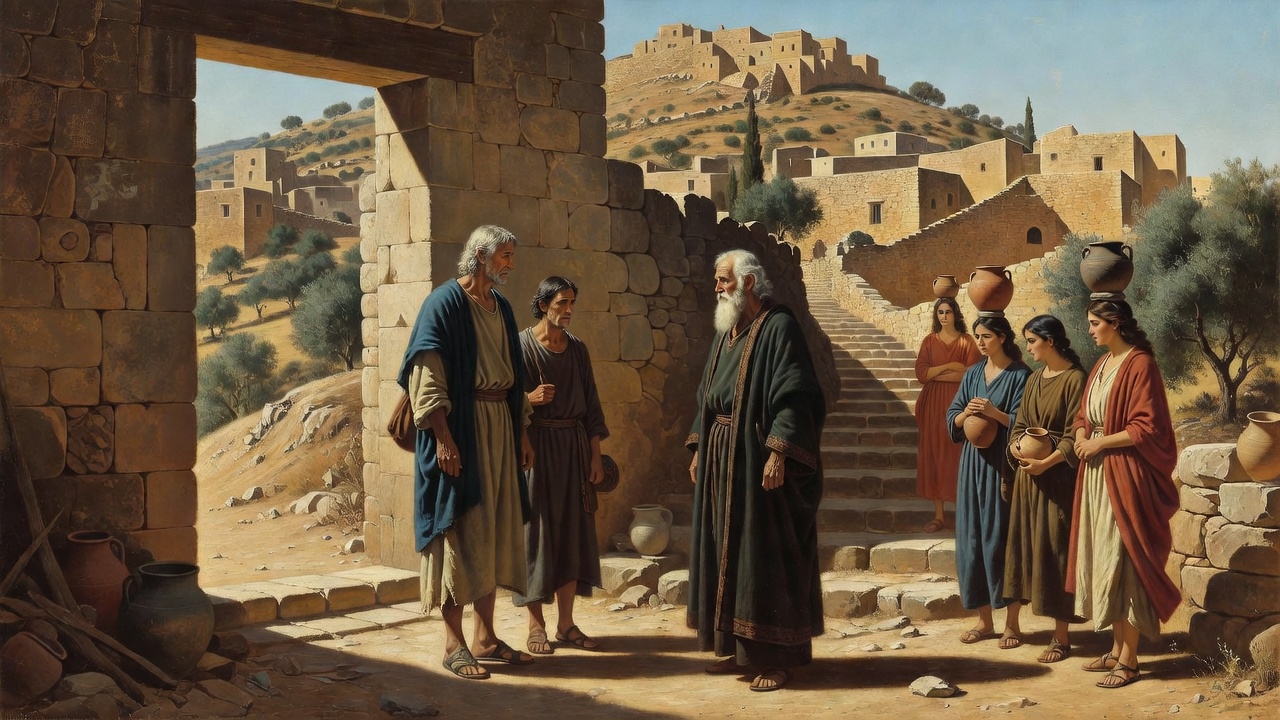
Saul's Search and Meeting with Samuel
- Saul's journey in search of his father's lost donkeys took him through the hill country of Ephraim, the land of Shalishah, the region of Shaalim, and finally to the district of Zuph, where Samuel's hometown of Ramah was located.Sources: the Bible text itself · Saul · Zuph
- The narrative notes that the title 'prophet' had replaced the older term 'seer' by the time the text was written down. Approaching a seer to inquire of God often involved bringing a customary modest gift or token, such as the quarter shekel of silver offered by Saul's servant.Sources: the Bible text itself
- At local sacrificial feasts held on high places, the presiding priest or prophet had to bless the offering before the guests could eat. Samuel honored Saul by seating him at the head of about thirty invited guests and serving him a special reserved portion of meat.Sources: the Bible text itself
Notes written with AI assistance from open sources (Theographic Bible Metadata, CC BY-SA 4.0; Easton’s Bible Dictionary, public domain) and reviewed before publishing.
Credits and license for this translation
Biblica® Ochiw Thuolo Motingʼo Loko Manyien™
Dholuo: Biblica® Ochiw Thuolo Motingʼo Loko Manyien™ (Bible)
copyright © 2020 Biblica, Inc.
Language: Dholuo
Translation by: Biblica, Inc.
Biblica® Open New Luo Translation™
Copyright © 1980, 2002, 2003, 2020 by Biblica, Inc.
Used with permission. All rights reserved worldwide.
“Biblica” is a trademark registered in the United States Patent and Trademark Office by Biblica, Inc. Used with permission.
All content on open.bible is made available under a Creative Commons Attribution-ShareAlike 4.0 License ( http://creativecommons.org/licenses/by-sa/4.0/ ).
You are free to:
Share — copy and redistribute the material in any medium or format
Adapt — remix, transform, and build upon the material for any purpose, even commercially
Under the following conditions:
Attribution — You must attribute the work as follows: “Original work available for free at www.biblica.com and open.bible” Attribution statements in derivative works should not in any way suggest that we endorse you or your use of this work.
ShareAlike — If you remix, transform, or build upon the material, you must distribute your contributions under the same license as the original.
Use of trademarks: Biblica® is a trademark registered in the United States Patent and Trademark Office by Biblica, Inc. and may not be included on any derivative works. Unaltered content from open.bible must include the Biblica® trademark when distributed to others. If you alter the content in any way, you must remove the Biblica® trademark before distributing your work.
This translation is made available to you under the terms of the
Creative Commons Attribution Share-Alike license 4.0.
You have permission to share and redistribute this Bible translation in any format and to make reasonable revisions and adaptations of this translation, provided that:
You include the above copyright and source information.
If you make any changes to the text, you must indicate that you did so in a way that makes it clear that the original licensor is not necessarily endorsing your changes.
If you redistribute this text, you must distribute your contributions under the same license as the original.
Pictures included with Scriptures and other documents on this site are licensed just for use with those Scriptures and documents.
For other uses, please contact the respective copyright owners.
Note that in addition to the rules above, revising and adapting God's Word involves a great responsibility to be true to God's Word. See Revelation 22:18-19.
2025-05-10
Source: http://ebible.org/luo/ · eBible.org