Revelation 6
Ibibemuwe-Num Iyiki Ifa Ru Dũya · Tap a verse to see its cross-references.
Ibiborh utɔɔva
1Umum iki inyã Ungwɛ̃ Itsurhi ha iki ikhor ibiborh unying ru utɔɔva ha, ri imimuna hã ikinanake umum igũ unying iki itsarhi irhakngge ru nyaki inai iki irhare igɛ, <<Uba!>> 2Mɔcɛ umum inyã inyãwã iyiki iterha! Uwuku ufũ ngge akpɔm nggu utɔɔ, aka adzowe unga nggu ifur iyɛrhe. Unga adzek ru nyaku unggang, abee iwu ungganga.
3Ivang Ungwɛ̃ Itsurhi ha iki ikhor ibiborh iyi uvaa, umum igũ uwu uvaa ra abin akika amumuna aki urhɛ ha ikinanake agɔr ugɛ, <<Uba!>> 4Mɔcɛ inyãwã iyɔɔ idzeka, iwu iyiki ibãrhã. Umbɔ adzowe uwuku ufũ ngge ijee iyiki inyãnguwe ididɔɔr ru upfung, ngge itsú anera agbɛyi adɔka. Adzowe unga nggaa ikon iki ider.
5Ivang Ungwɛ̃ Itsurhi ha iki ikhor ibiborh iyi untaar, umum igũ imimuna iyi untaar ra abin akika amumuna hã ikinanake aki urhɛ ha iki igɔr ugɛ, <<Uba!>> Mɔcɛ umum inyã inyãwã iyiki ifĩrhã. Uwuku ufũ ngge akpɔm nggu ubin ukpuku umei imor abin ru uboknga. 6Mɔcɛ umum igũ ubin ukpɔɔ ru nyaku urhɛm uku udzeki imimuna hã ikinanake aki urhɛ ugɔr ugɛ, <<Imang ugbiu itsem unying iwu imang itser unuma unying, imang ugbiu ishaa abvur ataar iwu imang itser unuma unying, bɔr niba udakukɔ atsei uzaitun nu amɛ̃ inebi!>> Ubin uwuku umei imor abin|alt="Scales (thing for measuring weight of things)" src="hk00156b.tif" size="col" loc="6.6" copy="Horace Knowles" ref="6.5"
7Ungwɛ̃ Itsurhi ha aka akhor ibiborh iyi unaa, umum igũ urhɛm imimuna iyi urhɛ ikinanake igɔr ugɛ, <<Uba!>> 8Mɔcɛ umum irhi inyã inyãwã iyɔɔ iyorngge iki isatungge! Uwuku ufũ iyi ha itsoknga igburh Akpe, anang isei abika akpukpe ikɛi adɔsa ru unga. Umbɔ adzowe umbɔ ijee ri itsi ukpusha unying ra anaa (1/4) aki upfung, umbɔ afɛyiwe nggu ikon iki ider, nu imerh, nu ikpo, nu íjuɛ arhum iyiki ibewe iyi upfung.
9Ungwɛ̃ Itsurhi ha aka akhor ibiborh iyi untɔ̃ɔ̃, umum inyã ra anɔnɔr ubeu ha ípfu abirabɛ umbɔ aka afɛr ra Arherhu-Num nu idekambɔ aka abima. 10Umbɔ atsarhi irhakmbɔ agɛ, <<A Uteijee uner ijee kishoo, usarkasar uner idzidzɛrhe, ukang ungo uku udɔrhu utsu uvau ru aner upfung ukpirɛ, nu utsuke umbɔ afai ubinkutsu, umbɔ afɛre umɛn?>> 11Mɔcɛ umbɔ adzowe ubɛn unera ru umbɔ atorho aka ader aka aterha, na asɔme umbɔ adãrhã ukunjiir utsɛku umbɔ aka imaa ifɛre angwɛ̃mbɔ nu anapumbɔ, abirabɛ aka awu andɔki itsermbɔ ru nyaka umbɔ aka afɛr umbɔ.
12Umum iki inyã Ungwɛ̃ Itsurhi ha iki ikhor ibiborh iyi utɔ̃ĩ, umɔ nggaa izizusa abĩ iki ikorhe. Ishaa unum idzipa iwu iki ifĩrhã ru nyaki igwar ibũ, ufɛ̃ udzipu uwe uku ubãrhã ru nyaka adzirh. 13Ídzɛɛr afã igbei ra abĩ, ru nyaki ikpũrhã uvorhvoyɛ iki ibĩ akarhãrhã, ugba uku uker uzung ngge nu ucuciiangge, ngge ipupi igba. 14Afã afeta ru nyaka umbɔ iki ifetu ufar, atsusuwe igũ nu ampfũwã ra anangke.
15Mɔcɛ ayɛrhe upfung ukpirɛ, nu anggbaashi anera, nu anggbaashi abi iwa abika agɔng, nu abika awe ru ubin, nu abi ijee, nu kishoo anera, agãrhã nu abirabɛ aka asi iwembɔ agãrhã, awoyi ra atai nu ífa iyi ígũ. 16Anu iyisi ígũ nu ífa agɔr agɛ, <<Àka agbei nu atsimɛn na atsire umɛn ra asu uwu ha aka asei nu anang isei ha, nu avɔm Ungwɛ̃ Itsurhi ha. 17Ubinkutsu, nggaa unum avɔm uku ubakpɔ, ungaa idɛ̃ɛ̃ abɛk?>>
Did you know?
The Opening of the Six Seals
- The first four seals reveal four riders on white, bright red, black, and pale green horses, summoned one by one by the four living creatures. Each horseman brings a distinct affliction across the earth, ranging from conquest and the loss of peace to widespread famine, plague, and death.Sources: the Bible text itself
- The third horseman holds a pair of scales, accompanied by a proclamation setting the price of a quart of wheat or three quarts of barley at a denarius, reflecting severe inflation and food rationing while oil and wine are preserved.Sources: the Bible text itself
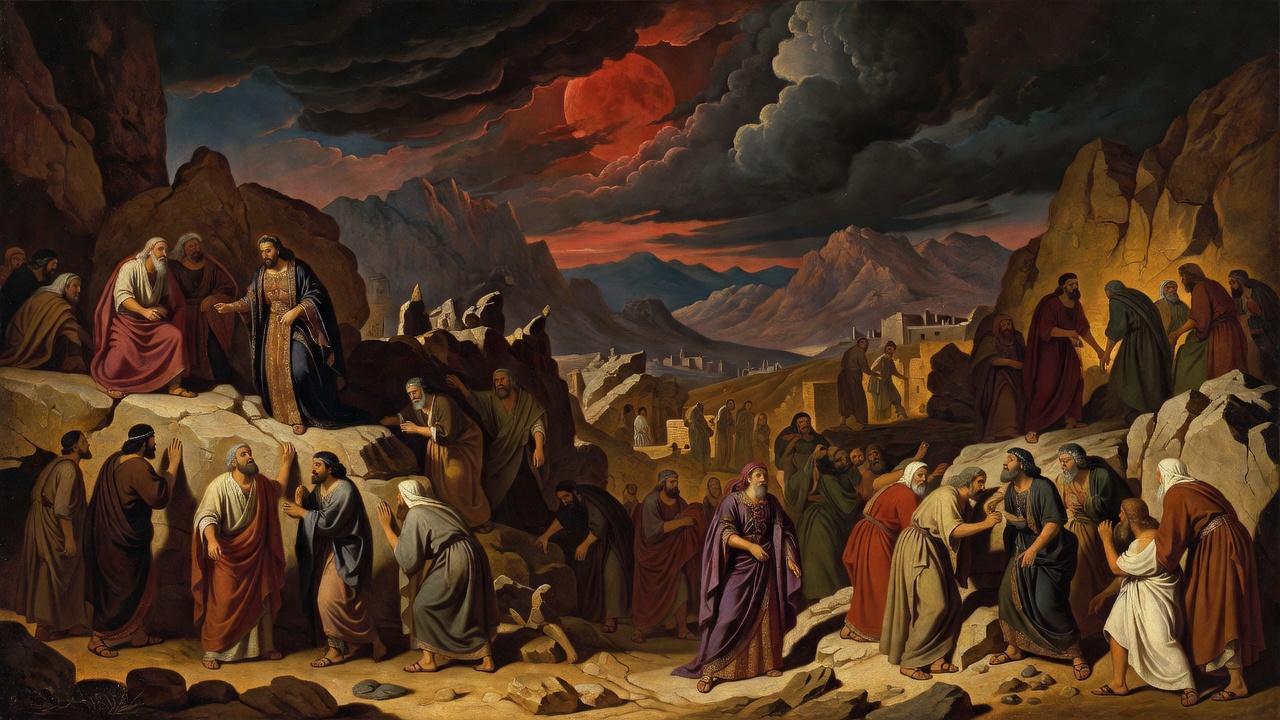
- When the fifth and sixth seals are opened, the focus shifts to the souls of slain believers waiting under the altar, followed by immense cosmic and earthly upheavals that lead people of every social station to hide in mountain caves.Sources: the Bible text itself
Notes written with AI assistance from open sources (Theographic Bible Metadata, CC BY-SA 4.0; Easton’s Bible Dictionary, public domain) and reviewed before publishing.
Credits and license for this translation
Ibibemuwe-Num Iyiki Ifa Ru Dũya
Duya: Ibibemuwe-Num Iyiki Ifa Ru Dũya (New Testament)
copyright © 2024 Wycliffe Bible Translators, Inc.
Language: (Duya)
Translation by: Dũya Development Association
Contributor: SIL Nigeria
This translation is made available to you under the terms of the
Creative Commons Attribution Share-Alike license 4.0.
You have permission to share and redistribute this Bible translation in any format and to make reasonable revisions and adaptations of this translation, provided that:
You include the above copyright and source information.
If you make any changes to the text, you must indicate that you did so in a way that makes it clear that the original licensor is not necessarily endorsing your changes.
If you redistribute this text, you must distribute your contributions under the same license as the original.
Pictures included with Scriptures and other documents on this site are licensed just for use with those Scriptures and documents.
For other uses, please contact the respective copyright owners.
Note that in addition to the rules above, revising and adapting God's Word involves a great responsibility to be true to God's Word. See Revelation 22:18-19.
2025-05-08
Source: http://ebible.org/ldb/ · eBible.org