Acts 8
Ibibemuwe-Num Iyiki Ifa Ru Dũya · Tap a verse to see its cross-references.
1Ushawurhu awu umɔ abemuka ifɛr Uistifanu.
Uver ha utsu abika adɔsa asitumbɔ
Ru unum hã nggaa uver utsĩkpɔ ra abika adɔsa ru Urusharhima, asituwe umbɔ kishoo ra abĩ abi Uyahudiya nu aki Usamariya, akpurha abɔre abi itser Uyesu. 2Mɔcɛ aner Unum adzake Uistifanu, aciu akpenga akarhãrhã. 3Bɔr Ushawurhu akpurha adɛ̃ɛ̃ idzowe uver ra abika adɔsa akarhãrhã. Atsĩrhã aya aya, adzui akatsak nu akatsɛrh atsuyiwe umbɔ ru ugborzĩ.
Ufirhibu ru Usamariya
4Abɔrɔ ha umbɔ aka asituwe adzowe Isarhe Iyiki Ize ri inangyɛ umbɔ aka azĩ. 5Ufirhibu azĩã uteu Usamariya, adzowe isarhe Ukiristo umɔ. 6Anera aka agũ, na anyã abin idzeukɛ unga aka akorhe umbɔ angwɛ̃ amɛnmbɔ ru ubinkpi unga iki irherhe. 7Ípfu iyiki ibewe itsuyi ivum ni idzeyingge ru ayor anera arhɛrhɛ, akerhuwe abi ishayi iyor na akatarhu arhɛrhɛ. 8Nggee umbɔ agɔm anggɔm akarhãrhã ru uteu ha.
Usiman uner igoka
9Unera nuwɔ itsoka igburh Usiman anu itser igoka adzowe idzeu ra anera kishoo ru uteu Usamariya. Anu iberi itsinga agɛ unga awu nggaa uner. 10Nu anera kishoo, uwuku ugɔng nu uwuku uci, atsu amɛnmbɔ nu unga anu igɔr agɛ, <<Utsak uwurɛ awe ru ijee iyi Unum umbɔ iki iyisa nggaa Ijee.>> 11Umbɔ adɔsa unga ubinkutsu aka adera unga aka anu ikorhuwe umbɔ abin idzeu nggu igbigba igokanga. 12Bɔr umbɔ aka awe ru imangmang ri Isarhe Iyiki Ize iyiriyɛ Ufirhibu aka arherhe iyi Iyɛrhe Unum nu iyi itsok Uyesu Ukiristo, asorhuwe umbɔ ubɔtisima, akatsak nu akatsɛrh. 13Usiman nibikanga awea ri imangmang, umbɔ aka asorhuwe unga ubɔtisima ikɛi unga adɔsunga Ufirhibu ubɛn anang. Unga aka anyã Ufirhibu akorha atsar nu abin idzeu, unga adzeidzeu akarhãrhã.
14Abi itser Uyesu aka awe ru Urusharhima aka agũ abi Usamariya aka ayɛimbɔ Arherhu-Num, umbɔ adene umbɔ Ubitru nggu Uyohana azĩ ru umbɔ. 15Umbɔ aka azĩ atsĩ, umbɔ afɛne-Num ru umbɔ ama ayɛi Ipfu Isarsatangge, 16ubinkutsu, Ipfu Isarsatangge ina isi icipuwangge nu unyinga umbɔ kata, akpurha akorhuwe umbɔ ubɔtisima ri itsok Uteijee Uyesu. 17Mɔcɛ Ubitru nu Uyohana atsorhuwe abok nu umbɔ, umbɔ ayɛi Ipfu Isarsatangge.
18Usiman aka anyã ugɛ awu itsorha abok abi itser Uyesu iki isaki itsu ikpo Ipfu-Num, unga adzowe umbɔ uhwɛk. 19Na agɛ, <<Udzaa umum ijee ha igamum, umum ĩba itsorhumum ubok nu ubɛn unera unga akpo Ipfu Isarsatangge.>>
20Ubitru agɔr unga agɛ, <<Uhwɛkngo nggu ungo aka atsim, ungo ukaifɛrhkɔ ugɛ ungo ukũ uhwɛk uyɛi izũwũ Unum! 21Ungo ushiɔ ru ugau ri itser iyɛrɛ, ubinkutsu, amɛnngo asi irhikuke ra asu Unum. 22Udzipa ru iyiki ibewa iyɛrɛ nu ufɛn-Num ru Uteijee. Use unga awuri itsũwãnga ungo ri ikpũ ifɛrhkɔ iyɛrɛ ra amɛnngo. 23Ubinkutsu umum inyã amɛnngo awu nggu unyɛ̃ɛ̃ akarhãrhã aka abow ra arhim.>>
24Mɔcɛ Usiman agɛ, <<Àka afɛnuwa umum Uteijee, utsur abin hã umbi aka arherhe akorhuke nggu umum.>>
25Ivangyɛ umbɔ Ubitru nggu Uyohana aka amaa idzowe isarhe Arherhu Uteijee, umbɔ abvui azĩmbɔ Urusharhima, adzowe Isarhe Iyiki Ize ri iteu Usamariya irhɛirhɛ.
Ufirhibu nu uner Uitiyofiya
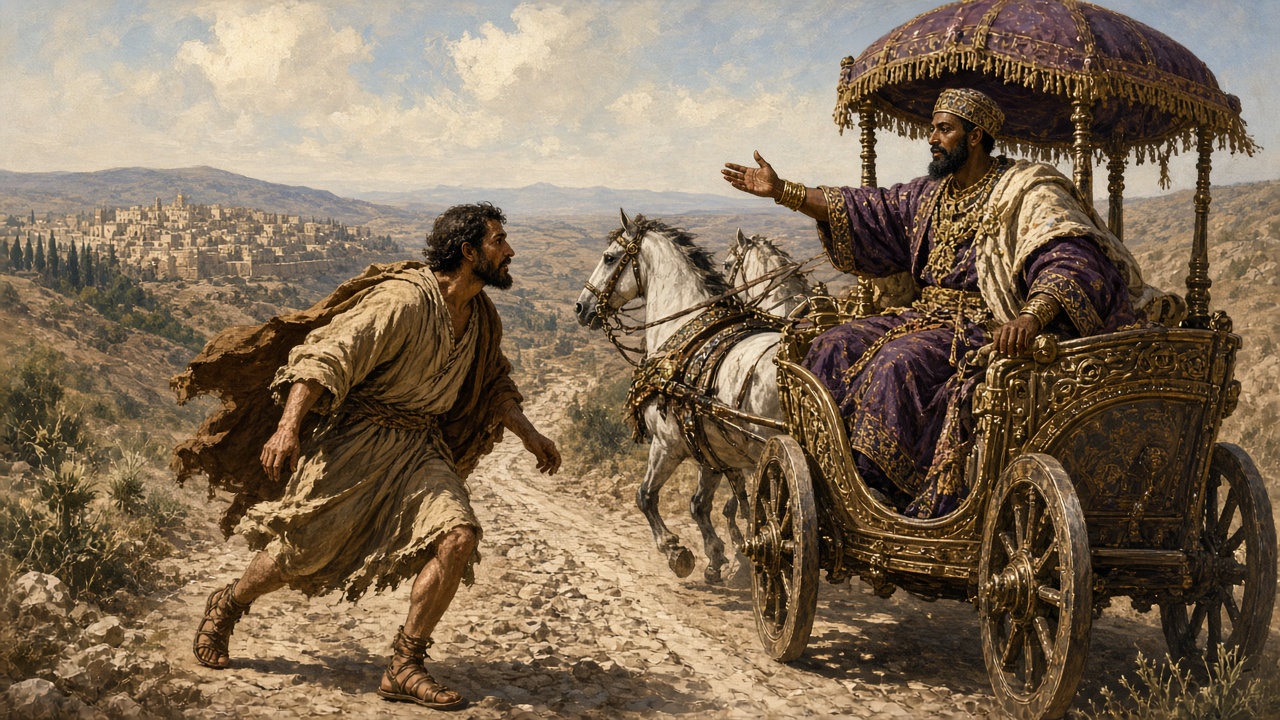
26Icɛ ipfu itser Uteijee igɔr Ufirhibu igɛ, <<Uso uzĩ unɔr utsĩndĩ arhum uwuku udzeku Urusharhima uzĩ Ugaza.>> 27Nggee unga asok adzek azĩã, unga agbopu uner Uitiyofiya uwuruwi aka awu unggbaashi, abika angwɛ̃ kishoo abin Ukadi uyɛrhe Uitiyofiya, aka awu ukutsɛrh. Aka azĩ Urusharhima idzowe igɔng. 28Unga awu ru utsĩndĩ uwuku uzĩ usoi, asei ru ikar inyãwãnga anu ivarhu ubvur uwuku usɔm Arherhu-Num Uishaya. 29Ipfu-Num igɔr Ufirhibu igɛ, <<Uzĩ ukhapa nu ikar inyãwã iyɔrɔ.>>
30Ufirhibu atĩ azĩ nu ikar inyãwã hã agũ utsa ha adɛ̃ɛ̃ ivarhe ubvur uwuku usɔm Arherhu-Num Uishaya. Ufirhibu arhusa unga agɛ, <<Ungo ugũ utaingo ubinkpi ungo uku uvarhe?>>
31Unga agɛ, <<Umum ikorhi iguse, unera aba asi igbisha adɛyiwanga umum?>> Na ayisu Ufirhibu afũ ikar inyãwã hã umbɔ asei.
32Uner Uitiyofiya ha adɛ̃ɛ̃ ivarhe ubvur Arherhu-Num aka agɔr ugɛ,
<<Adarh unga ru nyaki idɔi azĩmbɔ ingwĩngwã,
ru nyaku ungwɛ̃ itsurhi iki unukutata ru ubok uwuku ukone igwar iyorngge,
unga asi iyangunga angwĩnga.
33Akwɛɛte unga na akɛnmbɔ unga idzidzɛrhanga.
Ungaa idɛ̃ɛ̃ arherhe arherhe ri itsi unangnga?
Ubinkutsu anyangu urhɛnga adzembɔ ru upfung.>>
34Uner Uitiyofiya ha arhusu Ufirhibu, agɛ, <<Udɛyiwa umum, kabɔɔ, uner uwuku usɔm Arherhu-Num hã arherhe arherhe ha ri itsi ungaa, ri itsinga use ri itsi uner uwukuse?>> 35Mɔcɛ Ufirhibu atirhi nu ugbɛr itsɛng Arherhu-Num uwu ha adzowe unga Isarhe Iyiki Ize iyi Uyesu.
36Umbɔ awe ru uzɛ̃rhã nú utsĩndĩ hã, azĩ anyã amɛ̃, Uner Uitiyofiya ha agɛ, <<Unyã amɛ̃ akɛ! Awu use ikɛn umum isi ísorhmum ubɔtisima?>> 38Unga atsu umbɔ ajimu ikar inyãwã hã ngge idɛ̃ɛ̃. Umbɔ Ufirhibu nggu utsa ha ikivarhambɔ acipa atsĩmbɔ ra amɛ̃. Mɔcɛ Ufirhibu asorhuwe ubɔtisima ru utsa ha. 39Ivangyɛ umbɔ aka adzeka ra amɛ̃, Ipfu Uteijee ishupungge Ufirhibu, Uner Uitiyofiya ha asi ibvui anyã unga ikɛi, bɔr azĩã uzɛ̃rhãnga na agɔm anggɔm. 40Ufirhibu, anyã itsinga, ru Uazotu. Umɔ unga atsĩrhã ri kishoo iteu, adzise Isarhe Iyiki Ize azĩ atsĩã Ukaisariya. Uzɛ̃rhũ Ufirhibu|alt="Philip's Travel" src="ldb GPS_PhilipsTravelsSmall_B&W.jpg" size="span" copy="WBT" ref="8.5-40"
Did you know?
The message spreads beyond Jerusalem
- After Stephen’s death, a great persecution broke out against the church in Jerusalem, and all except the apostles were scattered through Judea and Samaria. Philip, one of the seven and later called the evangelist, was among them; he went first to Samaria, where the crowds gave their attention to his message about the Christ.Sources: the Bible text itself · Phillip the Evangelist
- Before Philip arrived, Simon had long astounded Samaria by sorcery, and people called him the divine power known as the Great Power. He believed and was baptized, then offered money for the power to give the Holy Spirit by the laying on of hands; the word simony, for buying a spiritual office, is derived from his name.Sources: the Bible text itself · Simon the Sorcerer
- Two roads linked Jerusalem and Gaza; Philip was sent along the one through Hebron and a thinly inhabited district called the desert. There he met an Ethiopian eunuch, treasurer to Candace, queen of the Ethiopians, returning from worship in Jerusalem and reading the prophet Isaiah in his chariot. Candace was a title borne by successive queens of Meroe in Upper Nubia, a wealthy center of trade between Africa and southern Asia.Sources: the Bible text itself · Phillip the Evangelist · Candace
Notes written with AI assistance from open sources (Theographic Bible Metadata, CC BY-SA 4.0; Easton’s Bible Dictionary, public domain) and reviewed before publishing.
Places in this chapter
- Jerusalem · 31.777, 35.234 · verses 1, 14, 25, 26, 27
- Judea · Today: Judea 1 · 31.777, 35.234 · verse 1
- Samaria · Today: Samaria 2 · 32.276, 35.195 · verses 1, 5, 9, 14, 25
- Gaza · Today: Tell Harube · 31.504, 34.464 · verse 26
- Ethiopia · 16.935, 33.751 · verse 27
- Ashdod · Today: Tel Ashdod · 31.757, 34.658 · verse 40
- Caesarea · Today: Caesarea Maritima · 32.500, 34.892 · verse 40
Only places identified with high confidence are shown (90% or more according to the scholarly sources compiled by OpenBible). Period map: DARE (Digital Atlas of the Roman Empire), CC BY 4.0; modern map: © OpenStreetMap contributors; places: OpenBible.info (CC BY 4.0).
Credits and license for this translation
Ibibemuwe-Num Iyiki Ifa Ru Dũya
Duya: Ibibemuwe-Num Iyiki Ifa Ru Dũya (New Testament)
copyright © 2024 Wycliffe Bible Translators, Inc.
Language: (Duya)
Translation by: Dũya Development Association
Contributor: SIL Nigeria
This translation is made available to you under the terms of the
Creative Commons Attribution Share-Alike license 4.0.
You have permission to share and redistribute this Bible translation in any format and to make reasonable revisions and adaptations of this translation, provided that:
You include the above copyright and source information.
If you make any changes to the text, you must indicate that you did so in a way that makes it clear that the original licensor is not necessarily endorsing your changes.
If you redistribute this text, you must distribute your contributions under the same license as the original.
Pictures included with Scriptures and other documents on this site are licensed just for use with those Scriptures and documents.
For other uses, please contact the respective copyright owners.
Note that in addition to the rules above, revising and adapting God's Word involves a great responsibility to be true to God's Word. See Revelation 22:18-19.
2025-05-08
Source: http://ebible.org/ldb/ · eBible.org