Acts 16
Ibibemuwe-Num Iyiki Ifa Ru Dũya · Tap a verse to see its cross-references.
Utimoti agbopu Uburhu nu Usirha
1Uburhu agbaashia aba Udarbe mɔcɛ na azĩ uteu Urhistira, anangkɛ ungwɛ̃ imesa uwɔɔ itsoka igburh Utimoti. Uyanga awu una Uyahudiya uwuku ududɔsa, bɔr utɛnga awu utsa Uherhini. 2Abika adɔsa ru Urhistira nu Uikoniya arherhi iyiki ize ri itsinga. 3Uburhu abee ikũ unga azĩ uzɛ̃rhã, nggee unga atsu umbɔ asorhuwe unga usorhe, ubinkutsu abi Uyahuda abi anang hã kishoo ahwɛngmbɔ utɛ Utimoti awu utsa Uherhini. 4Umbɔ aka azɛ̃rhã atsĩrhĩ iteu, anu idɛyiwe anera abinkɛ abi itser Uyesu nu akakũ ru Urusharhima, adɛyiwe abika adɔsa, adɔsa ake. 5Ngge itsu abika adɔsa atoma awu akerketambɔ ri imangmang, nu irhɛmbɔ inũ ititoma ubɛn unuma.
Uburhu anyã izĩ Umakidoniya ri irhi
6Uburhu nu awɛrhu uzɛ̃rhãnga azĩ udika abĩ Ufirijiya na aki Ugarhatiya, ubinkutsu Ipfu Isarsatangge ikɛnngge umbɔ idzowe isarhe Uteijee ru abĩ Uasiya. 7Ivangyɛ umbɔ aka aba atsĩ nu atsom abĩ Umisiya, umbɔ abee izĩ abĩ Ubitiniya, bɔr Ipfu Uyesu ikɛnngge umbɔ. 8Nggee umbɔ adɔsa udika abĩ Umisiya acipa azĩmbɔ uteu Utoruwa. 9Nu untsuuka Uburhu anyã irhi uner abĩ Umakidoniya aka adɛ̃ɛ̃ na ashɔ̃rhã unga agɛ, <<Uma uba Umakidoniya uba uyika umɛn.>> 10Uburhu aka anyã irhi ha, kanying umɛn ingbika abinmɛn izĩmɛn Umakidoniya, ubinkutsu umɛn inyã Unum unga ayisa umɛn idzowe Isarhe Iyiki Ize ru umbɔ.
Urhidiya awea ri imangmang
11Umɛn isok ru ukhukhɔɔ amɛ̃ idzeku Utoruwa uku urhirhiki izĩmɛn Usamutarkiya. Unum uvaa umɛn itsĩmɛn Uniyaforhi. 12Umɛn idze umɔ izĩmɛn uteu Ufirhipi, ukpuku uwe anang isei abi Uroma uteu ukugɔnga ra abĩ Umakidoniya. Umɛn imaa inuma umɔ.
13Ru unum ukpuku uwosha umɛn idzeka angwĩ utepa izĩmɛn ru ubang azɛ̃, anangkɛ umɛn iki itsar ugɛ awu anang ifɛn-Num. Umɛn isei ni irherha arherhe ra akatsɛrh aka akɔng umɔ. 14Utsɛrh uwɔɔ ra abika akpeto itsoka igburh Urhidiya, unga awu una uteu Utiyatira anu igoyiwe atorho undzuna, uwuku udzowe igɔng ru Unum. Uteijee ayanguwe amɛnnga unga akpeto ru ubinkpi Uburhu aka arherhe. 15Ivangyɛ umbɔ aka asorhuwe unga ubɔtisima nggu aner iyanga, unga ayisa umɛn izĩ ri iyanga agɛ, <<Umbi aba abemumbi agɛ umum iwu uwuku uwe ru imangmang ru Uteijee, àka aba acipa ri iyamum.>> Unga aka agbiir amɛnmɛn umɛn ibemumɛn.
Agbang Uburhu nu Usirha ru ugborzĩ
16Unum ukpɔɔ umɛn izĩ ra anang ifɛn-Num ni igbopu una uwɔɔ awu ugãrhã awuri ipfu iyiki ibewe iyi irhi. Unga aka isaka akposhuwe uhwɛk ru ateiyanga akarhãrhã ri itser irhi ha. 17Unga anu idɔsu Uburhu nu umɛn, atsu ivum, anu igɔr agɛ, <<Abɛrɛ awu agãrhũ Unum Uwuku Ugɔng anu idɛyiwa umbi utsĩndĩ uwuku ufɔrh.>> 18Anu ikorhe rimi inuma irhɛirhɛ utsɛku Uburhu agũ avɔm, na adzipa agɔr ipfu iyiki ibewe ha agɛ, <<Umum itsu ungo ri itsok Uyesu Ukiristo upfudzeka ru unga!>> Kanying ipfu iyiki ibewe ha idzekngge ru unga.
19Ivangyɛ ateiya una hã aka anyã utsĩndĩ ikpo uhwɛkmbɔ uku uborhmgbɔ, mɔcɛ umbɔ adzur Uburhu nu Usirha agbĩrhã umbɔ azĩmbɔ ra anang izɛɛ ra asu abi ijee. 20Umbɔ aka akũna umbɔ azĩ ra abika atsu uvau abi Uroma na agɛ, <<Aner abɛrɛ awu abi Uyahuda, adɛ̃ɛ̃ isoyiwe amɛn utepmɛn. 21Anu imesuwa agbeyakɛ aka asi imɛ̃ke ri ikpemyɛ umɛn abi Uroma iki iyɛi use umɛn ĩdɔsa.>>
22Anera akɔng nu atsimbɔ Uburhu nu Usirha, abika atsu uvau atsuke anera atsimuwe atorhambɔ na akwɛr umbɔ. 23Umbɔ aka akwɛr umbɔ akarhãrhã amaa, atsuke umbɔ ru ugborzĩ, atsu uner idzɛu angwɛ̃dzɛn na adzɛu umbɔ. 24Unga aka ayɛi itsera, unga atsuke umbɔ ru unɔrkang ugbora, atsuke adakmbɔ ru ukhɔɔ.
25Ayoka ikɔ untsuuka Uburhu nu Usirha afɛn-Num atsusa abom ikpoi Unum, abirabɛ umbɔ aka agbange ru ugborzĩ hã akpeto ru umbɔ. 26Kanying nggaa izizusa abĩ itsu atarh idzin ugbor uzĩ hã azusa. Kanying kishoo angwĩ ubã ugbor uzĩ atsuri, kishoo inyãwã iyiriyɛ umbɔ aka abow abi ugbora igarhe. 27Uner adzɛu ugborzĩ hã aka azir ru urhɔ anyã angwĩ ubã agbora adɛ̃ɛ̃ iyɛm, unga awɔɔr ikonnga abee ifɛre itsinga, ubinkutsu akaifɛrhkɔ agɛ abirabɛ umbɔ aka agbange ru ugborzĩ hã aka atĩmbɔ. 28Bɔr Uburhu atsarhi irhaknga atsu ivum agɛ, <<Niba unayikɔ itsingo! Umɛn abɛ kishoo iwu umɔ!>>
29Uner udzɛu ugborzĩ hã agɔr umbɔ akũ irhirhang aba, mɔcɛ unga asok adɛr atsĩ azang iwei ifɛr unga atararhu ra asu Uburhu nu Usirha. 30Mɔcɛ unga akũna umbɔ adzeka ra awiya na arhusa agɛ, <<Umbi anggbaashi, umum ikorhu use aka awu ufang ni ikpo ififɔrh?>>
31Umbɔ agɛ, <<Uwe ru imangmang ru Uteijee Uyesu, ungo uwuri ikpikpoɔ ififɔrh, ungo nu abi iyango.>> 32Mɔcɛ umbɔ arherhe Arherhe Uteijee asɔme unga nu abirabɛ aka awu ri iyanga kishoo. 33Ru untsuua ha ri ivang hã uner idzɛu ugbor ha aka akũna umbɔ azĩ asorhe isɔɔmbɔ. Kanying unga nu abi iyanga kishoo asorhuwe umbɔ ubɔtisima. 34Unga akũna umbɔ atsĩã ri iyanga akowe umbɔ ubingha. Unga nu abi iyanga kishoo agɔm anggɔm ubinkutsu umbɔ kishoo awembɔ ri imangmang ru Unum.
35Ukpe uku usar, abika atsu uvau adene ambow ikow agɛ, <<Atsũwe aner abɛrɛ.>> 36Nggee uner idzɛu ugbor ha adɛyiwe Uburhu agɛ, <<Abika atsu uvau agɔr agɛ atsũwe umbi. Icɛrɛ aka adzek. Azĩ uku utɔɔ.>>
37Bɔr Uburhu agɔr uner idzɛu ugbor ha agɛ, <<Akwɛr umɛn ra asu anera na asi ivarhumbɔ arherhe, umɛn abɛ iwu aner Uroma, na atsuke umɛn ru ugborzĩ. Icɛrɛ umbɔ awuri itsũwe umɛn ri iwɔk? Ĩ'ĩ, rinɛɛ! Uneke umbɔ aba nibikambɔ aba atsũwe umɛn idzek.>>
38Ambow ikow ha azĩ asɔme abika atsu uvau arherha akɛrɛ ha. Abika atsu uvau aka agũ agɛ Uburhu nu Usirha awu aner Uroma, iwei ifɛr umbɔ. 39Nggee umbɔ aba ashɔ̃rhã umbɔ Uburhu nu Usirha, atsũwe umbɔ, na adene umbɔ adzek ru ugborzĩ, na ashɔ̃rhã umbɔ ama adzek ru utepa. 40Ivangyɛ umbɔ Uburhu nu Usirha aka adzek ru ugborzĩ hã, umbɔ abvui azĩmbɔ ru iya Urhidiya, umɔ umbɔ aka akɔng nggu abika adɔsa na afituwe umbɔ. Mɔcɛ umbɔ abɔrukumbɔ utepa.
Did you know?
From Lystra to Philippi
- At Lystra, Paul met Timothy, a disciple of whom the brothers in Lystra and Iconium spoke well, the son of a believing Jewish woman and a Greek father. Wanting him as a companion, Paul had him circumcised on account of the Jews there, who knew that his father was Greek. Easton's Bible Dictionary (1897) says Timothy probably lived in Lystra and seems to have been converted during Paul's earlier visit.Sources: the Bible text itself · Timotheus
- After being kept from speaking in the province of Asia, Paul and his companions traveled through Phrygia and Galatia. At the border of Mysia they were not permitted to enter Bithynia, so they went down to Troas, Mysia's chief port on the northwest coast of Asia Minor, a city named for ancient Troy about four miles to the north. There a night vision of a man of Macedonia pleading for help led them to sail to that Roman province north of Greece.Sources: the Bible text itself · Mysia · Troas · Macedonia
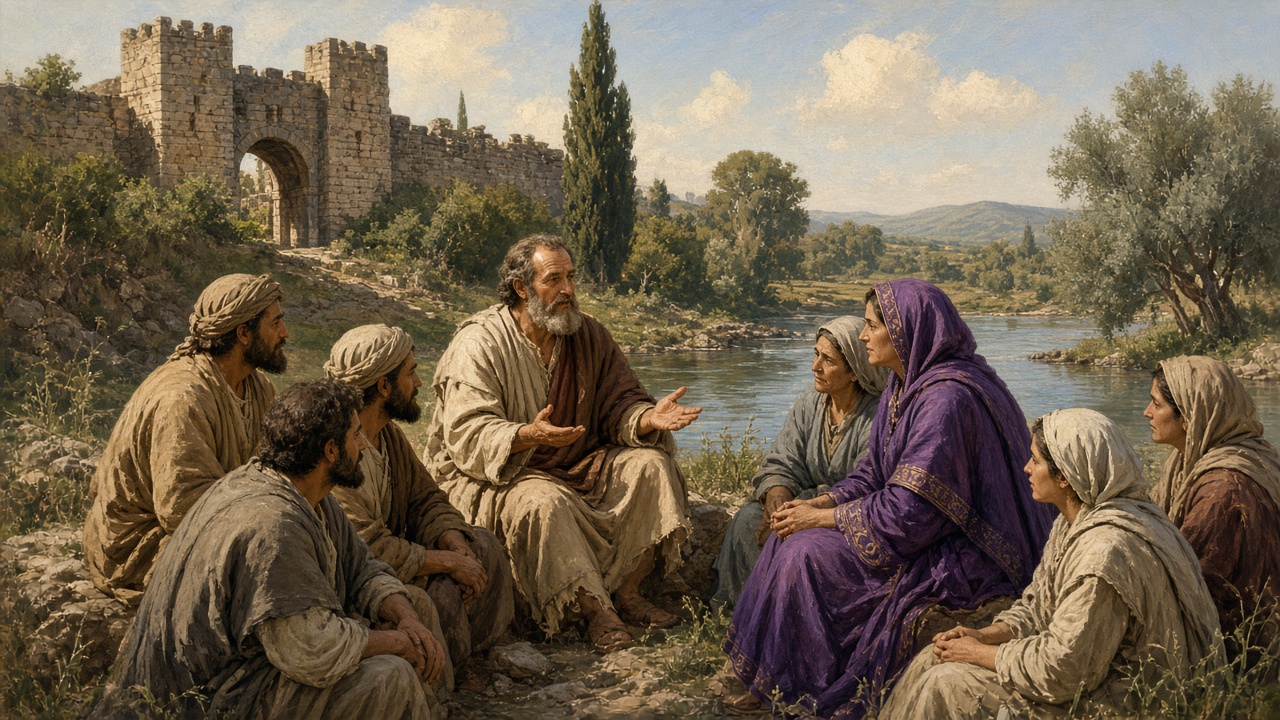
- In the Roman colony of Philippi, Paul and his companions found a customary place of prayer by the river outside the city gate, where women had gathered. Among them was Lydia, a dealer in purple cloth from Thyatira and a worshiper of God; after she and her household were baptized, she persuaded the travelers to stay at her house. Easton's Bible Dictionary (1897) describes her as a proselyte of considerable wealth and as the first person in Europe to embrace Christianity.Sources: the Bible text itself · Lydia
Notes written with AI assistance from open sources (Theographic Bible Metadata, CC BY-SA 4.0; Easton’s Bible Dictionary, public domain) and reviewed before publishing.
Places in this chapter
- Lystra · Today: Tel Lystra · 37.602, 32.338 · verses 1, 2
- Iconium · Today: Konya · 37.872, 32.492 · verse 2
- Jerusalem · 31.777, 35.234 · verse 4
- Asia · 38.400, 28.300 · verse 6
- Galatia · 39.267, 32.983 · verse 6
- Phrygia · 39.000, 31.000 · verse 6
- Bithynia · 40.500, 31.000 · verse 7
- Mysia · 40.000, 28.500 · verses 7, 8
- Troas · Today: Alexandria Troas · 39.752, 26.159 · verses 8, 11
- Greece · 37.972, 23.727 · verse 9
- Macedonia · 41.600, 22.540 · verses 9, 10, 12
- Neapolis · Today: Kavala · 40.935, 24.415 · verse 11
- Samothrace · Today: Samothraki · 40.450, 25.583 · verse 11
- Philippi · 41.012, 24.285 · verse 12
- Thyatira · Today: Akhisar · 38.920, 27.837 · verse 14
Only places identified with high confidence are shown (90% or more according to the scholarly sources compiled by OpenBible). Period map: DARE (Digital Atlas of the Roman Empire), CC BY 4.0; modern map: © OpenStreetMap contributors; places: OpenBible.info (CC BY 4.0).
Credits and license for this translation
Ibibemuwe-Num Iyiki Ifa Ru Dũya
Duya: Ibibemuwe-Num Iyiki Ifa Ru Dũya (New Testament)
copyright © 2024 Wycliffe Bible Translators, Inc.
Language: (Duya)
Translation by: Dũya Development Association
Contributor: SIL Nigeria
This translation is made available to you under the terms of the
Creative Commons Attribution Share-Alike license 4.0.
You have permission to share and redistribute this Bible translation in any format and to make reasonable revisions and adaptations of this translation, provided that:
You include the above copyright and source information.
If you make any changes to the text, you must indicate that you did so in a way that makes it clear that the original licensor is not necessarily endorsing your changes.
If you redistribute this text, you must distribute your contributions under the same license as the original.
Pictures included with Scriptures and other documents on this site are licensed just for use with those Scriptures and documents.
For other uses, please contact the respective copyright owners.
Note that in addition to the rules above, revising and adapting God's Word involves a great responsibility to be true to God's Word. See Revelation 22:18-19.
2025-05-08
Source: http://ebible.org/ldb/ · eBible.org