Genesis 38
Nan kalin Apo Dios · Tap a verse to see its cross-references.
Cha Juda ken Innapona ay Tamar
1Nakwas chi ya ket tinaynan Juda nan et-adna ya inmey ay nakisag-en ken Hira ay iyAdullam. 2Ischi et nan nanab-atana isnan inasawana ay Cananeo ay anak Sua. 3Naliton si asawana ya inmanak is lalaki ay nginadnan Juda is Er. 4Kasin pay naliton ya inmanak kayet is lalaki ya nginadnan nan fafai is Onan. 5Kasin kayet inmanak is lalaki ya nginadnana is Sela. Wad-ay si Juda id Akzib issan naiyanakan Sela.
6Awni ya ket inpaasawan Juda nan yon-a ay anakna ay si Er ken Tamar. 7Ngem ngaag nan okhalin Er ya egay nalaychan si Dios Apo ken siya, isonga inalana. 8Sa et kinwanin Juda ken Onan ay annochin Er, “En ka iyamong nan nailekkasan ay asawan yon-am, ta angnem nan lebfengmo ay angnen ken siya ta womad-ay ka is enwanen-ed nan natey ay yon-am.” 9Ngem ammon Onan ay et khechangna'y fakena enkwa nan sa na wad-ayen, isonga mo iseyepna nan chey ay nailekkasan, iwasitna nan kisitna ta maid ngomachan ay enfalin is anak san yon-ana. 10Nan inangnen Onan et inpasongetna si Dios Apo ya ke na't ay inala akhes siya. 11Ket ay kanan Juda isnan innapona ay Tamar, “Somakhong ka't is afong cha amam ya ad-i ka mangas-asawa engkhana'y maengngan nan anakko ay si Sela.” Siya chi nan kinwanina tay omegyat tay ta ket lang ya mapatey si Sela ay kag isnan yoyon-ana. Sa et sinmaa si Tamar ken cha amana.
12Awni pay ya ket natey nan asawan Juda. Kakwasan nan naliwliwaana, inmey cha ken Hira ay ib-ana ay iyAdullam id Timnat ay mapokpokisan nan karnilona. 13Ket ay wad-ay nan nangifaag ken Tamar ay omey si katokhangana id Timnat ay en mamokis isnan cheycha'y karnilona. 14Ala na't ya kaan isnan panesna ya nensokat, sa na't inap-apan nan kamesna isnan apongotna, ya inmey tinmotokcho isnan pantew nan ili ay omey id Enaim ay malaosan isnan omayan id Timnat. Siya chi tay ammona ay naengngan et nan kasaodna ay si Sela ngem ket ay eg-ay naiyasawa ken siya.
15Idwani, isnan nangil-an Juda ken siya, kanana't mo esa'y asi ay fafai tay naaap-apan nan kamesna. 16Sa et sinmag-en isnan kawadna is kailit nan karsa sa na't kanan, “Ayet! Kaat pay nan kanam?” (Tay eg-ayna inmatonan ay innapona pet siya.)
Ket ay kanan Tamar, “Ngag kay nan ichowam ken sak-en?”
17“At omipaiyali ak ken sik-a is innanak si karching ay talakenko.”
Kinwanin et Tamar, “Siya achi, mo omagtan ka is iigtok ay kag sarchan nan chey karching engkhana'y ipaiyalim.”
18“Ngag kay nan ichowak ay kag na sarcha?” kinwanina.
“Nan sana'y matonmo ay iyoowaymo ya nan sokodmo ay eegnam,” kinwanina. Et siya chi ay inchowana chana ken siya, sa na't inseyep, et naliton si Tamar. 19Sinmaa et si Tamar sa na't kinaan nan inyaap-apna ya kasin nenpanes.
20Idwani, osto'y inpaiyey Juda isnan ib-ana ay si Hira nan chey innanak si karching isnan chey fafai ta sa na't alaen nan cheycha'y insarchana ken siya, ya ket maid inchanan Hira ken siya. 21Sa et nensalodsod isnan cheycha'y lallalaki ischi ay iyEnain ay mangwanin, “Ento pay san asi ay fafai ay entotototokcho isna's ilit si karsa?”
“Ay ke man wad-ay paat asi's fafai isna?” kinwanicha.
22Sa et sinmakhong ken Juda ay mangwanin, “Ya ke maid inchanak ken siya mo! Sa et kanan nan cheycha'y lallalaki ischi en maid kano paat asi ay fafai ischi.”
23“Ngag ngotom ta igtona chachi. Ad-ik laychen ay maang-ango ta isnan takho. Olay ket pinachasko ay mamayad ken siya. Kanak ta fayachak siya, ngem nay met egay ka nakad-an ken siya.”
24Nakwas pay nan tolo ay fowan, ya ket wad-ay nan nangifaag ken Juda ay nangwanin, “Nen-angnen pet is asi nan innapom ay si Tamar, tay nay ya ket aped la maliton.”
Infilin et Juda ay mangwanin, “Ifalayo siya ta mapoowan.”
25Isnan cha maipafal-an Tamar, inpaifaagna ken katokhangana ay mangwanin, “Naliton ak isnan lalaki ay nenkwa isnan naycha. Isin-engmo achi ta ilaem mo sino nan nenkwa isnan naycha ay maton ay oway ya sokod.”
26Inmatonan Juda nan cheycha'y kwana ke na't kanan, “Sak-en pet nan nakafasol. Nalenlenteg siya mo sak-en tay egayko tinongpal nan lebfengko ay angnen ay mangipaasawa isnan anakko ay si Sela ken siya.”
27Isnan inomchanan nan nenkimenan Tamar nadlaw et ay apik nan ilillitona. 28Et isnan cha na omanakan, inpafalan nan esang nan limana, sa et inalan nan enpaan-anak ya tinakedna is sinolid ay enkilat sa na't kanan, “Siya na nan omon-ona ay maiyanak.” 29Nay met achi kasina innenat san limana ya ket ay nan kaapikna et nan nang-ona ay finmala. Sa et kinwanin nan enpaan-anak, “Ke pet kag tona nan ikkam ay pomortot!” Isonga nangadnan is Perez. 30Sa et inmonod ay naiyanak nan kaapikna ay natakchan is enkilat ay sinolid nan limana ya nangadnan is Zera.
Did you know?
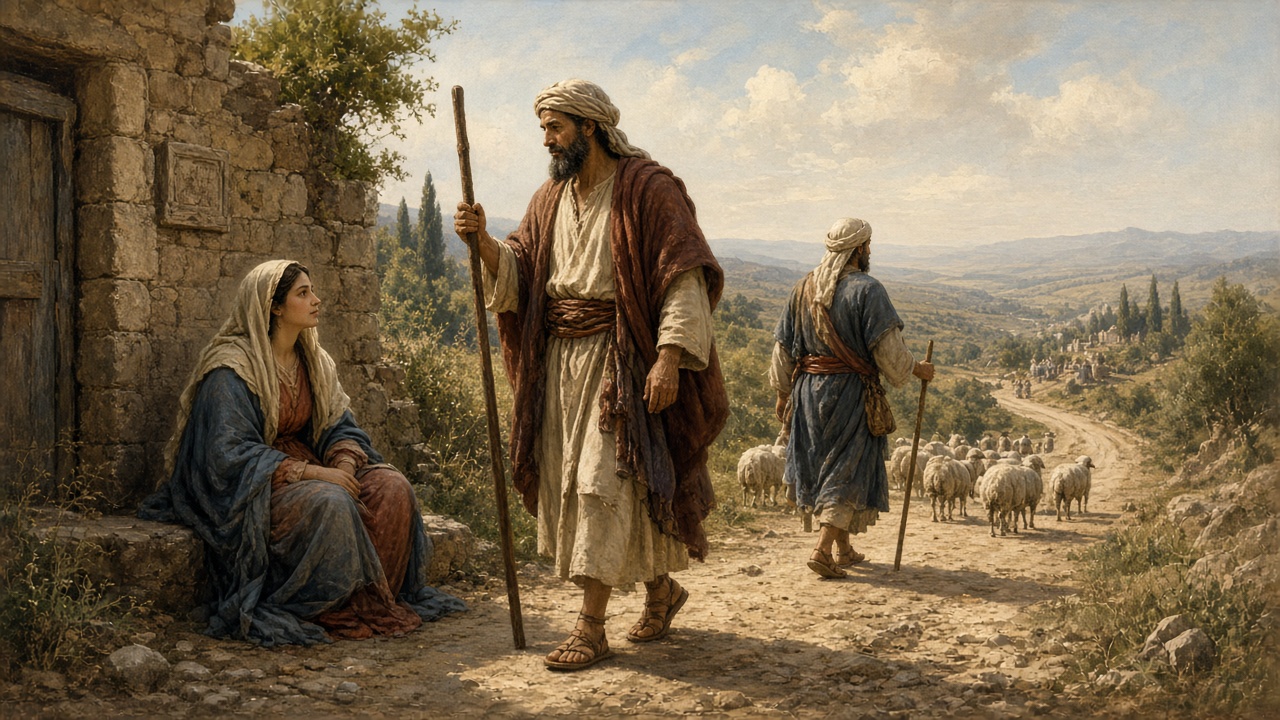
Judah and Tamar
- Soon after Joseph was sold to the Ishmaelites, Judah left his brothers and settled near Hirah, an Adullamite, and married the daughter of Shua, a Canaanite. She bore him Er, Onan, and Shelah; Shelah was born at Chezib, whose name means deceitful and is probably the same place as Achzib.Sources: Judah (patriarch) · Shuah · Chezib · the Bible text itself
- Judah took Tamar as a wife for his firstborn, Er. After Er died, he told Onan to sleep with her, fulfill a brother-in-law's duty, and raise up offspring for Er, but Onan would spill his seed on the ground so the child would not belong to him. Easton's Bible Dictionary (1897) compares that episode with Deuteronomy 25:5 and Matthew 22:24; Onan died before Jacob's family went down to Egypt, and Judah never gave Tamar to Shelah as promised.Sources: Tamar · Onan · the Bible text itself
- After the daughter of Shua died, Judah and his friend Hirah went up to his sheepshearers at Timnah, which Easton's Bible Dictionary (1897) describes as a town of Judah about twenty miles west of Jerusalem. Tamar veiled her face and waited at Enaim, on the way to Timnah—probably Enam, a city in the lowland or Shephelah—and Judah thought she was a prostitute because her face was covered. She later bore twins, and the child who broke out first was named Perez, a name that means breach.Sources: Timnah · Enaim · Pharez · the Bible text itself
Notes written with AI assistance from open sources (Theographic Bible Metadata, CC BY-SA 4.0; Easton’s Bible Dictionary, public domain) and reviewed before publishing.
Credits and license for this translation
Nan kalin Apo Dios
New Testament in Bontok, Central
copyright © 1992 Wycliffe Bible Translators, Inc.
Language: Central Bontok (Bontok, Central)
Translation by: Wycliffe Bible Translators
Contributor: Wycliffe Bible Translators, Inc.
Copyright Information
© 1992, Wycliffe Bible Translators, Inc. All rights reserved.
This translation text is made available to you under the
terms of the Creative Commons License: Attribution-Noncommercial-No Derivative Works.
( http://creativecommons.org/licenses/by-nc-nd/3.0/ )
In addition, you have permission to port the text to different file formats, as long as you
do not change any of the text or punctuation of the Bible.
You may share, copy, distribute, transmit, and extract portions
or quotations from this work, provided that you include the above copyright
information:
You must give Attribution to the work.
You do not sell this work for a profit.
You do not make any derivative works that change any of the actual words or punctuation of the Scriptures.
Permissions beyond the scope of this license may be
available if you contact
us with your request.
The New Testament
in Bontok, Central
© 1992, Wycliffe Bible Translators, Inc. All rights reserved.
This translation is made available to you under the terms of the
Creative Commons Attribution-Noncommercial-No Derivatives license 4.0.
You may share and redistribute this Bible translation or extracts from it in any format, provided that:
You include the above copyright and source information.
You do not sell this work for a profit.
You do not change any of the words or punctuation of the Scriptures.
Pictures included with Scriptures and other documents on this site are licensed just for use with those Scriptures and documents.
For other uses, please contact the respective copyright owners.
2015-03-17
Source: http://ebible.org/lbk/ · eBible.org