Genesis 32
Nan kalin Apo Dios · Tap a verse to see its cross-references.
Nan Nensagkhanaan Jacob isnan Manab-atana ken Esau
1Isnan nangitot-oloyan Jacob isnan faatna, wad-ay cha et nan kaangheangheles Apo Dios ay nanab-at ken siya. 2Sa na't kanan issan nangil-ana ken chaicha en, “Siya pet na nan kampon Apo Dios!” Et siya chi ay nginadnana chi is Mahanaim.
3Idwani infaan Jacob nan takhona ay inpaon-onana ken Esau ay yon-ana id Edom ay makwani akhes en Seir. 4Sa na't kanan ken chaicha, “Siya na nan kananyo isnan yon-ak, ‘Si Jacob ay ab-afaa ay faam, et laychena ay ipaammo ken sik-a ay apona ay Esau, ay inmannong ay nakitetee siya ken Laban ya nay inawniawnina nan tomoliyana engkhana idwani. 5Wad-ay cha nan fakana, dangki, karnilo, karching ya faana akhes. Et infaana chakami ay omali ay mangila ken sik-a apo, ta asop ya malaychan ka ken siya.’ ”
6Isnan tinmoliyan san cheycha'y finaan Jacob, kinwanicha, “Inmey kami ken Esau ay yon-am ya nay wad-ay et sinan chalan ay omal-ali ay manab-at ken sik-a. Fowegna nan epat khasot ay lallalaki.” 7Chadlos inmegyat et si Jacob ya nadchanakhan. Ala na't ya khedwa isnan takhona is chwan pamoweg. Siya akhes isnan cheycha'y enkik-iwiyena. 8Tay kanana is semekna ay, “Mo choklosen Esau nan inmona ay sinpamoweg at mabfalin nget ay makalayaw nan esang.”
9Nenlowalo et si Jacob ay nangwanin, “Apo ay Dios ikit ay Abraham ya si ama ay Isaac, chengngem koma sak-en. Infaagmo Dios Apo ay somakhong ak isnan ilik ya papangafongko, et angnem nan am-in ay somyaan nan fiyagko. 10Ad-i ak maikali isnan am-in ay inpailam ay kinagkhawis ya kinatalekmo ken sak-en ay faam. Khinchangko nan wanga ay Jordan ay aped ensosokod, ay maid paat ineegnak. Ya nay idwani ay somakhong ak et wad-ay nan naycha'y chwan pamoweg. 11Kedchawek ta omisalak ka isnan yon-ak ay si Esau. Omegyat ak tay ta ket lang ya omali ay chomoklos ya pomatey ken chakami am-in, olay nan in-a ya nan an-akcha. 12Sesemkem koma nan inkalim ay at omipagkhawis ka. Inkalim ay paangsanem nan cheycha'y wanen-edko ay kag nan kaangsan nan ofod is kailit nan fayfay ay maid makafib-ilang.”
13Inomyan si Jacob ischi, ya isnan kawaksana, nenpili isnan cheycha'y talakena is ilayadna isnan yon-ana: 14chwan khasot ay fai ay karching ya chwan poo ay laki; chwan khasot ay fai ay karnilo ya chwan poo ay laki; 15tolon poo ay enpasoso ay kamelio ya nan innanakcha; epat poo ay fai ay faka ya sinpoo ay laki; ya chwan poo ay fai ay dangki ya sinpoo ay laki. 16Sa na't tinketinken nan enkik-iwiyena ya sa na't inkakcheng isnan faana ay waschin menfiyang isnan sin-es-ang ay pangfon. Kinwanina ken chaicha, “Ipangpangoyo. Ilaenyo magtek ta en-inadchawi nan waschin esa'y pangfon.” 17Infilina isnan namangpango ay faana, “Mo abten nan yon-ak ay si Esau sik-a ya salodsochena mo sino nan apom, mo ento nan omayam, ya mo sino nan nenkwa isnan naycha'y talaken ay cham okochen, 18et siya na nan masapol ay isfatmo: ‘Kwan nan faam ay si Jacob chana. Inpaiyalina chana ay ilayadna ken apona ay Esau. Wad-ay siya akhes ay cha omon-onod ken chakami.’ ” 19Siya na akhes nan infilina isnan mikadwa, mikatlo, ya nan am-in kayet ay faa ay nangipakarkhowana isnan cheycha'y enkik-iwiyena. Kinwanina, “Siya na nan masapol ay ifaagyo am-in ken Esau mo abtenyo. 20Kananyo kayet, ‘Omon-onod ken chakami si Jacob ay faam.’ ” Isnan semek Jacob kankanana, “Et asop nget ya maawisko si yon-ak isnan naycha'y ilayadko ay ipaon-onak ken siya. Et isnan manab-atak ken siya asop ya pomakawan.” 21Adi kad inpaiyon-onana nan ilayadna ay cheycha, ngem siya, inomyan is kakampona isnan chey ay lafi.
Nan Nakidpapan Jacob id Peniel
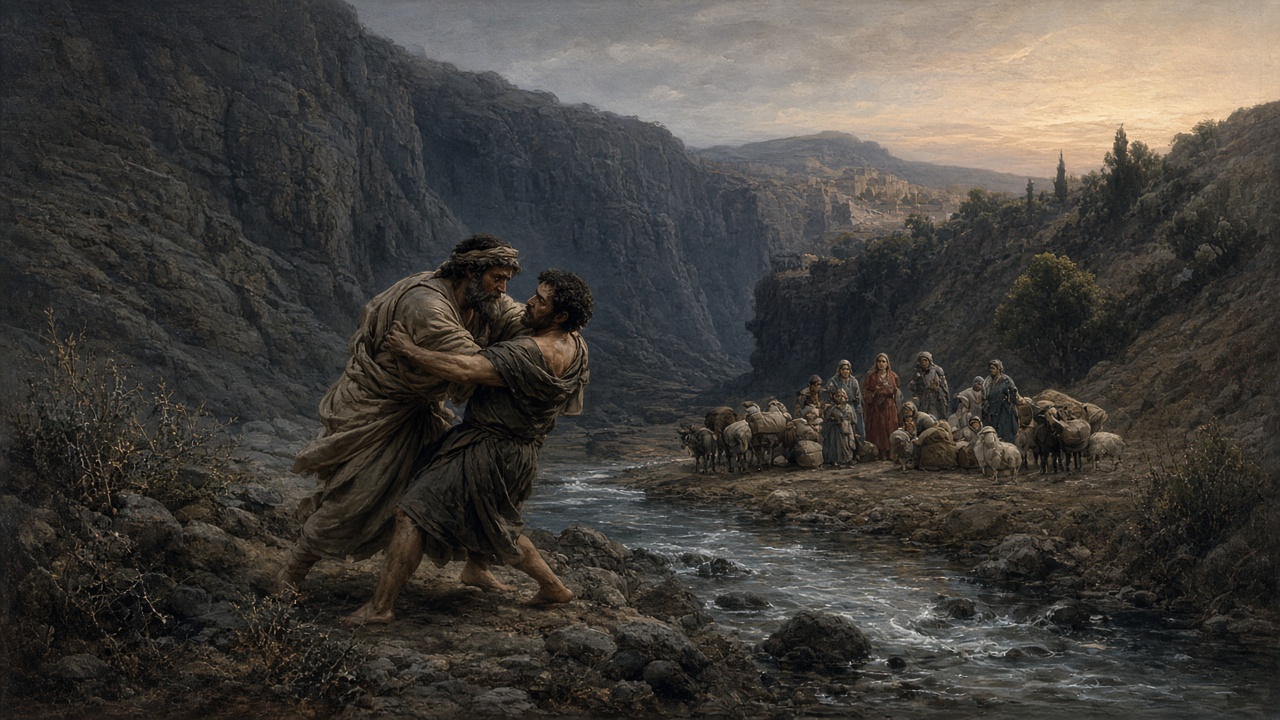
22Isnan siya kannay chi ay lafi finmangon si Jacob ya intakina nan chwa'y asawana, nan chwa'y fabfafai ay faa ay inasawana ya nan cheycha'y sinpoo ya esang ay an-akna, et khinchangcha nan wanga ay Jabbok. 23Osto'y khinomchang cha, inpagchangna akhes nan am-in ay kwana. 24Sa et nakhayad siya ay es-esang is chemangna.
Ya ket ay inmali nan esa'y lalaki ay nakidpap ken siya engkhana ay nganngani ay napat-a. 25Isnan nangil-an nan lalaki ay ad-i makaafak siya ken Jacob, ala na't ya tampak isnan tip-ay Jacob et nenkabsiw nan pangom-oman nan ingit si tip-ay. 26Kinwanin nan lalaki, “Omipalofos ka tay nay cha et mapat-a.”
“Ad-ik palofosen sik-a engkhana ay bomindisyon ka,” kinwanin Jacob.
27“Ngag man nan ngachanmo?” sinalodsod san lalaki.
“Jacob,” kinwanina.
28Kinwanin et nan lalaki, “Faken et Jacob nan ngachanmo, tay nakidpakidpap ka ken Apo Dios ya isnan takho, et nay nangafak ka, Israel et nan ngachanmo.”
29“Ibfakham ed nan ngachanmo,” kinwanin Jacob.
Sa na't kanan, “Ay kem masapol salodsochen nan ngachanko?” Sa na't binindisyonan si Jacob ischi kannay.
30Sa et kinwanin Jacob, “Inilak si Apo Dios ay sangosango ya nay khechangna ay matatakho ak pet kayet.” Siya na nan khotokna ay nangipangadnana ischi is Peniel. 31Cha mamatok nan akhew issan cha komaanan Jacob id Peniel et nen-ak-akilla tay naikabsiw nan pangom-oman nan tip-ayna. 32Isonga engkhana idwani ad-i sibfan nan cheycha'y wanen-ed Israel nan fekhas ay wad-ay isnan pangom-oman nan ingit si tip-ay, tay siya chi nan natampak ken Jacob.
Did you know?
At the Jabbok, on the Way to Esau
- Mahanaim means “two camps.” Jacob gave that name to the place near the Jabbok, beyond the Jordan, when the angels of God met him and he said, “This is the camp of God.” There he also divided his people, flocks, herds, and camels into two camps, hoping one might escape if Esau attacked the other.Sources: Mahanaim · the Bible text itself
- The Jabbok, whose name is explained as “a pouring out, or a wrestling,” is a stream east of the Jordan. It joins the Jordan about midway between the Sea of Galilee and the Dead Sea, after a course of about 65 miles through a wild, deep ravine. At its ford Jacob sent his two wives, two maidservants, eleven sons, and all he owned across, then remained alone and wrestled with a man until daybreak.Sources: Jabbok · the Bible text itself
- Jacob sent messengers to Esau in the land of Seir, the country of Edom, calling him lord and himself a servant. Seir is a mountainous region along the east side of the Arabah, from the southeastern end of the Dead Sea toward Akabah, the eastern branch of the Red Sea; the Edomites occupied it, and it was allotted to Esau’s descendants. Esau, the firstborn twin and a hunter, had sold his birthright for red lentil stew and was also called Edom, “red,” while Jacob—whose name means “one who follows on another’s heels,” or “supplanter”—had conspired with his mother to deceive Isaac.Sources: the Bible text itself · Seir · Esau (Edom) · Jacob (Israel)
Notes written with AI assistance from open sources (Theographic Bible Metadata, CC BY-SA 4.0; Easton’s Bible Dictionary, public domain) and reviewed before publishing.
Places in this chapter
- Edom · 30.746, 35.604 · verse 3
- Jordan · Today: Jordan River · 31.761, 35.558 · verse 10
- Jabbok · Today: Zarqa River · 32.115, 35.543 · verse 22
Only places identified with high confidence are shown (90% or more according to the scholarly sources compiled by OpenBible). Period map: DARE (Digital Atlas of the Roman Empire), CC BY 4.0; modern map: © OpenStreetMap contributors; places: OpenBible.info (CC BY 4.0).
Credits and license for this translation
Nan kalin Apo Dios
New Testament in Bontok, Central
copyright © 1992 Wycliffe Bible Translators, Inc.
Language: Central Bontok (Bontok, Central)
Translation by: Wycliffe Bible Translators
Contributor: Wycliffe Bible Translators, Inc.
Copyright Information
© 1992, Wycliffe Bible Translators, Inc. All rights reserved.
This translation text is made available to you under the
terms of the Creative Commons License: Attribution-Noncommercial-No Derivative Works.
( http://creativecommons.org/licenses/by-nc-nd/3.0/ )
In addition, you have permission to port the text to different file formats, as long as you
do not change any of the text or punctuation of the Bible.
You may share, copy, distribute, transmit, and extract portions
or quotations from this work, provided that you include the above copyright
information:
You must give Attribution to the work.
You do not sell this work for a profit.
You do not make any derivative works that change any of the actual words or punctuation of the Scriptures.
Permissions beyond the scope of this license may be
available if you contact
us with your request.
The New Testament
in Bontok, Central
© 1992, Wycliffe Bible Translators, Inc. All rights reserved.
This translation is made available to you under the terms of the
Creative Commons Attribution-Noncommercial-No Derivatives license 4.0.
You may share and redistribute this Bible translation or extracts from it in any format, provided that:
You include the above copyright and source information.
You do not sell this work for a profit.
You do not change any of the words or punctuation of the Scriptures.
Pictures included with Scriptures and other documents on this site are licensed just for use with those Scriptures and documents.
For other uses, please contact the respective copyright owners.
2015-03-17
Source: http://ebible.org/lbk/ · eBible.org