Genesis 18
Nan kalin Apo Dios · Tap a verse to see its cross-references.
Nan Nangikaliyan Apo Dios ay Maiyanak si Isaac
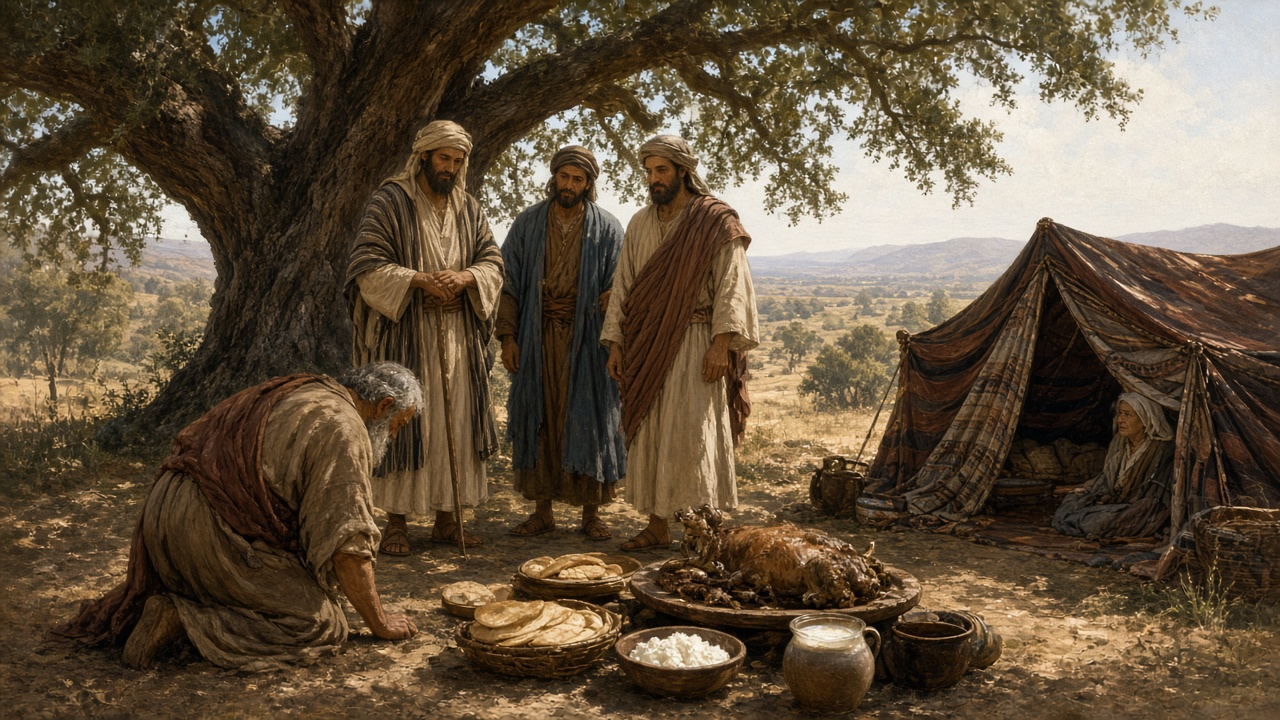
1Awni ya ket nenpaila si Dios Apo ken Abraham isnan kawadna isnan kag alimmos ay kaew Mamre, isnan osto ay tomotokchowana isnan pantew nan afongna ay torcha isnan misoyaw ay kachad-amaan nan atong. 2Isnan nenmonaangana, ya ke na't inila nan tolo ay lallalaki ay tinmatakcheg isnan adchawi is akit. Ala na't ya ligwat ya tagtag ay en nanab-at ken chaicha, sa et nenfalintomeng ay nentowad isnan sakhangcha. 3Ke na't kinwanin, “Apo, pangngaasiyo ta ad-iyo laosan nan afongko, tay naay ak ay mangipachag-os ken chakayo. 4Mo mabfalin ta maiyali nan chanom ay iyowasyo isnan sikiyo. Omilleng kayo isnan sanacha'y poon si kaew. 5Sak et omiyali is akit ay tinapay ta way ifikasyo ay mangitoloy isnan faatyo. Khawis tay chinmag-os kayo”.
Sa cha't kanan, “Siya man.”
6Alan et Abraham ya sekhep is kaafongna ay torcha, sa na't kanan ken Sara, “Kamowem! Omala ka's tolo ay labfa ay kakhawisan ay alina ta omoto ka's tinapay.” 7Sa et natanagtag is kakawad nan cheycha'y enkik-iwiyena, sa et pinmili isnan enlaplapog ay innanak si faka, et inchowana isnan cheycha'y faana ay nangikakamo ay nangisakhana ay nangoto. 8Inmala si Abraham is naipapakheeng ay khatas, khatas ya watwat, sa na't inyey isnan cheycha'y mangilina is kapoon nan kaew, et inpasangona ken chaicha. Sa et naitatakcho ta cha na ikhaowan chaicha. 9Sa cha't kanan, “Ento kay si Sara ay asawam?”
“Wad-ay is afong,” kinwanina.
10Kinwanin et nan esang ken chaicha, “At somakhong ak ay somakhong isnan siya na ay timpo is omali ay tawen, et omanak si asawam ay Sara is lalaki.”
Idwani, wad-ay si Sara is kachokogna is kapantew nan torcha ay afong ay mamannge ken chaicha. 11Chadlos nalakay cha Abraham ay sin-asawa ya tinomke et nan kachawyan Sara. 12Isonga naango siya isnan semekna ay mangwanin, “Idwani ay nalakalakay kami't ay sin-asawa ya maid et kachawyanko, ay kek ngen kasin khanasen?”
13Sa et kanan Dios Apo ken Abraham, “En man naango si Sara ay nangwanin, ‘Ay tet-ewa ngen ay sak omanak si apchas ak et nalakay?’ 14Ay ke way ad-i mabfalin ay angnen Dios Apo? Kag sinan kinwanik ay at ensakhong ak isnan siya na ay timpo is omali ay tawen, et sa omanak si Sara is lalaki.”
15Idwani, tay inmegyat si Sara, nen-engag ay mangwanin, “Ay ke ak nen-ango?”
“Wen, nen-ango ka,” kinwanin nan mangili.
Nan Nangiseg-angan Abraham isnan Ili ay Sodoma ken Apo Dios
16Naligwat et nan cheycha'y lallalaki ay komaan, sa cha't sinakhang is apet Sodoma. Naifoweg si Abraham ta ipangona chaicha isnan chalancha. 17Sa et kanan Dios Apo is semekna, “Ad-ik koma itafon ken Abraham nan sinmekko ay angnen. 18Tay at enfalin nan wanen-edna is chakchakowag ya mafikas ay ili, ya maichalan ken siya et sak bindisyonan nan am-in ay omili isnan olay entona ay ili isnan lofong. 19Ya sak et pinili siya ta sa na ifilin isnan an-ak ya isnan wanen-edna ta pomati cha ya angnencha nan khawis ya nalenteg. Mo angnencha na, at angnek ken chaicha am-in nan inkalik ken siya.”
20Sa et kinwanin Dios Apo ken Abraham, “Chad-ama nan cha maipabfasolan nan Sodoma ya Gomorra. Chad-ama nan fasolcha. 21Pomanad ak ta ilaek mo tet-ewa paymo ad-i nan cha cha maipabfasolan ay chak chengngen. Laychek ay ammowen.”
22Adi kad nenchadchawes nan chwa ay lalaki id Sodoma, ngem sisya si Dios Apo ay nanatakcho ken Abraham. 23Sa et sinmag-en si Abraham ken Apo Dios ay nangwanin, “Ay kem tet-ewa sa itapi ay mamakawas isnan cheycha'y nalenteg isnan nakafasol? 24Ngag kay mo wad-ay liman poo ay nalenteg isnan chey ay ili, at ngen pakawasem kayet? Ay kem ad-i isalakan nan ili ta maikasiw nan cheycha'y liman poo? 25Ad-i mabfalin ay itapim ay mamatey isnan cheycha'y nalenteg isnan nakafasol. Ad-ik patiyen ay angnem chi, tay mo siya sa nan angnem et pay en-iso cha ay machosa. Ammok ay ad-im angnen chi, tay sik-a ay mangokom isnan am-in ay lofong et nalenteg yangkhay nan angnem.”
26Sinmongfat si Dios Apo ay nangwanin, “Mo ilaek ya wad-ay id Sodoma nan liman poo ay nalenteg ay takho, et isalakak am-in nan chey ay ili khapo ken chaicha.”
27Kinwanin et kasin Abraham, “Asop achi ya ad-im ngaakhen nan menpoopootak ken sik-a Apo. Tay takho ak yangkhay ya maid kalentekhak ay cha enkak-ali si isyangkhay ken sik-a. 28Ngem mo kay nget wad-ay epat poo ya lima ay takho's nalenteg at ngen sam pakawasen kayet, tay kolang si lima?”
“Ad-ik pakawasen nan ili mo way ilaek is epat poo ya lima ay takho ay nalenteg,” kinwanin Apo Dios.
29Kinwanin kasin Abraham, “Mo kay epat poo?”
“Ad-ik pakawasen mo wad-ay epat poo cha.”
30Kinwanin kayet Abraham, “Asop ya ad-i ka somonget Apo, isnan kedchawek kasin. Mo pay way tolon poo yangkhay?”
“Ad-ik pakawasen mo way tolon poo ischi,” insongfat Apo Dios.
31Sa et kanan Abraham, “Pangngaasim Apo ta ad-im law-en nan kinatoledko ay enkechakechaw. Mo pay way chwan poo yangkhay is mad-anam?”
“Ad-ik pakawasen sa ay ili mo wad-ay chwan poo is mad-anak,” kinwanin Apo Dios.
32Kinwanin kayet Abraham, “Pangngaasim Apo ta ad-i ka somonget. Siya et na nan omochi ay kedchawek. Mo pay sinpoo yangkhay nan mad-anan?”
Kinwanin nan Apo, “Ad-ik pakawasen nan chey ili mo wad-ay sinpoo.” 33Kakwasan nan nakikaliyan Dios Apo ken siya, kinmaan, et sinmaa akhes si Abraham.
Did you know?
Visitors at Mamre and a Plea for Sodom
- In Genesis 18, the LORD appeared to Abraham by the Oaks of Mamre in the heat of the day, while Abraham sat at the entrance of his tent. Mamre was an Amorite chief in alliance with Abraham. Abraham ran to meet three men, bowed to the ground, offered them water for their feet and rest under the tree, and then set before them bread, a tender and choice calf, curds, and milk.Sources: the Bible text itself · Mamre
- Sarah, Abraham’s wife, is given the sense “Princess” in Easton's Bible Dictionary (1897), which says the name was given when it was announced that she would be the mother of the promised child. In Genesis 18 the LORD said he would return in about a year and Sarah would have a son, though both were already old and she had passed the age of childbearing. She laughed to herself and, because she was afraid, denied that she had laughed.Sources: Sarah · the Bible text itself
- Sodom, a city in the vale of Siddim, and Gomorrah, one of the five cities of that plain, are named together in Genesis 18 because of the great outcry against their grievous sin. Easton's Bible Dictionary (1897) says the cities of that plain probably stood close together near the northern end of what is now the Dead Sea, and explains Sodom and Gomorrah as “Burning; the walled” and “Submersion.” Two of the men went toward Sodom, while Abraham stayed and asked the LORD to spare the city for the sake of the righteous, lowering the number from fifty to ten.Sources: Sodom · Gomorrah · the Bible text itself
Notes written with AI assistance from open sources (Theographic Bible Metadata, CC BY-SA 4.0; Easton’s Bible Dictionary, public domain) and reviewed before publishing.
Credits and license for this translation
Nan kalin Apo Dios
New Testament in Bontok, Central
copyright © 1992 Wycliffe Bible Translators, Inc.
Language: Central Bontok (Bontok, Central)
Translation by: Wycliffe Bible Translators
Contributor: Wycliffe Bible Translators, Inc.
Copyright Information
© 1992, Wycliffe Bible Translators, Inc. All rights reserved.
This translation text is made available to you under the
terms of the Creative Commons License: Attribution-Noncommercial-No Derivative Works.
( http://creativecommons.org/licenses/by-nc-nd/3.0/ )
In addition, you have permission to port the text to different file formats, as long as you
do not change any of the text or punctuation of the Bible.
You may share, copy, distribute, transmit, and extract portions
or quotations from this work, provided that you include the above copyright
information:
You must give Attribution to the work.
You do not sell this work for a profit.
You do not make any derivative works that change any of the actual words or punctuation of the Scriptures.
Permissions beyond the scope of this license may be
available if you contact
us with your request.
The New Testament
in Bontok, Central
© 1992, Wycliffe Bible Translators, Inc. All rights reserved.
This translation is made available to you under the terms of the
Creative Commons Attribution-Noncommercial-No Derivatives license 4.0.
You may share and redistribute this Bible translation or extracts from it in any format, provided that:
You include the above copyright and source information.
You do not sell this work for a profit.
You do not change any of the words or punctuation of the Scriptures.
Pictures included with Scriptures and other documents on this site are licensed just for use with those Scriptures and documents.
For other uses, please contact the respective copyright owners.
2015-03-17
Source: http://ebible.org/lbk/ · eBible.org