Genesis 10
Nan kalin Apo Dios · Tap a verse to see its cross-references.
Nan Wanen-ed nan An-ak Noe
1Siya chana nan katontonan nan wanen-ed nan lallalaki ay an-ak Noe ay cha Sem, Ham ya si Jafet. Kakwasan nan lifog winad-aycha nan an-akcha ay lallalaki.
2Naaycha nan lallalaki ay an-ak Jafet: cha Gomer, Magog, Madai, Javan, Tubal, Mesec ya Tiras. Chaicha nan ikik-it nan cheycha'y nangingachan isnan ngadngachancha. 3Nan wanen-ed Gomer et chaicha nan takho id Askenaz, Rifat ya Togarma. 4Nan wanen-ed Javan et chaicha nan takho id Elisa, Tarsis, Cyprus ya Rodes. 5Chaicha nan ikik-it nan cheycha'y entetee isnan kailit nan fayfay. Adi kad siya am-in chachi nan wanen-ed Jafet ay wad-ay nan waschin cha pangafong, tribo, ya kali, ya naiwalas cha ay nentee isnan teketeken ay lota.
6Idwani, naaycha akhes nan lallalaki ay an-ak Ham: cha Cus, Egipto, Put ya Canaan. Siya chana akhes nan ikik-it nan cheycha'y nangingachan isnan ngadngachancha. 7Nan wanen-ed Cus et chaicha nan takho id Seba, Havila, Sabta, Raama ya Sabteca. Nan wanen-ed Raama et chaicha nan takho id Seba ya Dedan. 8Wad-ay nan anak Cus ay lalaki ay nenngachan si Nimrod. Siya nan kaoonaan ay kafibfikasan ay takho isnan lofong. 9Nenfalin siya ay nalaing ay omaanop khapo isnan fachang Dios Apo. Siya nan khotok nan mangmangwaniyan nan takho, “Khab-en koma Dios Apo sik-a ay nalaing ay omaanop ay kag ken Nimrod!” 10Nan inmona ay nen-ap-apowana et nan ili ay Babel, Erek ya Akkad. Siya chana nan sakop nan ili ay Babilonia. 11Nalpo siya ischi sa et nenpaAsiria ay nangab-ana isnan ili ay Nineve, Rehobot-ir, Cala 12ya Resen, ay wad-ay isnan nenfet-akan nan Nineve ya nan wadwad-ay ay ili ay Cala.
13Nan akhes wanen-ed Egipto et chaicha nan takho id Lydia, Anam, Lehab, Naftu, 14Patros, Caslu ya Caftor ay nalpowan nan Filisteo.
15Nan an-ak Canaan ay lallalaki et si Sidon ay inaona ya si Het. Siya chana nan ikik-it nan cheycha'y nangingachan isnan ngadngachancha. 16Si Canaan kayet nan ikit nan cheycha'y makwanin Jebuseo, Amorreo, Gergeseo, 17Heveo, Arkeo, Sineo, 18Arvadeo, Zemareo ya nan cheycha'y Hamateo. Siya chana nan natkenatken ay tribo ay nalpo ken Canaan ay awni ya naiwalas 19engkhana ay nan fedcheng nan ilicha et mailapo id Sidon ay wad-ay isnan amyanan engkhana id Gerar ay sag-en nan Gaza ay wad-ay isnan ambagatan, sa et isnan apet falaan si akhew ay maitapi nan Sodoma, Gomorra, Adma ya Zeboiim, engkhana isnan maisasag-en ay ili ay Lasa. 20Siya am-in chachi nan wanen-ed Ham, ay wad-ay nan waschin cha pangafong, tribo ya kali, ya naiwalas cha ay nentee isnan teketeken ay lota.
21Si akhes Sem ay yon-an Jafet et siya nan ikit nan am-in ay Hebreo. 22Naaycha nan lallalaki ay an-ak Sem: Elam, Assur, Arpaksad, Lud ya Aram. Siya chana nan ikik-it nan cheycha'y nangingachan isnan ngadngachancha. 23Nan wanen-ed Aram et chaicha nan takho id Uz, Hul, Geter, ya Mesek. 24Si Arpaksad nan aman Sela, ya nan anak Sela et si Eber. 25Chwa cha nan an-ak Eber. Esang nan nangachanan is Peleg mo ke tay nasisyasisyan cha nan takho issan timpona. Nan naipangachan isnan akhina et Joktan. 26Nan wanen-ed Joktan et chaicha nan takho id Almodad, Selef, Hasarmavet, Jera, 27Hadoram, Uzal, Dikla, 28Obal, Abimael, Seba, 29Ofir, Havila, ya Jobab. Nalpo am-in chana ken Joktan. 30Nan ilicha et sakopena id Mesa engkhana id Sefar ay wad-ay isnan nafib-ilikhana ay apet falaan si akhew. 31Siya am-in chana nan wanen-ed Sem, ay wad-ay nan waschin cha pangafong, tribo ya kali, ya naiwalas cha ay nentee isnan teketeken ay lota.
32Siya am-in chana nan katontonan nan wanen-ed Noe ay nenfalin ay kailiili. Am-in ay takho ay nawad-ay ya naiwalas isnan lofong kakwasan nan lifog et naiwaned cha am-in isnan an-ak Noe.
Did you know?
The Nations after the Flood
- Genesis 10 follows the families of Noah’s three sons, Shem, Ham, and Japheth, and says that after the flood the nations of the earth spread out from them, grouped by clans, languages, lands, and nations. Japheth’s line is linked with peoples of eastern Europe and northern Asia: Gomer is generally regarded as an ancestor of the Celts and the Cimmerians, who in early times settled north of the Black Sea, and Javan became the Hebrew name that the peoples of the East used for the Greeks, especially those of Ionia.Sources: the Bible text itself · Japheth · Gomer (son of Japheth) · Javan
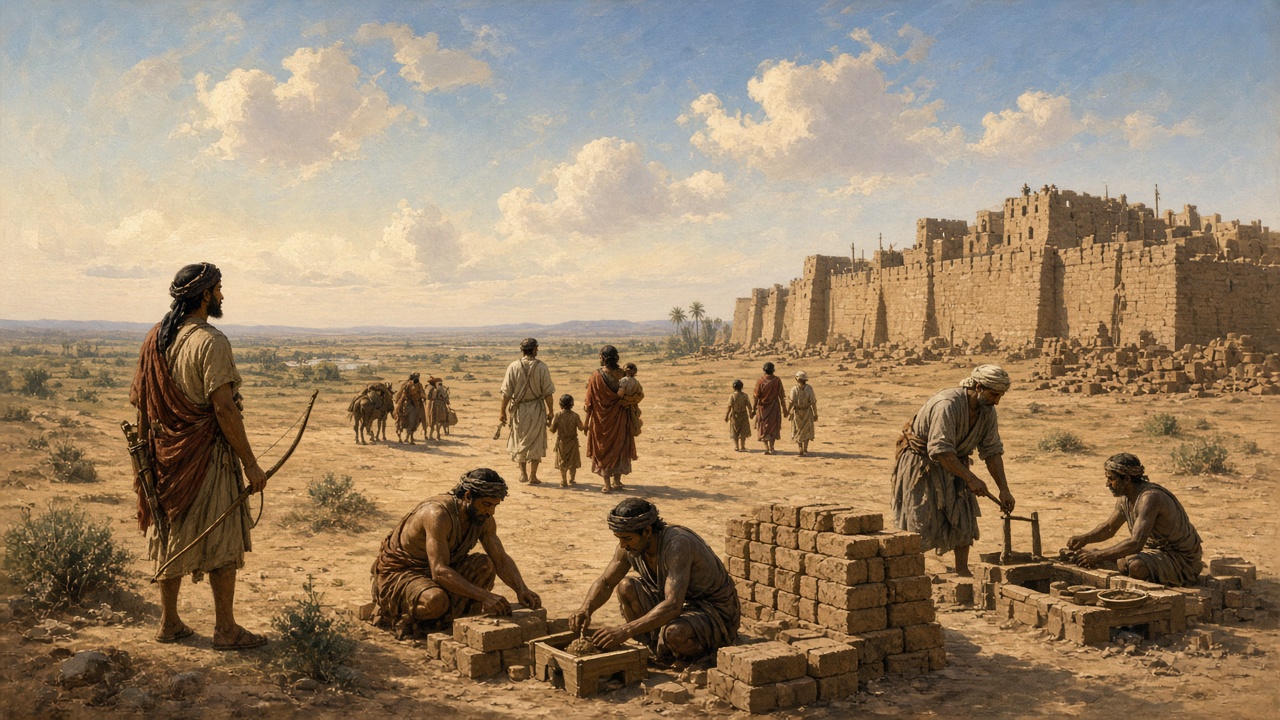
- Cush, a son of Ham, was the father of Nimrod, remembered as a mighty hunter before the Lord, whose kingdom began at Babylon, Erech, Accad, and Calneh in the land of Shinar, probably Babylonia or southern Mesopotamia. From that land he went into Assyria and built Nineveh, Rehoboth-Ir, Calah, and Resen; Calah’s site is probably the Nimrud ruins on the left bank of the Tigris.Sources: the Bible text itself · Shinar · Nineveh · Calah
- Mizraim, the dual form of a Hebrew word for a mound or fortress, may point to Upper and Lower Egypt and is the name the Hebrews usually gave that country; Arabic still calls it Muzr. Shem is called the older brother of Japheth and the forefather of all the sons of Eber, regarded as the founder of the Hebrew people, while an Arab tradition remembers Eber’s son Joktan, Kahtan in Arabic, as the ancestor of tribes of central and southern Arabia.Sources: the Bible text itself · Mizraim · Eber (Heber) · Joktan
Notes written with AI assistance from open sources (Theographic Bible Metadata, CC BY-SA 4.0; Easton’s Bible Dictionary, public domain) and reviewed before publishing.
Places in this chapter
- Erech · Today: Uruk · 31.322, 45.636 · verse 10
- Shinar · Today: Babylonia · 32.543, 44.422 · verse 10
- Assyria · 36.359, 43.153 · verse 11
- Calah · Today: Nimrud · 36.098, 43.329 · verses 11, 12
- Nineveh · 36.359, 43.153 · verses 11, 12
- Canaan · 32.767, 35.333 · verse 19
- Gaza · Today: Tell Harube · 31.504, 34.464 · verse 19
- Sidon · Today: Sandikli archaeological site in Sidon · 33.561, 35.372 · verse 19
Only places identified with high confidence are shown (90% or more according to the scholarly sources compiled by OpenBible). Period map: DARE (Digital Atlas of the Roman Empire), CC BY 4.0; modern map: © OpenStreetMap contributors; places: OpenBible.info (CC BY 4.0).
Credits and license for this translation
Nan kalin Apo Dios
New Testament in Bontok, Central
copyright © 1992 Wycliffe Bible Translators, Inc.
Language: Central Bontok (Bontok, Central)
Translation by: Wycliffe Bible Translators
Contributor: Wycliffe Bible Translators, Inc.
Copyright Information
© 1992, Wycliffe Bible Translators, Inc. All rights reserved.
This translation text is made available to you under the
terms of the Creative Commons License: Attribution-Noncommercial-No Derivative Works.
( http://creativecommons.org/licenses/by-nc-nd/3.0/ )
In addition, you have permission to port the text to different file formats, as long as you
do not change any of the text or punctuation of the Bible.
You may share, copy, distribute, transmit, and extract portions
or quotations from this work, provided that you include the above copyright
information:
You must give Attribution to the work.
You do not sell this work for a profit.
You do not make any derivative works that change any of the actual words or punctuation of the Scriptures.
Permissions beyond the scope of this license may be
available if you contact
us with your request.
The New Testament
in Bontok, Central
© 1992, Wycliffe Bible Translators, Inc. All rights reserved.
This translation is made available to you under the terms of the
Creative Commons Attribution-Noncommercial-No Derivatives license 4.0.
You may share and redistribute this Bible translation or extracts from it in any format, provided that:
You include the above copyright and source information.
You do not sell this work for a profit.
You do not change any of the words or punctuation of the Scriptures.
Pictures included with Scriptures and other documents on this site are licensed just for use with those Scriptures and documents.
For other uses, please contact the respective copyright owners.
2015-03-17
Source: http://ebible.org/lbk/ · eBible.org