Genesis 29
Uumeleembaa Buŋa Tere Soomoŋgo Gbilia · Tap a verse to see its cross-references.
Jeikobnoŋ Labambaa mirinoŋ keuro.
1Jeikobnoŋ kaeŋ jeŋ mesaoŋ kana toroqeŋ kema weeŋ koukoutaa kanageso yoŋoo balonoŋ keuro. 2Kanoŋ keuma baloŋ korianoŋ apu roŋ moŋ iiro. Miri toya yoŋonoŋ lama tuuŋgia uŋuama iikanoŋ apu oŋoma laligogi. Kambaŋ kanoŋ apu roŋ kawaa kosianoŋ lama tuuŋ karooŋ egi apu roŋ qaa ootanoŋ jamo somata ii mende metaŋgi. 3Lama galeŋ yoŋonoŋ wala lama tuuŋgia kuuya iikanoŋ meŋ kululuuŋ oŋoma jamo ii apu roŋ qaa ootanoŋga gbililiŋgogi kenogo lamaurugia apu oŋoŋgi negi jamo ii mombo duŋanoŋ komakegi.
4Jeikobnoŋ lama galeŋ ii kokaeŋ qisiŋ oŋono: “Eja alauruna, oŋo dakaya?” Qisiŋ oŋono “Nono Harambaajoŋa,” kaeŋ meleema mugi.
5Meleema mugi kokaeŋ qisiŋ oŋono: “Oŋo Naahorwaa esia Laban moma muju me qaago?”
Qisiŋ oŋono “Saanoŋ moma mujoŋ,” jegi.
6Jegi kokaeŋ qisiŋ oŋoma jero: “Ii saanoŋ laligoja me qaago?”
Kaeŋ jero kokaeŋ ijogi: “Ii saanoŋ laligoja. Iiba, iwaa borata Reizelnoŋ mono endu lama uŋuama kaja.”
7Kaeŋ ijogi Jeikobnoŋ jero: “Iibu, weeŋ somata ero lama ii gomantiiŋaajoŋ kululuuŋ oŋombombaa kambaŋanoŋ mende torija. Kawaajoŋ saanoŋ lamagia apu oŋoŋgi negi mombo uŋuama laaligogianoŋ kema oŋooŋgi nenegia newu.”
8Kaeŋ jero kokaeŋ meleeŋgi: “Kaeŋ saanoŋ mende amboŋa. Wala lama tuuŋ kuuya kululuuŋ oŋoma jamo ii apu roŋ qaa ootanoŋga gbililiŋgoniŋ kenogo mono lamaurunana apu oŋoniŋ newuya.”
9Jeikobnoŋ yoŋowo qaa kaeŋ amiŋ moma naŋgi iikanoŋadeeŋ Reizelnoŋ maŋaanoŋ lama tuuŋ uŋuama karo. Reizel iinoŋ lama galeŋ gawoŋ meŋ laligoro. 10Karo Jeikobnoŋ owayaa borata Reizel ano owayaanoŋ lama tuuŋ iŋiima apu roŋ qaa ootanoŋ kema jamo ii metaama owaya Labambaanoŋ lamauruta apu uŋuagiro. 11Uŋuagidaboroŋ Jeikobnoŋ Reizel buuta kitoŋ neŋ kanaiŋ kotakota qama saaro.
12Saama Reizelwaajoŋ jero: “Nii goo maŋgaa tinitosaya koloojeŋ. Nii Rebekawaa meriaga.” Kaeŋ jero Reizelnoŋ moma uulaŋawo bobogariŋ maŋaanoŋ kema buzu ii jero moro. 13Labanoŋ naaŋaa meria Jeikobwaa buzuya moma ii uulaŋawo mokoloomambaajoŋ keno. Kema mokolooŋ iima suuŋgoŋ aŋgomuŋ buuta kitoŋ neŋ wama mirianoŋ uri. Uma iwoi kuuya kolooroti, Jeikobnoŋ iikawaa sunduya jero moro. 14Ii moma kokaeŋ jero: “Saanoŋ, giinoŋ neenaa sakitina koloojaŋ.” Kaeŋ jero koiŋ motooŋgowaa so iwo rama laligoro. Kiaŋ.
Jeikobnoŋ Lea ano Reizel embawoitaga orono.
15Kaeŋ laligoro Labanoŋ Jeikob kokaeŋ ijoro: “Gii tinitosana laligojaŋiwaajoŋ tawaga qaa eeŋ weleŋ qeŋ nombabo. Ii mende sokombaa. Kawaajoŋ tawaga dawi mewagiwaajoŋ mojaŋi, ii saanoŋ jena momaŋa.” 16Labambaa borawoita woi laligori. Somataa qata Lea. Kogaa qata Reizel. 17Leawaa jaayanoŋ iima-aiŋaiŋawo kolooroto, Reizel seliaa kaitania ano jaasewaŋa ii kuuya iima-aiŋaiŋawo totooŋ kolooro.
18Jeikobwaa uunaaŋa ii Reizelwaanoŋ erotiwaajoŋ ama qaa kokaeŋ jero: “Niinoŋ boraga kanageŋa Reizel memambaajoŋ saanoŋ yambu 7 weleŋ qeŋ goma laligomaŋa.”
19Kaeŋ jero kokaeŋ ijoro: “Ii eja morota moŋ mube mende sokombaboto, gii gombe sokombaa. Kawaajoŋ saanoŋ niwo koi laligowa.” 20Kaeŋ jero Reizel memambaajoŋ yambu 7 weleŋ qeŋ muŋ laligoro. Uunaaŋanoŋ Reizelwaajoŋ erotiwaajoŋ ama yambu iikawaajoŋ moro weeŋ afaaŋa tani kolooro. Kiaŋ.
21Yambu 7 tegoro Jeikobnoŋ owaya Laban kokaeŋ ijoro: “Noo gawoŋ meme kambananoŋ mono tegojiwaajoŋ saanoŋ embana Reizel nona iwo eŋ laligomaŋa.” 22Labanoŋ qaa ii moma miri toya kuuya horoŋ kululuuŋ oŋoma lombaŋ ano neŋ korisoro aŋgi. 23Ii aŋgi tegoro gomaŋ tiiro Labanoŋ borata Lea wama kema Jeikob muro miri uutanoŋ uma motooŋ eri. 24Labanoŋ weleŋ embia qata Zilpa ii borata Leawaa weleŋqeqeyaga laligowaatiwaajoŋ muro. 25Motooŋ eri gomaŋ ano Jeikobnoŋ embia iima moro Reizel qaagoto, ii Lea kolooro yooyaanoŋ kema kokaeŋ jeŋ muro: “Gii mono naa terega ama nonjaŋate? Nii Reizel memambaajoŋ weleŋ qeŋ goma laligoweto, gii mono naambaajoŋ tiligoŋ nonjaŋ?”
26Ii moma meleema kokaeŋ ijoro: “Gomaŋ kokanoŋ data eeŋ laligoro koganoŋ eja mewaatiwaa nanamemeŋa ii nonoonoŋ mende eja. 27Kawaajoŋ saanoŋ maraŋ korisoro ii Leawo sonda motooŋgowaa so laligoŋ aisoona tegoro koga kaaŋagadeeŋ gomaŋa. Ii mewaatiwaajoŋ mono kaaŋagadeeŋ yambu 7 toroqeŋ weleŋ qeŋ noma laligowa.”
28Kaeŋ ijoro uumotooŋgo ama Leawo maraŋ korisoro kambaŋ ii sonda motooŋgowaa so laligoro tegoro Labanoŋ borata Reizel kaaŋagadeeŋ embia koloowaatiwaajoŋ muro. 29Labanoŋ weleŋ embia qata Bilha ii borata Reizelwaa weleŋqeqeyaga laligowaatiwaajoŋ muro. 30Jeikobnoŋ Reizel ii kaaŋagadeeŋ embiaga mero. Uunaaŋanoŋ Reizelwaajoŋ erotiwaajoŋ ama Reizel ii Lea uuguŋ jopagoŋ muŋ laligoro. Kawaajoŋ yambu 7 toroqeŋ Laban weleŋa qeŋ muŋ laligoro. Kiaŋ.
Jeikobwaa merauruta koloogi.
31Jeikobwaa uutanoŋ Leawaajoŋ mamaga mende ero zizi togoro Poŋnoŋ iiro mende sokono Lea koro ambaatiwaajoŋ ilaaŋ muroto, koga Reizelnoŋ aruŋa laligoro. 32Leanoŋ korowo kolooŋ laligoŋ mera ejaga meŋ qaa kokaeŋ jero, “Poŋnoŋ tapekokorona iiro lonanoŋ saanoŋ kanaiŋ jopagoŋ noma laligowaa.” Kaeŋ jeŋ qata iikawaa so Ruuben qaro. (Ruuben = Tapekokorona iiro.) 33Kanageŋ mombo koro ama mera eja moŋ meŋ qaa kokaeŋ jero: “Lonanoŋ melaada jopagoŋ nono Poŋnoŋ ii moma mera koi kaaŋagadeeŋ nonja.” Kaeŋ jeŋ qata iikawaa so Simeon qaro. (Simeon = Gejianoŋ moro.)
34Kawaa gematanoŋ mombo koro ama mera eja moŋ meŋ qaa kokaeŋ jero: “Nii merauruta karooŋ lonaajoŋ oŋonjeŋiwaajoŋ iinoŋ mono kanaiŋ uuta niwo somoŋgowaa.” Kaeŋ jeŋ qata iikawaa so Liwai qaro. (Liwai = Uuta somoŋgowaa.) 35Kawaa gematanoŋ duŋanoŋ mombo koro ama mera eja moŋ meŋ qaa kokaeŋ jero: “Nii kambaŋ kokaamba Poŋ mepeseejeŋ.” Kawaajoŋ qata iikawaa so Juuda (mepemepesee) qaro. Kawaa gematanoŋ mera mombo mende mero. Kiaŋ.
Did you know?
Jacob’s Marriages in Haran
- Jacob fled to Haran, where his uncle Laban lived, in the land of the people of the east. The city, also called the city of Nahor and identified with Harran, stood on the Belik, a tributary of the Euphrates, about seventy miles above the Belik’s junction with that river, in Upper Mesopotamia. Laban was the son of Bethuel and the grandson of Nahor, Abraham’s brother; Laban’s sister Rebekah was Isaac’s wife.Sources: Haran · Laban · Nahor (brother of Abraham) · the Bible text itself
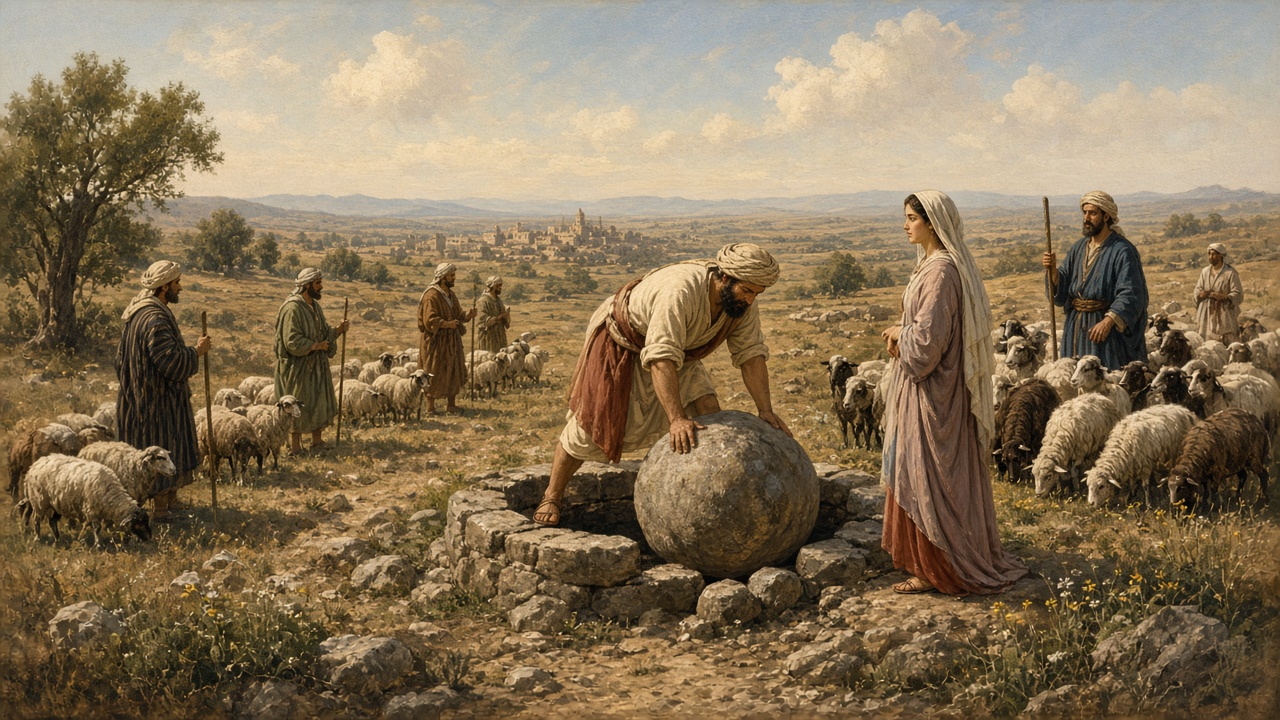
- The well was closed by a large stone that the shepherds rolled away only after all the flocks had gathered, then put back in place. Rachel, whose name is given as “ewe,” was a shepherdess bringing her father’s sheep, and Jacob, who had himself lived as a shepherd, moved the stone and watered his uncle’s flock.Sources: Rachel · Jacob (Israel) · the Bible text itself
- Leah, the elder sister, is called “weary,” and she is described as weak-eyed, or tender-eyed; Rachel, the younger, was shapely and beautiful. Jacob served seven years for Rachel, but at the evening feast Laban gave him Leah, saying it was not the custom there to give the younger daughter in marriage before the older, and then gave him Rachel for another seven years—fourteen in all. Leah’s first sons were Reuben, whose name is given as “Behold a son,” and then Simeon, Levi, and Judah; in naming them she spoke of the LORD seeing her affliction, hearing that she was unloved, her husband becoming attached to her, and her praise of the LORD.Sources: Leah · Rachel · Reuben · the Bible text itself
Notes written with AI assistance from open sources (Theographic Bible Metadata, CC BY-SA 4.0; Easton’s Bible Dictionary, public domain) and reviewed before publishing.
Places in this chapter
- East · Today: region around Amman · 31.955, 35.934 · verse 1
- Haran · Today: Harran · 36.864, 39.033 · verse 4
Only places identified with high confidence are shown (90% or more according to the scholarly sources compiled by OpenBible). Period map: DARE (Digital Atlas of the Roman Empire), CC BY 4.0; modern map: © OpenStreetMap contributors; places: OpenBible.info (CC BY 4.0).
Credits and license for this translation
Uumeleembaa Buŋa Tere Soomoŋgo Gbilia
The New Testament and portions of the Old Testament in the Borong Language of Papua New Guinea
Sampela hap Buk Baibel long tokples Borong long Niugini
Copyright © 2002, 2011 The Bible Society of Papua New Guinea
Language: Borong
Translation by: Wycliffe Bible Translators
This translation is made available to you under the terms of the
Creative Commons Attribution-Noncommercial-No Derivatives license 4.0.
You may share and redistribute this Bible translation or extracts from it in any format, provided that:
You include the above copyright and source information.
You do not sell this work for a profit.
You do not change any of the words or punctuation of the Scriptures.
Pictures included with Scriptures and other documents on this site are licensed just for use with those Scriptures and documents.
For other uses, please contact the respective copyright owners.
2015-01-26
Source: http://png.bible/ksr/ · eBible.org