Genesis 10
Uumeleembaa Buŋa Tere Soomoŋgo Gbilia · Tap a verse to see its cross-references.
Nooawaa merauruta yoŋoo kerasuru tuuŋ areŋgia
1Nooawaa merauruta Seem, Haam ano Jaafet yoŋoo gbiliurugia gboulu tegoro koloogiti, iyoŋoo qa areŋgia kokaeŋ:
Jaafetwaa gbiliuruta
2Jaafetwaa merauruta yoŋoo qagia ii Goomer, Maagog, Maadai, Jaawan, Tuubal, Mesek ano Tiiras. 3Goomerwaa merauruta yoŋoo qagia ii Askenas, Riifat ano Togarma. 4Jaawambaa merauruta yoŋoo qagia ii Elisa, Tarsis ano Saiprus kanageso ano Rodos kanageso. 5Yoŋoo esameraurugia ii juma deeŋqeema (gomaŋ leelee) Batugaranoŋ Kowe goraayanoŋ ano kowe iikawaa watoya watoya kanoŋ iyaŋgiaa baloŋgianoŋ kema laligoju. Yoŋonoŋ isigia so, tuuŋgia so ano qaagia so iyaŋgiaa gomaŋgianoŋ kema laligogi. Jaafetwaa kanagesouruta kiaŋ.
Haambaa gbiliuruta
6Haambaa merauruta yoŋoo qagia ii Kuus, Iijipt, Libia ano Keinan. 7Kuuswaa merauruta yoŋoo qagia ii Seba, Hawila, Sabta, Raama ano Sabteka. Raamawaa merawoita yoroo qagara ii Saba ano Dedan. 8Kuuswaa meria moŋ qata Nimrod kolooro. Iinoŋ somariiŋ waama manjaqeqewaa kawali eja kotiga totooŋ kolooŋ namonoŋ laligoro. 9Iinoŋ Pombaa jaasewaŋanoŋ borojaŋ eja kotiga laligorotiwaajoŋ ama qaa saaŋa kokaeŋ jeŋkeju: “Moŋnoŋ Pombaa jaasewaŋanoŋ Nimrod kaaŋa borojaŋ eja kotiga kolooja.” 10Nimrodwaa bentotoŋa ii baloŋ koi kaaŋanoŋ kanaigi: Baabel, Erek, Akad ano Kalne. Taoŋ 4 ii Babilonia (Sinar) gomanoŋ eju. 11Nimrodnoŋ Babilonia baloŋ mesaoŋ Assiria kema gomaŋ somasomata qagia Niiniwe, Rehobotir ano Kala ii mero. 12Kaaŋagadeeŋ Resen ii Niiniwe ano siti somata qata Kala yoroo batugaranoŋ mero.
13Iijiptwaa gbiliuruta yoŋonoŋ Libia (Luud) kanageso, Anam kanageso, Lehab kanageso ano Naftu kanageso kolooju. 14Kaaŋagadeeŋ Patrus, Kaslu ano Kriit. Kriit ii Filistia kanageso yoŋoo beŋisigia kolooro.
15Keinambaa meria mutuya ii Saidon. Iwaa gematanoŋ Keinanoŋ kanageso koi kaaŋa yoŋoo beŋisigia kolooro: Hit kanageso, 16Jebus kanageso, Amor kanageso, Girgas kanageso, 17Hiwi kanageso, Arka kanageso, Siini kanageso, 18Arwad kanageso, Zemar kanageso ano Hamat kanageso. Keinanoŋ korebore yoŋoo wanjale beŋisigia kolooro yoŋonoŋ kanageŋ juma deeŋqeeŋgi.
19Kaeŋ deeŋqeeŋgi Keinan kanageso yoŋoonoŋ baloŋ goraaya ii gomaŋ qata Saidon iikanoŋa kanaiŋ kema Gerar gomanoŋ kema Gaza kanoŋ tegoja. Kaaŋagadeeŋ Sodom baageŋ kema Gomora kema Adma ano Zeboim kema Lasa kanoŋ tegoja. 20Haambaa merauruta ii isigia so, qaagia so, baloŋgia so ano kanageso tuuŋgia so kaeŋ laligogi.
Seembaa gbiliuruta
21Jaafetwaa data Seem iwaa merauruta kaaŋiadeeŋ koloogi. Seemnoŋ kaeŋ Eberwaa merauruta kuuya yoŋoo wanjale beŋisigia kolooro. 22Seembaa merauruta yoŋoo qagia ii Elam, Asur, Arfaksad, Lidia (Luud) ano Aram. 23Arambaa merauruta yoŋoo qagia ii Uuz, Huul, Geter ano Mas. Kaeŋ laligogi. 24Arfaksadwaa meria Sela kolooro Selawaa meria Eber kolooro. 25Eberwaa merawoita woi koloori. Moŋnoŋ kolooŋ laligoŋ kouroti, kambaŋ iikanoŋ namo ejembanoŋ juma deeŋqeeŋgi. Kawaajoŋ iwaa qata Peleg (Siiŋserereŋ) qagi. Kogaa qata ii Joktan. 26Joktambaa merauruta kokaeŋ koloogi: Almodad, Selef, Hazarmawet, Jera, 27Hadoram, Uuzal, Dikla, 28Oobal, Abimael, Saba, 29Oofir, Hawila ano Joobab. Eja kuuya ii Joktambaa meraurutaga. 30Yoŋoo rama laaligo baloŋgia ii gomaŋ qata Meesa iikanoŋa kanaiŋ gomaŋ qata Sefar kanoŋ baageŋ kema weeŋ koukoutaa baloŋ baaŋayawo kanoŋ tegoja. 31Seembaa merauruta ii isigia so, qaagia so, baloŋgia so ano kanageso tuuŋgia so kaeŋ laligogi.
32Nooawaa esameraaŋuruta ii isigia so, kanagesogia ano baloŋgia so kaeŋ koloogi. Yoŋonoŋ juma seiŋ deeŋqeema kanageso tuuŋa tuuŋa koloogi gboulu somatanoŋ tegoro kema baloŋ sokoma laligogi. Kiaŋ.
Did you know?
The Nations after the Flood
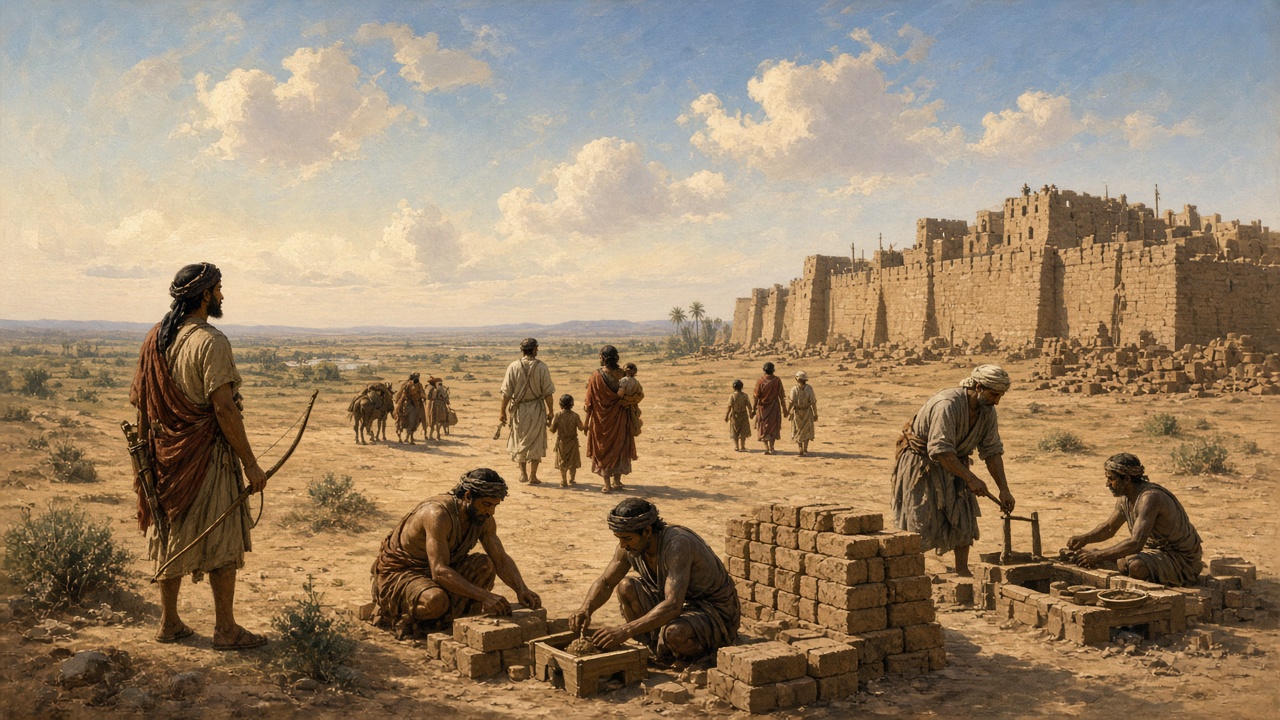
- Genesis 10 follows the families of Noah’s three sons, Shem, Ham, and Japheth, and says that after the flood the nations of the earth spread out from them, grouped by clans, languages, lands, and nations. Japheth’s line is linked with peoples of eastern Europe and northern Asia: Gomer is generally regarded as an ancestor of the Celts and the Cimmerians, who in early times settled north of the Black Sea, and Javan became the Hebrew name that the peoples of the East used for the Greeks, especially those of Ionia.Sources: the Bible text itself · Japheth · Gomer (son of Japheth) · Javan
- Cush, a son of Ham, was the father of Nimrod, remembered as a mighty hunter before the Lord, whose kingdom began at Babylon, Erech, Accad, and Calneh in the land of Shinar, probably Babylonia or southern Mesopotamia. From that land he went into Assyria and built Nineveh, Rehoboth-Ir, Calah, and Resen; Calah’s site is probably the Nimrud ruins on the left bank of the Tigris.Sources: the Bible text itself · Shinar · Nineveh · Calah
- Mizraim, the dual form of a Hebrew word for a mound or fortress, may point to Upper and Lower Egypt and is the name the Hebrews usually gave that country; Arabic still calls it Muzr. Shem is called the older brother of Japheth and the forefather of all the sons of Eber, regarded as the founder of the Hebrew people, while an Arab tradition remembers Eber’s son Joktan, Kahtan in Arabic, as the ancestor of tribes of central and southern Arabia.Sources: the Bible text itself · Mizraim · Eber (Heber) · Joktan
Notes written with AI assistance from open sources (Theographic Bible Metadata, CC BY-SA 4.0; Easton’s Bible Dictionary, public domain) and reviewed before publishing.
Places in this chapter
- Erech · Today: Uruk · 31.322, 45.636 · verse 10
- Shinar · Today: Babylonia · 32.543, 44.422 · verse 10
- Assyria · 36.359, 43.153 · verse 11
- Calah · Today: Nimrud · 36.098, 43.329 · verses 11, 12
- Nineveh · 36.359, 43.153 · verses 11, 12
- Canaan · 32.767, 35.333 · verse 19
- Gaza · Today: Tell Harube · 31.504, 34.464 · verse 19
- Sidon · Today: Sandikli archaeological site in Sidon · 33.561, 35.372 · verse 19
Only places identified with high confidence are shown (90% or more according to the scholarly sources compiled by OpenBible). Period map: DARE (Digital Atlas of the Roman Empire), CC BY 4.0; modern map: © OpenStreetMap contributors; places: OpenBible.info (CC BY 4.0).
Credits and license for this translation
Uumeleembaa Buŋa Tere Soomoŋgo Gbilia
The New Testament and portions of the Old Testament in the Borong Language of Papua New Guinea
Sampela hap Buk Baibel long tokples Borong long Niugini
Copyright © 2002, 2011 The Bible Society of Papua New Guinea
Language: Borong
Translation by: Wycliffe Bible Translators
This translation is made available to you under the terms of the
Creative Commons Attribution-Noncommercial-No Derivatives license 4.0.
You may share and redistribute this Bible translation or extracts from it in any format, provided that:
You include the above copyright and source information.
You do not sell this work for a profit.
You do not change any of the words or punctuation of the Scriptures.
Pictures included with Scriptures and other documents on this site are licensed just for use with those Scriptures and documents.
For other uses, please contact the respective copyright owners.
2015-01-26
Source: http://png.bible/ksr/ · eBible.org