Matthew 9
Nhandejáry Nhe'ẽ · Tap a verse to see its cross-references.
Hesu ombogwera hajy jeapa va'e-pe
1Ha upéi katu Hesu onhemboyru jevy-ma oho-vy kanóa-py. Upéi ohasa y rovái ogwahẽ oho-vy ha'e ae oiko ha-py. 2Upe-py ojereru íxupe hajy jeapa apa va'e. Gwupa reheve ou onheno oĩ-vy. Ójehe ojerovia tee ramo, ohexakwaa hese. Upéa-gwi he'i upe hajy jeapa apa va'e-pe:
—Ani erekyhyje teĩ, xe ra'y, he'i íxupe ombopy'agwapy-vy.
Gwa'ýry-pe he'iha-rami he'i íxupe:
—Amboyke-ma ndéhegwi ne rembiapo vaikwe, he'i upe hajy jeapa apa va'e-pe.
3Upe-py oĩ judeu rekombo'ehaty. Ohendu-ma ramo Hesu nhe'ẽ, ndojohu porãi:
—Onhemonhandejáry rei ou-vy, he'i mo'ã Nhandejáry Hesu-rehe. —Onhe'ẽ vai rei, he'i ojóupe hese.
4Ha ipy'apóry oikwaa Hesu:
—Ma'erã-gwi erenhe'ẽ vai rei nde py'apy-py? he'i. 5—Pejeapysaka porã katu xe nhe'ẽ-rehe. Oĩ ramo, “Amboyke-ma ndéhegwi ne rembiapo vaikwe” he'i va'e katu, ndajahexái hemimboyke. Omboyke para'e. Tapa nomboykéiry ra'e. Ndajahexáiry. Ha oĩ ramo, “Epu'ã katu egwata eho-vy” he'i rei va'e katu, jahexa ave. Nomopu'ãiry upe va'e. 6Ãy aikwaa uka-ta peẽ-my xe nhe'ẽ rei e'ỹha ko yvy-py. Xe Nhande Ryke'y tee va'e xe nhe'ẽ-py rei amboyke-ma voi yvypóry rembiapo vaikwe, he'i Hesu onhe'ẽ-vy gwĩ imbo'eháry-pe.
Upe ramo he'i hajy jeapa va'e-pe:
—Epu'ã katu ehupi nde rupagwe. Tereho nde róga-py, he'i.
7Upe-ma ramo opu'ã oho-ma gwóga-py. 8Upéa ohexa ramo ijaty va'e kente, opondera eterei hese. Inhe'ẽ-py rei omopu'ã-gwi:
—Omopu'ã-ma ngatu, he'i Hesu-rehe. —Iporã porã ete va'e voi hembiapo, he'i hese. —Nhandejáry omombaraete voi upe kwimba'e. Herovia hexapyrã-rupi ha'e hembiapo, he'i Hesu-rehe Nhandejáry-pe omomba'egwasu-vy.
“Xe moirũ katu” he'i Mateus-pe
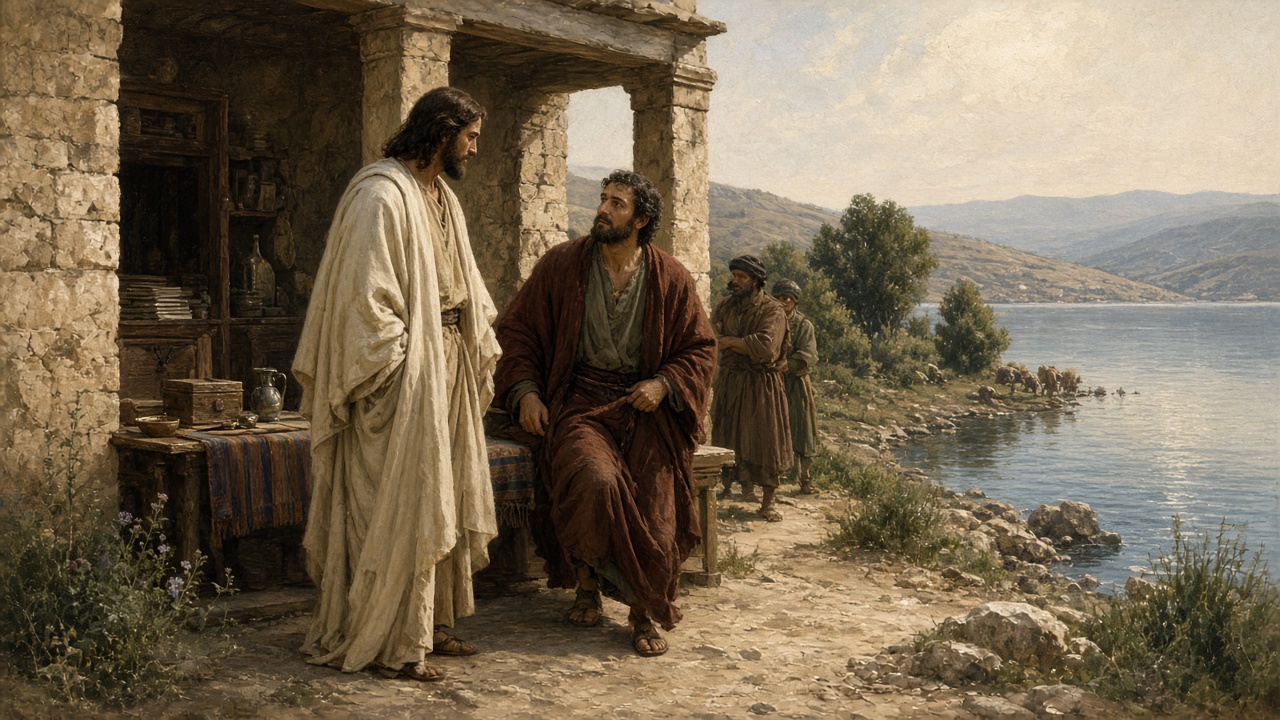
9Upe-gwi ohasave Hesu oho-vy. Oho jave, ohexa Mateus héry va'e-pe ogwapy oĩ-vy ramo. Nhane mbopaga haty-py ogwapy oĩ-vy:
—Xe moirũ katu, he'i íxupe.
Upe-ma ramo opu'ã omoirũ-ma íxupe.
10Upéi oho okaru Mateus róga-py. Ha'e okaru jave gwemimbo'e kwéry ndive ogwahẽ ave ou-vy heta nhane mbopaga uka va'ety, heta ojejavy va'e ou ave okaru ojoha-py. 11Upéa ohexa ramo fariseu kwéry, oporandu Hesu remimbo'e kwéry-pe:
—Ma'erã-gwi ne mbo'eháry okaru nhane mbopaga uka va'ety ndive, ojejavy va'e ndive ave? he'i Hesu-rehe.
12Upéa fariseu nhe'ẽ ohendu ramo Hesu:
—Nhane resãi ramo, nanhaikotevẽi nhane mbogweraharã-rehe. Ha nhande rasy ramo ae katu, nhaikotevẽ-ma nhane mbogweraharã-rehe, he'i hemimopotĩse-rehe onhemoirũ uka hagwã.
13—Ko'a-rami ae oĩ Nhandejáry kwatia nhe'ẽ:
“Ijukapyrã xe mboete-vy pejuka rei ramo, pende py'a porã e'ỹ reheve ojóupe, xe ndajohu porãi arã. Ha pejoporiahuvereko rei ramo katu xe ajohu porã arã pende reko. Upe va'e xe aipota voi, he'i Nhandejáry”.
Upéixa he'i Nhandejáry kwatia nhe'ẽ. Upéa nhe'ẽ, tapeho katu peikwaa hagwã he'ise va'e. Ndajúi va'ekwe ahenói-vy “Xe potĩ” he'i ójehe va'e-pe ou xe moirũ. Gwĩ ojejavy va'e-pe ae aju arova uka-vy hekoha íxupe xe moirũ hagwã, he'i fariseu kwéry-pe.
Hesu remimbo'e kwéry ndohasái okaru e'ỹ reheve
14Upéi ogwahẽ ou-vy Hesu renda-py João remimbo'e:
—Ore orohasa orokaru e'ỹ reheve Nhandejáry oipotaha-rami, he'i. —Ohasa ave okaru e'ỹ reheve fariseu kwéry. Ha ne remimbo'e kwéry katu ndohasái voi okaru e'ỹ reheve. Ma'erã po ndoikói ore reko-rami, he'i Hesu-pe oporandu-vy.
15Upéi Hesu he'i:
—Amombe'u-ta peẽ-my arandu rehegwa nhe'ẽ omenda va'e rehegwa-rami. Oime vyteri ramo omenda va'e, ndovy'are'ỹiry he'ýi kwéry. Okaru e'ỹ reheve ndohasáiry. Ha ojererahaha óra ogwahẽ-ta. Upe óra-py ohasa va'erã okaru e'ỹ reheve he'ýi kwéry, he'i ojehegwa omombe'u-vy.
16Upéi he'i jevy upe pygwa-pe:
—Outro arandu rehegwa nhe'ẽ háma amombe'u-ta peẽ-my ao rehegwa-rami, uva rykwere rehegwa-rami ave. Nanharemendái ipyahu va'e-py ao tuja. Nharemenda ramo ae katu onhynhy arã ra'e ipyahu va'e. Ojepoapy-vy omondoro arã ao tuja. Osorogwasuve va'erã ao tuja. 17Nanhanhunháiry ave uva rykwere pyahu va'e hyrurã tuja-py vakapi ipererĩ va'e-py. Ha nhanhunha ramo ae katu, ovu va'erã ra'e ipyahu va'e. Gwyru tuja va'e omondoro va'erã. Osyrypa arã ra'e pe uva rykwere onhehẽ-vy. Osoropa arã hyrukwe. Ha uva rykwere pyahu va'e ae katu nhanhunha hyru pyahu-py. Upéixa ramo opyta porã gwyru ndive, he'i Hesu oipota-gwi fariseu kwéry onhemboheko pyahu.
Hesu omoingove jevy kunhataĩ-pe
18Upéa he'i jave, ogwahẽ ou-vy peteĩ mburuvixa. Gwetypy'ã-rehe onhesũ Hesu rovagwy-py imboete-vy:
—Omano-ma xe rajy, he'i. —Omano ramo jepe, iporã ereho joty katu eremoĩ nde po hese oikove jevy hagwã, he'i Hesu-pe.
19Inhe'ẽ-py opu'ã oho-vy mburuvixa ndive. Hemimbo'e kwéry hendive ave oho. 20Upe-ma ramo ogwahẽ ou-vy peteĩ kunha. Are-ma hasy. Hasy doze ro'y ijysapy ogwejy eterei íxupe-gwi. Upéa-gwi ou hapykwéri, Hesu rapykwéri. Opoko-ma ijao poty-rehe. 21“Amboja ramo jepe xe po ijao-rehe, akwera-ma va'erã” he'i ra'e ojéupe.
22Upe-ma ramo ha'e ojere. Oma'ẽ ramo, ohexa-ma upe kunha-pe:
—Ani erekyhyje teĩ xéhegwi, xe rajy, he'i imbopy'agwapy-vy íxupe. Gwajýry-pe he'iha-rami, he'i kunha-pe: —Nde erejerovia-magwi xe-rehe, erekwera-ma, he'i kunha-pe.
Upéa nhe'ẽ he'i-ma ramo, pya'e okwera upe kunha.
23Ha upéi katu ojere jevy oho hagwã mburuvixa róga-py. Upe-py ohexa heta oĩ óga-py ijayvu va'e. Gwemimby ombopu ohapirõ-vy. Hasẽmba-ma ave. Ohexa ramo:
24—Tapehopa katu, he'i. —Nomano etéiry voi mitã kunha. Oke ae-ma oĩ-vy, he'i omosẽ-vy.
Ha óga-py oĩ va'e gwive katu onhembohory hese.
25Omosẽmba rire, oike koty-py mitã kunha oĩ ha-py. Oipopyhy íxupe imopu'ã-vy. 26Upe ramo upe mitã kunha omopu'ã jevy va'ekwe rerakwã opa-rupi osarambi upe yvy-rupi oho-vy.
Hesu ombohesapyso jevy mokõi hesapyso e'ỹ va'e-pe
27Upe-gwi ohasave oho-vy Hesu. Ha mokõi hesapyso e'ỹ va'e katu ou hapykwéri:
—Davi remiarirõre nhane remiha'arõ va'e, he'i ohenói hatã-vy íxupe. —Ore poriahuvereko katu, ore poriahuvereko katu, he'i ohenói hatã-vy íxupe.
28Upéi ha'e oike koty-py. Oike rire, ogwahẽ ave ou-vy upe mokõi hesapyso e'ỹ va'e:
—Pejerovia tipo xe-rehe apombohesapyso porã hagwã, he'i íxupe kwéry Hesu.
—Ha'e voi, he'i. —Orojerovia-ma nde-rehe, ore Járy, he'i íxupe.
29Upéi omoĩ hesa ári opo:
—Xe reroviaha-rami pehexa porã katu, he'i hesapyso e'ỹ va'e-pe.
30Upe ramo hesapyso porã-ma. Ha Hesu ndohejái omombe'u ojehegwa:
—Erekwera hagwe aníke eremombe'u mbe'u teĩ avave-pe, he'i íxupe omanda pohýi-vy.
31Ha okwera va'e katu ojoko ramo jepe íxupe, osẽ joty oho-vy. Omosarambi ra'e opa-rupi. Herakwã oho joty opa-rupi. Upe yvy-rupi osarambi joty ra'e.
Hesu ombogwera inhe'ẽnge'ỹ va'e-pe
32Koty-gwi osẽ jave, ojereru Hesu renda-py anháy rerekoha inhe'ẽnge'ỹ va'e. 33Omosẽ imondo-vy anháy-pe. Inhe'ẽnge'ỹ va'ekwe onhe'ẽ-ma. Ojogweroaty va'e kente ohexa ramo, opondera eterei hese:
—Yma gwive ko'ánga ete peve ndajahexái voi a ramigwa, he'i. —Nhande kwéry yvy-rupi, Israel yvy-rupi ndajahexái voi a ramigwa, he'i opondera-vy hese.
34Ha fariseu kwéry katu ndojohu porãi hembiapo:
—Anháy ruvixa nhe'ẽ-py ae nipo ra'e omosẽ imondo-vy anháy-pe Hesu. Anháy ae nipo ombopu'aka ra'e Hesu-pe, he'i mo'ã hese hikwái.
Hesu oiporiahuvereko ijaty jaty va'e kente kwéry-pe
35Ha upéi katu Hesu ohasa oho-vy tetã tetã-rupi gwive. Tetã'i tã'i-rupi gwive ave ohasa oho-vy. Ojeporahéi haty haty-rupi Nhandejáry nhande ruvixarã rehegwa nhe'ẽ porã omombe'u mbe'u. Opaixagwa mba'asy-gwi ombogwera gwera hasy va'e-pe.
36Ohexa ramo ijaty jaty va'e kente, oiporiahuvereko íxupe kwéry:
—Ovexa-rami rei oiko ra'e hikwái, he'i. —Ndoikóiry ramo ovexa-rehe onhangareko va'e, ndoiko porãi. Ipyrasypa, heterasypa ave. Ho'a ramo, ndaipóri henohẽharã. Upéixa ete ovexa hasy va'e-rami, herekwa e'ỹ va'e-rami oiko ko ijaty va'e kente xe moirũse va'e. Upéa-gwi aiporiahuvereko-ma íxupe kwéry, he'i ojogweroaty va'e kente kwéry-rehe.
37Upe ramo omombe'u gwemimbo'e kwéry-pe nhe'ẽ mombe'uharã rehegwa nhe'ẽ temitỹgwe kytĩharã rehegwa nhe'ẽ oiporu-vy.
—Heta hi'a porã ramo jepe, ndahetáiry joty oikytĩ va'e heraha-vy. 38Upéixa ete heta eterei oĩ ramo jepe nhe'ẽ porã ohenduse va'e, ndahetáiry joty imombe'uharã íxupe kwéry. Upéa-gwi pejapo oração temitỹgwe járy-pe omondo hagwã oikytĩharã, he'i Nhandejáry-rehe, nhe'ẽ porã mombe'uharã-rehe oração ojapo uka-vy.
Did you know?
Mercy, Healing, and New Wine
- Matthew, son of Alphaeus, was a publican, or tax collector, at Capernaum. Jesus, coming up from the side of the lake, passed the custom-house where Matthew sat and said, “Follow me.” He had formerly been known as Levi; that same day he gave a great feast, described as a farewell, for Jesus, the disciples, and probably many of his old associates.Sources: Matthew · the Bible text itself
- Those who ask why they and the Pharisees fast so often, while Jesus’ disciples do not, are disciples of John the Baptist. John is called the forerunner; he was of priestly descent, his father Zacharias a priest of the course of Abia and his mother Elisabeth one of the daughters of Aaron.Sources: John the Baptist · the Bible text itself
- One chronology places the healing of the paralyzed man, the call of Matthew, the question about fasting, and the parable of the wineskins in AD 28.Sources: Healing the Man with Palsy · Jesus Calls Matthew · Fasting Question · Parable of the Winseskins
Notes written with AI assistance from open sources (Theographic Bible Metadata, CC BY-SA 4.0; Easton’s Bible Dictionary, public domain) and reviewed before publishing.
Places in this chapter
- Sea of Galilee · 32.819, 35.590 · verse 1
Only places identified with high confidence are shown (90% or more according to the scholarly sources compiled by OpenBible). Period map: DARE (Digital Atlas of the Roman Empire), CC BY 4.0; modern map: © OpenStreetMap contributors; places: OpenBible.info (CC BY 4.0).
Credits and license for this translation
Nhandejáry Nhe'ẽ
New Testament in Kaiwá (BR:kgk:Kaiwá)
copyright © 2006 Wycliffe Bible Translators, Inc.
Language: Kaiwá
Translation by: Wycliffe Bible Translators, Inc.
Copyright Information
© 2006, Wycliffe Bible Translators, Inc. All rights reserved.
This translation text is made available to you under the
terms of the Creative Commons License: Attribution-Noncommercial-No Derivative Works.
( http://creativecommons.org/licenses/by-nc-nd/3.0/ )
In addition, you have permission to port the text to different file formats, as long as you
do not change any of the text or punctuation of the Bible.
You may share, copy, distribute, transmit, and extract portions
or quotations from this work, provided that you include the above copyright
information:
You must give Attribution to the work.
You do not sell this work for a profit.
You do not make any derivative works that change any of the actual words or punctuation of the Scriptures.
Permissions beyond the scope of this license may be
available if you contact
us with your request.
The New Testament
in Kaiwá
© 2006, Wycliffe Bible Translators, Inc. All rights reserved.
This translation is made available to you under the terms of the
Creative Commons Attribution-Noncommercial-No Derivatives license 4.0.
You may share and redistribute this Bible translation or extracts from it in any format, provided that:
You include the above copyright and source information.
You do not sell this work for a profit.
You do not change any of the words or punctuation of the Scriptures.
Pictures included with Scriptures and other documents on this site are licensed just for use with those Scriptures and documents.
For other uses, please contact the respective copyright owners.
2014-04-27
Source: http://ebible.org/kgkNT/ · eBible.org