John 7
Nhandejáry Nhe'ẽ · Tap a verse to see its cross-references.
Hesu ryvy kwéry rehegwa nhe'ẽ
1Ha upe rire katu ndogwatavéi-ma Hesu Judéia yvy-rupi. Upe pygwa judeu kwéry va'e ojukase íxupe. Upéa-gwi ndogwatavéi upe-rupi. Galiléia yvy-rupi ae ogwata oiko-vy. 2Ha upéi katu hi'agwĩ-ma oĩ ogwahẽ hagwã judeu kwéry arete áry, héry va'e Festa dos Tabernáculos, kwarahy ãy-my jaiko ramo peteĩ semana. 3Upe ramo he'i íxupe Hesu ryvy:
—Tereho katu Judéia yvy-py, ne nhe'ẽ renduha ohexa hagwã ne rembiapo, he'i. 4—Erejehexa ukase ramo, ani erejapo nhemi ne rembiapo. Nde pu'akaha-rupi, hexapyrã-rupi ne rembiapose ramo, atýra-py katu ejehexa uka, he'i íxupe tyvýry.
5Tyvýry jepe ndojeroviáiry joty hese: “Ha'e Cristo voi” nde'íry vyteri gwyke'y-rehe.
6Upéi he'i gwyvýry-pe:
—Nogwahẽi vyteri xe óra aha hagwã. Ha peẽ katu napende órai peho hagwã. Pehose ramo, tapeho mani katu, he'i. 7—Ha teko rei ndaija'e'ỹi pende-rehe. Ha xe katu aikwaa uka íxupe kwéry hembiapo vaikwe-gwi, ndaija'e porãi voi xe-rehe teko rei. 8Tapeho katu Jerusalém-my aretegwasu mboete-vy. Ha xe katu nogwahẽi vyteri xe óra aha hagwã. Upéa-gwi ndaha mo'ãi joty, he'i gwyvýry-pe.
9Upe rire katu ndohói opyta joty Galiléia-py.
Hesu oho aretegwasu mboete hagwã-py
10Ha tyvýry oho-ma tenonderã. Aretegwasu mboete hagwã-py oho-ma. Oho rire hikwái, oho ave Hesu. Ha hexapyrã-rupi katu ndohói. Onhemo'ã ha-rupi ae oho. 11Ogwahẽ e'ỹ ngatu oheka Hesu-pe judeu ruvixa kwéry aretegwasu mboete haty-py:
—Ne'írã vyteri tipo ogwahẽ, he'i oporandu Hesu-rehe.
12Ha kente kwéry omombe'u joavy avy hese:
—Hekoha porã va'e ha'e, he'i hese.
Outro he'i:
—Ndaha'éi hekoha porã va'e. Nhane mbotavy rei oiko-vy va'e ae, he'i mo'ã hese.
13Ha atýra-py katu Hesu rehegwa nhe'ẽ nomombe'úiry. Hevovo rei onhe'ẽ-vy, judeu ruvixa kwéry-gwi ikyhyje-gwi hikwái.
14Ha upéi katu oho Hesu upe-py. Aretegwasu mbyte-py oike oho-vy Nhandejáry róga kakwaa-py. Ombo'e upe pygwa-pe. 15Inhe'ẽ ohendu ramo, opondera hese hikwái:
—Mba'éixa po hi'arandu? he'i hese. —Onhembo'e e'ỹ reheve, oikwaa rei onhe'ẽrã, he'i judeu ruvixa kwéry hese.
16Onhe'ẽ íxupe kwéry Hesu:
—Ndaha'éi xejéhegwi xe ambo'e. Xe mbouhare rembigwaa uka xe-vy ae amombe'u. Nhandejáry rembiexa uka-py xe-vy ambo'e. 17Hemimbota ojapose va'e gwive oikwaa va'erã ki-gwi po ou ra'e xe nhe'ẽ, Nhandejáry gwigwa para'e, xejéhegwigwa rei para'e. Nhandejáry gwigwa voínte xe nhe'ẽrã. 18Ojéhegwi onhe'ẽ va'e onhembotuvixase mba'e. Ha imbouhare-pe ombotuvixase mba'e va'e katu, anhetegwa omombe'u. Ijapu e'ỹ va'e. 19Pene rembypy Moisés omombe'u va'ekwe ramo jepe pende rekoharã, pene pa'ũ-my ndaipóri tekoha-rupi oiko va'e, he'i. —Upéa-gwi xe jukase voi. Ha naiporãi xe juka, he'i judeu ruvixa kwéry-pe Hesu.
20—Anháy ojepota nde-rehe ra'e, he'i. —Kiva'e nipo nde jukase? he'i íxupe ijaty va'e kwéry.
21Upéi Hesu he'i:
—Peteĩ mba'e ajapo va'ekwe hexapyrã-rupi ajapo. Pehexa ramo pepondera joa hese. 22Ha peẽ katu ndapepytu'u teéiry japytu'uha áry-py. Japytu'uha áry-py ereikytĩ mixĩmi joty nde ra'y pire. Moisés nhe'ẽ-py ereikytĩ ipire. Ha Moisés nomombe'u ranhéi va'ekwe nhande-vy ko'a-rami nhande rekorã. Nhane rembypy ae omombe'u va'ekwe nhane rekorã. 23Upéixa ramo japytu'uha áry-py jepe ereikytĩ joty arã ipire Moisés nhe'ẽgwe apo-vy. Upéa erejapo ramo, eremba'apo joty voi, he'i. —Nderepytu'u teéiry, eremba'apo ave nde. Ha ko'ánga katu xe amohesãimba kuri peteĩ hasy va'e. Japytu'uha áry-py amohesãimba-ma íxupe. Ma'erã po pende poxy xe-vy ra'e upeakwe-rehe? he'i íxupe kwéry. —Peẽ kwéry ave ndapepytu'u teéiry japytu'uha áry-py, he'i íxupe kwéry. 24—Ani ere rei teĩ nde rapixa-rehe, “Hembiapo vai ra'e”. Erehexa porã rire mante ae hembiapo vaikwe, “Hembiapo vai-ma” ere arã hese ra'e, he'i judeu kwéry-pe Hesu.
Judeu ruvixa kwéry oipyhyse mo'ã Hesu-pe
25Upéixa ramo oĩ Jerusalém pygwa he'i va'e Hesu-rehe:
—Upe va'e hembijukase voi, he'i ojóupe Hesu-rehe. 26—Ha'e ko atýra-py omombe'u. Ha mburuvixa kwéry nombojevýi joty inhe'ẽ. Ohexa kwaa para'e hese hekoha hikwái. “Ha'e Cristo nhane remiha'arõ va'e” he'i para'e hese hikwái, he'i ojóupe.
27Ha oĩ he'i va'e, “Ojekwaa ramo Cristo, ki-gwi po ojekwaa uka ou-vy va'erã avave ndoikwaái” he'i Cristo, hemiha'arõ va'e-rehe he'i. Upéa-gwi he'i ojóupe:
—Ha upe va'e ae katu, ki-gwi po ou ra'e jaikwaa voi ogwahẽha. Upe va'e ndaha'éi nipo Cristo ra'e, he'i mo'ã hese Jerusalém pygwa kwéry.
28Ha upe-ma ramo Nhandejáry róga kakwaa-py oporombo'e jave, onhe'ẽ hatã Hesu:
—“Jaikwaa voi íxupe. Ki-gwi po ou ra'e jaikwaa voi ogwahẽha” peje mo'ã xe-rehe, he'i. —Xe katu ndajúi va'ekwe xe nhe'ẽ-py. Oime voi xe mbouhare. Ha'e Nhandejáry tee va'e. Peẽ katu ndapeikwaái íxupe. 29Xe ae aikwaa íxupe. Íxugwi-ma aju va'ekwe. Ha'e xe mbou va'ekwe. Upéa-gwi aikwaa voi íxupe, he'i ójehe íxupe kwéry Hesu.
30Inhe'ẽ ohendu ramo, oipyhyse mo'ã íxupe hikwái. Ha nogwahẽi vyteri oipyhy hagwã óra. Upéa-gwi ndoipyhýi vyteri íxupe. 31Heta oĩ jepe ojerovia va'e hese:
—Heta hembiapo porã va'ekwe Hesu. Opu'akaha-py, hexapyrã-rupi hembiapo, he'i. —Ojehexa uka ramo Cristo nhane remiha'arõ va'e, hetave íxugwi ndojapo mo'ãi va'erã voi. Ha'e nipo Cristo voi ra'e, he'i ojóupe ojerovia va'e hese.
Mburuvixa kwéry he'i oipyhy hagwã Hesu-pe
32Upe ramo kente kwéry omombe'u joavy avy Hesu-rehe. Inhe'ẽ ohendu ramo he'i oipyhy hagwã íxupe pa'i ruvixa kwéry ndive fariseu kwéry. Oipyhy uka gwĩ Nhandejáry róga kakwaa-rehe onhangareko va'e polícia kwéry-pe mo'ã.
33Upe-ma ramo Hesu he'i:
—Ndaxe are mo'ãi ne ndive aiko-vy. Upe rire katu aha jevy-ta xe mbouhare ha-py. 34Peẽ xe reka va'erã ha ndaxe topa mo'ãi. Ndikatúi peju va'erã xe aha hagwã-py, he'i ójehe judeu ruvixa kwéry-pe.
35Upéi oporandu ojóupe hese hikwái:
—Upe va'e mamo-py po oho-ta jatopa e'ỹ hagwã-py íxupe? Oho-ta para'e oiko hagwã judeu kwéry pa'ũ-my grego yvy-py oiko va'e pa'ũ-my? Ombo'e-ta para'e nhande kwéry e'ỹ va'e, grego kwéry va'e-pe? he'i. 36—He'i kuri nhande-vy: “Peẽ xe reka reka-ta ha ndaxe topa mo'ãi” he'i. Upéi he'i, “Ndikatúi peju va'erã xe aha hagwã-py” he'i. Upéa he'i ramo, mbava'e-pe po he'i, he'i oporandu-vy ojóupe.
“Xe reroviaha py'apy gwive osẽ oho-vy va'erã yvu ramigwa” he'i Hesu
37Aretegwasu áry paha-py, iporã ete va'e-py, onhembo'y-ma Hesu. Hatã onhe'ẽ. Enterove ohendu hagwã-rami onhe'ẽ:
—Ijy'uhéi va'e gwive tou katu xe ha-py hoy'u hagwã, he'i. —Ijy'uhéi va'e ouse va'e-rami y-py hoy'u hagwã, taxe moirũ katu xe moirũse va'e gwive, he'i. 38—Xe-rehe ojerovia va'e gwive, ipy'apy gwive osẽ oho-vy va'erã yvu ramigwa hapixa pegwarã. Upéixa he'i Nhandejáry kwatia nhe'ẽ, he'i ójehe omombe'u-vy Hesu.
39Yvu ramigwa he'i ramo, Nhe'ẽ Marangatu tee va'e-pe ae he'i. Entéro jajerovia hese va'e-pe gwive Nhe'ẽ Marangatu tee va'e hemime'ẽrã ae. Ne'írã omano Hesu oikove jevy hagwã onhembotuvixa mba'e hagwã. Upéa-gwi nome'ẽi vyteri Nhe'ẽ Marangatu tee va'e nhande-vy gwarã.
Kente kwéry omombe'u joavy avypa Hesu rehegwa nhe'ẽ. Ndogwerojojái inhe'ẽ
40Hesu nhe'ẽ ohendu ramo, oĩ he'i va'e hese:
—Upe va'e ko Nhandejáry nhe'ẽ-py omombe'u va'ety ou va'erã va'ekwe voi, he'i Hesu-rehe.
41Oĩ outro he'i va'e:
—Upe va'e ko Cristo nhane remiha'arõ va'e voi, he'i.
Oĩ ave outro he'i va'e:
—Cristo ndaha'éi ou va'erã va'ekwe Galiléia-gwi, he'i mo'ã. 42—Ha'e ae ko myamyrĩ Davi remiarirõ voi, he'i. —Belém-gwi ou va'erã va'ekwe. Davi oiko hagwe-gwi ou va'erã va'ekwe. Upéixa voi he'i Nhandejáry kwatia nhe'ẽ, he'i hese hikwái.
43Upéixa ramo omombe'u joavy avypa hesegwa nhe'ẽ. Ndogwerojojái inhe'ẽ hikwái. 44Oĩ oipyhyse va'e mo'ã íxupe. Ha ndoipyhýi joty íxupe.
Mburuvixa kwéry ndojeroviái Hesu-rehe
45Ha upéi katu ou jevy imondohare-pe gwĩ Nhandejáry róga kakwaa-rehe onhangareko va'e polícia. Ha pa'i ruvixa kwéry fariseu kwéry ndive oporandu polícia-pe:
—Ma'erã po ndereipyhýi íxupe heru-vy? he'i oporandu-vy.
46Ha polícia katu he'i:
—Ha'eixagwa ndoikói onhe'ẽ porã va'e. Onhe'ẽ porã tee voi, he'i mburuvixa-pe.
47He'i fariseu kwéry polícia-pe:
—Penhembotavy nipo ra'e peẽ ave, he'i. 48—Ndojeroviái hese mburuvixave. Fariseuve ndojeroviái hese ave. 49Teko rei katu nhande rekoha-rupi oiko e'ỹ va'e, ha'e kwéry anho ojerovia-ma hese. Ha gwĩ teko rei-rehe he'i vai-ma Nhandejáry, he'i mo'ã hese fariseu kwéry.
50Ha peteĩ ipa'ũ-my oĩ va'e ndojohu porãi inhe'ẽ. Héry va'e Nicodemos. Pyhare onhomongeta ra'e Hesu ndive. Ãy katu he'i hese:
51—“Hembiapo vai ra'e” ja'e ramo hese nhamonhe'ẽ ranhe e'ỹ reheve íxupe ndajaikóiry tekoha-rupi. Jaikwaa e'ỹ reheve hembiapokwe, “Hembiapo vai ra'e” ja'e ramo ave, tekoha-rupi ndajaikói voi ave, he'i mburuvixa kwéry-pe Nicodemos.
52—Nde Galiléia gwigwa para'e, he'i íxupe. —Emonhe'ẽ nhe'ẽ katu Nhandejáry kwatia nhe'ẽ. Ndaipóri Nhandejáry nhe'ẽ-py omombe'u va'ety Galiléia-gwi ou va'erã. Upéa ereikwaa porã hagwã emonhe'ẽ katu, he'i Nicodemos-pe hikwái.
53Upe ramo mburuvixa kwéry ohopa jevy oje'ói-vy. Peteĩ teĩ jevy oje'ói hikwái. Gwóga gwóga-rupi oje'oipa jevy hikwái.
Did you know?
Jesus at the Feast of Tabernacles
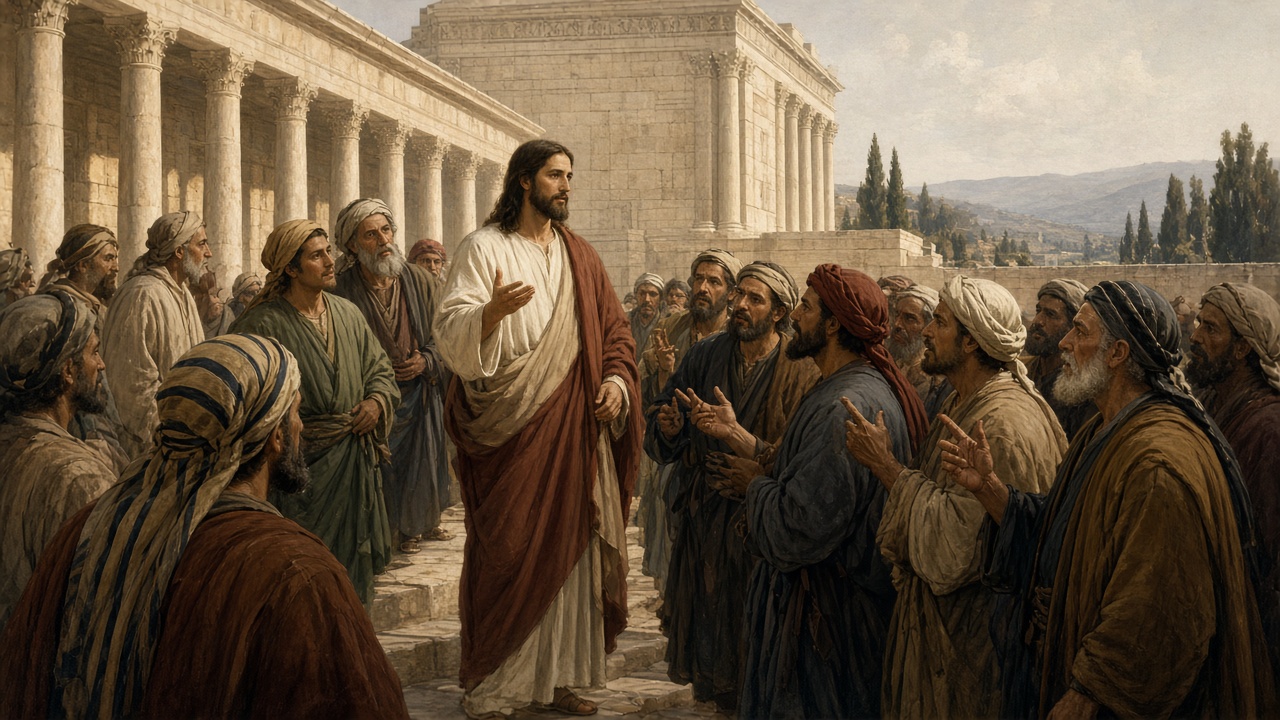
- As the Jewish Feast of Tabernacles, a seven-day feast, drew near, Jesus stayed in Galilee and avoided Judea, where people were trying to kill him. In his time Judea was the southernmost of the three Roman divisions of Palestine, distinct from Galilee and Samaria; he later went up to the feast in secret and taught in the temple courts.Sources: the Bible text itself · Feast of Tabernacles · Judea
- The crowds were divided over where the Christ would come from. Some said that Scripture places him in David's line and in Bethlehem, the village where David, the eighth and youngest son of Jesse, lived; others objected that he could not come from Galilee, a region long called Galilee of the Gentiles, and the Pharisees insisted that no prophet comes from there.Sources: the Bible text itself · David · Galilee
- Nicodemus, a Pharisee and a member of the Sanhedrin, had earlier come to Jesus at night. When the officers sent to arrest Jesus returned without him, Nicodemus protested and asked whether their law condemned a man before hearing him and finding out what he had done.Sources: the Bible text itself · Nicodemus
Notes written with AI assistance from open sources (Theographic Bible Metadata, CC BY-SA 4.0; Easton’s Bible Dictionary, public domain) and reviewed before publishing.
Places in this chapter
- Galilee · 32.760, 35.527 · verses 1, 3, 9, 41, 52
- Judea · Today: Judea 1 · 31.777, 35.234 · verses 1, 3
- Jerusalem · 31.777, 35.234 · verse 25
- Bethlehem · 31.704, 35.208 · verse 42
Only places identified with high confidence are shown (90% or more according to the scholarly sources compiled by OpenBible). Period map: DARE (Digital Atlas of the Roman Empire), CC BY 4.0; modern map: © OpenStreetMap contributors; places: OpenBible.info (CC BY 4.0).
Credits and license for this translation
Nhandejáry Nhe'ẽ
New Testament in Kaiwá (BR:kgk:Kaiwá)
copyright © 2006 Wycliffe Bible Translators, Inc.
Language: Kaiwá
Translation by: Wycliffe Bible Translators, Inc.
Copyright Information
© 2006, Wycliffe Bible Translators, Inc. All rights reserved.
This translation text is made available to you under the
terms of the Creative Commons License: Attribution-Noncommercial-No Derivative Works.
( http://creativecommons.org/licenses/by-nc-nd/3.0/ )
In addition, you have permission to port the text to different file formats, as long as you
do not change any of the text or punctuation of the Bible.
You may share, copy, distribute, transmit, and extract portions
or quotations from this work, provided that you include the above copyright
information:
You must give Attribution to the work.
You do not sell this work for a profit.
You do not make any derivative works that change any of the actual words or punctuation of the Scriptures.
Permissions beyond the scope of this license may be
available if you contact
us with your request.
The New Testament
in Kaiwá
© 2006, Wycliffe Bible Translators, Inc. All rights reserved.
This translation is made available to you under the terms of the
Creative Commons Attribution-Noncommercial-No Derivatives license 4.0.
You may share and redistribute this Bible translation or extracts from it in any format, provided that:
You include the above copyright and source information.
You do not sell this work for a profit.
You do not change any of the words or punctuation of the Scriptures.
Pictures included with Scriptures and other documents on this site are licensed just for use with those Scriptures and documents.
For other uses, please contact the respective copyright owners.
2014-04-27
Source: http://ebible.org/kgkNT/ · eBible.org