Hebrews 3
Nhandejáry Nhe'ẽ · Tap a verse to see its cross-references.
Hesu onhemboeteve va'e Moisés amyrĩ-gwi
1Ãy, xe re'ýi kwéry, Nhandejáry re'ýi voi peẽ. Pende reko marangatu va'e. Hemienói voi peẽ yváy-py peiko hagwã. Pene arandu kena peikwaa hagwã Hesu rehegwa nhe'ẽ. Ha'e Nhandejáry remimbou pa'i ruvixagwasu-rami. Upéa rehegwa nhamombe'u jaiko-vy. 2Hembiaporã Nhandejáry remime'ẽgwe ojapopa voi. Ndaipóri ojapo e'ỹ va'e. Ha'e-rami Moisés amyrĩ ave hembiapo gwive ojapopa, Nhandejáry re'ýi-rehe omba'apo-vy. 3Ha, “Nhane moingovehare nhamboeteve voi hemimoingove-gwi” ja'e. Upéixa ramo, iporã katu nhamboete Moisés-pe. Ha Hesu katu iporã nhambotuvixa eteve íxupe. 4Ndoikói hemimoingove va'e omoingovehaty e'ỹ reheve. Ha enterove va'e moingovehaty va'e voi Nhandejáry. 5Ha Moisés Nhandejáry rembigwái ramo rei oiko va'ekwe. Ojapopa va'ekwe ha'e gwembiaporã Nhandejáry re'ýi-rehe omba'apo-vy. “Emombe'u katu atýra-py eremombe'u hagwã ha'e va'erã” he'i va'ekwe íxupe Nhandejáry. 6Ha Cristo katu ta'ýry tee voi. Ojapopa íxupe he'i va'ekwe Nhandejáry, Nhandejáry re'ýi kwéry-rehe onhangareko-vy. Nhandejáry re'ýi tee voi nhande kwéry ave. Nhande kyhyje e'ỹ ramo, Hesu ogwahẽ jevytaha javy'a meme ramo nhaha'arõ tee-vy, he'ýi tee voi nhande.
Aníke pejehesa rerova teĩ Cristo-gwi
7Pejeapysaka katu Nhandejáry kwatia nhe'ẽ-rehe, Nhe'ẽ Marangatu tee va'e he'i va'ekwe-rehe pejeapysaka. Yma he'i va'ekwe a-rami voi:
“Ko'ãy Nhandejáry nhe'ẽ pehendu ramo, 8ani ijapysa e'ỹ va'e-rami peiko teĩ. Yma va'ekwe pene ramoigwasu kwéry yma gware nohenduséiry va'ekwe Nhandejáry nhe'ẽ. Tekwaty e'ỹ-my oiko jave, ombovyte vyte va'ekwe Nhandejáry-pe. Ani peiko teĩ ha'e kwéry heko-rupi”
he'i myamyrĩ pene ramoigwasu kwéry-rehe.
9“Upe-py tekwaty e'ỹ-my xe mboyvyte vyte va'ekwe pene ramói nhagwe va'ekwe: Nhahendu e'ỹ ramo jepe, ndogweropoxýi arã nhane rembiapo Nhandejáry, he'i mo'ã xe-rehe hikwái” he'i. “Quarenta ro'y xe rembiapo porã porã rexahare voi pene ramói. Hexapyrã-rupi xe rembiapo porã ramo jepe, xe mbovyte vyte xe rendu e'ỹ-vy. 10Upéa-rehe ha'e xejéupe, Areko asy va'erã íxupe kwéry hembiapokwe-rehe. Xéhegwi ojehesa rerova meme oiko-vy. Ndohoséi tape porã-rupi. Tekoha porã-rehe, Tekoha porã, nde'íry. Aipo ramo, amoingo asy va'erã íxupe kwéry hembiapo-rehe. 11Upéixa ramo ha'e ete-ma xejéupe, Ndopytavéi-ma va'erã xe aime ha-py xe ndive opytu'u hagwã. Areko asy va'erã íxupe kwéry hembiapo-rehe, ha'e xejéupe, he'i Nhandejáry nhane ramói amyrĩ kwéry-rehe.”
Upéixa he'i Nhandejáry kwatia nhe'ẽ nhane ramoigwasu-rehe. 12Upéixa ramo, xe re'ýi kwéry, “Xáke” peje katu pendéjehe. Ndaipotái pene pa'ũ-my hekoha vai va'e, herovia e'ỹha pene pa'ũ-my ndaipotái. Upe va'e ojehesa rerova arã Nhandejáry hekove tee va'e-gwi. Nhande reko irũ-gwi ojehesa rerova va'erã. 13Aipota ae penhemonhe'ẽ nhe'ẽ meme ojóupe: “Ani peiko teĩ ijapysa e'ỹ va'e-rami. Ani pene mbotavy teĩ anháy pene mbojejavy uka hagwã” peje katu ojóupe. Ko'ẽ ko'ẽ penhemonhe'ẽ ojóupe peiko-vy. Onhe'ẽ vyteri jave nhande-vy Nhandejáry, “Ãy voi” peje. “Ãy voi pehendu katu ko'ãy omombe'u va'e” peje katu ojóupe. 14Ãy Cristo re'ýi voi nhande. Are-ma jajerovia tee jaiko-vy hese. Ha ndajajerevéi ramo íxugwi nhamano peve, he'ýi teerã voi jaiko íxupe nhande. Ndajajehesa rerova ukái ramo íxugwi, jatopa peve íxupe, he'ýi teerã voi jaiko íxupe nhande. Upéa-gwi aníke penhemonhe'ẽ e'ỹ teĩ ojóupe. 15A-rami he'i Nhandejáry kwatia nhe'ẽ:
“Ko'ãy, Nhandejáry nhe'ẽ pehendu ramo, ani kena erenhembohesae sae teĩ inhe'ẽ rendusere'ỹ-vy. Yma va'ekwe myamyrĩ pene ramói nohenduséiry va'ekwe Nhandejáry nhe'ẽ. Ani peẽ peiko teĩ heko kwéry-rupi”
he'i Nhandejáry kwatia nhe'ẽ. 16Upéa kwatia nhe'ẽ-rehe pejeapysaka katu. Kiva'e po yma gware Nhandejáry nhe'ẽ renduse e'ỹha, amombe'u-ta peẽ-my. Gwĩ Egito yvy-gwi Moisés rembierahakwe gwive voi. 17Upéi kiva'e rembiapo yma gware po Nhandejáry rembiereko asy quarenta ro'y va'e amombe'u-ta peẽ-my. Gwĩ ojejavy va'ekwe voi. Omano hagwe-py upe-py rei opyta va'ekwe hetekwe tekwaty e'ỹ-my. 18Upéi kiva'e-pe po, “Ndapeikovéi-ma va'erã xe aime ha-py xe ndive petongea hagwã” nde'i reíry, amombe'u-ta peẽ-my. Inhe'ẽ renduse e'ỹha-pe he'i upéa. 19Upéixa ramo ma'erã po ndoikovéi-ma Nhandejáry ndive, jaikwaa-ma voi. Ndogweroviái-gwi íxupe ndoikóiry hendive.
Did you know?
Greater Glory Than Moses
- Hebrews asks its readers to fix their attention on Jesus, the apostle and high priest they confess. He was faithful to the one who appointed him, just as Moses was faithful in all God's house, but Jesus is counted worthy of greater glory than Moses, as the builder of a house has greater honor than the house. Moses was faithful as a servant; Christ is faithful as the Son over God's house.Sources: the Bible text itself
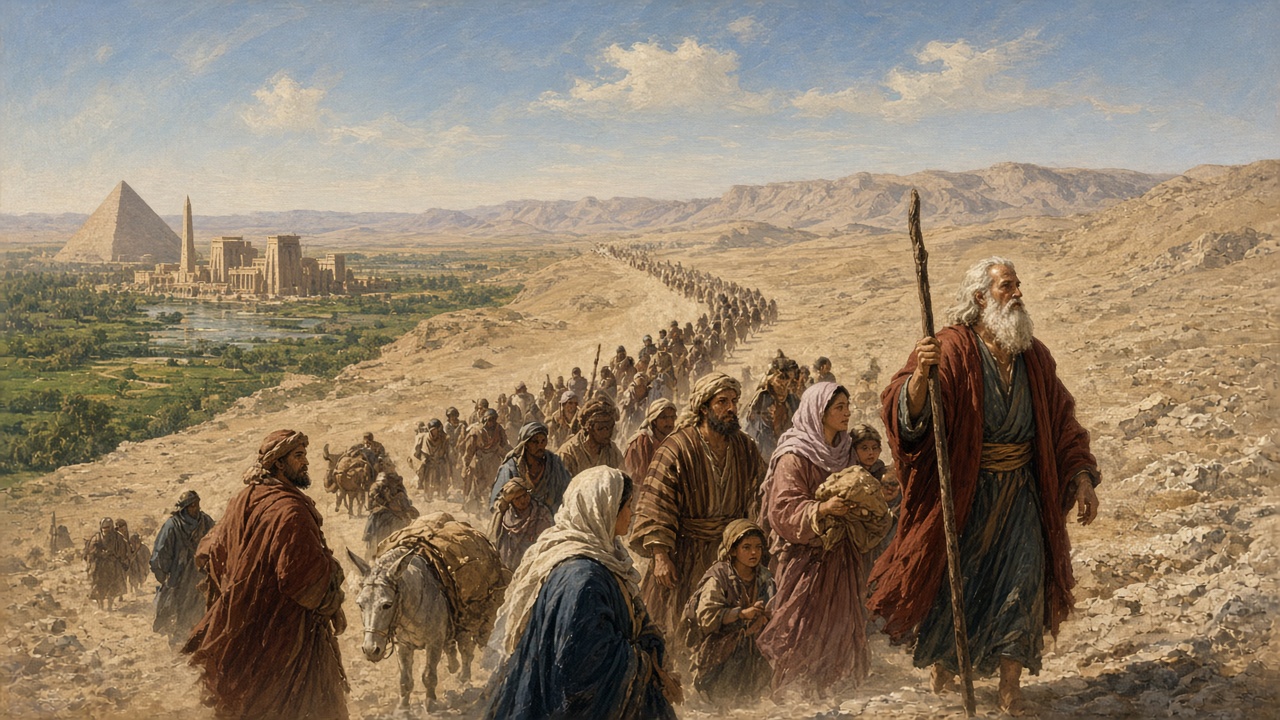
- The warning looks back to the people Moses led out of Egypt. For forty years in the wilderness they tested God, who was angry with that generation and swore they would never enter his rest; their bodies fell in the wilderness. The chapter says that unbelief kept them from entering.Sources: the Bible text itself
- Egypt, the land they left with Moses, is the land of the Nile and the pyramids. Easton's Bible Dictionary (1897) explains the name Moses as Drawn, or links it with the Egyptian word mesu, meaning son.Sources: the Bible text itself · Egypt · Moses
Notes written with AI assistance from open sources (Theographic Bible Metadata, CC BY-SA 4.0; Easton’s Bible Dictionary, public domain) and reviewed before publishing.
Places in this chapter
- Egypt · 30.129, 31.308 · verse 16
Only places identified with high confidence are shown (90% or more according to the scholarly sources compiled by OpenBible). Period map: DARE (Digital Atlas of the Roman Empire), CC BY 4.0; modern map: © OpenStreetMap contributors; places: OpenBible.info (CC BY 4.0).
Credits and license for this translation
Nhandejáry Nhe'ẽ
New Testament in Kaiwá (BR:kgk:Kaiwá)
copyright © 2006 Wycliffe Bible Translators, Inc.
Language: Kaiwá
Translation by: Wycliffe Bible Translators, Inc.
Copyright Information
© 2006, Wycliffe Bible Translators, Inc. All rights reserved.
This translation text is made available to you under the
terms of the Creative Commons License: Attribution-Noncommercial-No Derivative Works.
( http://creativecommons.org/licenses/by-nc-nd/3.0/ )
In addition, you have permission to port the text to different file formats, as long as you
do not change any of the text or punctuation of the Bible.
You may share, copy, distribute, transmit, and extract portions
or quotations from this work, provided that you include the above copyright
information:
You must give Attribution to the work.
You do not sell this work for a profit.
You do not make any derivative works that change any of the actual words or punctuation of the Scriptures.
Permissions beyond the scope of this license may be
available if you contact
us with your request.
The New Testament
in Kaiwá
© 2006, Wycliffe Bible Translators, Inc. All rights reserved.
This translation is made available to you under the terms of the
Creative Commons Attribution-Noncommercial-No Derivatives license 4.0.
You may share and redistribute this Bible translation or extracts from it in any format, provided that:
You include the above copyright and source information.
You do not sell this work for a profit.
You do not change any of the words or punctuation of the Scriptures.
Pictures included with Scriptures and other documents on this site are licensed just for use with those Scriptures and documents.
For other uses, please contact the respective copyright owners.
2014-04-27
Source: http://ebible.org/kgkNT/ · eBible.org