Galatians 6
Nhandejáry Nhe'ẽ · Tap a verse to see its cross-references.
Penhopytygwõ katu peiko-vy
1Xe re'ýi kwéry, oime ramo pene pa'ũ-my ojejavy va'e, ojekwaa ramo hembiapo vaikwe, penhemonhe'ẽ katu íxupe: “Anive ereho tape porã e'ỹ-rupi. Tereho ae katu tape porã-rupi” peje íxupe. Pene pa'ũ-my hi'arandu porã va'e, Nhe'ẽ Marangatu tee va'e nhe'ẽ-rupi oiko meme va'e, tonhemonhe'ẽ porã rei katu ojejavy va'ekwe-pe. Túvy-rami tonhe'ẽ porã katu íxupe. Ha tonhangareko porã katu ójehe pono ha'e-rami ave ojejavy. 2Penhopytygwõ katu peiko-vy. Upéixa peiko va'erã Cristo rekoha-rupi. 3Pene pa'ũ-my oĩ ramo onhemomba'egwasu ukase mo'ã va'e: “Xe ko xe tuvixave va'e xe. Naipytygwõ mo'ãi xe rapixa kwéry-pe” he'i rei voi ójehe. Ijapu rei ójehe. Upéa-gwi penhopytygwõ katu peiko-vy. 4Iporã voi jajapo peteĩ teĩ nhane rembiapo. Upéa-gwi nhane rembiapo-rehete nhapena va'erã. Jajapo katu peteĩ teĩ nhane rembiapo nhapondera e'ỹ reheve ojóehe, nhanhembohory e'ỹ reheve nhande rapixa-rehe. Upéixa iporã ramo nhane rembiapo, ovy'a-ma va'erã nhane rembiapokwe-rehe Nhandejáry.
6Ha Cristo nhe'ẽ-py ombo'e íxupe va'e katu, ani hakate'ỹ teĩ ogwereko va'e-rehe ombo'eháry-pe. Tome'ẽ me'ẽ ombo'eháry-pe hemikotevẽ. 7Pejeapysaka katu xe nhe'ẽ-rehe: “Jajaty ja'u va'erã” ja'e. Upéixa ete ereho-ma ramo tape vai-rupi, erehasa asy arã ereiko-vy. Upéa-gwi: “Ambotavy-ta Nhandejáry-pe” ani ere teĩ ndejéupe. Imbotavypyre'ỹ voi ko ha'e. Ereho ramo tape vai-rupi, erehasa asy va'erã ereiko-vy. Nerenhotỹ porãi ramo, okakwaa arã nde kokwe-py hi'upy e'ỹ va'e. Upéixa ete jajapose va'e rei jajapo ramo, jaha vai arã, nhanhehundi rei va'erã. Ha erenhotỹ porã ramo katu, ere'u va'erã erejaty va'ekwe. Upéixa ete Nhe'ẽ Marangatu tee va'e oiko tee ramo nde py'a-py, ereiko porã porã va'erã. Nhandejáry ndive ereiko va'erã opa e'ỹ reheve. 9Upéixa ramo aníke ere: “Xe kwerái-ma xe rembiapo porã porã ramo” ani ere upéa. Nhane rembiapo porã meme ramo nhande kaigwe e'ỹ reheve, nhande-vy gwarã ome'ẽtaha áry-py ome'ẽ va'erã nhande-vy Nhandejáry. 10Upéa-gwi nhande pu'aka hagwã-rami jareko porã rei enterovéa-pe. Ha Nhandejáry reroviaha gwive katu jareko porãve rãve katu íxupe kwéry.
Cristo mba'e kurusu-rehe apena xe aiko-vy
11Pehexa katu. Ko'ánga xe amoĩ-ta kwatia-rehe xe nhe'ẽ. Xe po-rupi amoĩ-ta. Tuvixa vixa amoĩ kwatia-rehe imonhe'ẽ hagwã. 12Ha gwĩ omombe'u ambue va'e Hesu Cristo rehegwa nhe'ẽ porã katu oipota judeu kwéry imandu'a porã hese. Upéa-gwi he'i peẽ-my: “Judeu reko-rupi peiko joty katu, penhepirekytĩ uka-vy” he'i peẽ-my omanda-vy. Oipota peiko judeu reko-rupi. He'i ramo ra'e: “Cristo-rehe, kurusu-rehe ojejuka va'ekwe-rehe, hese anho mante jajerovia-ma ramo, omopotĩ va'erã nhande py'a Nhandejáry judeu reko-rupi jaiko e'ỹ reheve” he'i ramo ra'e, omoingo asy arã ra'e íxupe judeu kwéry. Upéa-gwi he'i peẽ-my: “Penhepirekytĩ uka katu” he'i peẽ-my omanda-vy. 13Ha nonhe'ẽ porãi hikwái. Gwĩ judeu reko-rupi oikose va'e mo'ã nohendúi entéro Moisés he'i hagwe gwive. Ma'erã oipota penhepirekytĩ uka? Ma'erã oipota peiko judeu reko-rupi? Oipota voi imandu'a porã hese judeu kwéry. Onhemboete ukase mo'ã judeu reko-rupi peiko-gwi. 14Ha xe katu napenái voi judeu remimbota-rehe. Hemimbota ndajapói va'e imandu'a porã hagwã mo'ã xe-rehe. Cristo rehegwa nhe'ẽ, ikurusugwasu rehegwa nhe'ẽ ave, upéa nhe'ẽ amomba'egwasu voi amombe'u meme-vy. Cristo upe kurusugwasu-rehe omano-gwi, napenavéi-ma ãygwa nhe'ẽ-rehe. Omano va'ekwe-rami ndarohoryvéi-ma íxupe, ãygwa-pe. Ha ãygwa katu ndaxe rerohoryvéi-ma ave. Omano va'ekwe-rami ndaxe rerohoryvéi-ma ave. Ikurusugwasu-rehe apena aiko-vy va'e mante xe mopotĩ va'erã. 15Ha judeu kwéry va'e, judeu e'ỹ va'e ave, ogwereko peteĩ va'e-rami íxupe Nhandejáry. Tape pyahu porã-rupi jaiko hagwã, nhane moatyrõmba va'e, nhane mohekoviarõ pyahu va'e Nhandejáry voi. Upéa-gwi judeu rekoha-rehe napenavéi-ma. Cristo mba'e kurusugwasu-rehe ae apena xe aiko-vy. 16Upe va'e tape pyahu porã-rupi peho va'e-pe gwive, tapene mbopy'agwapy katu Nhandejáry. Tapene poriahuvereko katu ave. Entéro gwe'ýi gwive tohovasa porã katu Nhandejáry.
17Xe ko Hesu remimondo tee va'e. Hemimondo tee ramo aiko-gwi, xe mbohasa asy va'ekwe. Ha ko'ánga katu xe rete-rupi ojekwaapa voi xe pire joka joka hagwe. Pehexapa-ma voi xe-rehe. Xe mbopere pere va'e-rami ojekwaa voi xe-rehe oho-vy enterove oikwaa hagwã Hesu rembigwái ramo xe aikoha. Upéa-gwi xe-rehe ijapu ramo avave ndaipotái xe moakã tarova.
18Tapende rovasa porã porã katu Nhandejáry Hesu Cristo pende rexakwaa rei-vy, xe re'ýi kwéry. Pende py'a gwive tapende rovasa. Amém.
Did you know?
Burdens, the Harvest, and the Cross
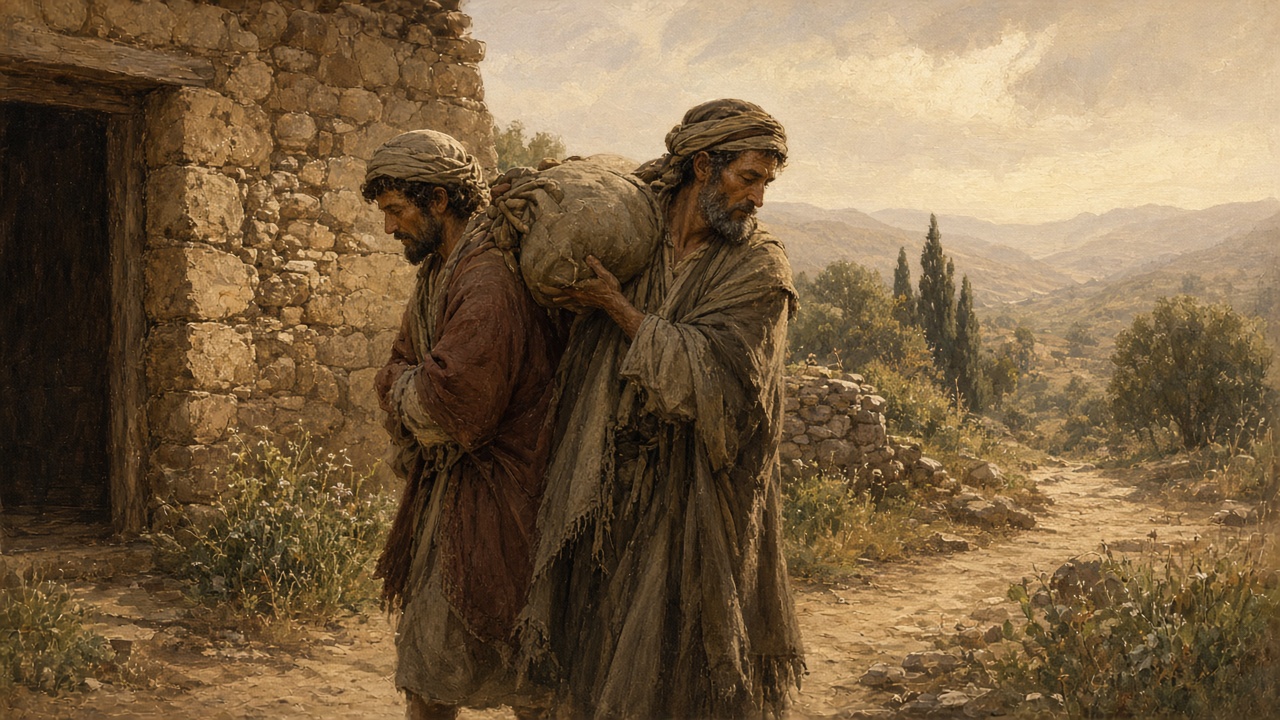
- The chapter sets two duties side by side. Those who are spiritual should restore with gentleness someone caught in a trespass, and carry one another's burdens, which the letter calls fulfilling the law of Christ. Each person, however, should test his own work and carry his own load, rather than think he is something when he is nothing and boast by comparing himself with someone else.Sources: the Bible text itself
- The writer uses the image of sowing and reaping: God is not to be mocked, and a person reaps what he sows. The one who sows to please the flesh reaps destruction from the flesh; the one who sows to please the Spirit reaps eternal life from the Spirit. Readers are urged not to grow weary in doing good, for in due time they will reap a harvest if they do not give up, and to do good to all, especially to the family of faith.Sources: the Bible text itself
- The writer calls attention to the large letters he is using as he writes with his own hand. He says that some try to compel circumcision in order to make a good outward impression, to avoid persecution for the cross of Christ, and to boast in the flesh of others, though the circumcised do not themselves keep the law. He asks never to boast except in the cross of our Lord Jesus Christ, says that neither circumcision nor uncircumcision means anything and that what counts is a new creation, and states that he bears on his body the marks of Jesus.Sources: the Bible text itself
Notes written with AI assistance from open sources (Theographic Bible Metadata, CC BY-SA 4.0; Easton’s Bible Dictionary, public domain) and reviewed before publishing.
Credits and license for this translation
Nhandejáry Nhe'ẽ
New Testament in Kaiwá (BR:kgk:Kaiwá)
copyright © 2006 Wycliffe Bible Translators, Inc.
Language: Kaiwá
Translation by: Wycliffe Bible Translators, Inc.
Copyright Information
© 2006, Wycliffe Bible Translators, Inc. All rights reserved.
This translation text is made available to you under the
terms of the Creative Commons License: Attribution-Noncommercial-No Derivative Works.
( http://creativecommons.org/licenses/by-nc-nd/3.0/ )
In addition, you have permission to port the text to different file formats, as long as you
do not change any of the text or punctuation of the Bible.
You may share, copy, distribute, transmit, and extract portions
or quotations from this work, provided that you include the above copyright
information:
You must give Attribution to the work.
You do not sell this work for a profit.
You do not make any derivative works that change any of the actual words or punctuation of the Scriptures.
Permissions beyond the scope of this license may be
available if you contact
us with your request.
The New Testament
in Kaiwá
© 2006, Wycliffe Bible Translators, Inc. All rights reserved.
This translation is made available to you under the terms of the
Creative Commons Attribution-Noncommercial-No Derivatives license 4.0.
You may share and redistribute this Bible translation or extracts from it in any format, provided that:
You include the above copyright and source information.
You do not sell this work for a profit.
You do not change any of the words or punctuation of the Scriptures.
Pictures included with Scriptures and other documents on this site are licensed just for use with those Scriptures and documents.
For other uses, please contact the respective copyright owners.
2014-04-27
Source: http://ebible.org/kgkNT/ · eBible.org