Acts 4
Nhandejáry Nhe'ẽ · Tap a verse to see its cross-references.
Pedro João ndive onhemoĩ preso
1Ha upéi katu Pedro João ndive onhe'ẽ oĩ-vy Nhandejáry róga py-py, óga kakwaa va'e py-py. Ne'írã omombe'upa vyteri ramo, ogwahẽ ou-vy pa'i ruvixa kwéry. Ogwahẽ ave polícia ruvixa. Upe va'e polícia onhangareko va'e Nhandejáry róga kakwaa-rehe. Ogwahẽ ave saduceu kwéry. 2Mokõive va'e nhe'ẽ ogweropoxy: “Hesu oikove jevy-gwi, nhande kwéry jaikove jevy va'erã voi ave” he'i ra'e omombe'u-vy kente kwéry-pe gwive Pedro João ndive. Upéa nhe'ẽ ombopoxy saduceu kwéry-pe.
3Upéa-gwi mokõive va'e-pe oipyhy hikwái oapresa hagwã íxupe. Ka'aru ete-ma. Ko'ẽmba peve oapresa imoĩ-vy. 4Ha heta voi oĩ inhe'ẽ reroviaha. Cinco mil kwimba'e va'e-rupi oĩ inhe'ẽ renduha.
5Ko'ẽmba-ma ojogweroaty Jerusalém-my judeu ruvixa kwéry. Ojogweroaty ave gwĩ judeu kwéry remimboete. Judeu rekombo'ehaty kwéry ojogweroatypa ave. 6Hendive kwéry oĩ pa'i ruvixagwasu héry va'e Anás. He'ýi oĩ ave, héry va'e Caifás, João, Alexandre. He'ýi gwive oĩ ave. 7Upe ramo ohenói uka onhemoĩ preso va'ekwe ou hagwã. Ou ramo gwovagwy-py omonhembo'y imoĩ-vy íxupe kwéry. Upéi omonhe'ẽ íxupe:
—Kiva'e nhe'ẽ-py tipo pejapo koixagwa ra'e? Kiva'e réry-py pejapo koixagwa ra'e? he'i íxupe kwéry oporandu randu-vy.
8Upe-ma ramo ipy'a omohynyhẽmba íxupe onhe'ẽ hagwã Nhe'ẽ Marangatu tee va'e. Upéi omombe'u judeu ruvixa kwéry-pe Pedro:
9—Ãy katu xe monhe'ẽ voi ogwata e'ỹ va'e-rehe. Okwera porãmaha-rehe xe monhe'ẽ: “Mba'éixa tipo okwera?” ere kuri xe-vy ereporandu-vy. 10Néi, amombe'u-ta peẽ-my peikwaa hagwã, peẽ kwéry mburuvixa kwéry va'e. Entéro Israel remiarirõre judeu ruvixa kwéry-pe amombe'u-ta ave. Ko va'e kwimba'e, Hesu Cristo Nazaré pygwa réry-py voíte opu'ã okwera porã. Ha peẽ katu pehupi va'ekwe Hesu-pe imoĩ-vy kurusugwasu-rehe ijuka-vy. Ha pene rembiupikwe-pe katu omoingove jevy-ma voi Nhandejáry. Ha'e héry-py voi onhembo'y jevy-ma ko va'e kwimba'e, ogwata e'ỹ tuja va'e. Pende rovagwy-py opu'ã-ma oĩ-vy. 11Yma omoĩ va'ekwe kwatia-rehe he'i-vy:
“Ndovaléi, he'i ogapoha ita-rehe. Ha upe ita katu ojeporu ojepytahoha ramo. Óga jepytahoha voi ita”
he'i va'ekwe, he'i Pedro omombe'u-vy.
Upéi he'i jevy Pedro:
—“Ita” he'i ramo, Hesu rekorã omombe'u. “Ogapoha” he'i ramo, pene rekorã omombe'u va'ekwe. 12Ãy katu ko yvy-rupi ndaipóri ha'e héry ramigwa. Ambue va'e réry nomoĩry nhande-vy Nhandejáry nhane resende hagwã. Hesu réry mante ae nhahenói ramo, nhane resende va'erã, he'i judeu ruvixa kwéry-pe Pedro.
13Upe ramo mburuvixa kwéry ohendu joa inhe'ẽ. Onhembopy'agwasu reheve mokõive va'e remimombe'u ohendu joa hikwái. He'i ojóupe:
—Ndoikéi ramo jepe escola-py, oikwaa porã voi onhe'ẽrã. Imbo'eháry ndoikói ramo jepe, hi'arandu porã voi, he'i ojóupe hese kwéry. Oikwaa porã onhe'ẽrã-gwi, opondera hese hikwái: —Hesu ndivegwa voíte ra'e upe va'e, he'i ojóupe hese hikwái.
14Upéi oma'ẽ upe ogwata e'ỹ tuja va'e-rehe Pedro yke-rehe onhembo'y oĩ-vy ramo. Okwera porã-gwi nonhe'ẽ mbojevy mo'ãi íxupe hikwái. Mba'eve nde'íry íxupe. 15Upéixa ramo, ombojevy imondo-vy opa'ũ-gwi hikwái. 16Osẽ rire he'i ojóupe:
—Mbava'e tipo jajapo-ta hese? he'i oporandu randu-vy ojóupe hikwái. —Hexapyrã-rupi voi hembiapo porã, he'i hese. —A pygwa, Jerusalém-my oiko va'e gwive oikwaapa voi. Upéa-gwi ndikatúi nhande apu hese. 17Ha ndajaipotavéi herakwã oho mombyry-rupi: “Anive katu erenhe'ẽve teĩ Hesu réry-py ereiko-vy. Upéixa erejapo ramo orogwereko asy arã” ja'e katu mokõive va'e-pe, he'i ojóupe judeu ruvixa kwéry.
18Upéi ohenói jevy oike hagwã. Oike rire, he'i íxupe:
—Anive katu erenhe'ẽve teĩ ereiko-vy Hesu réry-py. Ani ereporombo'eve teĩ heko-rupi, he'i onhe'ẽ poxy-vy íxupe onhemonhe'ẽ-vy.
19Ohendu ramo inhe'ẽ, he'i mburuvixa kwéry-pe Pedro João ndive:
—Iporã tipo orohendu pene nhe'ẽ orohendu e'ỹ hagwã Nhandejáry nhe'ẽ? he'i. —Aipo ramo mbava'e tipo he'i-ta Nhandejáry orohendu ramo pene nhe'ẽ? Pemombe'u katu ore-vy, he'i íxupe. 20—Ore rembiexagwe, ore remiendukwe oromombe'u meme va'erã. Norokirirĩ mo'ãiry voi, he'i mburuvixa kwéry-pe.
21Upe rire he'i íxupe:
—Anive eremombe'u Hesu réry-py. Upéixa erejapo ramo orogwereko asy arã, he'iri iri onhe'ẽ poxy-vy íxupe hikwái.
Upéi katu opoi íxugwi oho hagwã:
—Tereho katu, he'i íxupe ombohasa asyse mo'ã rire íxupe.
Nombohasa asy jepéiry íxupe. Ha upe pygwa onhomboaty va'e gwive omboete okwa-vy va'e Nhandejáry-pe. Ojehu va'ekwe-rehe omboete. Upéa-gwi mburuvixa kwéry omosẽ rei imondo-vy. 22Ha ogwata e'ỹ tuja va'e katu hexapyrã-rupi okwera va'e ituja-ma va'e voi. Quarenta-gwi ogwerekove va'e ro'y. Upéa-gwi kente kwéry omboete tee voi Nhandejáry-pe.
Hesu reroviaha gwive peteĩxa omondo Nhandejáry-pe onhe'ẽ
23Upe-ma ramo Pedro João ndive oho jevy gwe'ýi kwéry ha-py. Pa'i ruvixa he'i va'ekwe omombe'u. Judeu ruvixa he'i va'ekwe omombe'u ave. 24Ohendu ramo, peteĩxa omondo mondo joa hikwái Nhandejáry-pe onhe'ẽ:
—Nde ko, ore Járy, nde pu'aka va'e voi enterove va'e-rehe, he'i omboete-vy. —Nde áry yvy ygwasu ave apoha. Hesegwa gwive ijapoha voi nde, he'i omboete-vy.
25—Yma ete nhane ramói Davi amyrĩ-pe ne rembigwái-pe ereme'ẽ va'ekwe inhe'ẽrã. Ombo'e va'ekwe íxupe onhe'ẽ hagwã Nhe'ẽ Marangatu tee va'e:
“He'i Nhandejáry: Mba'e-gwi po judeu re'ýi e'ỹ kwéry ipoxypa hikwái? Ma'erã po he'i mo'ã xe-rehe: Nhande kwéry nhande pu'aka va'e voi Nhandejáry-rehe, he'i. 26Ha yvypóry ruvixagwasu kwéry ojogweroatypa hikwái. Onhesyrũ syrũ okwa-vy. Ou orairõ xe-vy, xe rembiporavo-pe ave, he'i Nhandejáry.”
Yma upéixa he'i va'ekwe Davi. 27Ha ko'ánga katu a-py voi ojogweroaty-ma mburuvixagwasu orairõ hagwã ne rembigwái marangatu-pe, ne rembiporavo Hesu-pe. Upéa mburuvixa héry Herodes, upéa mburuvixagwasu héry Pôncio Pilatos ave, Israel remiarirõre judeu kwéry, judeu re'ýi e'ỹ kwéry ave ojogweroatypa orairõ hagwã ne rembiporavo Hesu-pe. 28Ne nhe'ẽ-rupi ojapo hagwã hese yma ere va'ekwe gwive ojapo va'erã. 29Ãy katu onhe'ẽ poxy hikwái. Ehexa katu ipoxyha, ore Járy. Ore ne rembigwái va'e. Ore mbopy'agwasu katu ore kyhyje e'ỹ hagwã ne nhe'ẽ mombe'u-vy. 30Ehexa uka katu nde pu'akaha erembogwera hagwã hasy va'e-pe. Mba'asy-rehe nde pu'aka va'e. Ne rembigwái marangatu Hesu réry-py ejapo uka katu nhane rembiexa e'ỹ. Ehexa uka katu ne rembiapo porã. Hexapyrã-rupi ejapo uka katu, he'i joa hikwái.
31Upéixa omondo mondo Nhandejáry-pe onhe'ẽ. Upe-ma ramo ojogweroaty haty-py oryrýi-ma. Ipy'a omohynyhẽmba-ma íxupe kwéry Nhe'ẽ Marangatu tee va'e. Upéixa ramo okyhyje e'ỹ reheve peteĩ teĩ omombe'u Nhandejáry nhe'ẽ.
Peteĩ teĩ va'e-pe ome'ẽ me'ẽ hemikotevẽ
32Upe ramo Hesu reroviaha gwive ogwerojoja okyre'ỹ oiko-vy hikwái: “Kóa xe mba'e, kóa xe mba'e” he'i va'e ndoikói. “Nhane mba'e meme voi ko'ã va'e” he'i omba'e kwéry-rehe ojóupe.
33Ha upe doze Hesu remimondo va'e heroviapyrã-rupi omombe'u mbe'u oiko-vy Hesu oikove jevymaha rehegwa nhe'ẽ. Nhandejáry ipytygwõ-vy íxupe omombaraete omombe'u hagwã. Upéa-gwi ohendu va'e gwive inhe'ẽ ojohu porã voi. 34Ogwerohory joa hikwái. Ha ndaiporivéi-ma ipa'ũ kwéry-py oikotevẽ va'e. Heta ijyvy va'e, heta óga ogwereko va'e ave ovende oiko-vy. 35Upéi ovende va'ekwe repykwe ogweru, ome'ẽ hagwã Hesu remimondo kwéry-pe, omboja'o ja'o va'erã-pe. Upéixa ramo omboja'o ja'o ime'ẽ me'ẽ-vy oikotevẽ va'e-pe, peteĩ teĩ va'e-pe ome'ẽ hagwã hemikotevẽ. 36Upe ramo oĩ Hesu nhe'ẽ renduha héry va'e José. Ha Hesu remimondo kwéry ombohéry jo'a Barnabé. Barnabé réry he'ise: “Nhane mongyre'ỹ va'ety”. Barnabé Levita va'e, Chipre yvy pygwa va'e ave. 37Ha'e oho peteĩ oyvy ovende. Ogweru hepykwe Hesu remimondo kwéry-pe ome'ẽ hagwã.
Did you know?
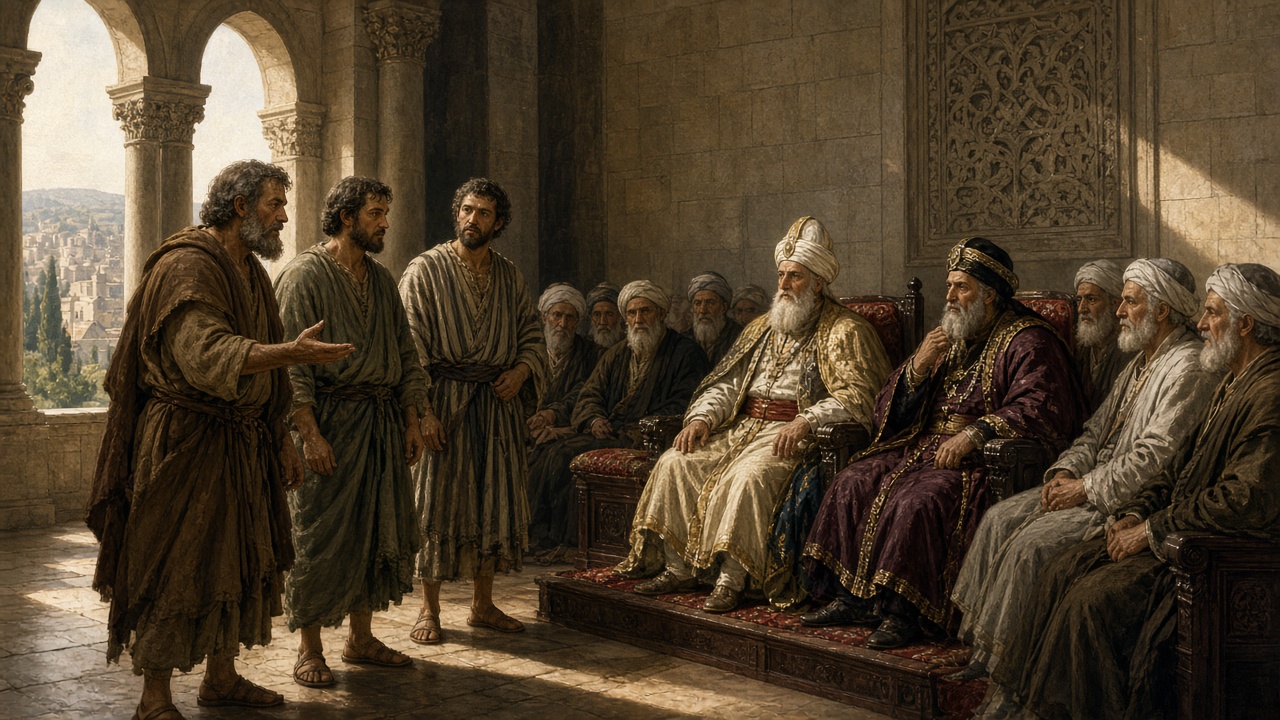
Peter and John before the Sanhedrin
- The priests, the captain of the temple guard, and the Sadducees seized Peter and John because they were teaching the people and proclaiming in Jesus the resurrection of the dead. Caiaphas, who sat with the assembly the next day, belonged to the Sadducees.Sources: the Bible text itself · Caiaphas
- Annas, called high priest here, had held that office from A.D. 7 to 14 until a Roman procurator deposed him. Caiaphas, who had married Annas's daughter, was raised to the office in A.D. 25; even so, some Jews may still have regarded Annas as the legal high priest, since Mosaic law treated the office as lifelong, and Annas was probably president or deputy of the Sanhedrin. John and Alexander, relatives of the high priest and otherwise unknown, sat with them.Sources: the Bible text itself · Annas · John (Relative of the High Priest) · Alexander (Son of Simon)
- Peter, a fisherman from Bethsaida, and John, also a fisherman and a son of Zebedee, were brought before the rulers, elders, and scribes. The council marveled at their boldness when it realized that they were unschooled, ordinary men, and took note that they had been with Jesus.Sources: the Bible text itself · Simon Peter · John the Apostle
Notes written with AI assistance from open sources (Theographic Bible Metadata, CC BY-SA 4.0; Easton’s Bible Dictionary, public domain) and reviewed before publishing.
Places in this chapter
- Jerusalem · 31.777, 35.234 · verses 5, 16
- Nazareth · 32.702, 35.298 · verse 10
- Cyprus · 35.000, 33.000 · verse 36
Only places identified with high confidence are shown (90% or more according to the scholarly sources compiled by OpenBible). Period map: DARE (Digital Atlas of the Roman Empire), CC BY 4.0; modern map: © OpenStreetMap contributors; places: OpenBible.info (CC BY 4.0).
Credits and license for this translation
Nhandejáry Nhe'ẽ
New Testament in Kaiwá (BR:kgk:Kaiwá)
copyright © 2006 Wycliffe Bible Translators, Inc.
Language: Kaiwá
Translation by: Wycliffe Bible Translators, Inc.
Copyright Information
© 2006, Wycliffe Bible Translators, Inc. All rights reserved.
This translation text is made available to you under the
terms of the Creative Commons License: Attribution-Noncommercial-No Derivative Works.
( http://creativecommons.org/licenses/by-nc-nd/3.0/ )
In addition, you have permission to port the text to different file formats, as long as you
do not change any of the text or punctuation of the Bible.
You may share, copy, distribute, transmit, and extract portions
or quotations from this work, provided that you include the above copyright
information:
You must give Attribution to the work.
You do not sell this work for a profit.
You do not make any derivative works that change any of the actual words or punctuation of the Scriptures.
Permissions beyond the scope of this license may be
available if you contact
us with your request.
The New Testament
in Kaiwá
© 2006, Wycliffe Bible Translators, Inc. All rights reserved.
This translation is made available to you under the terms of the
Creative Commons Attribution-Noncommercial-No Derivatives license 4.0.
You may share and redistribute this Bible translation or extracts from it in any format, provided that:
You include the above copyright and source information.
You do not sell this work for a profit.
You do not change any of the words or punctuation of the Scriptures.
Pictures included with Scriptures and other documents on this site are licensed just for use with those Scriptures and documents.
For other uses, please contact the respective copyright owners.
2014-04-27
Source: http://ebible.org/kgkNT/ · eBible.org