Acts 15
Nhandejáry Nhe'ẽ · Tap a verse to see its cross-references.
“Naiporãi nhanhemonhe'ẽ hatã hatã judeu e'ỹ kwéry-pe” he'i Hesu reroviaha rerekwa
1Ha upéi katu ogwahẽ ou-vy, Judéia yvy-gwi ou va'e. Ombo'e mbo'e oiko-vy Hesu reroviaha-pe:
—Iporã katu erenhepirekytĩ uka upe Moisés amyrĩ he'i hagwe-rupi. Nerenhepirekytĩ ukái ramo, nane resende mo'ãi Nhandejáry, he'i mo'ã imbo'e-vy.
2Ohendu ramo inhe'ẽ Paulo Barnabé ndive:
—Ndaha'éiry upéixa, he'i.
—Upéixa voínte nhande reko, he'i Paulo-pe onhe'ẽ mbojevy jevy-vy.
—Ndaupéixairy, he'iri iri onhonhe'ẽ mbojevy jevy-vy.
Omombe'u joavy avy-gwi, he'i ojóupe:
—Nhamondo katu Paulo Barnabé ndive. A pygwa ave nhamondo Jerusalém tetã-my jaikwaa porãve hagwã, he'i. —Upe-py oĩ Hesu remimondo, Hesu reroviaha rerekwa ave. Nhamondo katu upe-py, “Iporã-ta pa judeu e'ỹ kwéry onhepirekytĩ uka, tapa naiporãi” oporandu hagwã, he'i.
3Upéa-gwi omondo íxupe Hesu reroviaha upe-py oĩ va'e. Upéi oho. Ohasa oho-vy Fenícia yvy-rupi, Samaria yvy-rupi ave:
—Gwĩ judeu e'ỹ kwéry ko ogwerova-ma gwekoha Nhandejáry-rehe, he'i omombe'u mbe'u oiko-vy.
Upéa omombe'u ramo, ombovy'a eterei entéro Hesu reroviaha gwive. 4Ogwahẽ ramo Jerusalém-my ogwerohory íxupe Hesu reroviaha, herekwa kwéry ave, Hesu remimondo ave. Nhandejáry ojapo uka uka íxupe va'ekwe omombe'upa íxupe kwéry.
5Ha oĩ ave Hesu reroviaha, fariseu kwéry moirũhaty. Mokõi va'e reko-rupi oikose va'e. Ohendu ramo Paulo nhe'ẽ, onhembo'y-ma inhe'ẽ mbojevy hagwã:
—Tonhepirekytĩ uka voi katu judeu e'ỹ kwéry. Tohendu katu ave myamyrĩ Moisés he'i va'ekwe nhande rekorã, he'i mo'ã imombe'u-vy.
6Upéixa-gwi ojogweroaty onhomongeta-vy Hesu remimondo, Hesu reroviaha rerekwa ave. Ojogweroaty ojohu hagwã mbava'e tipo Nhandejáry oipota jajapo jaiko porã hagwã. 7Heta omombe'u joavy avy rire, opu'ã-ma oĩ-vy Pedro. He'i Hesu reroviaha kwéry-pe omombe'u-vy:
—Are-ma voi xe poravo va'ekwe pene pa'ũ-gwi Nhandejáry, xe re'ýi kwéry. Xe poravo va'ekwe amombe'u hagwã Hesu rehegwa nhe'ẽ porã. Xe nhe'ẽ ohendu ramo, judeu e'ỹ kwéry ogwerovia hagwã hikwái, xe poravo. 8Ha Nhandejáry nhande py'a pygwa va'e rexaha voi. Judeu e'ỹ kwéry ogwerovia tee ramo, ojohu porã. Upéa-gwi nhande py'a omohynyhẽmba hagwe-rami ipy'a omohynyhẽmba ave íxupe kwéry. Ome'ẽ íxupe kwéry ave Nhe'ẽ Marangatu tee va'e ipy'apyhyharã íxupe. 9Peteĩxa ogwereko va'ekwe enterove va'e gwive imopotĩ-vy. Nhande py'a mopotĩ hagwe-rami, omopotĩ ave judeu e'ỹ kwéry py'a ogwerovia-gwi íxupe.
10—Ma'erã peje íxupe kwéry ojapo hagwã Nhandejáry remimbota e'ỹ? Ma'erã pembopoxy-ta teĩ Nhandejáry-pe? Judeu reko-rupi jaiko ramo, ipohýi va'e oatúa-rehe ogwerahaha-rami jaiko. Upe va'e reko-rupi ndikatúi jaiko. Nhane ramói amyrĩ ave ndikatúi oiko araka'e upéa reko-rupi. Ãy katu ma'erã penhemonhe'ẽ hatã hatã íxupe kwéry oiko hagwã judeu reko-rupi? Ani pejapo teĩ upéixa. Judeu reko-rupi anho ngatu rei peiko meme ramo jepe, napene resende mo'ãi joty Nhandejáry. 11Jajerovia-ma ramo ae Nhandejáry Hesu-rehe, nhane resende-ta. Nhane resendese-gwi, nhane resende-ta. Nhane resendeha-rami ave, oresende-ta judeu e'ỹ va'e-pe, he'i Hesu reroviaha kwéry-pe Pedro imombe'u-vy.
12Onhe'ẽ rire okirirĩmba hikwái. Upéi Paulo, Barnabé ndive omombe'upa Nhandejáry ojapo uka uka va'ekwe íxupe. Omombe'u hexapyrã-rupi ojapo uka va'ekwe. Judeu e'ỹ remiexarã ojapo uka va'ekwe omombe'upa:
—Nhandejáry rembiapo porã-rehe oponderapa joa hikwái ojohu porã-vy, he'i omombe'u-vy.
Omombe'u jave, ndoikwaái onhe'ẽ mbojevy hagwã. 13Omombe'upa rire, onhe'ẽ-ma Hesu reroviaha rerekwa héry va'e Tiago:
—Pejeapysaka porã xe-rehe, xe re'ýi kwéry. 14Simão Pedro ko omombe'upa kuri nhande-vy judeu e'ỹ kwéry rehegwa nhe'ẽ: “Yma Nhandejáry ndohovasái va'ekwe íxupe kwéry, judeu kwéry-rami. Upe rire ae ohovasa va'ekwe íxupe kwéry. Oipe'a va'ekwe onhopa'ũ-gwi hese ojerovia va'e gwe'yirã” he'i nhande-vy Pedro omombe'u-vy. 15Yma ete Nhandejáry nhe'ẽ-py omombe'u va'ety omoĩ va'ekwe kwatia-rehe onhe'ẽ. Yma hemimoĩgwe-rami kwatia-rehe ãy katu onhe'ẽ Pedro. Ijoja inhe'ẽ. No'ã-rami hemimoĩgwe:
16“Heta mba'e ojehu va'ekwe myamyrĩ Davi ra'yre-pe. Heta mba'e ojehu ramo íxupe, ndopytavéi mburuvixa ramo. Upéi he'i Nhandejáry: Ánga ete-ma ae aheja jevy-ta Davi remiarirõre-pe mburuvixagwasurã. 17Aheja jevy-ta xe reka reka hagwã entéro yvypóry kente kwéry gwive. Xe reka-ta xe moirũ hagwã. Judeu e'ỹ kwéry, xe re'yirã gwive xe reka-ta gwuvixarã, he'i. 18Yma gwive ãy peve aikwaa uka peẽ-my ko va'e nhe'ẽ, he'i Nhandejáry”
he'i Tiago imombe'u-vy. Upéi omombe'u jevy upe Hesu reroviaha rerekwa:
—Upéixa hemimoĩgwe kwatia-rehe. Upéixa voi judeu e'ỹ kwéry katu Nhandejáry re'ýi ave. 19Upéa-gwi ha'e-ta peẽ-my: Xe-vy naiporãi nhanhemonhe'ẽ hatã hatã judeu e'ỹ kwéry-pe. Ogwerova ramo gwekoha Nhandejáry-rehe naiporãi nhamoakãrasy íxupe kwéry. “Entéro Moisés he'i va'ekwe gwive ejapo katu” naiporãi ja'e íxupe. 20Nhamondo katu íxupe kwéry nhande kwatia nhe'ẽ no'ã-rami: “Ani penhemongy'a teĩ pe'u-vy upe tembi'u tupã ra'anga rovagwy-py onhemoĩ va'e hemi'urã. Pemenda e'ỹ reheve, ani ae peiko rei onhondive. Ani pe'u teĩ ijuka-vy ohumbiri va'ekwe. Ani pe'u teĩ so'o rugwykwe.” Ko va'e nhe'ẽ mante nhamondo íxupe kwéry. Ko va'e nhe'ẽ ojapo va'e judeu kwéry. 21Yma gwive ãy peve oiko enterove tetã-my meme myamyrĩ Moisés he'i va'ekwe mombe'uha. Pytu'u tu'uha áry-py meme omonhe'ẽ nhe'ẽ he'i va'ekwe. Judeu kwéry porahéi haty haty-rupi omonhe'ẽ. Oĩ joty judeu reko-py oiko va'e. Upéa-gwi naiporãi nhambopoxy rei íxupe kwéry, he'i onhemonhe'ẽ-vy Tiago.
Upéixa onhonhe'ẽ mbojevy jevy rire, onhonhe'ẽ mbohory jevy oiko-vy.
Hesu reroviaha rerekwa kwéry omondo onhe'ẽ kwatia-rehe entéro Hesu reroviaha-pe gwive
22Ohendu ramo inhe'ẽ, ogwerovy'a hikwái. Upéa-gwi he'i Hesu remimondo, Hesu reroviaha gwive ave, herekwa kwéry ave:
—Nhane pa'ũ-gwi jaiporavo katu nhane remimondorã. Antioquia tetã-my nhamondo katu. Paulo Barnabé ave nhamondo katu inhirũrã, he'i ojóupe hikwái.
Ko va'e nhe'ẽ ojohu porã hikwái. Upéa-gwi mokõi omondo. Judas ombohéry va'e Barsabás Silas ndive omondo. Ko mokõi Hesu reroviaha rerekwa va'e.
23Upe oho jave voi ogweraha uka ipo-py íxupe kwéry kwatia nhe'ẽ. No'ã-rami he'i hembieraha va'e kwatia nhe'ẽ. “Ore kwéry, Hesu remimondo va'e, Hesu reroviaha rerekwa va'e, pende re'ýi ave oromondo-ta ore nhe'ẽ peẽ-my, Hesu reroviaha va'e, judeu e'ỹ va'e, Antioquia tetã mygwa va'e, Síria yvy pygwa va'e, Cilícia yvy pygwa va'e ave. Peẽ kwéry va'e-pe oromondo-ta ore kwatia nhe'ẽ. Mba'éixa tipo peiko? Peiko porã pa?
24“Pene moakãrasy jeko ra'e ko'a gwigwa. Omombe'u ambue ramo peẽ-my pene moakãrasy. Oromombe'u uka e'ỹ reheve, omombe'u. 25Upéa-gwi orojogweroaty rire oro'e: Iporã katu jaiporavo nhane remimondorã, oro'e. Hendive oho-ta Barnabé Paulo ave, nhane rembiayhu va'e, naimytu'e'ỹ etéiry ójehe va'e. 26Hapixa kwéry ojukase ramo jepe íxupe, ha'e ojapo joty va'e Nhandejáry Hesu Cristo remimbota, oro'e kuri orejéupe Barnabé ndive Paulo-rehe. 27Upéa-gwi oromondo-ta Judas Silas ndive omombe'u hagwã ore remimoĩgwe kwatia-rehe, peikwaapa porã hagwã omombe'u va'e. 28Ha oro'e, Íxupe kwéry katu naiporãiry nhanhemonhe'ẽ hatã hatã, oro'e kuri orejéupe pende-rehe kwéry. Tekoha porã ae nhamombe'u va'erã kwatia nhe'ẽ-rupi íxupe kwéry, oro'e kuri pende-rehe kwéry. Koixagwa nhe'ẽ ojohu porã ave Nhe'ẽ Marangatu tee va'e. 29Upéa-gwi ani penhemongy'a teĩ pe'u-vy tembi'u tupã ra'anga rovagwy-py onhemoĩ va'ekwe. Ani pe'u teĩ so'o hugwy reheve. Ani pe'u teĩ ijuka-vy ohumbiri va'ekwe. Pemenda e'ỹ reheve, ani ae peiko rei onhondive. Upéa ndapejapói ramo peiko porã va'erã. Nhandejáry tapende rovasa katu. Opa-ma oronhe'ẽmba.”
Upéixa voi omoĩ kwatia-rehe onhe'ẽ omondo va'erã.
Hesu reroviaha gwive ogwerovy'a kwatia nhe'ẽ
30Ha upéi katu hemimondo osẽ oho-vy. Antioquia tetã-my ogwahẽ oho-vy. Upe-py ogwahẽ ramo, ombojogweroatypa Hesu reroviaha gwive. Omboaty ome'ẽ hagwã Hesu reroviaha-pe upéa kwatia nhe'ẽ. 31Omonhe'ẽmba rire, upe pygwa ogwerovy'a eterei inhe'ẽ hikwái:
—Onhemonhe'ẽ porã nipo ra'e, he'i ojóupe.
32Upéi Judas Silas ndive Nhandejáry nhe'ẽ-py omombe'u va'ety, heta-ma onhe'ẽ onhemonhe'ẽ-vy:
—Eiko meme katu tape porã-rupi, he'i Hesu reroviaha-pe.
33Upe-py are-ma opyta. Upe rire:
—Oroho jevy-tama ore mbouhare ha-py, he'i Hesu reroviaha-pe.
—Néi, tapeho porã katu Nhandejáry ndive, he'i íxupe.
34Ha Silas katu ndohóiry. Opyta joty upe-py. 35Ha Paulo Barnabé ndive opyta upe-py ombo'e mbo'e-vy. Nhandejáry nhe'ẽ omombe'u oĩ-vy. Heta-ma omoirũ íxupe ave Nhandejáry nhe'ẽ omombe'u-vy.
Paulo oiporavo Silas-pe omoirũ hagwã íxupe
Heta omombe'u Nhandejáry nhe'ẽ Paulo Barnabé ndive oiko-vy. 36Upe rire he'i Barnabé-pe Paulo:
—Jaha jahexa jevy Nhandejáry nhe'ẽ nhamombe'u mbe'u hagwe-rupi. Tetã tetã-rupi jaha, he'i. —Jaha jaikwaa hagwã mba'éixa pa oiko Hesu reroviaha, he'i íxupe Paulo.
37—Jaraha katu nhane ndive João Marcos, he'i íxupe Barnabé.
38—Naiporãi jaraha íxupe, he'i. —Nhande reja-ma va'ekwe oho-vy upe va'e. Panfília yvy-py nhande reja va'ekwe oho-vy. Nanhane moirũvéiry, jaha ramo nhamombe'u Nhandejáry nhe'ẽ. Naiporãvéi-ma jaraha íxupe, he'i íxupe Paulo.
39Upéixa ramo mokõive va'e onhonhe'ẽ mbojevy jevy hikwái. Ndaijoja etéiry voi inhe'ẽ kwéry. Upéa-gwi ojoheja-ma. Barnabé oho, Marcos rerahaha ramo oho. Onhemboyru kanoagwasu-py oho hagwã Chipre ykõi-my. 40Ha Paulo katu oiporavo Silas-pe omoirũ hagwã íxupe:
—Nhandejáry ko nhande rexakwaa rei va'e. Tande rovasa katu, he'i íxupe imondo-vy Hesu reroviaha.
41Upe rire osẽ oho-vy. Síria yvy-rupi, Cilícia yvy-rupi ave oho onhemonhe'ẽ-vy:
—Ani erejere teĩ Hesu rekoha-gwi, he'i Hesu reroviaha-pe onhomboaty aty ha-rupi.
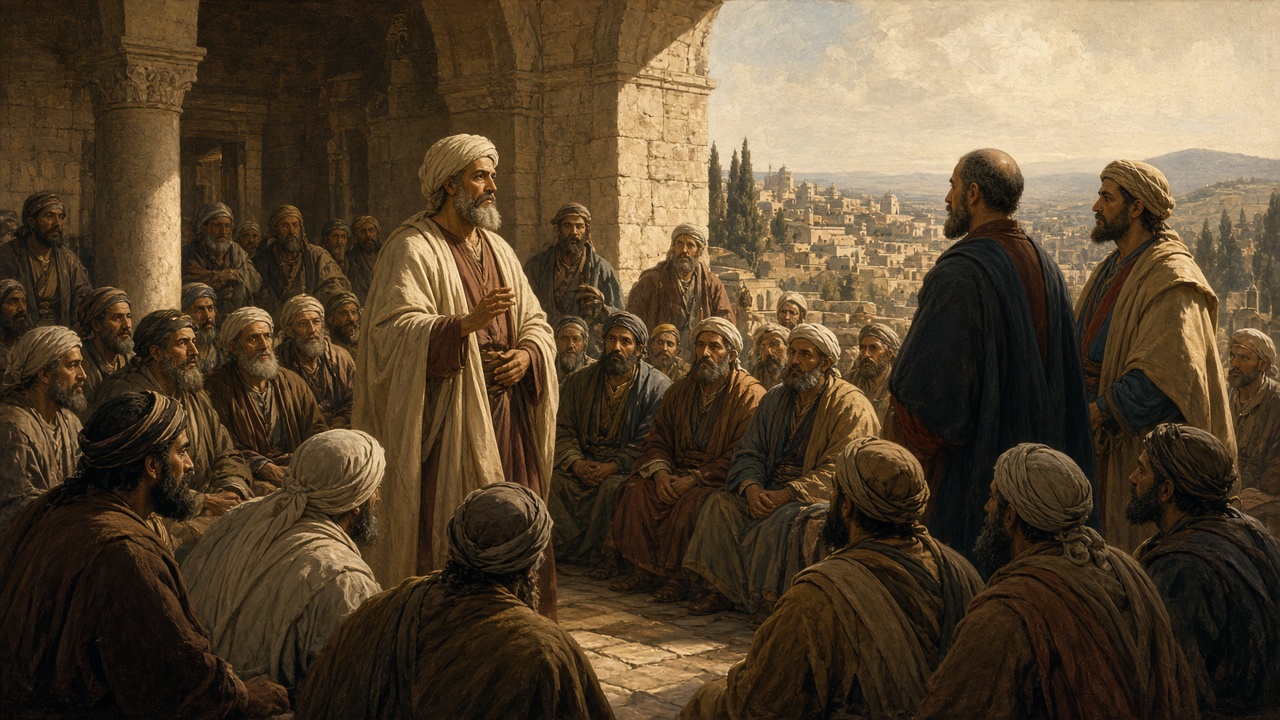
Did you know?
The Council on Gentile Believers
- The dispute began in Antioch, on the Orontes about three hundred miles north of Jerusalem, then ranked third among the cities of the Roman empire, after Rome and Alexandria. On the way to the council, Paul and Barnabas passed through Phoenicia, a coastal strip about one hundred twenty miles long, and through Samaria. A chronological note dates the Jerusalem Council to AD 46.Sources: Antioch (Syria) · Phenicia · the Bible text itself · Jerusalem Council
- Easton's Bible Dictionary (1897) says that James, whom it calls the brother or near kinsman of Jesus, headed the church in Jerusalem and presided at the council on the Gentiles. The letter that followed was addressed to Gentile believers in Antioch, Syria, and Cilicia. Cilicia, Paul's home province and a maritime Roman province in the southeast of Asia Minor since 67 BC, included his native city of Tarsus.Sources: James (Brother of Jesus) · the Bible text itself · Cilicia · Paul
- Judas, called Barsabbas, and Silas, also known as Silvanus, were prophets and leading men of the Jerusalem church, sent to confirm the council's decision in person. A later sharp disagreement over John Mark, cousin of Barnabas, separated the two missionaries: Barnabas took Mark and sailed for Cyprus, while Paul chose Silas. A chronological note dates that parting to AD 47.Sources: the Bible text itself · Silas · John Mark · Paul and Barnabas part ways
Notes written with AI assistance from open sources (Theographic Bible Metadata, CC BY-SA 4.0; Easton’s Bible Dictionary, public domain) and reviewed before publishing.
Places in this chapter
- Antioch · Today: Antioch on the Orontes · 36.227, 36.172 · verses 1, 22, 23, 30, 35
- Judea · Today: Judea 1 · 31.777, 35.234 · verse 1
- Jerusalem · 31.777, 35.234 · verses 2, 3, 4, 22, 23, 33
- Phoenicia · 33.271, 35.196 · verse 3
- Samaria · Today: Samaria 2 · 32.276, 35.195 · verse 3
- Cilicia · 36.913, 34.892 · verses 23, 41
- Syria · Today: Syria 2 · 33.511, 36.306 · verses 23, 41
- Pamphylia · 37.000, 31.000 · verse 38
- Cyprus · 35.000, 33.000 · verse 39
Only places identified with high confidence are shown (90% or more according to the scholarly sources compiled by OpenBible). Period map: DARE (Digital Atlas of the Roman Empire), CC BY 4.0; modern map: © OpenStreetMap contributors; places: OpenBible.info (CC BY 4.0).
Credits and license for this translation
Nhandejáry Nhe'ẽ
New Testament in Kaiwá (BR:kgk:Kaiwá)
copyright © 2006 Wycliffe Bible Translators, Inc.
Language: Kaiwá
Translation by: Wycliffe Bible Translators, Inc.
Copyright Information
© 2006, Wycliffe Bible Translators, Inc. All rights reserved.
This translation text is made available to you under the
terms of the Creative Commons License: Attribution-Noncommercial-No Derivative Works.
( http://creativecommons.org/licenses/by-nc-nd/3.0/ )
In addition, you have permission to port the text to different file formats, as long as you
do not change any of the text or punctuation of the Bible.
You may share, copy, distribute, transmit, and extract portions
or quotations from this work, provided that you include the above copyright
information:
You must give Attribution to the work.
You do not sell this work for a profit.
You do not make any derivative works that change any of the actual words or punctuation of the Scriptures.
Permissions beyond the scope of this license may be
available if you contact
us with your request.
The New Testament
in Kaiwá
© 2006, Wycliffe Bible Translators, Inc. All rights reserved.
This translation is made available to you under the terms of the
Creative Commons Attribution-Noncommercial-No Derivatives license 4.0.
You may share and redistribute this Bible translation or extracts from it in any format, provided that:
You include the above copyright and source information.
You do not sell this work for a profit.
You do not change any of the words or punctuation of the Scriptures.
Pictures included with Scriptures and other documents on this site are licensed just for use with those Scriptures and documents.
For other uses, please contact the respective copyright owners.
2014-04-27
Source: http://ebible.org/kgkNT/ · eBible.org