1 Timothy 4
Nhandejáry Nhe'ẽ · Tap a verse to see its cross-references.
Oporohekombo'e vai va'e ojekwaa va'erã
1Ko'a-rami Nhe'ẽ Marangatu tee va'e remimombe'u porã: “Hesu ogwahẽ jevyha áry renonde ojekwaa va'erã oporohekombo'e vai va'e. Oporombotavy va'e nhe'ẽ anháy remimombe'u ohendu va'erã. Anháy arandu-rupi oiko va'erã” he'i Nhe'ẽ Marangatu tee va'e. 2Oporombo'e joavy avy rei va'erã. Opy'a ky'a ombojekwaa e'ỹ ramo jepe, ijapu joty va'erã. Ipy'a ky'a ramo jepe, “Ndajapo vaíry” he'i rei joty va'erã ojéupe. Gwĩ imba'e raku-py ombopere va'e-rami ombopere opy'a. Gwasy ohendu e'ỹ va'e-rami oiko. Ndoikwaái gwekoha vai. 3“Anive eremenda teĩ. Omenda e'ỹ va'e mante ojapo Nhandejáry remimbota” he'i mo'ã va'erã upe hekoha vai va'e. “Oĩ ja'u e'ỹ va'erã. Anive ere'u teĩ” he'i mo'ã va'erã anháy arandu-rupi oporombo'e rei-vy. “Ndaja'úi” he'i ramo jepe, Nhandejáry remimoingokwe joty nhande-vy gwarã. Nhandejáry oipota ojéupe otima porã Hesu reroviaha anhetegwa oikwaa va'e tembi'u hemimoingokwe-rehe. 4Entéro Nhandejáry remimoingokwe iporã meme voi. Ndoikói ja'u e'ỹ va'erã. Nhatima porã ramo íxupe ja'u hagwã-rehe, ja'u joty va'erã. Ndaipóri voi ja'u e'ỹ va'erã. 5Upéa Nhandejáry rembijohu porã. “Iporã ere'u” he'i nhande-vy. Jajapo oração hese ave. Upéa-gwi ndaipóri ja'u e'ỹ va'erã.
Erepara porã katu ndéjehe pono eremombe'u joavy avy
6Orohekombo'e hagwe-rami ave ehekombo'e nde re'ýi kwéry-pe. Upéixa Hesu Cristo nhe'ẽ-py ereipytygwõ va'erã íxupe kwéry. Upéixa hesegwa nhe'ẽ porã ererovia tee ramo, ne mbo'eháry nhe'ẽ erehendu ramo, ne mbaraeteve teve va'erã ereho-vy. 7Ani erepena teĩ onhe'ẽ rei va'e-rehe. Hi'arandu e'ỹ va'e nhe'ẽ emboyke katu. Imombe'uharãgwe embojevy katu imondo-vy. Nde retea'e reheve ejapo katu Nhandejáry remimbota. 8Jaripara puku ramo, nhanhemombaraete-vy jaripara. Upéixa iporã nhande rete-pe jaripara. Ha nhande retea'e reheve Nhandejáry remimbota jajapo ramo ae katu, nhanhemombaraeteve voi jaiko-vy. Ãy ko yvy-rupi jaiko ramo, “Nhandejáry ndive jaikove meme va'erã” ja'e. Ha upe rire katu nhagwahẽ ramo Nhandejáry oiko ha-py ave, jaiko meme va'erã Nhandejáry ndive. 9Upéa nhe'ẽ anhetegwa voi. Iporã jarovia íxupe. 10Upéa-rehe hatã hatã nhamba'apo Nhandejáry nhe'ẽ nhamombe'u-vy. Jajerovia-ma Nhandejáry oikove va'e-rehe jaiko-vy. Ha'e enterove va'e resendeharã. Hesu reroviaha-pe oresende voi. Upéa-gwi nhamba'apo hatã inhe'ẽ mombe'u-vy. 11Upéa nhe'ẽ, “Pejapo katu” ere erehekombo'e porã-vy íxupe kwéry. 12Enhemboete uka katu íxupe, ani he'i hagwã nde-rehe, “Ikaria'y vyteri nipo ra'e Timóteo”. Nde ae eiko porã katu Hesu reroviaha rekorã rexa uka-vy. Enhe'ẽ porã katu. Tekoha-rupi eiko íxupe kwéry. Eporohayhu, ejerovia Nhandejáry-rehe, otĩ kwaa va'e-rami eiko. Ójehe ha'e ae omombe'u va'e-rami eiko. Ohexa kwaa ramo nde-rehe, ohendu va'erã ne remimombe'u. 13Agwahẽ va'erã aha-vy nde ha-py. Aha e'ỹ jave, emonhe'ẽ nhe'ẽ katu Nhandejáry kwatia nhe'ẽ onhomboaty va'e-pe. “Jajapo katu Nhandejáry nhe'ẽ” ere íxupe kwéry erehekombo'e porã-vy. 14Omombe'u va'ekwe nde-vy Nhandejáry ne rembiaporã nde rexakwaa rei-vy. Upe va'e apo-vy ne kyre'ỹ ae katu. Are-ma omotenonde va'ekwe nde-rehe ne rembiaporã-rehe Nhandejáry nhe'ẽ-py omombe'u va'ety. Omoĩ va'ekwe ne akã-rehe opo heroviaha rerekwa kwéry. Upe jave ne mombaraete voi va'ekwe Nhandejáry ne rembiapo porãrã-rehe. Upéa-gwi ne kyre'ỹ katu ne rembiaporã apo-vy. 15Ne renonde-py emoĩ meme katu ne rembiaporã omotenonde va'ekwe nde-vy. Enheme'ẽ íxupe upéa nhe'ẽ-rupi ereiko hagwã. Aipo ramo upéa nhe'ẽ-rupi ereiko porãve rãve ramo, ojekwaa porã va'erã nde rekoha porã. 16Erepara porã katu ndéjehe. Ne remimombe'urã-rehe enhangareko katu ave, pono eremombe'u joavy avy. Upéixa ereiko ramo erenheresende va'erã. Ne nhe'ẽ-rupi onheresende va'erã ave ne renduháry.
Did you know?
False Teaching and Godly Training
- The chapter says the Spirit expressly states that in later times some will abandon the faith to follow deceitful spirits and the teachings of demons. They are influenced by the hypocrisy of liars whose consciences are seared with a hot iron, and they will prohibit marriage and require abstinence from certain foods.Sources: the Bible text itself
- The letter answers those demands by saying God created such foods to be received with thanksgiving by those who believe and know the truth. Every creation of God is good, and nothing received with thanksgiving should be rejected, because it is sanctified by the word of God and prayer.Sources: the Bible text itself
- The writer urges the young person he addresses not to let anyone despise his youth, but to set an example in speech, conduct, love, faith, and purity. Until the writer comes, he is to devote himself to the public reading of Scripture, to exhortation, and to teaching, and not neglect the gift given through prophecy when the elders laid hands on him. Physical exercise, the letter adds, is of limited value, while godliness is valuable in every way, holding promise for the present life and the life to come, a saying the letter calls trustworthy and worthy of full acceptance.Sources: the Bible text itself
Notes written with AI assistance from open sources (Theographic Bible Metadata, CC BY-SA 4.0; Easton’s Bible Dictionary, public domain) and reviewed before publishing.
Credits and license for this translation
Nhandejáry Nhe'ẽ
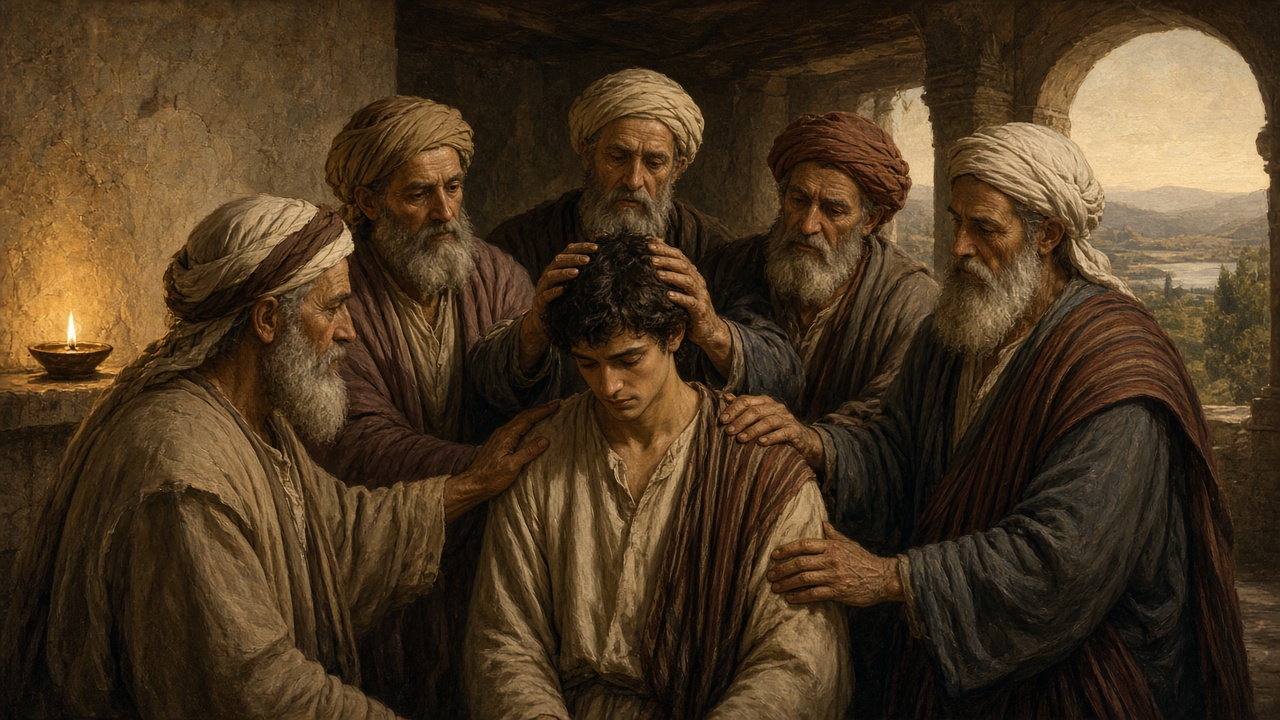
New Testament in Kaiwá (BR:kgk:Kaiwá)
copyright © 2006 Wycliffe Bible Translators, Inc.
Language: Kaiwá
Translation by: Wycliffe Bible Translators, Inc.
Copyright Information
© 2006, Wycliffe Bible Translators, Inc. All rights reserved.
This translation text is made available to you under the
terms of the Creative Commons License: Attribution-Noncommercial-No Derivative Works.
( http://creativecommons.org/licenses/by-nc-nd/3.0/ )
In addition, you have permission to port the text to different file formats, as long as you
do not change any of the text or punctuation of the Bible.
You may share, copy, distribute, transmit, and extract portions
or quotations from this work, provided that you include the above copyright
information:
You must give Attribution to the work.
You do not sell this work for a profit.
You do not make any derivative works that change any of the actual words or punctuation of the Scriptures.
Permissions beyond the scope of this license may be
available if you contact
us with your request.
The New Testament
in Kaiwá
© 2006, Wycliffe Bible Translators, Inc. All rights reserved.
This translation is made available to you under the terms of the
Creative Commons Attribution-Noncommercial-No Derivatives license 4.0.
You may share and redistribute this Bible translation or extracts from it in any format, provided that:
You include the above copyright and source information.
You do not sell this work for a profit.
You do not change any of the words or punctuation of the Scriptures.
Pictures included with Scriptures and other documents on this site are licensed just for use with those Scriptures and documents.
For other uses, please contact the respective copyright owners.
2014-04-27
Source: http://ebible.org/kgkNT/ · eBible.org