Malachi 1
Anumzamofo Ruotage Avontafere · Tap a verse to see its cross-references.
About this book
About Malachi
- Easton's Bible Dictionary (1897) presents Malachi, a name meaning "messenger" or "angel," as the last of the minor prophets and the writer of the last book of the Old Testament canon. Nothing is known of him beyond what is contained in his book of prophecies.Sources: Easton: Malachi · Malachi
- Some have supposed that the name is simply a title for a messenger of Jehovah, not a proper name. Easton's Bible Dictionary (1897) concludes, however, that there is reason to regard Malachi as the prophet's ordinary name.Sources: Easton: Malachi · Malachi
- Easton's Bible Dictionary (1897) dates the prophecies to about 420 B.C., after Nehemiah's second return from Persia, or possibly before that return. Because Ezra does not mention him and he does not mention the restoration of the temple, the dictionary infers that he prophesied after Haggai and Zechariah.Sources: Easton: Malachi
- Easton's Bible Dictionary (1897) treats Malachi as a contemporary of Nehemiah, comparing Malachi 2:8 with Nehemiah 13:15 and Malachi 2:10-16 with Nehemiah 13:23. It also notes that the temple services were still in existence, citing Malachi 1:10, 3:1 and 3:10.Sources: Easton: Malachi
Notes written with AI assistance from open sources (Theographic Bible Metadata, CC BY-SA 4.0; Easton’s Bible Dictionary, public domain) and reviewed before publishing.
Ra Anumzamo'ma Israeli vahe avesizmante'nea zamofo naneke
1Ama'i nanekea Ra Anumzamo'a kasnampa ne' Malakaiampi huvazino Israeli vahe zamasmi'nea naneke, 2Ra Anumzamo'a huno, Nagra navesi neramantoe. Hianagi tamagra amanage hutma nantahinegaze, Kagra inankna kazigati tavesia nerantane? Anagema hazageno'a, Ra Anumzamo'a anage hu'ne, Jekopu'a Iso negna mani'neanagi, nagra Jekopuna navesi ante'noe. (Rom 9:13) 3Hianagi Isona navresra hunente'na, agona kokama erisantima hare'nea kokana eri hagage hugeno, hagage koka me'negeno, ana kokampina afi kraramimo avite'ne. 4Idomu vahe'mo'za amanage hugahaze, tazeri haviza hazageta havizantfa hu'nonanagi, ete vuta nonkumatia omeri so'e huta kigahune. Hianagi Monafi sondia vahe'mofo Ra Anumzamo'a huno, nonkumara tro hu'za manigahazanagi, Nagra ana nonkumazmia eri tagna taganu vazitrenugeno, ana mopagura kefo avu'avazamo avite'nea mope hu'za nehu'za, anampima nemaniza vahekura, Ra Anumzamo arimpa ahezmante vava nehia vahere hu'za hugahaze. 5Tamagra'a tamavufinti negeta amanage huta hugahaze, Ra Anumzamofo hihamu'amo'a rankrerfa hu'neankino, Israeli vahe mopa atupa agatereno vuno eno hu'ne huta hugahaze.
Knare osu'nea zantamima Kresramanama vu zamofo naneke
6Monafi sondia vahe'mofo Ra Anumzamo'a pristi vahetaminkura amanage hie, ne'mofavremo'a nefana antahimino kesga nehuno ke'a antahinemigeno, eri'za vahe'mo'a kva'amofona kesga huno ke'a antahinemie. Hanki Nagrikura huta nafatimo'e nehuta, kvatimo'e nehaze. Hianagi nahigeta nagesga nehuta keni'a nontahize? huno Monafi sondia vahe'mofo Ra Anumzamo'a hu'ne. Hianagi tamagra huta, inankna huta Kagri kagia eri haviza nehune? huta nehaze. 7Tamagra agru osu ne'za erita kre sramana vu itanirera Kresramana nevaze. Hianagi tamagra amanage nehaze, inankna huta kagri kagia eri pehana nehune? huta nantahinegaze. Ra Anumzamofo ita kehenkami netrone huta nehuta, tamagra ana ita keamane zankna nehaze. 8Avuma asuhu afu'ma avreta nagrite'ma ofama eme kre sramana vanazana, e'i knare avu'avaza hugahazafi? Agia azamo'ma haviza huge, kri erige'ma hu'nesia afu'ma kre sramanama vanazana, e'i knare avu'vaza hugahazafi? E'ina'ma hu'nenia afura avrenka gavana nera ome aminenka ko, agra musena hugantegahifi? huno Monafi sondia vahe'mofo Ra Anumzamo'a hu'ne. 9Hagi menina Anumzamofo asunku zankura pristi vahe'mota antahigeho. E'ina ofama tamagra tamazanuti'ma hanaza zana Anumzamo'a negeno musena hugahifi? huno Monafi sondia vahe'mofo Ra Anumzamo'a hu'ne. 10Hagi mago'mo'ma mono no kafama erigisigeta knare osu ofama Kresramanama nevaza zama eme Kresramanama ovanazana, e'i knare hugahie. Nagra tamagrikura musena hunoramantoanki'na, ofama hanazana musena hu'na antahi oramigahue, huno Monafi sondia vahe'mofo Ra Anumzamo'a hu'ne. 11Zage hanati kazigati evuno zage fre kazigama mani'naza vahepina, nagri nagimo'a marerigahie. Hagi nagri nagire maka kaziga mananentake'za insensine agru ofanena hugahaze. Na'ankure nagri nagimo'a kokankoka vahetera marerigahie, huno Ra Anumzana Monafi sondia vahe'mofo Anumzamo'a hu'ne. 12Hianagi tamagra Nagri Kresramana vu ita keamne zankna nehuta, knare osu zana erita Kresramana vu itarera eme ofa nehuta kresramna vu itani'a eri pehana hu'naze. 13Tamagra amanage nehaze, Ra Anumzama amage'ma ante zamo'a tusi amuho hu'ne huta nehuta, kasegeni'ama amage'ma ante'zankura tamagona remaku hu nagamunetraze, huno Monafi sondia vahe'mofo Ra Anumzamo'a hu'ne. Musufasege, agaza haviza huge, kri erige'ma hu'nenia afu'ma ofama erita eme Nagrite'ma nehazana Nagra ana ofatamirera musena nehufi? huno Ra Anumzamo'a hu'ne. 14Hagi iza'o knare ve sipisipi afu ofa hugahue huno'ma huteno, agaza haviza huge kri erige'ma hu'nenia sipisipi afu'ma eme ofama Ra Anumzamofonte'ma hanimo'a, kazusifi manigahie. Na'ankure Nagra ra kini ne' manugeno kokankoka vahe'mo'za Nagri nagigura koro nehaza ne' mani'noe, huno Monafi sondia vahe'mofo Ra Anumzamo'a hu'ne.
Did you know?
Honoring God and Defective Offerings
- The name Malachi means messenger or angel. While some have suggested it was a title rather than a proper name, scholars and traditions widely treat it as the prophet's personal name, placing his ministry during the period of Nehemiah, after Haggai and Zechariah.Sources: Malachi
- The opening dispute recalls the twin brothers Jacob and Esau, the ancestors of Israel and Edom. The text contrasts God's covenant love for Israel with the judgment and desolation coming upon the mountainous region of Edom.Sources: Esau (Edom) · Jacob (Israel) · Edom · the Bible text itself
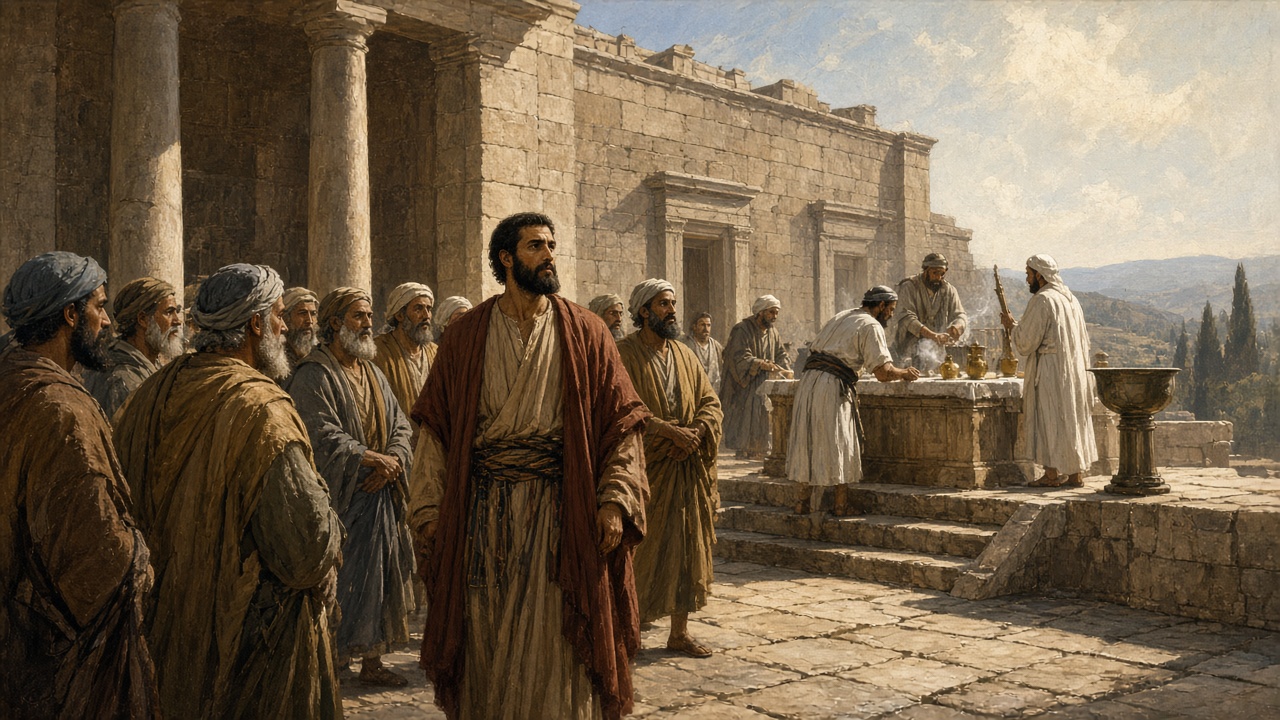
- The priests are rebuked for offering blind, lame, and diseased animals on the altar rather than unblemished livestock. Malachi exposes their disrespect by asking whether a civil governor would accept such inferior gifts.Sources: the Bible text itself
Notes written with AI assistance from open sources (Theographic Bible Metadata, CC BY-SA 4.0; Easton’s Bible Dictionary, public domain) and reviewed before publishing.
Places in this chapter
- Edom · 30.746, 35.604 · verse 4
Only places identified with high confidence are shown (90% or more according to the scholarly sources compiled by OpenBible). Period map: DARE (Digital Atlas of the Roman Empire), CC BY 4.0; modern map: © OpenStreetMap contributors; places: OpenBible.info (CC BY 4.0).
Credits and license for this translation
Anumzamofo Ruotage Avontafere
The Holy Bible in the Kamano-Kafe language of Papua New Guinea
Buk Baibel long tokples Kamano-Kafe long Niugini
copyright © 2022 Tyndale Bible Translators
℗ Tyndale Bible Translators
Language: Kamano-Kafe (Kamano)
Translation by: Tyndale Bible Translators
This translation is made available to you under the terms of the
Creative Commons Attribution Share-Alike license 4.0.
You have permission to share and redistribute this Bible translation in any format and to make reasonable revisions and adaptations of this translation, provided that:
You include the above copyright and source information.
If you make any changes to the text, you must indicate that you did so in a way that makes it clear that the original licensor is not necessarily endorsing your changes.
If you redistribute this text, you must distribute your contributions under the same license as the original.
Pictures included with Scriptures and other documents on this site are licensed just for use with those Scriptures and documents.
For other uses, please contact the respective copyright owners.
Note that in addition to the rules above, revising and adapting God's Word involves a great responsibility to be true to God's Word. See Revelation 22:18-19.
2026-08-31
Source: http://png.bible/kbq/ · eBible.org