Revelation 21
Bëngbe Bëtsa Cabëngaftaca Entsoyebuambna · Tap a verse to see its cross-references.
Celoca tsmiñe y fshantse tsmiñe
1Chents̈ana ats̈e sënjáninÿe canÿe celoca tsmiñe y canÿe fshantse tsmiñe, ndoñe nts̈amo tempo enjamncá, er chë tempo enjamna celoca y fshantse chora ya ndoñe quentétsemna, y chë mar béjaye chora cach tondaye. 2Sënjáninÿe chë “uámana ca” uabaina bëts pueblo, chë tsëm bëts pueblo Jerusalén, Bëngbe Bëtsábiocana celocana enjétsostjajuana, puerte botamaniñe, mo canÿe shembása puerte botamananacá, chabe boyá jábocnabiama. 3Y chora canÿe jabuache oyebuambnayana Bëngbe Bëtsabe uámana puestents̈ana sënjanuena, mënts̈á: “Mouena. Bëngbe Bëtsá ents̈ángaftaca echántsemna y cha chë́ngbeñe echantsiyena. Chënga chabe ents̈anga mochántsemna, cach Bëngbe Bëtsá chë́ngaftaca echántsemna, y cha chëngbe Bëtsá echántsemna. 4Cha echanjama chënga ndocna te más ngménënga chamondë́tsemnama, y ndoñe más chamondóbanama, ndoñe más chamondos̈achema, ni ngménaca ndoñe chamondëtsóyebuambnama y ndoñe más tsets̈anana chamondë́tsebomnama; er nts̈amo chënga ents̈angcá fshantsoca tempo imojëftsiyena ora enjamncá, chora ya ndoñe chca queochátsmëna ca.”
5Chë uámana puestents̈e enjantbemaná s̈onjaniyana: “Ats̈e lempe mo tsëm soyëngcá sëndbama ca.” Y mënts̈ánaca tonjánayana: “Chë soyënga mábema, er chë palabrënga endmëna nts̈amo ndegombre yomncá, y nÿetscanga mondobena chiñe corente jtsos̈buáchiyana ca.”
6Chents̈ana s̈onjaniyana: “Lempe tonjochnëngo. Ats̈e sëndmëna chë nÿetsca soyënga bojats̈ayá y pochocayá, chë natsaná y chë ustonoyá. Mo nda ts̈a uajuendayana tojtsebomná canÿe béjaye fshantsiñe obocanents̈ana cuafjofs̈ecá, cachcá nda ts̈a tojtsebos̈e ats̈be soyënga jtsebomnama, ats̈e chanjama cha chë soyënga chaotsebomnama, y chë nÿetsca tescama yomna ts̈abe vídnaca, chca jtsebomnama chábioye tondaye ntsotjañcá. 7Nda nÿetsca soyënguents̈ana ts̈abá chaojabocná mo ayënjanayacá, lempe echanjóyëngacñe nts̈amo ats̈be ents̈ángbioye jats̈atayama tijas̈ebuachenacá, y ats̈e chabe Bëtsá chántsemna y cha ats̈be uaquiñá. 8Pero chë auatja causa Crístbioye ndoñe mondëservénënga, chábeñe ndos̈buáchiyënga, chë bacna soyënga causa Bëngbe Bëtsabiama puerte uaboyë́njanënga imomnënga, chë ínÿengbioye obánayënga, chë shembása o boyabásaftaca bacna soye amënga, chë bocjuana soyënga amënga, chë soyënga adórayënga diosënga yomna ca jtsejuabnayëse, y nÿetscanga bosterënga imomnëngbiamna, chënga entsamna chë íñesheca uafjajónayoca jasúfriana, chë azufre yojuínÿinÿanents̈e. Chents̈e puerte castigánënga sempre mochanjë́ftsemna, mo uta soyama cuafjobancá ca.”
Chë tsëm bëts pueblo Jerusalén
9Chents̈ana canÿa chë angelënguents̈á, chë canÿsëfta copbenga bomnënga jútjena chë canÿsëfta ústonoye pochócaye soyë́ngaca, áts̈bioye tonjánabo y s̈onjaniyana: “Mabo, cbochanjinÿinÿiye chë tojobouamá shembása, chë Oveshatembe shema ca.” 10Y ats̈e chë Uámana Espíritoftaca corente mandaná jtsemnëse, chë ángel s̈onjanánatse canÿe bëts y tsbanana tjoye, y s̈onjaninÿinÿé chë tsëm bëts pueblo Jerusalén, chë “uámana ca” uabaina pueblo, celocana Bëngbe Bëtsábiocana enjétsostjajuana. 11Chë bëts pueblo enjétsebuashinÿinÿana Bëngbe Bëtsabe buashinÿinÿanánaca; enjétsebuashinÿinÿana mo canÿe uámana botamana ndëts̈becá, mo jaspe ndëts̈becá, pero mo cristalcá tëshínÿniñe. 12Chë bëts pueblo shë́conana canÿe bëts y tsbanana tapiës̈e enjamna, chë tapiës̈iñe bnë́tsana uta bës̈ashangá y cada bës̈áshents̈e canÿe ángel, y chë bës̈áshangañe enjanábemana chë Israeloca bnë́tsana uta bëts pamíllangbe uabaina. 13Shinÿe bocanoica unga bës̈ashangá, shinÿe uenatjë́mbambanoica ungashá, tsjuanoica unga bës̈ashangá, y tsmanoica ungashá. 14Chë tapiës̈e enjanë́cuatjona bnë́tsana uta ndëts̈benguiñe, y chëbenguiñe enjanábemana Jesucristo chë Oveshatembe bnë́tsana uta ichmónëngbe uabaina.
15Chë ángel áts̈eftaca oyebuambnayá canÿe castellano juinÿnanës̈ëfja enjánatbëna jamedídama chë bëts pueblo, chents̈a bës̈ashangá y chents̈a tapiës̈e. 16Chë bëts pueblo cach medida enjánbomna nÿets cantoica, cach medida tënts̈oye y nÿanëjoye. Chë ángel chabe juinÿnanës̈ë́fjaca chë bëts pueblo tonjanmedidá: enjánbomna uta uaranga y uta patse kilómetrënga; tënts̈oye, tsbanánoye y nÿanëjoye cach medida enjánbomna. 17Chents̈ana chë tapiës̈e tonjanmedidá, enjánbomna chnë́nguana bnë́tsana y shachna metrënga; nts̈amo ents̈anga chca soyënga jamedídama mondëtats̈ëmbcá chë ángel tonjanmedidá.
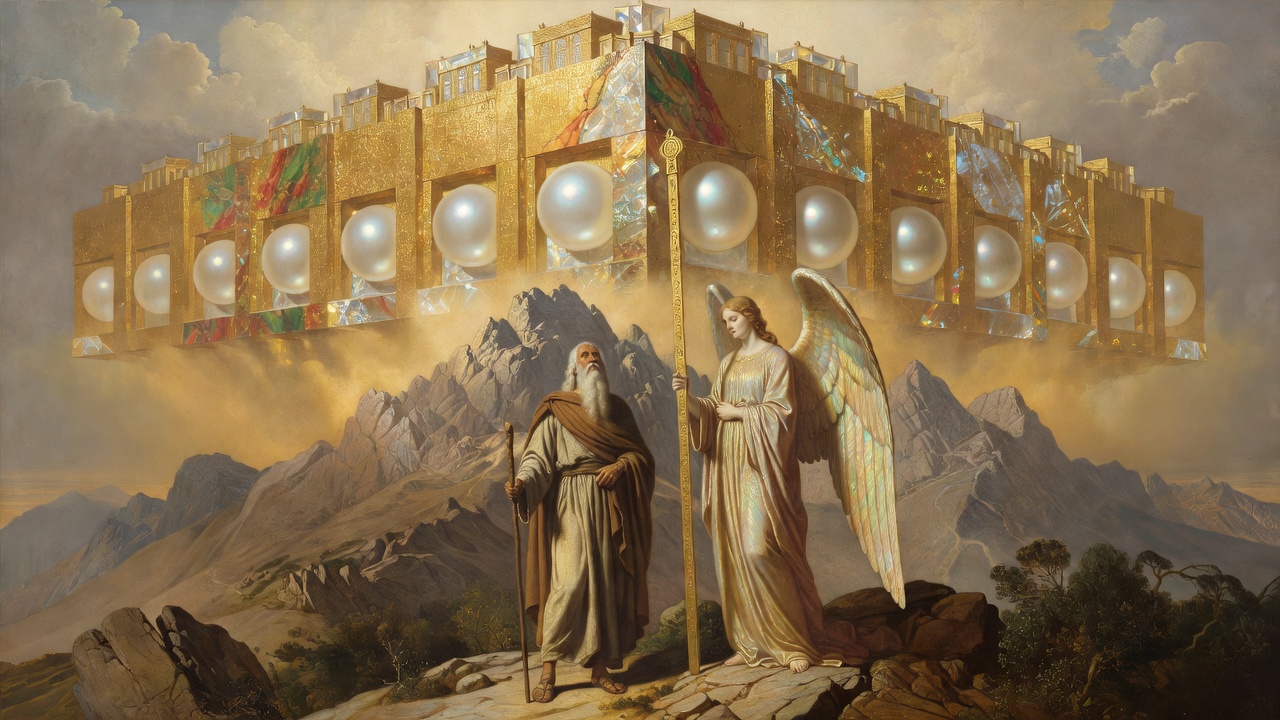
18Chë tapiës̈e enjanpormana jaspe ndëts̈beca, y chë bëts pueblo ena castellánoca, ts̈a chca nÿa mo cristalcá tëshínÿniñe enjáninÿna. 19Chë ndëts̈benga ndayiñe chë tapiës̈e enjanë́cuatjona enjánbotamanana nÿetsca uámana botamana ndëts̈béngaca: canÿebé jaspe ndëts̈beca, chë inÿebé zafíroca, chë inÿebé ágata ndëts̈beca, chë inÿebé esmeráldaca, 20chë inÿebé ónice ndëts̈beca, chë inÿebé cornalina ndëts̈beca, chë inÿebé crisólito ndëts̈beca, chë inÿebé berilo ndëts̈beca, chë inÿebé topácioca, chë inÿebé crisoprasa ndëts̈beca, chë inÿebé jacíntoca y chë inÿebena amatista ndëts̈beca. 21Chë bnë́tsana uta bës̈ashangá enjuamna bnë́tsana uta perlënga; cada bës̈ásha nÿe canÿe pérlaca uapormanë́sha. Y chë más bëts tsáshenëjana enjamna ena castellánoca; mo cristalcá tëshínÿniñe enjáninÿna.
22Chë bëts pueblents̈e ndocna Bëngbe Bëtsabe bëts yebna chiyátaninÿe, er Bëngbe Utabná, chë Bëngbe Bëtsá nÿets obenana bomná y chë Oveshatema chents̈e bonjamna, y chata nÿetscangbiama chë bëts pueblents̈e ndayénts̈naca adoránata bonjétsemna. 23Chë bëts pueblents̈e ndoñe quenjatsiyta shinÿe o juashcona chaotsebínÿnaye, er Bëngbe Bëtsabe buashinÿinÿanana chents̈e enjétsebinÿnaye, y chë Oveshatembe buashinÿinÿanana mo uajuinÿanëshacá enjamna chë bëts pueblama. 24Chents̈a binÿnayánaca, ents̈anga nÿetsca mándayëngbents̈e mochantsiyena, y quem luarents̈a mandadënga chëngbe uámana y bëts soyënga chë bëts puebloye mochanjiyëbo. 25Chë bëts pueblents̈a bës̈ashangá ndocna te quemochtë́tatame, y chents̈e ndocna ora ibeta queochátsmëna. 26Chë bëts puebloye mochanjiyëbo chë nÿetsca luarënguents̈a ents̈angbe uámana y bëts soyënga, y chë nÿetsca luarënguents̈a ents̈ángbeñe bëtsë́tsanga y uámanënga iuabiamná soyë́ngnaca. 27Pero ndocna te queochatómashëngo ndayánaca, y chë soye chaotsama ents̈anga ndoñe ts̈ábenga chamotsemnama Bëngbe Bëtsá jadórama; ni ndocná queochátamashëngo, Bëngbe Bëtsabiama nÿa tondayama ogustana soyënga amá o ínÿengbioye jáingñama soyënga amá. Choye mochanjámashjna nÿe chë ndëmuanÿengbe uabaina yojtsábemana chë Oveshatembe librë́s̈añe, chë nÿetsca tescama ts̈abe vida mochjónÿenëngbe uabaina uábemanents̈e.
Did you know?
The New Jerusalem
- In this vision the city coming down from heaven is called the holy city, the new Jerusalem. Jerusalem was also known as the holy city and the city of God, and in Arabic it is el-Khuds, meaning the holy. Its name is in a dual form and means possession of peace or foundation of peace.Sources: the Bible text itself · Jerusalem
- The seer is carried in the Spirit to a great and high mountain and shown that holy city descending. Jerusalem is described as a mountain city enthroned on a mountain stronghold, and the dual form of the name probably refers to the two mountains on which it was built, Zion and Moriah, or, as some suppose, to the upper and lower city.Sources: the Bible text itself · Jerusalem
- The city wall has twelve gates, three on each side, inscribed with the names of the twelve tribes of Israel. Israel is another name for Jacob, explained as one who follows on another's heels, or as a supplanter.Sources: the Bible text itself · Jacob (Israel)
Notes written with AI assistance from open sources (Theographic Bible Metadata, CC BY-SA 4.0; Easton’s Bible Dictionary, public domain) and reviewed before publishing.
Places in this chapter
Only places identified with high confidence are shown (90% or more according to the scholarly sources compiled by OpenBible). Period map: DARE (Digital Atlas of the Roman Empire), CC BY 4.0; modern map: © OpenStreetMap contributors; places: OpenBible.info (CC BY 4.0).
Credits and license for this translation
Bëngbe Bëtsa Cabëngaftaca Entsoyebuambna
New Testament in Camsá
copyright © 2009 Wycliffe Bible Translators, Inc.
Language: Camsá
Translation by: Wycliffe Bible Translators, Inc.
Copyright Information
© 2009, Wycliffe Bible Translators, Inc. All rights reserved.
This translation text is made available to you under the
terms of the Creative Commons License: Attribution-Noncommercial-No Derivative Works.
( http://creativecommons.org/licenses/by-nc-nd/3.0/ )
In addition, you have permission to port the text to different file formats, as long as you
do not change any of the text or punctuation of the Bible.
You may share, copy, distribute, transmit, and extract portions
or quotations from this work, provided that you include the above copyright
information:
You must give Attribution to the work.
You do not sell this work for a profit.
You do not make any derivative works that change any of the actual words or punctuation of the Scriptures.
Permissions beyond the scope of this license may be
available if you contact
us with your request.
The New Testament
in Camsá
© 2009, Wycliffe Bible Translators, Inc. All rights reserved.
This translation is made available to you under the terms of the
Creative Commons Attribution-Noncommercial-No Derivatives license 4.0.
You may share and redistribute this Bible translation or extracts from it in any format, provided that:
You include the above copyright and source information.
You do not sell this work for a profit.
You do not change any of the words or punctuation of the Scriptures.
Pictures included with Scriptures and other documents on this site are licensed just for use with those Scriptures and documents.
For other uses, please contact the respective copyright owners.
2016-05-05
Source: http://ebible.org/kbh/ · eBible.org