1 Thessalonians 4
Kitab sutyi prejanjian anyar ing Basa Jawa Suriname sing gampang · Tap a verse to see its cross-references.
Urip sing sutyi nurut karepé Gusti
1Para sedulur, awaké déwé wis mulangi kowé bab tyarané urip sing ndadèkké legané Gusti Allah. Uripmu wujuté ya kaya ngono. Nanging ing jenengé Gusti Yésus awaké déwé meksa nyuwun marang kowé supaya pada majua lan mundaka terus. 2Kowé ngerti pernatan-pernatan sing wis diwulangké karo awaké déwé sangka karepé Gusti Yésus. 3Karepé Gusti Allah kowé kudu nglakoni urip sing resik lan sing pantes, ngedohi laku bédang. 4Saben wong lanang enggoné urip bebarengan karo bojoné kuduné karo ati sing seneng lan ngajèni. 5Aja manut hawa kesenengan sing ora apik, kaya kalumrahané wong-wong sing ora ngerti Gusti Allah. 6Ing bab iku kowé aja sampèk nggawèkké wirangé lan aja sampèk ngapusi sedulurmu. Awaké déwé enggoné ngélingké marang kowé ya wis ora kurang-kurang, nèk Gusti Allah bakal nyetrap wong sing nduwèni klakuan kaya ngono kuwi. 7Awit sing dikarepké karo Gusti Allah kuwi ora supaya awaké déwé uripé rusu sak gelemé, ora, nanging supaya awaké déwé nglakoni urip sing sutyi. 8Mulané, sapa ora nurut piwulang iki, ora nampik manungsa, nanging nampik Gusti Allah déwé sing ngekèki Rohé Sutyi marang kowé.
9Awaké déwé wis ora usah nulisi kowé nèk kudu trésna marang tunggal sedulur, awit Gusti Allah déwé wis mulangi marang kowé kepriyé tyarané wong trésna marang sakpada-pada kuwi. 10Lan wujuté kowé ya pada ngétokké katrésnan kuwi marang sedulur kabèh nang bawah Masedonia. Nanging para sedulur, awaké déwé kepéngin ngélingké marang kowé sepisan menèh, supaya enggonmu trésna marang sakpada-pada intera mundak terus. 11Para sedulur, kowé kudu nglumui urip sing rukun lan tentrem. Pada ngurusi uripé déwé lan nyambuta gawé nggolèk sandang-pangan déwé-déwé, kaya sing wis diwulangké karo awaké déwé dèk abené kaé. 12Dadiné wong njaba bisa ngajèni marang kowé lan kowé ora usah njagakké wong liya, nanging bisa nyampèni awakmu déwé.
Bab wong-wong sing wis mati
lan tekané Gusti Yésus
13Para sedulur! Awaké déwé uga kepéngin ngomongi kowé bab wong-wong sing wis mati, dadiné kowé ngerti lan ora usah sedi kaya wong liya-liyané sing ora nduwé pengarep-arep. 14Awaké déwé pada pretyaya nèk Gusti Yésus wis mati lan tangi menèh sangka pati? Semono uga awaké déwé ngerti nèk wong kabèh sing pretyaya marang Gusti Yésus, nanging sing saiki wis mati, mbésuk bakal ditangèkké karo Gusti Allah, supaya bisa dadi siji karo Gusti Yésus.
15Mulané, awaké déwé kepéngin ngélingké marang kowé karo tembungé Gusti Yésus déwé: awaké déwé sing ijik urip tekan baliké Gusti Yésus ora pisan-pisan bakal budal ndisik, ninggal sing wis pada mati, ora. 16Awit mbésuk penggedéné mulékat bakal ngabari ndisik karo swara banter lan trompèté Gusti Allah bakal muni. Sakwisé kuwi Gusti Yésus déwé bakal medun sangka swarga. Terus sedulur-sedulur sing wis mati bakal pada tangi ndisik. 17Sakwisé kuwi, awaké déwé sing ijik urip terus bareng karo sing entas ditangèkké kuwi, munggah nang méga metuki Gusti nang langit. Awaké déwé terus slawas-lawasé dadi siji karo Gusti. 18Mulané para sedulur, kowé kudu nglipur lan mbangun sakpada-pada karo tembungé Gusti kuwi mau.
Did you know?
Holiness, Love, and Hope for the Dead
- This chapter notes that its readers were already showing love to all the brothers throughout Macedonia. In New Testament times Macedonia was a Roman province lying north of Greece, governed by a propraetor with the title of proconsul. Paul was summoned by a vision of the "man of Macedonia" to preach the gospel there.Sources: the Bible text itself · Macedonia
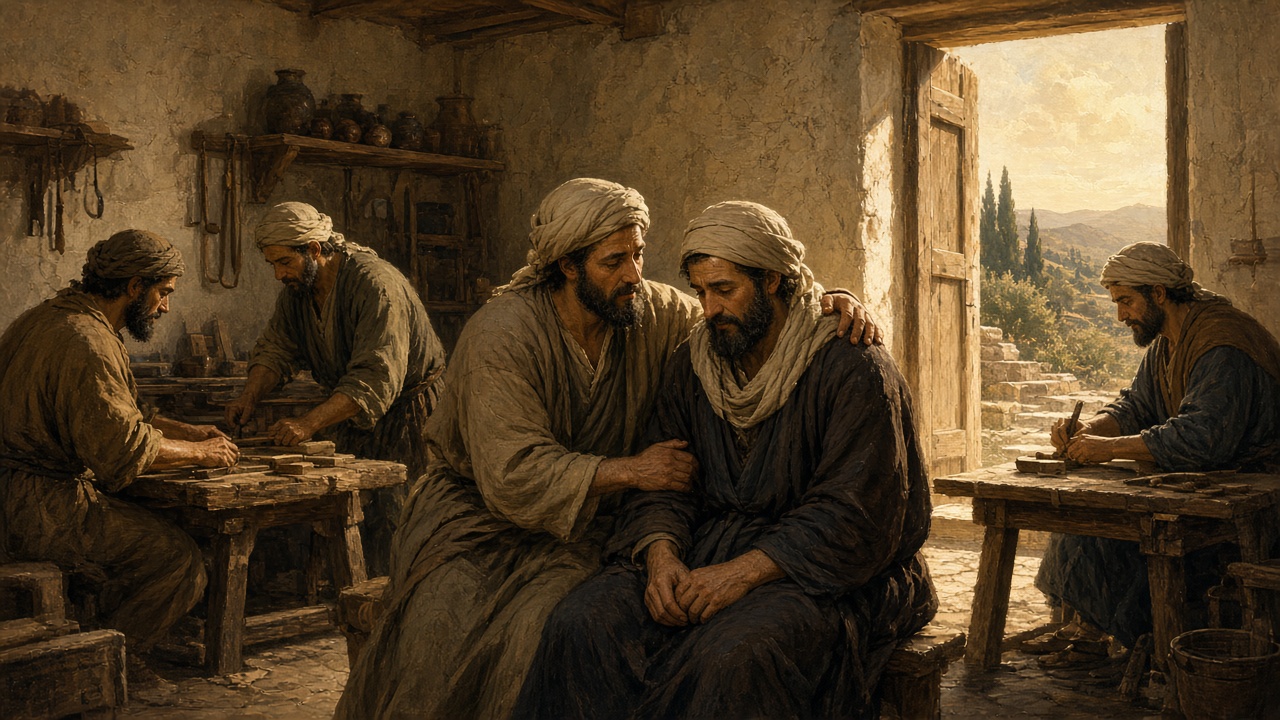
- The chapter speaks of the dead as people who sleep or have fallen asleep, and it asks the readers not to grieve like the rest, who have no hope. Because Jesus died and rose again, it says, God will bring with Jesus those who have fallen asleep in him; the dead in Christ will rise first, and then those still alive will be caught up with them in the clouds to meet the Lord in the air.Sources: the Bible text itself
- The readers are urged to aspire to a quiet life, to attend to their own matters, and to work with their own hands, as they had already been instructed. The chapter presents this as the way to behave properly toward outsiders and to avoid being dependent on anyone.Sources: the Bible text itself
Notes written with AI assistance from open sources (Theographic Bible Metadata, CC BY-SA 4.0; Easton’s Bible Dictionary, public domain) and reviewed before publishing.
Places in this chapter
- Macedonia · 41.600, 22.540 · verse 10
Only places identified with high confidence are shown (90% or more according to the scholarly sources compiled by OpenBible). Period map: DARE (Digital Atlas of the Roman Empire), CC BY 4.0; modern map: © OpenStreetMap contributors; places: OpenBible.info (CC BY 4.0).
Credits and license for this translation
Kitab sutyi prejanjian anyar ing Basa Jawa Suriname sing gampang
New Testament in Javanese, Caribbean (NS:jvn:Javanese, Caribbean)
copyright © 2009 Wycliffe Bible Translators, Inc.
Language: Javanese, Caribbean
Translation by: Wycliffe Bible Translators, Inc.
Javanese, Caribbean
jvn
Suriname
Copyright Information
© 2009, Wycliffe Bible Translators, Inc. All rights reserved.
This translation text is made available to you under the
terms of the Creative Commons License: Attribution-Noncommercial-No Derivative Works.
( http://creativecommons.org/licenses/by-nc-nd/3.0/ )
In addition, you have permission to port the text to different file formats, as long as you
do not change any of the text or punctuation of the Bible.
You may share, copy, distribute, transmit, and extract portions
or quotations from this work, provided that you include the above copyright
information:
You must give Attribution to the work.
You do not sell this work for a profit.
You do not make any derivative works that change any of the actual words or punctuation of the Scriptures.
Permissions beyond the scope of this license may be
available if you contact
us with your request.
The New Testament
in Javanese, Caribbean
© 2009, Wycliffe Bible Translators, Inc. All rights reserved.
This translation is made available to you under the terms of the
Creative Commons Attribution-Noncommercial-No Derivatives license 4.0.
You may share and redistribute this Bible translation or extracts from it in any format, provided that:
You include the above copyright and source information.
You do not sell this work for a profit.
You do not change any of the words or punctuation of the Scriptures.
Pictures included with Scriptures and other documents on this site are licensed just for use with those Scriptures and documents.
For other uses, please contact the respective copyright owners.
2014-04-27
Source: http://ebible.org/jvnNT/ · eBible.org