Genesis 47
Meeŋka Jooŋ · Tap a verse to see its cross-references.
Yaagüüp Parahuun Ŋüülkene
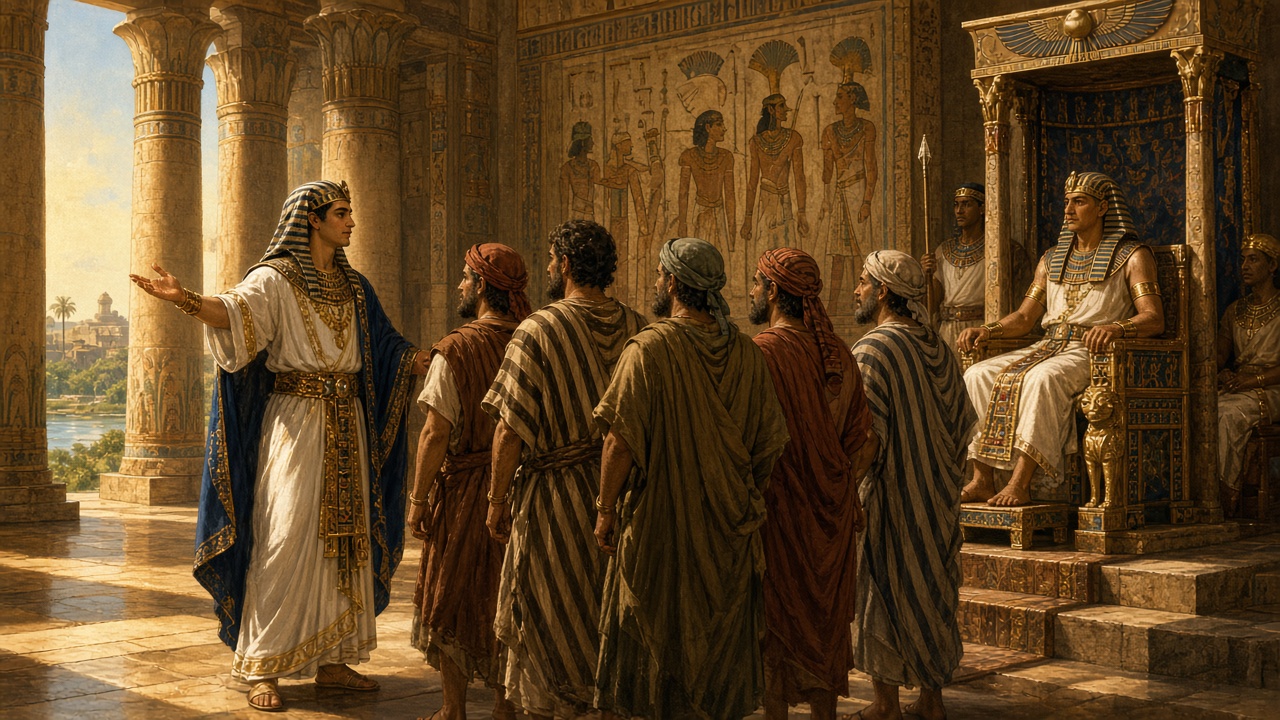
1Aŋ Yuucip attä Parahuun ti, aŋ nüütkene ogo, “Wäyo ke mädgo ke ḍiik ke däk ke wakkä yeeken muure ätä ŋommañ mä Kanaan ti, aŋ iken tiññaŋ a baan mä Jiicaan ti.” 2Aŋ kuññu mädgen kä duuc, aŋ iññe Parahuun ñome ti.
3Aŋ Parahuun Yuucip mädgen taaññe ogo, “Ñuugula yeenic a ŋaaka?”
Aŋ Parahuun luugi ogo, “Ñuuguloni yüükü a kaaydoni ḍiik bata dänkä yurgen. 4Ikoon äätonon cääjjodon Macïr winni bata boorgu, kä yaana wïca baati nänṭa kääjene ñuuguloni yüükü ḍiik ye, kä yaana käñ tällee ŋommañ mä Kanaan ti ye. Aŋ dalä kura ñuuguloni yüükü cääjjï baan mä Jiicaan ti.”
5Aŋ Parahuun Yuucip kiinne ogo, “Wääc ke mädgic äätin ïkï ti. 6Aŋ wäkä nänṭä yaana ṭäkkä ŋommañ mä Macïr ti ŋeraŋ ye, aŋ ḍuccii kä wääc ke mädgic. Aŋ dalä iken cääjjï baan mä Jiicaan ti. Aŋ naana ïkï ŋäjjä ook yakkalaŋ iken ti lïïṭït tïïcï ḍigärgä ye, i müükkü ḍigärgä yeeki dalä tïïcä.”
7Aŋ Yuucip wäyen Yaagüüp äbene yuutte Parahuun ñome ti. Aŋ Yaagüüp Parahuun ŋüülkene.
8Aŋ Parahuun Yaagüüp taaññe ogo, “Yüüngü kä ŋïṭṭä?”
9Aŋ Yaagüüp Parahuun luuŋŋe ogo, “Yuungu yeeki a 130, aŋ yuungu yeeki ḍewgaŋ aŋ yejgaŋ, aŋ batta a ḍakin yuungu dänkä yurgo ti yaaka cääynene kä ye.” 10Aŋ Yaagüüp Parahuun ŋüülkene, aŋ kaaccä woo üṇtük aŋgin yore Parahuun ti.
11Aŋ Yuucip wäyen ke mädgen ḍoocce ŋommañ mä Macïr jï, aŋ iññe ŋommañ yaana kääṭï kä ŋerrä baan mä Ramcïïc ti ye, bata yaana eenjene daa Parahuun ye. 12Aŋ Yuucip wäyen ke mädgen ke äntüke yen wäyen muure iññe wakkä äämkä daa kä yoken.
Yuucip ke Käñ
13Aŋ käñ yaaññä kä yaac aŋ ammani baati nänkä muure aŋ mäbaan yek mä Macïr ke yek mä Kanaan aŋŋa puudgu kä käñ. 14Aŋ Yuucip tiil muure yek ŋommañ mä Macïr ke yek mä Kanaan ḍülle yokïn, yaaka kijene me päk ye, aŋ Yuucip tiil äbene ḍoocce än Parahuun jï. 15Aŋ wääna tiil muure baakkene ŋommañ mä Macïr ti ke ŋommañ mä Kanaan ti ye, i mä Macïr muure äätin Yuucip ti aŋ kiini ogo, “Iñjon päk. Ikoon bääggodoon tüwon ina? Tiil yooko baakkin.”
16Aŋ luugi Yuucip ogo, “Ḍigärgä yeekic äbe aŋ ikee bi iñe päk rätke kä ḍigärgä yeekic naana tiil yeekic baakkin ye.” 17Aŋ iken ḍigärgä yeeken icki Yuucip aŋ iñi Yuucip päk rätkeneeda kä bägälgä ke ḍiik ke däk ke tüürüŋŋi. Aŋ iken iici Yuucip rätkede päk kä ḍigärgä yeeken yun yaanna ti.
18Aŋ wääna yun yaanna ḍüüñenee kä ye, iken ḍuukin yun kalaŋ ti, aŋ ike kiini ogo, “Men mooye yoono, ïkï batta päänkiti ŋïngïn ginkalaŋ ogo tiil yooko baakkono. Aŋ ḍigärgä yooko muure aŋŋa yüükü, baati gin'a a büccïnï iñgi kä ye, a gäyko ke yirkä yooko pääken. 19Aŋ ikoon bääggodoon tüwon ñomü ti ikoon ke yirkä yooko ina? Kiyjon ke yirkä yooko kä päk aŋ ikoon ke yirkä yooko ikoon wääton a kiinkä yek Parahuun. Aŋ iñjon käwkä nuŋko ŋana tüwdon kä, aŋ yirkä ŋana wäätcïdï a mardï.”
20Aŋ Yuucip ŋommañ mä Macïr muure kijgene Parahuun. Aŋ mä Macïr muure yirkä yeeken yääjji woo, kä yaana käñ yaaññee kä iken ti ye, aŋ ŋommañ aŋŋa yen Parahuun. 21Aŋ Yuucip mä Macïr naŋŋe a kiinkä muure. 22Aŋ a ŋommañ mä däŋkä pare ken batta agee kä kiygon a nääŋka Parahuun agee kä ḍüccïnï jiik ke iken aŋ iñdeeda kä päk yek ñuugula yeenen ye. Aŋ ken amgä, ina ken ŋommañ yeenen batta yääyge daa kä yaanna.
23Aŋ Yuucip me kiinne ogo, “Tiiŋe, ikee ke ŋommañ yeenic ikee kijgene Parahuun, aŋ käwkä yaakki koowe ije pïïde yirkä gïtï. 24Aŋ naana päk erre ye, i Parahuun iñe kä keelok duuc ti, aŋ ŋan ken ḍooce a käwkä aŋ a ammani yek ḍuuggic ke mä äntükeni yeekic ke merkälen yeekic.”
25Aŋ iken jaajjin ogo, “Üṇṇü yoono maŋŋi, aŋ men mooye, dalä ikoon käñon ŋerrä ïkï ti, aŋ ikoon bi wääton agon kiinkä yek Parahuun.”
26Aŋ naŋi Yuucip a jiik ḍoocin ŋommañ mä Macïr jï, ogo keelok duuc ti yen errä ogo yen Parahuun, aŋ jiik ḍoocin yaakka bilti ke tiññaŋ. Aŋ büccïdï a ŋommañ mä däŋkä pare ken batta a wääton a yen Parahuun.
27Aŋ mä Icärayiil cäygin ŋommañ mä Macïr jï, baan mä Jiicaan jï. Aŋ iken ŋommañ aŋŋa yeenen, aŋ iken gidgin aŋ ḍiirin kä yaac. 28Aŋ Yaagüüp cääynä ŋommañ mä Macïr ti yuungu kä caay witken kä ŋaṭükel. Aŋ yuungu yek Yaagüüp muure yek üṇṇü yeene a 147.
29Aŋ wääna tüwnü Yaagüüp cokulenee ye, i minneni yeene Yuucip bärkene ti, aŋ kiinne ogo, “Kura dalä ika käñä ŋerrä ïkï ti. Aŋ ïṇtü äcci äämi ti aŋ lïïtkaa ogo ika bi nüütkada biilin yaana batta düüñïdï ye ke woṇṇu. Aŋ ika ŋana jïgja ŋommañ mä Macïr jï. 30Aŋ naana ika baakkänä ye, äbaa woo ŋommañ mä Macïr jï, aŋ jïgja kälkä wäygo ti.”
Aŋ luugi Yuucip ogo, “Bi naŋä bata yaana kiinnaa kä ye.”
31Aŋ Yaagüüp jaajjin ogo, “Lïïtkaa.” Aŋ lïïtkï Yuucip, aŋ Yaagüüp ḍüŋjïn ïñï bür yeene wic.
Did you know?
A Home in Goshen
- Joseph settled his father and brothers in Goshen, the region Pharaoh called the best part of the land. The same district is also called the land of Rameses; it lay east of the Nile, apparently not far from the royal residence, though the region is now desert.Sources: the Bible text itself · Goshen · Rameses
- When Pharaoh asked their occupation, Joseph’s brothers answered that they were shepherds, as their fathers had been, and they asked to stay in Goshen because the famine in Canaan had left no pasture for their flocks. Easton’s Bible Dictionary (1897) identifies the Pharaoh of Joseph’s day as probably Apopi, the last Hyksos king, and notes that shepherds were an abomination to the native Egyptians, while these Asiatic shepherds were welcomed by the Hyksos; some instead place Joseph in the reign of Thothmes III, long after the Hyksos.Sources: the Bible text itself · Pharaoh (of Joseph)
- As the famine exhausted Egypt and Canaan, Joseph took payment first in money, then in livestock, and finally in land, so that the fields became Pharaoh’s and the people were reduced to servitude. He did not take the priests’ land, since Pharaoh already supplied their rations, and he established that a fifth of the produce belonged to Pharaoh.Sources: the Bible text itself
Notes written with AI assistance from open sources (Theographic Bible Metadata, CC BY-SA 4.0; Easton’s Bible Dictionary, public domain) and reviewed before publishing.
Places in this chapter
- Canaan · 32.767, 35.333 · verses 1, 4, 13, 14, 15
- Goshen · Today: Goshen 1 · 30.799, 31.834 · verses 1, 4, 6, 27
- Egypt · 30.129, 31.308 · verses 4, 6, 11, 13, 14, 15, 20, 21, 26, 27, 28, 29, 30
Only places identified with high confidence are shown (90% or more according to the scholarly sources compiled by OpenBible). Period map: DARE (Digital Atlas of the Roman Empire), CC BY 4.0; modern map: © OpenStreetMap contributors; places: OpenBible.info (CC BY 4.0).
Credits and license for this translation
Meeŋka Jooŋ
Jumjum Bible Translation
copyright © 2023 Pioneer Bible Translators
Language: (Jumjum)
Contributor: Pioneer Bible Translators
This translation is made available to you under the terms of the
Creative Commons Attribution Share-Alike license 4.0.
You have permission to share and redistribute this Bible translation in any format and to make reasonable revisions and adaptations of this translation, provided that:
You include the above copyright and source information.
If you make any changes to the text, you must indicate that you did so in a way that makes it clear that the original licensor is not necessarily endorsing your changes.
If you redistribute this text, you must distribute your contributions under the same license as the original.
Pictures included with Scriptures and other documents on this site are licensed just for use with those Scriptures and documents.
For other uses, please contact the respective copyright owners.
Note that in addition to the rules above, revising and adapting God's Word involves a great responsibility to be true to God's Word. See Revelation 22:18-19.
2025-05-06
Source: http://ebible.org/jum/ · eBible.org