Genesis 42
Meeŋka Jooŋ · Tap a verse to see its cross-references.
Yuucip Mädgen Atï Macïr
1Aŋ wääna Yaagüüp tiiŋŋee kä ogo päk bilto ti Macïr ye, i merkä yeeke kiinne ogo, “Ikee däämme ina? 2Ika tiiŋŋä ogo päk bilto ti Macïr. Ate ïñï wïca aŋ kiije päk yaaka ütïn kä ye nuŋko ŋana tüwtïn kä.”
3Aŋ Yuucip mädgen yaaka kä caay ye attä Macïr kïïjïdï päk, 4aŋ Yaagüüp Benyamïïn, Yuucip määden batta agee kä tucon ke meken, booc nuŋko ginkalaŋ näŋit ḍoŋe ike ti. 5Aŋ merkälen Yaagüüp ḍakkä ti ke meken Macïr kïjï päk, kä yaana käñ biltee kä ti ŋommañ mä Kanaan ye.
6Aŋ a Yuucip ken a mügdo yen mä Macïr. Aŋ ike yääjgïdï mä baan muure päk. Aŋ Yuucip mädgen äätin, aŋ ḍüŋjïn ïñï ike ti ŋommañ jï. 7Aŋ Yuucip mädgen yoorre aŋ ŋïññe, aŋ täkkene bata m'ana a pare ye, aŋ rütkene ŋïngïn tajde ogo, “Ikee ääte wa?”
Aŋ iken jaajjin ogo, “Ikoon ääton ŋommañ mä Kanaan ti kijon päk.”
8Aŋ Yuucip mädgen ŋïññe, aŋ ike batta agene kä ŋïcon. 9Aŋ Yuucip päjjin lääggï yeeke yaaka läkkee kä ogo iken ye. Aŋ iken kiini Yuucip ogo, “Ikee age mä jommu! Aŋ ikee äätene dääme ellä baan yoono!”
10Aŋ iken luukcin ike ti ogo, “U'u mügdo, kiinkä yüükü äätin kïjï päk. 11Ikoon muuronaan agon merkä män keellä. Ikoon agon me wotken. Kiinkä yüükü batta a mä jommu.”
12Aŋ kiinne ogo, “U'u a ellä yen baan yoono ken umgene daame.”
13Aŋ iken jaajjin ogo, “Ikoon kiinkä yüükü agon mädin caay witken kä yew merkä män keellä ŋommañ yen mä Kanaan ti, aŋ tiññaŋ määdo ḍeerconḍe bilti cääy ke wäyo aŋ yaŋkalaŋ a yääyon.”
14Aŋ iken kiini Yuucip ogo, “Bata yaana kiinne kä ye ikee age mä jommu. 15Aŋ kä yaanni ikee puuce, ikee lïïtke kä yäṇtäŋ Parahuun, ikee batta bi kaace woo nänṭä yaanni ti ke määdic ḍeerconḍe ääte winni. 16Tucce men kä keelok ikee ti aŋ dale ike atï määdic äbe i ikee kalaŋ age gaŋgar jï winni, nuŋko ukcon kä gïtï jiik yeekic naana ikee jaaye a gïtken ye. Naana batta gïtken ye, ikee lïïtke kä yäṇtäŋ Parahuun, ikee age mä jommu.”
17Aŋ ḍoocce muure gaŋgar jï, aŋ nääkin nïïnkä kä ḍäk. 18Aŋ nïïnnä ḍäk iken kiini Yuucip ogo, “Yaanni naŋe aŋ ikee bi üde, kä yaana booju kä Jooŋ ye. 19Aŋ naana ikee age mä wotku ye, dale määdic yaŋkalaŋ cääy gaŋgar jï winni, aŋ ikee yakkalaŋ ate paa äce päk äärgä yeekic tüggen yaaka näkä käñ ye ti. 20Aŋ määdic ḍeerconḍe äckakä nuŋko jiik yeekic ŋïce daa me agene gïtken, nuŋko ŋana tüwde kä.” Aŋ iken yaakka gïmgï.
21Aŋ iken luugjin ogo, “A gïtken jooññu yaanni kaññïn kä gin'a näŋgïnïn määdo Yuucip ina. Ïkïïn yüṭṭïn pillä yäwconḍe yeene wääna ñujee ïkïïn ti yüükkïn ti, aŋ batta agïn yüükkïnï ti. Ina ken pillä yaanni wäättee kä ïkïïn ti yaanna.”
22Aŋ Robïïn luukcin ogo, “Ikee batta kolle ogo ŋana minneni näŋgede yiñ? Aŋ ikee batta tiŋde. Tiññaŋ yïmgä yeeke ken ikki joocïn kä me yaakki.”
23Aŋ batta ŋäjjänä ogo jiiken ookcïdïï gïtï Yuucip, nääŋka ike jaay kä aŋ jiik yeeke ŋüülge daa gïtï kä mäŋkalaŋ ye. 24Aŋ ike ñome ṭukke woo iken ti aŋ jujjin kä ïwok, aŋ wääna ḍaŋŋee kä ïwok ye, i ñome ṭuugene ti iken ti aŋ jaaynene ŋuca, aŋ Camoon koowne aŋ ḍiiŋŋe ñomgen ti.
25Aŋ Yuucip kiinkä yeeke iingene ogo kücümgü ook yaakka küümgïï ko päk, aŋ oon yaŋkalaŋ daa tiil yeeke ḍüükcï kücam yeene jï, aŋ ïñjï wakkä äämkä yek päy jïñe. Aŋ yaakka näŋgene daa kä me. 26Aŋ wäättan iken tüürüŋŋï yeeken kuucki ŋätkin päk yeeken aŋ attä.
27Aŋ nänṭä yaana yuuttene ïñï nïïnene kä ye, yaŋkalaŋ kücam yeene kupkene ogo tüürüŋ yeene äämgee, aŋ tiil yeeke kaññe kücam tük. 28Aŋ mädgen kiinne ogo, “Yuure tiil yeeki a ḍuukin ti, ikki kücam jï.” Aŋ iken juuggen yejgin aŋ yoken tïïcïn aŋ luugjin ogo, “A ŋaaka ken naŋi Jooŋ ïkïïn ti aŋŋi?”
29Aŋ wääna iken ḍakkene ti wäyen Yaagüüp ti ŋommañ mä Kanaan ti ye, wäyen nüütkï waak'a näŋŋä ḍuuggen iken ti ye muure ogo, 30“Oon yaana a men mooye yen mä baan yaanja ye, ikoon rüüṇṇon ŋïngïn, aŋ ikoon käkkonon witin ogo ikoon agjon mä jommu yek baan yeenen. 31Aŋ kiinnon ogo, ‘Ikoon agon me wotken, ikoon batta agon mä jommu. 32Ikoon mädin agon caay witken kä yew, aŋ wäyo a keelok, aŋ keelok a yääyon, aŋ ḍeerconḍe a paa ke wäyo ŋommañ mä Kanaan ti.’ 33Aŋ men mooye yen mä ŋommañ yaanja ikoon kiinnon ogo, ‘Aŋŋi ken bi ŋäjje kä ogo ikee agje me wotken. Määdic keelok dalje ïñï ika ti winni, aŋ kuje päk ije äcke äärgä tüggen yeekic yaaka näkä käñ ye ti. 34Aŋ määdicle äcka kä, nuŋko ŋäjje kä ogo ikee batta agje mä jommu, aŋ ogo mä wotken. Aŋ wäättan määdic ḍuukke kä, aŋ ikee bi kije aŋ yääje wakkä baan jï kä tettä.’”
35Aŋ wääna kücümgü yeeken pukte daa kä ye, iken muure yaŋkalaŋ daa ḍeggon yeene yen tiil bilti kücam yeene jï. Aŋ wääna iken ke wäyen ḍïïggï tiil yoorene daa ye, i iken bojgin. 36Aŋ iken kiini wäyen Yaagüüp ogo, “Ikee ṭäke merkä yeeki yääye muure? Yuucip baati, aŋ Camoon baati, aŋ tiññaŋ ikee ṭäke Benyamïïn koowde. Aŋ yaakki muure äätïdï a ika ti!”
37Aŋ Robïïn wäyen kiinne ogo, “Merkälen yeeki yaaka kä yewwe ye nägä ḍugin, naana batta agä ḍüügïnï ïkï ti ye, müükkaa kä ïṇtï ti, aŋ bi ḍuukkenii kä.”
38Aŋ Yaagüüp jaajjin ogo, “Minneni yeeni batta atï ke ikee wïca, määden tüwnü aŋ ike aŋŋa keelok yaana buccin ye. Ika agä daan aŋ naana ginkalaŋ näŋï ḍoŋe ike ti päy jï ye, ika bi äcka ḍok nüüjdüŋ, aŋ ika bi näga ḍok.”
Did you know?
The Brothers Come to Egypt for Grain
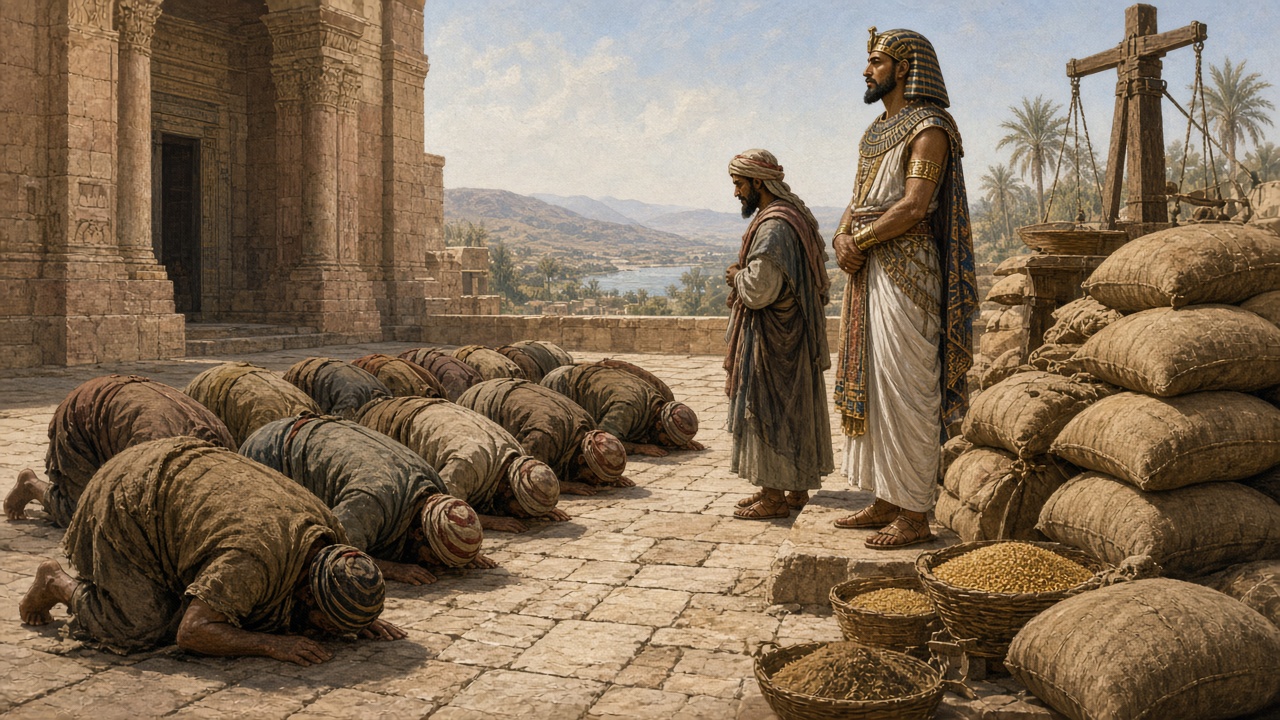
- Jacob heard that there was grain in Egypt, the land of the Nile, and sent ten of his sons from Canaan to buy some so the family would not die in the famine. The seven-year famine is dated to a beginning in 1707 BC, and the brothers' journey to Egypt to 1706 BC.Sources: the Bible text itself · Egypt · 7 years of famine · Joseph's brothers go to Egypt
- Joseph, ruler of the land and the one who sold grain to its people, recognized his brothers when they bowed before him, but they did not recognize him. An interpreter stood between them, so they did not realize that he understood what they said. He turned away and wept, then had Simeon, Jacob's second son by Leah, bound before their eyes and held as a hostage.Sources: the Bible text itself · Simeon
- Benjamin, the younger son of Jacob and Rachel, stayed behind with his father; Joseph was Rachel's elder son, and Jacob believed that brother was already dead. Jacob refused to let Benjamin go down to Egypt, saying that harm to him would bring his gray hair down to Sheol in sorrow. Reuben, the eldest son of Jacob and Leah, who had earlier saved Joseph when the other brothers would have put him to death, pledged his own life and the lives of his two sons if he failed to bring Benjamin back.Sources: the Bible text itself · Benjamin (patriarch) · Joseph (son of Jacob) · Reuben
Notes written with AI assistance from open sources (Theographic Bible Metadata, CC BY-SA 4.0; Easton’s Bible Dictionary, public domain) and reviewed before publishing.
Places in this chapter
Only places identified with high confidence are shown (90% or more according to the scholarly sources compiled by OpenBible). Period map: DARE (Digital Atlas of the Roman Empire), CC BY 4.0; modern map: © OpenStreetMap contributors; places: OpenBible.info (CC BY 4.0).
Credits and license for this translation
Meeŋka Jooŋ
Jumjum Bible Translation
copyright © 2023 Pioneer Bible Translators
Language: (Jumjum)
Contributor: Pioneer Bible Translators
This translation is made available to you under the terms of the
Creative Commons Attribution Share-Alike license 4.0.
You have permission to share and redistribute this Bible translation in any format and to make reasonable revisions and adaptations of this translation, provided that:
You include the above copyright and source information.
If you make any changes to the text, you must indicate that you did so in a way that makes it clear that the original licensor is not necessarily endorsing your changes.
If you redistribute this text, you must distribute your contributions under the same license as the original.
Pictures included with Scriptures and other documents on this site are licensed just for use with those Scriptures and documents.
For other uses, please contact the respective copyright owners.
Note that in addition to the rules above, revising and adapting God's Word involves a great responsibility to be true to God's Word. See Revelation 22:18-19.
2025-05-06
Source: http://ebible.org/jum/ · eBible.org