Genesis 34
Meeŋka Jooŋ · Tap a verse to see its cross-references.
Müüŋŋü Ḍïïna
1Aŋ Ḍïïna ṭul Leya yaana giide Yaagüüp ti ye, kaaccä woo atï ükcïdï ṭulgu yek baan. 2Aŋ wääna Cakïïm minneni Hamuur mä Haaw, yätïn yen baan yaanja Ḍïïna yoorre daa kä ye, i müüŋŋe. 3Aŋ jone ṭäkcin Ḍïïna ṭul Yaagüüp. Aŋ ṭuulle ḍeerconḍe bilgene aŋ jääjgene kä ŋer kuckon. 4Aŋ Cakïïm jaajjin wäyen Hamuur ti ogo, “Ṭuulle yaanna kujgaa kä wäätï a iiŋ yeeni.”
5Aŋ wääna Yaagüüp tiiŋŋee kä ogo ṭuulle yeene Ḍïïna müüŋŋïï Cakïïm ye, i merkälen yeeke a woo ke ḍigärgä yeeke, aŋ ike tïïŋjïn ïñï ke iken ḍuukene ti.
6Aŋ Hamuur Cakïïm wäyen attä jayok ke Yaagüüp. 7Aŋ wääna merkälen Yaagüüp äätene kä ti äätene woo aŋ tiiŋŋene kä gin'a näŋŋä ḍoŋe ye, i iken mïtcïn ñaalok aŋ piiṇdin kä yaac, kä yaana Cakïïm näŋŋee kä loon mä Icärayiil ti kä müüŋŋü ṭuulle Yaagüüp ye, aŋ a gin'a yoku batta päjjïdï naŋtä me ye.
8Aŋ kiini Hamuur ogo, “Minneni yeeni Cakïïm jone kaaccä ṭuulle yüünü ti, kura iñjeeda dalä wäätï a iiŋe. 9Ḍïkïn jiik dale kuuwin wäätï waadgä mä yooko ke mä yeekic ti. 10Aŋ cääye ke ikoon waan a kupon ŋommañ yaanni ti, cääye nänṭ'a ṭäkke ye, aŋ laaye kä tettä aŋ ikee käñe wakkä yeekic jïñe ti.”
11Aŋ Cakïïm jaajjin Ḍïïna wäyen ti ke mädgen ti aŋ kiinne ogo, “Dale ika käñä ŋerrä ikee ti, aŋ ikee bi iñe wakkä muure yaaka taaja kä ye. 12Aŋ naana daa yelgä caraŋ bata ŋa' ke iñdin ye, ika äccädä waak'a ñuye ye muure. Aŋ ṭuul iña kä a iiŋ yeeni.”
13Aŋ merkälen Yaagüüp Cakïïm ke wäyen Hamuur luugi kä malläŋïngïn kä yaana Cakïïm käwen müüŋŋee da ye. 14Aŋ kiini ogo, “Ikoon batta lïïṭon nääŋkä yaakka naŋon, käwo iñon m'ana batta a ergon ye, yaanna bi wäätï a loon mooye ikoon ti. 15Ikoon bi kaacon ḍeŋŋä jiik ti ke ikee kä gin kä keelok, dale ikee beelje bata ikoon kä iirrä ook yeekic muure. 16Aŋ wäättan ikee bi iñge ṭulgo aŋ ikoon bi kujon ṭulgic daa a yooko, aŋ ikoon bi cäyon ke ikee aŋ ïkïïn wäätïn agïn mä keelkä. 17Aŋ ikee naana batta gïmmede kä jiik yooko aŋ ikee batta iire ye, i käwo bi koowon aŋ ikoon bi aton.”
18Aŋ jiik yaakka Hamuur ñaappe jok ke minneni yeene Cakïïm. 19Aŋ Cakïïm batta a kooron kä naŋŋä nääŋkä yaakka, kä yaana jone ñappee kä ṭuul Yaagüüp ye. Aŋ Cakïïm ken tïïlcïdï eemtä me kä yaac äntüke yen wäyen ti, 20aŋ Hamuur ke minneni yeene Cakïïm äätin äntüke baan mooye yeenen ti, aŋ iken jaajjin mä baan mooye yeenen ti ogo,
21“Me yaakki näŋŋä ŋïïbbïn ke ïkïïn. Dale iken cäyok baan yoono jï aŋ layok, ŋommañ gääbaŋ päjjïdï iken ti, dale ïkïïn ḍïcïn ṭulgu yeeken, aŋ iken ïñïn ṭulgo a määngen. 22Aŋ iken bi gïmmä kä cäwdä ke ïkïïn bata mä keelkä ke ïkïïn, naana ook yooko iirgä me bata iken ye. 23Aŋ naana yaakki naŋïn ye, i ḍigärgä yeeken muure ke wakkä yeeken bi wäätï a yooko, ääte gïmmïn kä jiik yeeken, aŋ dale iken cäyok winni ke ïkïïn.”
24Aŋ me muure yaaka attä baan mooye tük ye gïmmïn kä jiik yaaka naŋi Hamuur ke Cakïïm yaanna, aŋ ook muure iiri me. 25Aŋ nïïnkä kä ḍäk wääna ook mor wääcene kuggu iirrä ye, merkälen Yaagüüp kä yewwe Camoon ke Laawï yaaka a Ḍïïna mädgen ye, iken gaaḍalli yeeken koowi aŋ ircin baan mooye jï i kucu me, aŋ ook muure nägi ḍugin. 26Aŋ iken Hamuur nägi ḍok ke minneni yeene Cakïïm kä gaaḍalli, aŋ Ḍïïna äbi woo äräk ba' Cakïïm aŋ iken attä.
27Aŋ merkä Yaagüüp äätin aŋ nääkin me aŋ baan mooye gaani jï kä yaana käwen müügene daa me ye. 28Aŋ ḍiik yeeken ke däk ke tüürüŋŋï yeeken koowi ke waak muure yaaka baan mooye jï ye ke yirkä. 29Wakkä yeeken muure ke äärgä gïtken muure gaani. Iken cäänna merkälen lïcken yeeken koowi ke määngen aŋ kïïdï bata mä müükïn.
30Aŋ Yaagüüp jaajjin Camoon ti ke Laawï ti ogo, “Ikee ika äckana ḍok tïñïdïn tiññaŋ mä Kanaan ke mä Peeric ke me muure yek baan ika bi putkana jï. Aŋ ika batta cääygana ook kä ḍiräk, aŋ naana iken muure yoken ḍülgü aŋ ika irkana ye, i mä äntüke yeeki bi ḍüümgü gïtï.”
31Aŋ iken luukcin ogo, “Ikoon käwo daljon naŋde bata iiŋ yaana a baal ye?”
Did you know?
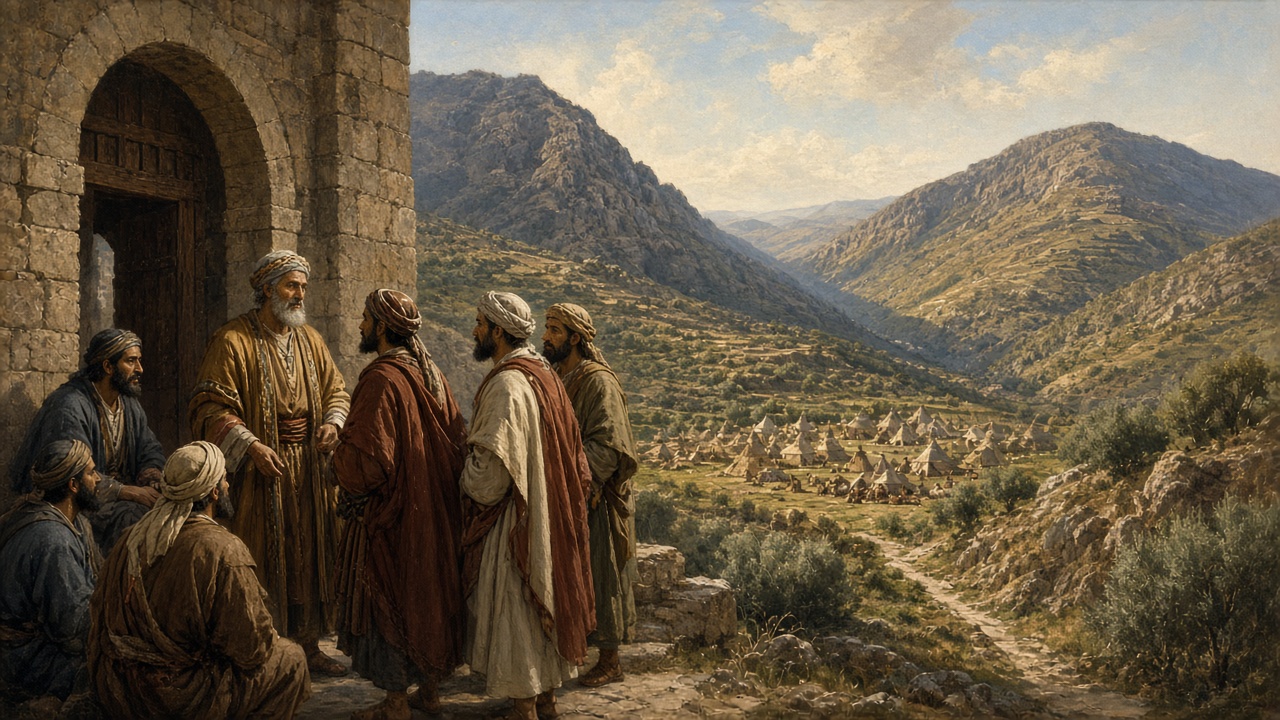
Dinah and the city of Shechem
- Dinah, daughter of Jacob and Leah and sister of Simeon and Levi, was taken by force by Shechem, son of Hamor the Hivite. Simeon and Levi then killed Hamor, Shechem, and the men of the city; Jacob said they had made him a stench to the Canaanites and Perizzites, and, when dying, he pronounced a malediction against Simeon.Sources: Dinah · Simeon · the Bible text itself
- The city of Shechem lay in a narrow, sheltered valley between Mount Ebal on the north and Mount Gerizim on the south, only some five hundred yards apart at their base. After returning from Mesopotamia, Jacob bought a parcel of a field there from the children of Hamor. Hamor's name is explained as meaning 'he-ass,' and Acts 7:16 calls him Emmor.Sources: Shechem · Hamor
- The Hivites were one of the peoples scattered from Hermon to Gibeon in the south; the name is interpreted as 'midlanders' or 'villagers,' and they were probably a branch of the Hittites. Hamor the Hivite is described as prince of the land at the time of Jacob's return, and the narrative calls his son Shechem the most respected of all his father's household.Sources: Hivite · the Bible text itself
Notes written with AI assistance from open sources (Theographic Bible Metadata, CC BY-SA 4.0; Easton’s Bible Dictionary, public domain) and reviewed before publishing.
Credits and license for this translation
Meeŋka Jooŋ
Jumjum Bible Translation
copyright © 2023 Pioneer Bible Translators
Language: (Jumjum)
Contributor: Pioneer Bible Translators
This translation is made available to you under the terms of the
Creative Commons Attribution Share-Alike license 4.0.
You have permission to share and redistribute this Bible translation in any format and to make reasonable revisions and adaptations of this translation, provided that:
You include the above copyright and source information.
If you make any changes to the text, you must indicate that you did so in a way that makes it clear that the original licensor is not necessarily endorsing your changes.
If you redistribute this text, you must distribute your contributions under the same license as the original.
Pictures included with Scriptures and other documents on this site are licensed just for use with those Scriptures and documents.
For other uses, please contact the respective copyright owners.
Note that in addition to the rules above, revising and adapting God's Word involves a great responsibility to be true to God's Word. See Revelation 22:18-19.
2025-05-06
Source: http://ebible.org/jum/ · eBible.org