Genesis 32
Meeŋka Jooŋ · Tap a verse to see its cross-references.
Yaagüüp Booc kä Ïïcü
1Aŋ Yaagüüp jujjin woo attä kä päy aŋ malaŋŋi yek Jooŋ pärjene kä. 2Aŋ wääna yoorene daa kä Yaagüüp ye, ike jaajjin ogo, “A nänṭä kääygä Jooŋ inni.” Aŋ ina ken nänṭä yaanna äkkeeda ogo Manaayim yaanna.
3Aŋ Yaagüüp tuccin tüüjgï ñome ti attä pärjïdï ke määden Ïïcü ŋommañ mä Cïïr ti baan mooye mä Ïdoom ti. 4Aŋ eenjene aŋ kiinne ogo, “Ikee ate aŋ mügdo yeeni Ïïcü kiine ogo, ‘Kiingon yüünü Yaagüüp jääyïdï ogo, “Ika attä Laabaan ti, aŋ ikoon cääyon ke ike ke tiññaŋ. 5Ika cääyga däk, ke tüürüŋŋï ke ḍiik ke kiinkä oogen ke määngen. Ika tuucunu ṭäkä nüütküdü mügdo yeeni ogo ika käñjo ŋerrä ïkï ti.”’”
6Aŋ tüüjgï ḍuukin Yaagüüp ti, aŋ jaajjin ogo, “Ikoon atton määdic Ïïcü ti. Aŋ ike äätïdï ike pärjede aŋ ike ädit ook caykä mäyken kä ŋan.” 7Aŋ Yaagüüp booññu kä yaac aŋ yore rüütte, aŋ m'aka ke ike ye kiimme gïtï kurku kä yew, ke ḍiik ke däk ke kälämgä. 8Aŋ Yaagüüp jaajjin ogo, “Naana Ïïcü ätä aŋ kun keelok irke ye, yakkalaŋ lïïṭï lïkcï woo.”
9Aŋ Yaagüüp jaajjin ogo, “Ay Jooŋ yen daan wäyo Abrayiim ke wäyo Icaak, ay Pïṭo ika kiinnaa ogo, ‘Ḍukcu baan yüünü ti ke mä yüükü ti, nuŋko bi näŋgenii kä ŋerrä ye.’ 10Ika batta päjjädä kä biilin yaana batta düüñïdï ye ke woṇṇu yaana nüütkana kä ika kiingon yüünü ye. Aŋ wääna ircänä woo wii mä Üürdün ye a lacan pare ken äddä. Aŋ tiññaŋ ika wäättä kurku kä yewwe. 11Kura magja kä määdo Ïïcü. Ika booju kä ike, nuŋko äätïdï aŋ ika irkada, ke määngä ke merkä. 12Aŋ ïkï jaajjini ogo, ‘A gïtken ika ïkï bi näŋgeni ŋerrä, aŋ kilkä yüükü bi naŋä bata ṭiŋal yek wii jïñe yaaka batta lïïltä me kä paŋŋä ye.’”
13Aŋ ike nïïnnä wïca wïïrïn jïñe yaanja ti, aŋ waak yeeke ti ike määden Ïïcü wäkkene woo iñdin. 14Aŋ wäkkene woo ḍiik määngen 200, ke ñukku caykä kä yew, ke käbälgä määngen 200, ke käbälgä yätken caykä kä yew, 15ke kälämgä määngen caykä kä ḍäk ke ṭulgen, ke däk caykä kä ŋan ke yätkä kä caay, ke tüürüŋŋï määngen caykä kä yew aŋ oogen kä caay. 16Aŋ yaakka iññe kiinkä yeeke aŋ ike jaajjin ogo, “Ate ñomi ti aŋ waan yaŋkalaŋ dale kun yaŋkalaŋ atï ñomuk aŋ yaŋkalaŋ kä ŋäjäk.”
17Aŋ kiingon yaana ïïjjïdï ye iingene ogo, “Naana määdo Ïïcü purjene kä aŋ ïkï tajdey ogo, ‘Ïkï agä män ŋaani? Aŋ ïkï atä wa? Aŋ a ḍiik ŋaani ika ye?’ 18I luugu ogo, ‘A yek kiingon yüünü Yaagüüp, yaakki a iñdin tuckudu mügdo yeeni Ïïcü. Aŋ Yaagüüp kä ḍoŋe bilti äätä ŋätko ti.’”
19Aŋ yewwe yeene ke ḍäke eenjene kä jiik keelkä ke yaaka muure baadit ḍigärgä ye, ogo, “Ikee jaajje jiik keelkä Ïïcü ti naana ike kaññe ye. 20Aŋ ikee jaajje ogo, ‘Kiingon yüünü Yaagüüp bilti äätä ŋätko ti.’” Ike payit ogo, “Bi läägä juuggin ïñï kä iñdin yaaka atï ñomi ti yaakki. Aŋ wäättan naana yooru ye, naana ṭäkï ye ika bi gïmga.” 21Aŋ ike a tüccïnï iñdin ñomuk aŋ ike nïïnnä nänṭä keeññi.
Yaagüüp Mügjïn ke Jooŋ
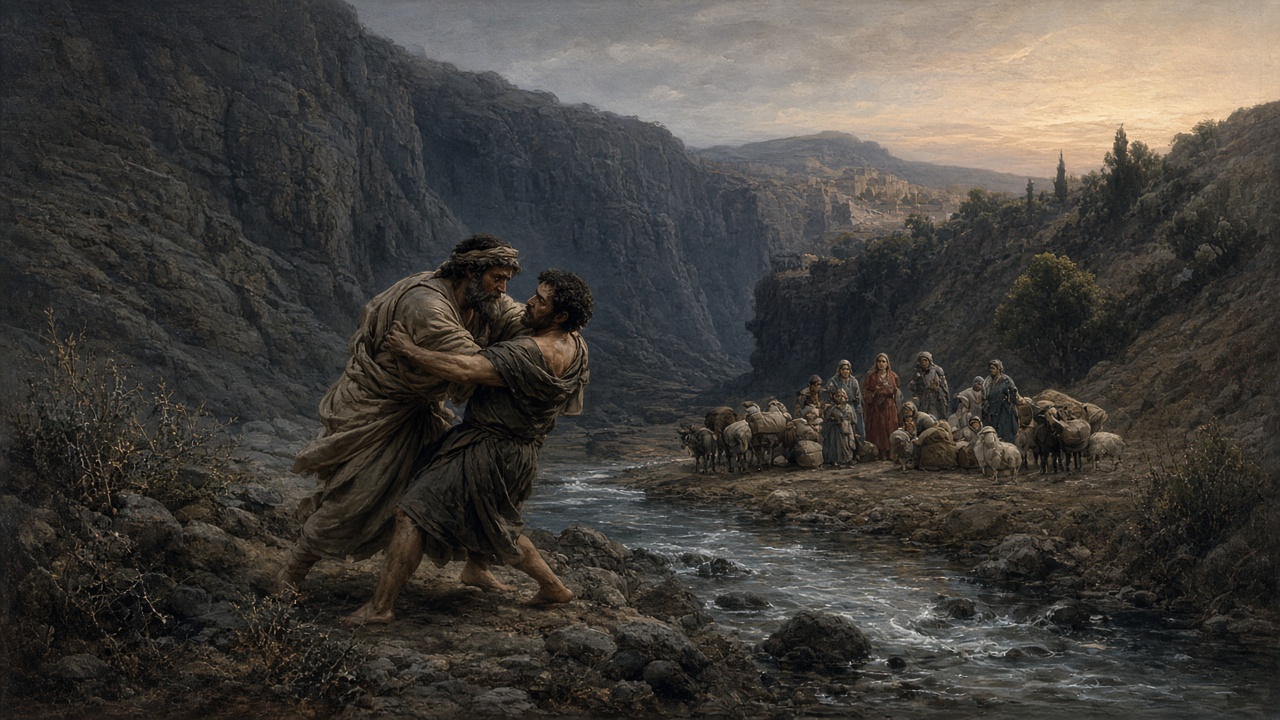
22Aŋ mïïllä jïñe keellä yaanja ti ike juwin ñaalok aŋ määngä yeeke yaaka kä yewwe ye koowne ke kiinkä yeeke määngen, ke merkä yeeke yaaka caay wiñen kä keelok ye, aŋ ircin woo wii mä Yabüük. 23Aŋ iken koowne aŋ tucce ircin woo wii, ke wakkä yeeke muure yaaka bilti ye, 24aŋ Yaagüüp dalji me ïñï pare. Aŋ mügjïn ke oon ke buur kääje. 25Aŋ wääna yoorene daa kä oon yuccee kä ye. I Yaagüüp jemme ḍïïne ti, aŋ ḍïïne kooynu wääna mükcete kä ye.
26Aŋ kiini oon ogo, “Dalä ika atä buur kääjin.” Aŋ kiini Yaagüüp ogo, “Ïkï batta äkkedeni atä ke ŋüülkaa kä.”
27Aŋ taaji oon ogo, “Ïkï batti me ogo ŋaani?”
Aŋ kiinne ogo, “Ika batta me ogo, Yaagüüp.”
28Aŋ kiini oon ogo, “Yäṇtonḍü ŋuca batta bi battä me ogo Yaagüüp, ïkï bi batti me ogo Icärayiil. A nääŋka mügjene ke Jooŋ ke me, aŋ yoññeeda kä ye.”
29Aŋ Yaagüüp jaajjin ogo, “Nüütkaa yäṇtonḍü.” Aŋ taaji oon ogo, “Ika tajdaa kä yäṇtonḍi ina?” Aŋ wäättan ŋüülkene wïca. 30Aŋ Yaagüüp nänṭä äkkene ogo Pïnïyel. Aŋ naana aŋan ye i ogo, “Ikoon yuurtonon woŋgin ke Jooŋ, aŋ ika por daa agä üdon.”
31Aŋ wääna Pïnïyel daljedeeda kä ïñï ye i kääcki äŋ wïca aŋ ike ŋoldïdï kä yaana ḍïïne agee kä kooyon kä ye. 32Ina ke tiññaŋ mä Icärayiil batta ämene kä puuc mäyken waadgä ḍïïnä yaanna kä yaana Yaagüüp jemmeeda kä ḍïïne ti ye.
Did you know?
At the Jabbok, on the Way to Esau
- Mahanaim means “two camps.” Jacob gave that name to the place near the Jabbok, beyond the Jordan, when the angels of God met him and he said, “This is the camp of God.” There he also divided his people, flocks, herds, and camels into two camps, hoping one might escape if Esau attacked the other.Sources: Mahanaim · the Bible text itself
- The Jabbok, whose name is explained as “a pouring out, or a wrestling,” is a stream east of the Jordan. It joins the Jordan about midway between the Sea of Galilee and the Dead Sea, after a course of about 65 miles through a wild, deep ravine. At its ford Jacob sent his two wives, two maidservants, eleven sons, and all he owned across, then remained alone and wrestled with a man until daybreak.Sources: Jabbok · the Bible text itself
- Jacob sent messengers to Esau in the land of Seir, the country of Edom, calling him lord and himself a servant. Seir is a mountainous region along the east side of the Arabah, from the southeastern end of the Dead Sea toward Akabah, the eastern branch of the Red Sea; the Edomites occupied it, and it was allotted to Esau’s descendants. Esau, the firstborn twin and a hunter, had sold his birthright for red lentil stew and was also called Edom, “red,” while Jacob—whose name means “one who follows on another’s heels,” or “supplanter”—had conspired with his mother to deceive Isaac.Sources: the Bible text itself · Seir · Esau (Edom) · Jacob (Israel)
Notes written with AI assistance from open sources (Theographic Bible Metadata, CC BY-SA 4.0; Easton’s Bible Dictionary, public domain) and reviewed before publishing.
Places in this chapter
- Edom · 30.746, 35.604 · verse 3
- Jordan · Today: Jordan River · 31.761, 35.558 · verse 10
- Jabbok · Today: Zarqa River · 32.115, 35.543 · verse 22
Only places identified with high confidence are shown (90% or more according to the scholarly sources compiled by OpenBible). Period map: DARE (Digital Atlas of the Roman Empire), CC BY 4.0; modern map: © OpenStreetMap contributors; places: OpenBible.info (CC BY 4.0).
Credits and license for this translation
Meeŋka Jooŋ
Jumjum Bible Translation
copyright © 2023 Pioneer Bible Translators
Language: (Jumjum)
Contributor: Pioneer Bible Translators
This translation is made available to you under the terms of the
Creative Commons Attribution Share-Alike license 4.0.
You have permission to share and redistribute this Bible translation in any format and to make reasonable revisions and adaptations of this translation, provided that:
You include the above copyright and source information.
If you make any changes to the text, you must indicate that you did so in a way that makes it clear that the original licensor is not necessarily endorsing your changes.
If you redistribute this text, you must distribute your contributions under the same license as the original.
Pictures included with Scriptures and other documents on this site are licensed just for use with those Scriptures and documents.
For other uses, please contact the respective copyright owners.
Note that in addition to the rules above, revising and adapting God's Word involves a great responsibility to be true to God's Word. See Revelation 22:18-19.
2025-05-06
Source: http://ebible.org/jum/ · eBible.org