Genesis 25
Meeŋka Jooŋ · Tap a verse to see its cross-references.
Tüwnü yen Abrayiim
1Aŋ Abrayiim ḍiññä iiŋ yaŋkalaŋ ŋuca battä me ogo Katuura. 2Aŋ ike gitki Jumraan ke Yakcaan ke Midaan ke Mïdïyaan ke Ïcbaak aŋ Cüwa. 3Yakcaan ken a wäy yen Cïïba ke Diidaan. Aŋ kaaynä yek Diidaan a mä Acüür ke mä Litüüc ke mä Liim. 4Aŋ merkä oogen yek Mïdïyaan a Ipa ke Eper ke Anook ke Abida aŋ Elda. Iken yaakca muureen a kaaynä yek Katuura.
5Abrayiim waak yeeke muure yädi minneni yeene Icaak. 6I ike batta mor tüw, merkä yeeke yaaka giide kiinkä yeeke määngen ti ye, pääggene iñdinni. Aŋ piirre gïtï ke Icaak, aŋ iken tucce woo baan ti kä ñomuk.
7Aŋ Abrayiim yuunge muure yaaka cääynee kä ŋommañ wic ye a 175. 8Aŋ ike wääkcin woo wääktäŋ tüwnü aŋ tüwnü, i yuunge a ḍïïrïnï a yääŋon kä cäwdä ŋommañ wic, aŋ ike cooṭi me ti dänkä yurge ti. 9Aŋ merkä yeeke Icaak ke Icämayiil ike jïgï ṭuum yaana Makapeela jï ye, cokulaŋ ti Mamar, yiil yen Aproon minneni Cuwaar yen mä Haat. 10Aŋ yiil yaana kiyi Abrayiim mä Haat ti ina, ken jïgene daa kä me iken ke iiŋe Caarra. 11Aŋ wääna Abrayiim tüwnee kä ye, minneni yeene Icaak ŋüülkï Jooŋ. Aŋ Icaak cääynä kä cokal Bïïr Lahaayi Rooy, aŋ aŋan ogo, Jïïn M'ana a Üdon Ika Yoodda ye ti.
Merkälen yek Icämayiil
12A perrä kaaynä yek Icämayiil minneni Abrayiim, yaana giide Haajir kiingon yen Caarra yaana a yen mä Macïr ina ti. 13A merkä oogen yek Icämayiil yäṇtäŋgenen ikki, aŋ a pergin a ïïjgïnï kä kaygon ti ke m'ana düüñïdï ye ti. Nabïyüüt ken a kaygon aŋ bäätcete Kedar ke Adbeel ke Mibcaam 14ke Micma ke Düüma ke Maaca 15ke Haddaat ke Tiima ke Yatuur ke Naapïc aŋ Kedeema. 16A merkä oogen yek Icämayiil ikki, aŋ a yäṇtäŋŋi yek yätïnï yaaka äärgä tüggen kä caay witken kä yewwe ye, ke nänk'a cääyene kä ye, ke keeññi yeeken. 17Aŋ Icämayiil cääynä ŋommañ wic yuunge 137. Aŋ ike wääkcin woo wääktäŋ tüwnü aŋ tüwnü, aŋ ike cooṭi me ti dänkä yurge ti. 18Aŋ kaaynä yeeke cääjjin Hawela attä ke Cüür kä cokal Macïr ñome ti, bata gin'a ïkï üŋjüdü Acüür ye. Aŋ iken cäygin muure kä puudin gïtï ke mä yeeken.
Yaagüüp ke Ïïcü
19Wakkä yaakki a yaaka näŋŋä ḍuuggen Icaak ti minneni Abrayiim ti ye.
Aŋ Abrayiim gittä Icaak. 20Aŋ Icaak yuunge caykä kä ŋan wääna kuññee kä Rïpga ṭul Batüwïïl yaana a män Araam ina, aŋ ike baanne battä me ogo Padaan Araam aŋ ike a Laabaan mä Araam käwen.
21Aŋ Icaak mälcin ñaalok Pïṭo ti kä yaana iiŋe agee kä burŋu ye. Aŋ mallä yen Icaak luugi Pïṭo aŋ iiŋe Rïpga laaccä yuunku. 22Aŋ merkälen yaaka kä yewwe jïñe ti ye yoken yuuku, aŋ attä tääccïdï Pïṭo ti kä yuuŋŋu merkä yoken. Aŋ tääccin ogo, “Nääŋkä yaakki näŋit ḍuuggen ika ti ina?” 23Aŋ kiini Pïṭo ogo, “Merkä yaaka jïñü ti yaakka bi wäätï a ṭoŋ kä yew. Aŋ me yüükü yaaka kä yew jïñü ti yaakka bi piirtit, aŋ ṭoŋ yaŋkalaŋ bi meken borgu kä teynä, aŋ kaygon yüünü määdenle bi ñuugele.”
24Aŋ wääna nïïnnä yen giidä yeene ḍäägenee kä ye, yore kaññe cäyge yuunku oogen jïñe ti. 25Aŋ yaana ïïjgene giidene woo ye, tïdaŋ aŋ yore a jiik bata gaan, aŋ äkki me ogo Ïïcü. 26Aŋ yuungon yaŋkalaŋ giidi me i määden Ïïcü agee kä mükon kä ŋubdonḍe. Aŋ äkki me ogo Yaagüüp. Aŋ wääna yuunku giidene daa kä me ye i Icaak yuunge caykä kä ḍüügük.
27Aŋ wääna merkä pïïrene ñaalok ye, Ïïcü wäättä aŋŋi män keñ laay woo luummuk, i määden Yaagüüp a män ŋïïbbïn cääy paa keeññi gïtï. 28Aŋ Icaak a Ïïcü ken bilge nääŋka ämee kä yäŋgä waak luum jïñe yaaka äbätä Ïïcü ye, aŋ Rïpga a Yaagüüp ken daa bilge.
29Aŋ ääŋkalaŋ ti wina Yaagüüp cääpï yüückü, aŋ käägi ti Ïïcü ätä woo luummuk a bägon kuckon aŋ näkä käñ. 30Aŋ Ïïcü Yaagüüp kiinne ogo, “Ika tüwü kä käñ! Kura iñja yüückü tïtkä kä ḍeewaŋ!” A yaana Ïïcü äkkene daa me yäṇtäŋ yaŋkalaŋ ogo, Ïdoom ye, nüütï ogo “tïdda.”
31Aŋ luugi Yaagüüp ogo, “Ee, por kaykïtïn yüünü yääjgaa kä.”
32Aŋ Ïïcü jaajjin ogo, “Yuuru, ika tüwü kä käñ. Aŋ ŋerrä kaykïtïn yeeni a ŋaaka ika ti?”
33Aŋ kiini Yaagüüp ogo, “Por ïïjjä lïïtkaa.” Aŋ Ïïcü lïïttä, ogo kaykïtïn yeene yääjgedee Yaagüüp.
34Aŋ Yaagüüp Ïïcü iññe bïggï ke yüückü piiken. Aŋ ike ämmä aŋ mättä, aŋ wäättana juwin attä. Aŋ aŋan Ïïcü ñääynä kä kaykïtïn yeene.
Did you know?
Abraham’s heirs and the twin brothers
- Keturah, whose name Easton's Bible Dictionary (1897) explains as “incense,” is introduced here as another wife of Abraham. That dictionary says he probably married her after Sarah’s death, though her nationality is unknown, and notes that 1 Chronicles calls her a concubine. She bore him six sons, including Jokshan and Midian, the father of the Midianites; while Abraham was still alive he gave gifts to the sons of his concubines and sent them away from Isaac to the land of the east.Sources: Keturah · Midian · the Bible text itself
- Isaac and Ishmael together buried Abraham in the cave of Machpelah near Mamre, in the field Abraham had bought from Ephron the Hittite, where Sarah already lay. Easton's Bible Dictionary (1897) explains Machpelah as “portion” or “double cave,” set on a hillside east of Hebron and facing Mamre, a place called the oaks—or, in a margin, the terebinths—of Mamre.Sources: Machpelah · Mamre · the Bible text itself
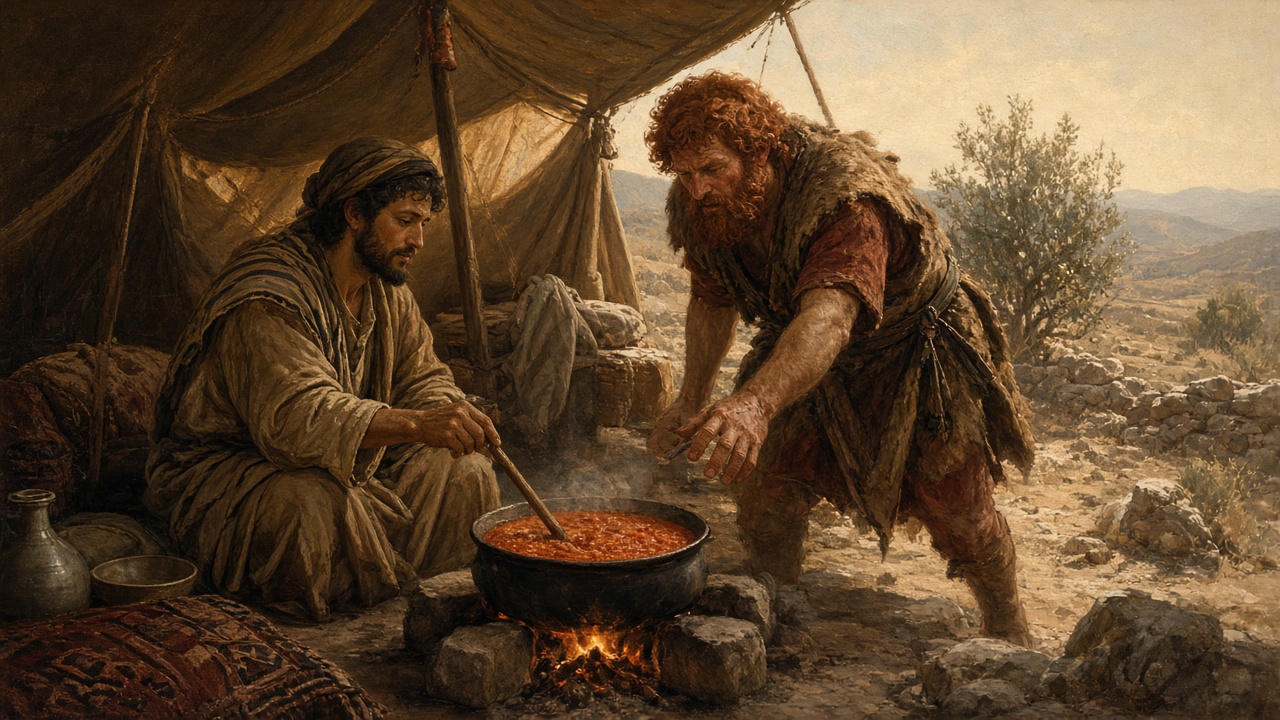
- Esau, Rebekah’s firstborn twin, was born red and covered with hair like a fur coat. Easton's Bible Dictionary (1897) links the further name Edom, “red,” to the red lentil stew for which he sold his birthright, and explains Jacob as “one who follows on another’s heels” or “supplanter,” matching the report that Jacob was born grasping Esau’s heel. Esau grew up as a skillful hunter and a man of the field, while Jacob was a quiet man who stayed at home.Sources: Esau (Edom) · Jacob (Israel) · the Bible text itself
Notes written with AI assistance from open sources (Theographic Bible Metadata, CC BY-SA 4.0; Easton’s Bible Dictionary, public domain) and reviewed before publishing.
Places in this chapter
- East · Today: region around Amman · 31.955, 35.934 · verse 6
- Machpelah · Today: Cave of the Patriarchs · 31.525, 35.111 · verse 9
- Negeb · 31.245, 34.841 · verse 11
- Assyria · 36.359, 43.153 · verse 18
- Egypt · 30.129, 31.308 · verse 18
Only places identified with high confidence are shown (90% or more according to the scholarly sources compiled by OpenBible). Period map: DARE (Digital Atlas of the Roman Empire), CC BY 4.0; modern map: © OpenStreetMap contributors; places: OpenBible.info (CC BY 4.0).
Credits and license for this translation
Meeŋka Jooŋ
Jumjum Bible Translation
copyright © 2023 Pioneer Bible Translators
Language: (Jumjum)
Contributor: Pioneer Bible Translators
This translation is made available to you under the terms of the
Creative Commons Attribution Share-Alike license 4.0.
You have permission to share and redistribute this Bible translation in any format and to make reasonable revisions and adaptations of this translation, provided that:
You include the above copyright and source information.
If you make any changes to the text, you must indicate that you did so in a way that makes it clear that the original licensor is not necessarily endorsing your changes.
If you redistribute this text, you must distribute your contributions under the same license as the original.
Pictures included with Scriptures and other documents on this site are licensed just for use with those Scriptures and documents.
For other uses, please contact the respective copyright owners.
Note that in addition to the rules above, revising and adapting God's Word involves a great responsibility to be true to God's Word. See Revelation 22:18-19.
2025-05-06
Source: http://ebible.org/jum/ · eBible.org