Genesis 2
Meeŋka Jooŋ · Tap a verse to see its cross-references.
1Naŋŋä polloŋ ke ŋommañ ke waak'a bilteen ye ḍaŋŋä. 2Aŋ Jooŋ ḍaŋŋä kä naŋŋä wakkä yeeke nïïnnä yaana kä ŋaṭükel ye ti, aŋ yore yïïkkene nïïnnä yaana kä ŋaṭükel ye ti kä nääŋkä yaaka naŋŋe ye muure. 3Aŋ Jooŋ nïïnnä ŋaṭükel ŋüülkene aŋ naŋŋe ladaŋ, kä yaana yore yïïkkeneeda kä ñuugula yen wakkä muure yaaka naŋŋe ye.
Aadam ke Awwa
4Yaanni a gin'a näŋŋä ḍoŋe wääna Pïṭo Jooŋ näŋŋee kä polloŋ ke ŋommañ ye. 5Aŋ jengä muure mor baati ŋommañ wic, aŋ wakkä garkä batta mor yülü woo, nääŋka Pïṭo Jooŋ batta mor tuucee ïñï ñaal ŋommañ wic ye, kä mänbaan bäwe yaana pïïtï ŋommañ wic ye. 6Aŋ ñomuk ku on piik kääjïdï woo ŋommañ jï määtï ŋommañ wiñe muure. 7Aŋ Pïṭo Jooŋ kuññu ŋomgu ŋommañ wic, aŋ naŋŋe a oon, aŋ kütkene umdin wääktäŋ üṇṇü. Aŋ oon üṇṇü.
8Aŋ Pïṭo Jooŋ pïïttä jengä garkä nänṭä battä me ogo Adan ñomuk aŋŋi, aŋ oon yaana naŋŋe ye ḍoocce wïca. 9Aŋ Pïṭo Jooŋ jengä yaaka ŋeraŋ me waŋgen ti aŋ ŋeraŋ ammä ti ye, muure yüülene ñaalok ŋommañ wic, aŋ jaan yaana me iñde üṇṇü ye, cääy ṭeejjük nänṭä garrä, aŋ jaan ŋäjjin ŋerrä ke yiñ cäänna bilti ṭeejjük.
10Aŋ ku on wii kääjïdï woo nänṭä battä me ogo Adan määtï nänṭä garrä, aŋ kïïptïdï gïtï wïca aŋ wäätcïdï ääŋken kä ŋan. 11Yaŋkalaŋ battä me ogo Pecüün, aŋ ike ken kaajit baan mä Hawela jï muure nänṭ'a cääyge tiilgä ye. 12Aŋ tiilgä yek baan yaanja ŋeraŋ. Aŋ jengä pïlkä yaaka ääcete me woo panḍeyni ye, bilti aŋ cäänna pämkä yaaka gäldïdï ŋeraŋ ye bilti wïca. 13Aŋ yäṇtäŋ wii yaŋkalaŋ ogo Jeyüün, aŋ a ike ken kaajit baan mä Küüc jï muure. 14Aŋ yäṇtäŋ wii yaana agene ḍäk ye, battä me ogo Adagiil, aŋ ike ken kaajit Acüür ti kä ñomuk. Aŋ wii yaana wäätcete kä ŋan ye, battä me ogo Puraat.
15Aŋ Pïṭo Jooŋ oon koowne aŋ ḍoocce Adan nänṭä garrä ogo ñuugelee aŋ tïïjje. 16Aŋ Pïṭo Jooŋ oon iingene aŋ kiinni ogo, “Jengä yaaka nänṭä garrä jï ye, amä muure, 17aŋ jaan yen ŋäjjin ŋerrä ke yiñ ŋana ïkï ämjädä, naana ïkï bi ämjä ye, ïkï bi tüwü a gïtken.”
18Aŋ Pïṭo Jooŋ jaajjin ogo, “Batta ŋeraŋ oon cäwde pare aŋan, näŋgä m'ana ike yüükkütü ti cäwdä ye.”
19Aŋ Pïṭo Jooŋ kuññu ŋommañ aŋ näŋŋä wakkä luum jïñe muure ke ḍïïrgä polloŋ jïñe. Aŋ äckene oon ookcedeeda bi äkke ogoo, aŋ wakkä yaaka a üdïn ye muure yaana bärkänä oon ye, i daa wäätï a yäṇtonḍe. 20Aŋ ḍigärgä muure bääri oon kä yäṇtäŋgenen, ke ḍïïrgä polloŋ jïñe ke wakkä luum jïñe muure. Aŋ ike kä ḍoŋe batta käñon yaana äälene kä ike yüükkütü ti kä cäwdä ye.
21Aŋ Pïṭo Jooŋ oon iññe waŋgin nïïnkä kä pek, aŋ wääna oodene daa ye, ääcin woo ŋiiranḍe yaŋkalaŋ kä keelok aŋ nänṭä yeene paatte waŋ. 22Aŋ Pïṭo Jooŋ näŋŋä iiŋ kä ŋiiran yaana äbe woo oon gunne ti ye, aŋ äckene oon.
23Aŋ oon jaajjin ogo,
“Yaanni tiññaŋ a äwnä yen äwgi
aŋ a yäŋŋä yen yäŋgi.
Aŋ ike bi battä me ogo, ‘iiŋ’
nääŋka äbene daa me woo ‘oon’ ti ye.”
24Aŋ ina ken oon wäyen ke meen daleeda buwin aŋ yore cooṭeeda ti iiŋe ti aŋ wäätene agene gaan keellä yaanna.
25Aŋ ñomuk ku on oon ke iiŋe muuṭuk yoken ladaŋ, aŋ yoken batta a lodgu.
Did you know?
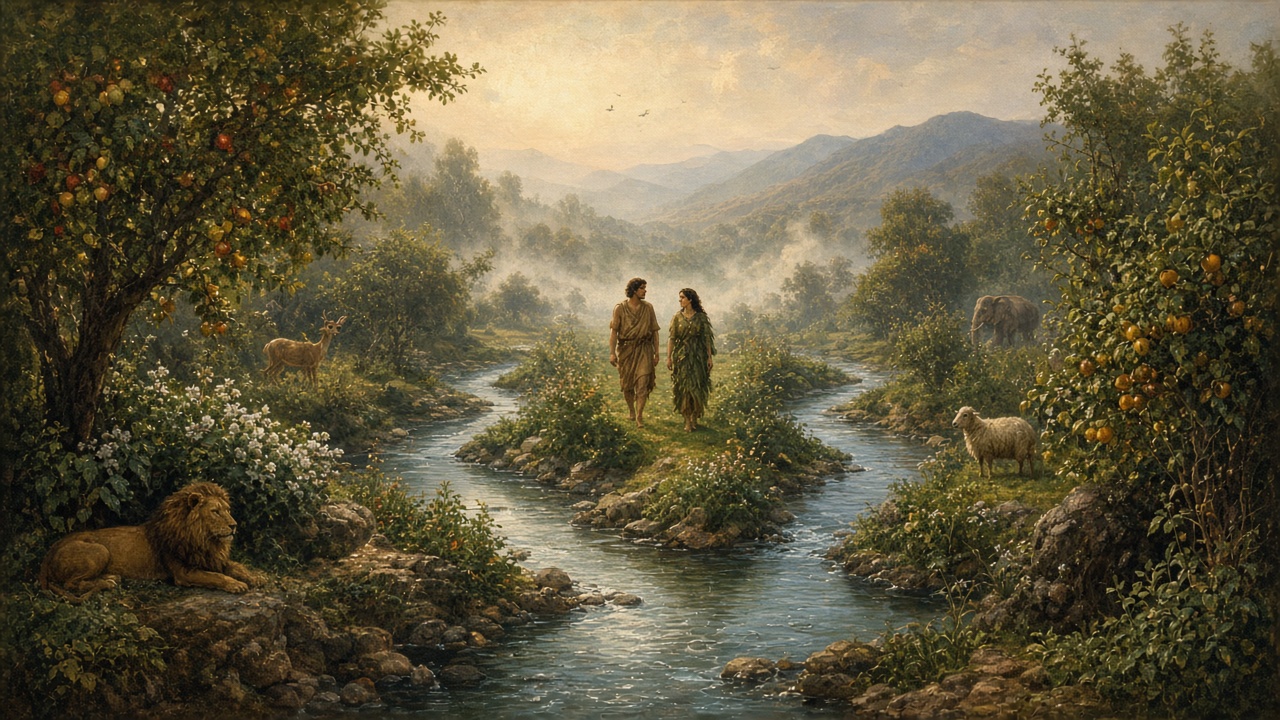
Adam, Eden, and the Four Rivers
- Adam, meaning “red,” is a Babylonian word and the ordinary name for a human being, with the same sense in Hebrew and in Assyrian. It was given to the first man. He was formed from the dust of the ground—hence the name—and God breathed into his nostrils the breath of life.Sources: Adam · the Bible text itself
- A river flowed out of Eden and divided into four headwaters: the Pishon, the Gihon, the Hiddekel, and the Euphrates. Some identify the Pishon with the Phasis or the Halys, others with the Indus, the Ganges, or still other rivers; the Gihon has been identified with the Nile, and others regard it as the Oxus, the Araxes, or the Ganges. The Hiddekel is the Tigris, called by the Accadians the river of Idikla; Gesenius understood the name as “the rapid Tigris.”Sources: the Bible text itself · Pison · Gihon · Hiddekel
- The site of Eden, the garden in which the first parents lived, has been discussed more than almost any other geographical question. It has been placed in Armenia, in the region west of the Caspian Sea, in Media, near Damascus, in Palestine, in southern Arabia, and in Babylonia. Easton's Bible Dictionary (1897) seeks it along the Tigris and the Euphrates of western Asia, in the land of Shinar, or Babylonia.Sources: Eden
Notes written with AI assistance from open sources (Theographic Bible Metadata, CC BY-SA 4.0; Easton’s Bible Dictionary, public domain) and reviewed before publishing.
Places in this chapter
- Assyria · 36.359, 43.153 · verse 14
- Euphrates · Today: Euphrates River · 31.004, 47.442 · verse 14
- Tigris · Today: Tigris River · 31.004, 47.442 · verse 14
Only places identified with high confidence are shown (90% or more according to the scholarly sources compiled by OpenBible). Period map: DARE (Digital Atlas of the Roman Empire), CC BY 4.0; modern map: © OpenStreetMap contributors; places: OpenBible.info (CC BY 4.0).
Credits and license for this translation
Meeŋka Jooŋ
Jumjum Bible Translation
copyright © 2023 Pioneer Bible Translators
Language: (Jumjum)
Contributor: Pioneer Bible Translators
This translation is made available to you under the terms of the
Creative Commons Attribution Share-Alike license 4.0.
You have permission to share and redistribute this Bible translation in any format and to make reasonable revisions and adaptations of this translation, provided that:
You include the above copyright and source information.
If you make any changes to the text, you must indicate that you did so in a way that makes it clear that the original licensor is not necessarily endorsing your changes.
If you redistribute this text, you must distribute your contributions under the same license as the original.
Pictures included with Scriptures and other documents on this site are licensed just for use with those Scriptures and documents.
For other uses, please contact the respective copyright owners.
Note that in addition to the rules above, revising and adapting God's Word involves a great responsibility to be true to God's Word. See Revelation 22:18-19.
2025-05-06
Source: http://ebible.org/jum/ · eBible.org