Genesis 14
Meeŋka Jooŋ · Tap a verse to see its cross-references.
Abram Luut Määgede Woo
1Aŋ nïïnkä yaakca ti yääññä juwin baan jï. Aŋ Amrapiil yätkä mä Cïnnaar, ke Ariyok yätkä mä Alicaar, ke Kadarlomaar yätkä mä Ilaam, ke Tidaal yätkä mä Jüwïïm 2ircin yääññäk Beera ti yätkä mä Caduum, ke Birca yätkä mä Amuura, ke Cannaap yätkä mä Adama, ke Camïbaar yätkä mä Jobïïm, ke yätkä mä Beela. Aŋ a Beela ken battä me ogo Coogaar. 3Aŋ iken yaaka kä duuc yaakka kääygä yeeken ḍülï yokïn ḍääñgon yaana battä me ogo Cadïïm ye ti, Koon Mooye yen Äyyä ti. 4Aŋ iken yuungu yaaka kä caay witken kä yewwe ye, müktü kä yätkä Kadarlomaar, aŋ yun yaana yoku wäätcete kä caay witken kä ḍäk ye, i tuuci yokïn woo.
5Aŋ wääna nääkenee yun ŋuca ye, Kadarlomaar ke yätkäni yaaka ñääkene ye ḍäägin ti, aŋ mä Rapïïn booji nänṭ'a battä me ogo Actarüüt Karnïïm ye ti, aŋ mä Jüüc booji nänṭ'a battä me ogo Haam ye ti, aŋ mä Ïïm booji nänṭ'a battä ogo Coobï Kiriteem ye ti, 6aŋ mä Hüür booji pämkä yaaka battä me ogo Cïïr ye ti, ke ḍaakene daa ti El Paraan nänṭä teeṇṇä ti kä cokal. 7Aŋ iken ḍuukin ŋäjäk aŋ attä nänṭ'a battä me ogo En Micpeet ye ti. Aŋ nänṭä cäänna äkki me ogo Gaadic. Aŋ iken bänkä mä Amülïïk müügï muure ke mä Amoor yaaka cäyok Hajojon Taamar ye.
8Aŋ yätkäni mä Caduum, ke Amuura, ke Adama, ke Jobïïm, ke Beela yoken tooti yääññä ti ḍääñgon mä Cadïïm jï. Aŋ Beela a nänṭ'a cäänna äkki me ogo Coogaar ye. 9Aŋ näägjin ke Kadarlomaar yätkä mä Ilaam, ke Tidaal yätkä mä Jüwïïm, ke Amrapiil yätkä mä Cïnnaar, ke Ariyok yätkä mä Alicaar. Aŋ iken yätkäni kä ŋan pärjïdï ke yätkäni kä duuc. 10Aŋ ḍääñgon yen mä Cadïïm cääygene gïtï kälkä mäyken küüñgïn yek kälkä ñownä ïïlïn kä ḍiräk, aŋ wääna yätkä yen mä Caduum ke yen mä Amuura ñoolene daa meken ye, yakkalaŋ lüütï kälkä aŋ meken yakkalaŋ lüdgïn aajjin ñaalok pämkä witin. 11Aŋ yätkäni yaaka kä ŋan ye, waak muure yek mä Caduum ke Amuura peeji ke wakkä äämkä muure, aŋ iken ḍukcin ŋäjäk. 12Aŋ Luut yaana cääy Caduum a minneni Abram määden ina mügï iji, aŋ waak yeeke koowi muure.
13Aŋ män Luut yaŋkalaŋ bättä, aŋ attä Abram nüütkene nääŋkä yaaka näŋŋä ḍuuggen ye muure. Aŋ a Abram yen mä Iburu yaana cääy cokulaŋ ti jengä mäyken yek m'ana battä me ogo Mamar a män Amoor ye, Mamar ke mädgen Ickool ke Aneer a m'aka ñääkï ke Abram ye.
14Aŋ wääna Abram jiik tiiŋŋeeda kä ogo minneni määden müŋŋïï me ye, i ike ḍüttü 318 m'aka a giitin paa baanne, aŋ a ŋeelgin ye. Aŋ ädäŋŋi baati ŋätin, ke ḍakene ti baan battä me ogo Ḍaan. 15Aŋ wääna nänṭä üllee kä ye, Abram mä yeeke pääŋŋe gïtï, aŋ gutcin yääññäk aŋ meken booji. Aŋ kääygä Kadarlomaar buurcin woo, aŋ ñooli ke baan yaana battä me ogo Hoba ye, Damac ti kä ñaalok. 16Aŋ Abram waak muure müüŋŋe, aŋ Luut minneni määden ke waak yeeke ke määngä ke ook yaaka a müükïn ye ḍuugene ŋäjäk.
Malikcadiik Abram Ŋüülkene
17Aŋ wääna Abram ḍuukenee kä nänṭa buuccee kä yätkä Kadarlomaar ke yätkäni yaaka ñääkene kä ye, yätkä yen mä Caduum kääjin woo pääkcïdï ike ḍääñgon yen mä Coobï jï, a ḍääñgon yen yätkä.
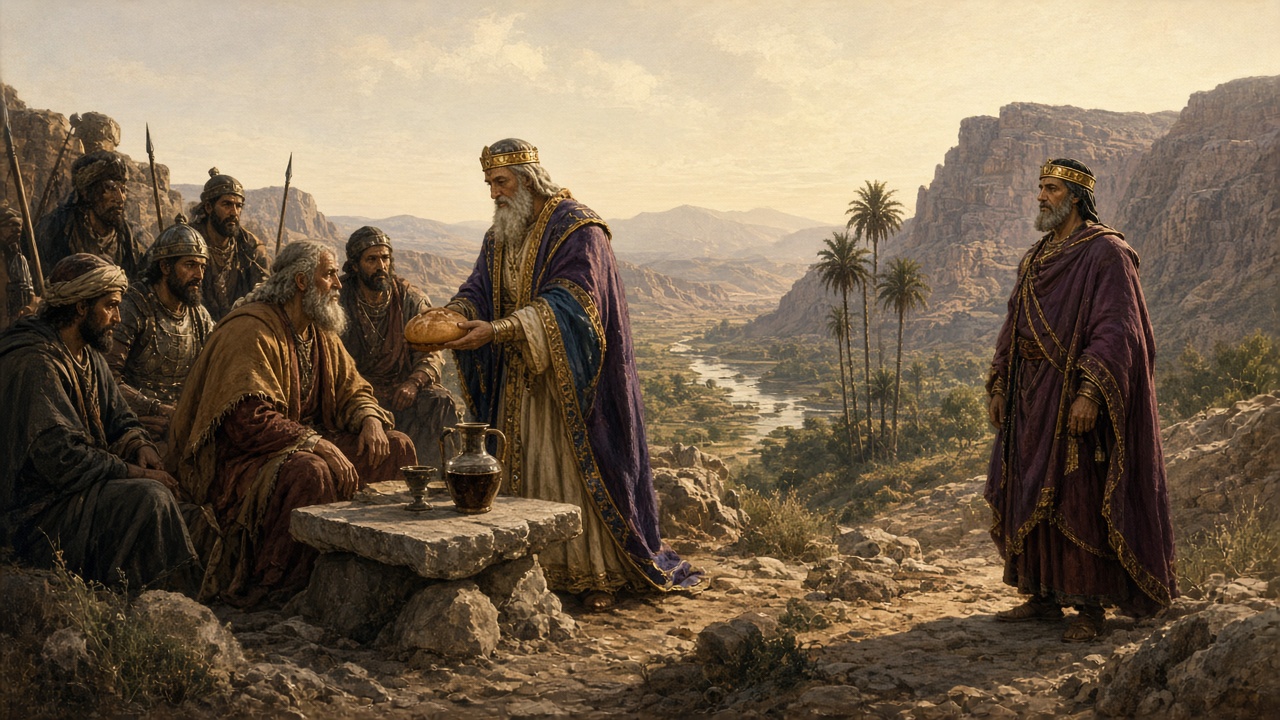
18Aŋ Malikcadiik yätkä yen mä Caalïm a män daaŋ yen Jooŋ yaana Küülaŋ kä Yaac ye, Abram äckene woo biŋŋan ke määk. 19Yätkä Malikcadiik Abram ŋüülkene aŋ jaajjin ogo,
“Abram ŋüülkünü Jooŋ yaana Küülaŋ kä Yaac,
näŋŋä polloŋ ke ŋommañ ye.
20Aŋ ŋüülkïn ḍükcï Jooŋ yaana Küülaŋ kä Yaac ye ti,
kä yaana iññey kä teynä aŋ ädäŋŋi yüükü booññee da kä ye.”
Aŋ Malikcadiik kiŋgi Abram waak muure yaaka piijene ye ti, kä caycayni.
21Aŋ yätkä yen mä Caduum Abram kiinne ogo, “Mä yeeki yaaka müügï me ye ken ḍuukkaa kä, aŋ waak muure koowu yaaka piijini ye.”
22Aŋ Abram yätkä yen mä Caduum kiinne ogo, “Ïṇtï lajjänä ñaalok aŋ ika lïïttä kä Pïṭo Jooŋ yaana Küülaŋ kä Yaac näŋŋä polloŋ ke ŋommañ ye ti, 23ogo ika batta kujjo ginkalaŋ waak yüükü ti, naana a tol aŋ naana a waynä umdonḍe ye, nuŋko ŋana jaayii kä ogo, ‘Abram naŋŋä kä ika a ceeggon.’ 24Waak'a ami mä yeeki yaaka ääton kä yääññäk ye, ken bi gïmgä pääken, aŋ Aneer ke Ickool ke Mamar, dale küjï yeeken.”
Did you know?
The Campaign of the Four Kings
- Easton's Bible Dictionary (1897) identifies the four invading kings with names on ancient inscriptions: Chedorlaomer with Khudur-Lagamar of Elam, Amraphel with Khammu-rabi of Shinar (southern Chaldea), Arioch, king of Ellasar, with Eri-Aku of Larsa, and Tidal with Tudkhula. It explains Eri-Aku as an Elamite name meaning “servant of the moon-god,” later changed to Rimsin, and takes Goiim—“nations”—as Gutium, east of the Tigris and north of Elam.Sources: Chedorlaomer · Amraphel · Arioch (king of Ellasar) · Tidal
- The five local kings drew up for battle in the Valley of Siddim, which this chapter equates with the Salt Sea, and the valley was full of tar pits into which some of the fleeing men fell. Easton's Bible Dictionary places that valley at the south end of the Dead Sea, between Engedi and the cities of the plain, and calls the pits bitumen pits.Sources: the Bible text itself · Vale of Siddim
- Abram lived near the oaks of Mamre the Amorite, a brother of Eshcol and Aner, and the three were bound by treaty to him. Easton's Bible Dictionary calls Mamre and Eshcol Amorite chiefs and Aner a Canaanite chief, and notes that they joined Abram in pursuing Chedorlaomer and recovering Lot.Sources: the Bible text itself · Mamre · Eshcol · Aner
Notes written with AI assistance from open sources (Theographic Bible Metadata, CC BY-SA 4.0; Easton’s Bible Dictionary, public domain) and reviewed before publishing.
Places in this chapter
- Elam · 32.189, 48.258 · verses 1, 9
- Shinar · Today: Babylonia · 32.543, 44.422 · verses 1, 9
- Salt Sea · Today: Dead Sea · 31.500, 35.500 · verse 3
- Shaveh-kiriathaim · Today: within 1 km of Al Qurayyat · 31.541, 35.686 · verse 5
- Dan · Today: Tel Dan · 33.249, 35.652 · verse 14
- Damascus · 33.511, 36.306 · verse 15
- Valley of Shaveh · Today: intersection of Kidron Valley and Valley of Hinnom · 31.767, 35.236 · verse 17
- Salem · Today: Jerusalem · 31.777, 35.234 · verse 18
Only places identified with high confidence are shown (90% or more according to the scholarly sources compiled by OpenBible). Period map: DARE (Digital Atlas of the Roman Empire), CC BY 4.0; modern map: © OpenStreetMap contributors; places: OpenBible.info (CC BY 4.0).
Credits and license for this translation
Meeŋka Jooŋ
Jumjum Bible Translation
copyright © 2023 Pioneer Bible Translators
Language: (Jumjum)
Contributor: Pioneer Bible Translators
This translation is made available to you under the terms of the
Creative Commons Attribution Share-Alike license 4.0.
You have permission to share and redistribute this Bible translation in any format and to make reasonable revisions and adaptations of this translation, provided that:
You include the above copyright and source information.
If you make any changes to the text, you must indicate that you did so in a way that makes it clear that the original licensor is not necessarily endorsing your changes.
If you redistribute this text, you must distribute your contributions under the same license as the original.
Pictures included with Scriptures and other documents on this site are licensed just for use with those Scriptures and documents.
For other uses, please contact the respective copyright owners.
Note that in addition to the rules above, revising and adapting God's Word involves a great responsibility to be true to God's Word. See Revelation 22:18-19.
2025-05-06
Source: http://ebible.org/jum/ · eBible.org