1 Kings 1
フリーダム・バイブル · Tap a verse to see its cross-references.

About this book
About 1 Kings
- Easton's Bible Dictionary (1897) treats the authorship of the books of Kings as uncertain. A tradition that Jeremiah wrote them is, in Easton's view, supported by passages almost identical with parts of Jeremiah and by events Jeremiah knew personally, yet Easton thinks it more probable that Ezra, after the Captivity, compiled the books from earlier documents, perhaps written by David, Solomon, Nathan, Gad, and Iddo. Easton dates the composition between 561 B.C., when Jehoiachin was released from captivity by Evil-merodach, and 538 B.C., the decree of Cyrus.Sources: Easton: Kings, The Books of
- Easton says these books contain the annals of the kingdom from Solomon's accession until Nebuchadnezzar and the Babylonians subdued it, a period he estimates at about 453 years. 1 Kings opens while David is dying: Adonijah, his fourth son, who had become heir-apparent to the throne after the deaths of Amnon and Absalom, has himself proclaimed king, but Nathan and Bathsheba persuade David to enthrone Solomon at once. Solomon, David's son by Bathsheba, whose history is recorded in 1 Kings 1-11, came to the throne, Easton suggests, at about sixteen or eighteen.Sources: Easton: Kings, The Books of · Adonijah · Solomon
- In the Hebrew Scriptures the two books of Kings originally formed one book; the Septuagint first divided them and, with the Vulgate, numbers them as the third and fourth books of Kings, the books of Samuel being the first and second. Easton notes that Chronicles gives greater prominence to the priestly or Levitical office, while Kings gives greater prominence to the royal office, and that in the threefold division of the Scriptures by the Jews these books are ranked among the Prophets. The narrative points to earlier sources: the book of the acts of Solomon and the chronicles of the kings of Judah and of Israel.Sources: Easton: Kings, The Books of
- After Solomon's death the ten tribes revolted and invited Jeroboam, son of Nebat, to be their king; Easton calls him the first king of those tribes and dates his reign from 976 to 945 B.C. He had fled to Egypt under the protection of Shishak I, and later moved his residence from Shechem, his first capital, to Tirzah, which remained the chief residence of Israel's kings until Omri bought the hill of Shomeron from Shemer for two talents of silver and built Samaria. The later narrative includes Ahab, Omri's son and the seventh king of Israel, whose wife was Jezebel: to the calf worship introduced by Jeroboam he added the worship of Baal, and he was severely admonished by the prophet Elijah.Sources: Jeroboam · Tirzah · Samaria · Ahab
Notes written with AI assistance from open sources (Theographic Bible Metadata, CC BY-SA 4.0; Easton’s Bible Dictionary, public domain) and reviewed before publishing.
1ダビデ王は年を重ね、非常に老いていた。人々は彼に衣を掛けたが、王は温まらなかった。 2そこで家臣たちは王に言った。「わが君、王のために若い処女を探させましょう。彼女を王のおそばに仕えさせ、王の世話をさせます。そして、わが君、王が温まるように、王のふところに寝かせましょう。」 3そこで彼らはイスラエルの全土で美しい若い女を探し、シュネム人アビシャグを見つけて、彼女を王のもとに連れて来た。 4その若い女は非常に美しかった。彼女は王の世話をし、彼に仕えた。しかし、王は彼女と床を共にすることはなかった。
5そのころ、ハギテの息子アドニヤは、「わたしが王になる」と言って自らを高く上げた。彼は戦車と騎兵、それに自分の前を走る五十人の男を用意した。 6父はこれまで一度も、「なぜこのようなことをしたのか」と言って彼をたしなめたことがなかった。アドニヤは非常に容姿の良い男で、アブサロムの次に生まれた者であった。 7彼はツェルヤの息子ヨアブ、および祭司アビアタルと協議した。彼らはアドニヤに従い、彼を支持した。 8しかし祭司ツァドク、エホヤダの息子ベナヤ、預言者ナタン、シメイ、レイ、そしてダビデに属する勇士たちは、アドニヤに味方しなかった。 9アドニヤはエン・ロゲルのそばにあるツォヘレテの石の傍らで、羊、牛、肥えた家畜をいけにえとしてささげ、王の息子たちであるすべての兄弟たちと、王のしもべであるユダのすべての男たちを招いた。 10しかし彼は、預言者ナタン、ベナヤ、勇士たち、そして兄弟のソロモンは招かなかった。
11そこでナタンはソロモンの母バテ・シェバに言った。「ハギテの息子アドニヤが王となり、われわれの主君ダビデがそれをご存じないことを、あなたは聞いていないのですか。 12さあ、助言をお聞きください。あなた自身のいのちと、息子ソロモンのいのちを救うためです。 13ダビデ王のところに入って行き、彼に言いなさい。『わが君、王よ。あなたはしもべに誓って、「確かにあなたの息子ソロモンがわたしの後に王となり、わたしの王座に座る」と言われたではありませんか。それなら、なぜアドニヤが王となっているのですか。』 14見よ、 あなたがそこで王と話している間に、わたしもあなたの後から入って行き、あなたの言葉を確かなものとします。」
15バテ・シェバは部屋にいる王のところに入って行った。王は非常に年老いており、シュネム人アビシャグが王に仕えていた。 16バテ・シェバは身をかがめ、王に敬意を表した。
王は、「何が望みか」と言った。
17彼女は彼に言った。「わが君。あなたはあなたの神、主 にかけて、あなたのしもべに『確かにあなたの息子ソロモンがわたしの後に王となり、彼はわたしの王座に座る』と誓われました。 18今、アドニヤが王となっています。そして、わが君、王はそれを知っておられません。 19彼は牛、肥えた家畜、羊を豊かにいけにえとしてささげ、王のすべての息子たち、祭司アビアタル、軍の長ヨアブを招きました。しかし、あなたのしもべソロモンは招いていません。 20わが君、王よ。全イスラエルの目はあなたに注がれています。わが君、王の後にだれが王座に座るのかを、あなたが告げてくださるのを待っているのです。 21そうでなければ、わが君、王が父祖たちとともに眠りにつかれるとき、わたしと息子ソロモンは罪人として扱われることになります。」
22彼女がまだ王と話している間に、預言者ナタンが入って来た。 23人々は王に、「預言者ナタンがお見えです」と告げた。
彼が王の前に入って来たとき、彼は地に顔を伏せて王の前に身をかがめた。 24ナタンは言った。「わが君、王よ。あなたは『アドニヤがわたしの後に王となり、わたしの王座に座る』と言われたのですか。 25彼は今日下って行き、牛、肥えた家畜、羊を豊かにいけにえとしてささげ、王のすべての息子たち、軍の長たち、祭司アビアタルを招きました。彼らは今、彼の前で食べたり飲んだりし、『アドニヤ王、万歳!』と言っています。 26しかし彼は、あなたのしもべであるわたし、祭司ツァドク、エホヤダの息子ベナヤ、そしてあなたのしもべソロモンを招きませんでした。 27これはわが君、王によってなされたことですか。そしてあなたは、わが君、王の後にだれがその王座に座るかを、あなたのしもべたちに示されなかったのですか。」
28そこでダビデ王は答えて、「バテ・シェバをわたしのところに呼べ」と言った。彼女は王の御前に来て、王の前に立った。 29王は誓って言った。「あらゆる苦難からわたしのいのちを救い出してくださった主は生きておられる。 30『確かにあなたの息子ソロモンがわたしの後に王となり、彼はわたしに代わってわたしの王座に座る』と言って、わたしがイスラエルの神、主にかけてあなたに誓ったとおりに、わたしは今日そのように行う。」
31そこでバテ・シェバは地に顔を伏せて身をかがめ、王に敬意を表して、「わが君、ダビデ王がとこしえに生きられますように」と言った。
32ダビデ王は、「祭司ツァドク、預言者ナタン、エホヤダの息子ベナヤをわたしのところに呼べ」と言った。彼らは王の前に来た。 33王は彼らに言った。「あなたがたの主君のしもべたちを連れて行き、わたしの息子ソロモンをわたし自身の騾馬に乗せ、彼をギホンへ連れて下りなさい。 34そこで祭司ツァドクと預言者ナタンは、彼に油を注いでイスラエルの王としなさい。角笛を吹き鳴らし、『ソロモン王、万歳!』と言いなさい。 35それから彼の後について上って来なさい。彼は来て、わたしの王座に座る。彼がわたしに代わって王となるからだ。わたしは彼をイスラエルとユダの君主に任命した。」
36エホヤダの息子ベナヤは王に答えた。「アーメン。わが君、王の神である主が、そのように言われますように。 37主がわが君、王とともにおられたように、ソロモンとともにおられ、彼の王座を、わが君ダビデ王の王座よりも大いなるものとされますように。」
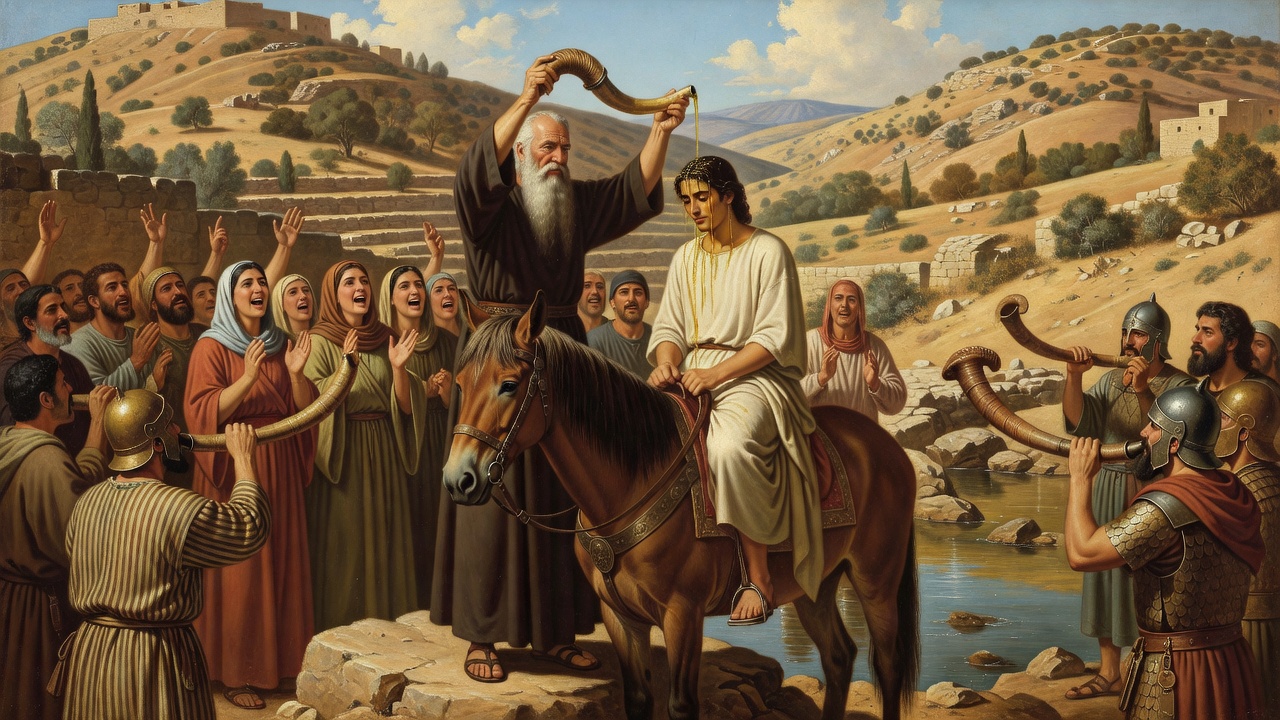
38そこで祭司ツァドク、預言者ナタン、エホヤダの息子ベナヤ、およびケレテ人とペレテ人は下って行き、ソロモンをダビデ王の騾馬に乗せ、彼をギホンへ連れて行った。 39祭司ツァドクは天幕から油の角を取り出し、ソロモンに油を注いだ。彼らは角笛を吹き鳴らし、すべての民は「ソロモン王、万歳!」と言った。 40すべての民は彼の後について上り、笛を吹き、大いに喜んだ。その歓声で地が裂けるほどであった。
41アドニヤと彼とともにいたすべての客は、食事を終えたときにこれを聞いた。ヨアブは角笛の音を聞くと、「なぜ町はあのように騒がしいのか」と言った。
42彼がまだ話している間に、祭司アビアタルの息子ヨナタンがやって来た。アドニヤは、「入れ。あなたは立派な人だから、良い知らせを持って来たのだ」と言った。
43ヨナタンはアドニヤに答えた。「いいえ。われわれの主君ダビデ王は、ソロモンを王とされました。 44王は祭司ツァドク、預言者ナタン、エホヤダの息子ベナヤ、それにケレテ人とペレテ人を彼とともに遣わされました。彼らは彼を王の騾馬に乗せました。 45祭司ツァドクと預言者ナタンは、ギホンで彼に油を注いで王としました。彼らはそこから喜びながら上って来たので、町は響き渡りました。あなたがたが聞いたのはその音です。 46さらに、ソロモンは王座に着いています。 47その上、王のしもべたちはわれわれの主君ダビデ王を祝福しに来て、『あなたの神が、ソロモンの名をあなたの名よりも良くし、彼の王座をあなたの王座よりも大いなるものとされますように』と言いました。すると王は寝台の上で身をかがめられました。 48さらに王はこう言われました。『イスラエルの神、主はほめたたえられるように。主は今日、わたしの王座に座る者を与えられ、わたしの目もそれを見ている。』」
49アドニヤの客たちは皆恐れ、立ち上がって、それぞれ自分の道へ行った。 50アドニヤはソロモンを恐れ、立ち上がって行き、祭壇の角をつかんだ。 51ソロモンに告げる者がいた。「アドニヤはソロモン王を恐れています。彼は祭壇の角をつかんで、『ソロモン王がそのしもべを剣で殺さないと、まずわたしに誓ってくださるように』と言っています。」
52ソロモンは言った。「彼が忠実な者であることを示すなら、その髪の毛一本も地に落ちることはない。しかし、彼のうちに悪が見つかれば、彼は死ぬ。」 53こうしてソロモン王は人を遣わし、彼らは彼を祭壇から連れて下った。彼は来てソロモン王に身をかがめた。ソロモンは彼に、「あなたの家へ帰りなさい」と言った。
Did you know?
The Succession to David's Throne
- As David's oldest surviving son after the deaths of Amnon and Absalom, Adonijah claimed the royal succession, backed by the military commander Joab and the high priest Abiathar. However, David chose his younger son Solomon, who was supported by the prophet Nathan, the priest Zadok, and the royal bodyguard under Benaiah.Sources: Adonijah · Solomon · the Bible text itself
- Riding the king's own mule was a decisive public declaration of royal authority. By David's explicit instruction, Solomon was escorted down to the spring of Gihon, where Zadok anointed him king with oil taken from the tabernacle to the sound of ram's horns and popular celebration.Sources: Gihon · Zadok · the Bible text itself
- Upon hearing of Solomon's public coronation, Adonijah fled in terror and sought asylum by taking hold of the horns of the sacrificial altar. Solomon granted him conditional clemency, sparing his life so long as he proved himself a worthy man.Sources: Adonijah · the Bible text itself
Notes written with AI assistance from open sources (Theographic Bible Metadata, CC BY-SA 4.0; Easton’s Bible Dictionary, public domain) and reviewed before publishing.
Places in this chapter
- Shunem · Today: Sulam · 32.606, 35.334 · verse 3
- Serpent’s Stone · Today: within 100 m of Bir Ayub · 31.767, 35.236 · verse 9
- Gihon · Today: Gihon Spring · 31.773, 35.236 · verses 33, 38, 44, 45
- Jerusalem · 31.777, 35.234 · verse 40
Only places identified with high confidence are shown (90% or more according to the scholarly sources compiled by OpenBible). Period map: DARE (Digital Atlas of the Roman Empire), CC BY 4.0; modern map: © OpenStreetMap contributors; places: OpenBible.info (CC BY 4.0).
Credits and license for this translation
フリーダム・バイブル
The Holy Bible in the Japanese Language, Freedom Bible translation
Public Domain
Language: 日本語 (Japanese)
この聖書翻訳には著作権が設定されていません。この聖書翻訳の公式な配布元は eBible.org です。これは翻訳の草案です。この聖書翻訳をより良いものにするため、改善のご提案を [email protected] までお寄せください。
2026-08-19
Source: http://ebible.org/jpnm/ · eBible.org