John 8
Janji Bible · Tap a verse to see its cross-references.
1Yeso maha ani po nu zaitun, 2Ni sisizo maze udenge wasere, anu vat wa eh ahira ame; ma cukuno madun garwe. 3Ba anu nitike nan nanubezizi uru sa wa en ure vanau e sa amekki me in ni hara ni ma dini. Wawume atii. 4Ba wagun me, “Unu dungara, unee uginome a mekkime mara anyimo uwuza uni hara ni madi. 5Anyimo uweki utize ti Musa maguna n duru ti tizi usasana wanu aginome, hu nyani waguna me?” 6Wabuki anime barki wa masame. Wa kem imumbe sa wadi buki ani ce nu me, Ba Yeso ma tunguno ma nitiki a dizii inni bo nume. 7Sawa reje innu igizo ume, maluri ma tonno magunwe, “Deebe sa ma zoome in madini ba anyimo ashime, matubi u vingizi ume inpo”. 8Makuri mutunguno, ma nitiki innibo nume adizii. 9Sawa kunna anime, wasusi a inde-inde, umeki uzika unaanu uwe. Umasir ka a ceki Yeso me i sisi ime nan nu ne me sa mara atii awe. 10Yeso mahiri matonno ma gunme, “Unee, ani anu boo uwe wa raa? Daa unu reki uwe marani ba? 11Magu, “Unu mazoni, Ugomo Asere” Yeso magu, “micangi daki mare kuwe ba. Dusaule kati ukuri u wuzi ni hara nimadini. 12Yeso ma kinki ubuku tize nan nanume magu, mimani masz munee, me desa ma tarsam, mada wuza me tanu anyi mo amareuba. Anime madi kem masa mi vai. 13Anu bezizi urusa wagun me, “U nyinza urusa uni ce nuwe, urusa uwe daki u ka daure kaniba”. 14Yeso ma kabirka magunwe, “Inki manya urasa ani ce num kadure kani, inrusa ahira sama suroni nan na hirame sandi dusani shi tashi ahira sa masuro ni ba, ida kuri irusi shi ahira sandi dusa niba. 15I wesi tize tu hemu ni ce, mi daa mawe ki uye tize ba. 16Ko gusi ma agu ma weki uye tize, u weki utize tum kadure kani barki dakki min sisi in iniba, inzi nanka coo desa ma tumam. 17Um, anyimo u inko u tize tishi a ni tike u guna unyinza urusa ana ware kadure kani. 18Mimani in zini nyinza urusa unice num, me a coo desa matumam mazin nu nyinza urasa um. 19Wagun me, “Acoome maraa?” Yeso ma ka birka we magu, “itashimiba nani a coo um, inda gi irusam ida rusa a coo u me. 20Mabuki ni guran nigino mamu nan na hira ati inso uganiya amen nu dungara anyimo udenge Asere, ani me daki uye ma meki barki sa u ganiya u me dakki wa wuna ba udaza. 21Makinki uguna uwe, “indi dusa, idi nyarini mi ida kem me miba, idi wiji a nyimo u cara abanga ashimeni. Ahira san in haza idake irusa u hana me ba. 22Mayahudawa magu, “Madi hu ni ce nume ni ni, sama guna ahira sa in haza idakee ida hana shiba?” 23Yesu magun we, shi a dizi ani irani, mi Asesere ani. Shi ira unee ugeuni, mi kuma daki un nee ugen ne uniba. 24Inee ini ya wuna magunan shi idi wiji anyimo ucara abanga ashime in. Indaki ya hem in mi ba idi wiji anyimo amadi mashi. 25Ba wagun me,”Humani aveni?” Yeso magun we, “imumbe sa mabuka shi da ti utuba. 26In zin ni mum gwardang san di buki shi, inkuri in gbarika shi aini. Vat a ani me de sa ma, tumam, una kadure mani, ati mumume sa makuna ahirame, ti mu mum tigino tini in bo unee.” 27Daki wa rusa imumbe sa mazin nu bo me ani ce na coo me. 28Yeso magu, “Inki yahiriza vana unu Azesere ani me idi rusi mimani, daki ma wuza ani me barki ni ce mumba, kasi gusi a coo ma dungaram, ane ani in bo ti mumum tiginoo. 29Mede sa ma tuma, ma zi nigome nan mi daki ma cekum isisi imba, barki in wuza timumu sa ti mumum tiginoo. 30Sa Yeso mazin nu bo uti mumu, gbardang wa hem in me. 31Yeso ma buki Ayahudawa sa wa hem in me, “inki yatonno anyimo atize tum shi anu tarsa um wani aka dure. 32Idi rusi kadure, kadure kadi burishi. 33Wakabirka, “We bisana bi Ibrahim bini daki tamu wuza nirere ahira a uyeba, aneni udigu, a dibuiri shi?” 34Yeso magun we, “kadure, kadundure, in gussan shi, vat de sa ma wuza bi wuza wuza bima dini urere u madini mani. 35Urere be, mada cikke akura madini ba, dama ciki madisani. 36Barki anime, inki vana mabura shi, idi cukuno anu bura kam. 37In rusa shi bisana bi Ibrahim bini, inyara ihuni mi barki ni guran num ni zomen na hira ati cukum anyimo ashi. 38Mabuka ti mu mum sa ma ira ahira a coo um, shi iwuza imumbe sa ya kunna ahira a coo ushi.” 39Wa kabirka wagun me, “Ibrahim mani a coo uru” Yeso magun we, “Gussishi a hanna Ibrahim wani ida wuza i mumbe sa Ibrahim ma wuza. 40Ine ini aname inyara ihunimi, unume sama buka shi kadura sa makunna a hira Aserte. Ibrahim daka ma wuzi anime ba. 41I wuzi imumu ya coo ushi. Wagun me, “Haru daki ayon duru upebu uniba, tizinka coo u inde: Asere.” 42Yeso magun we, “Gusi Asere a coo u shi mani, ida hemin mi, barki ma aye usuro a hira Asere mibe abame, daki barki ni ce num nini ma aye ba, Me nani matuman. 43Nyani ya wuna daki ya rusa tize tumba? barki sadaki sa idake ikuntize tum tiniba. 44Shi wa coo, ushi uburu mani inyara i wuzi imumu ya coo ushi. Me unu huzaa nu mani daati utuba mada tunzino me a kadure barki kadure ka zoni a anyimo ame. Uganiya sa mabo ma cuco, mabo u zina ume uni barki me una macuco mani nan ka coo a mooco. 45In boshi kadure daki ya nyaa ce in mi ba. 46Avee ni anyimo ashime mamekum in hara nimadi? Inki mabuka kadu re kani nyani yawuna daki ya hen in miba? 47Me de sama zi wasere make ma kunna tize ta, asere, shi da kunna shi tize tasere barki sa shi da Asere.” 48Mayaduwa wakabirka me, “tidabome kadure ba barki sa taguna hu ubasamariya mani u zin na gbergene?” 49Yeso makabirka, “Minzoom na gbergene, inyinza a coo um ti nanu. Slibe ida nyin zami tinanu tum ba.” 50Idaa nyaram u ye zize u nice numba, anunyara u anime warani wagwara. 51Kadure, Kadure imboshi. Vat due sa matarsa tize tum, madida irame iwono ba.” 52Ba mayahudawa wagunme, anume tarusa in zin na gbergene. Ibrahim nan ana katuma kasere wa wijo. hube waguna, debesa matarsa tize tuwe madi da donkin kino me iwowoba'. 53Uda tekuwe a coo uru Ibrahim sama ma wi, nani uteki me? ana dang aka tuma kasere wawijo, hu ucira nice nuwe aveni?” 54Yeso makubirka, “Inki ma heza nice num uyeze usisi unee ani, acooum mani Asere ashime. 55Shibe itashime ba, min inrusanme. inki maguna intamin me, macukuno kasi we ini, una ma cuco. 56Min rusanme intarsa tize tume. Aco ushi ibrahim ma zin na puru a rum in nu ira u wui um, ma ira uni ma wuna apum arum”. 57Ma yahudawa wagun me, “Daki wabiki tiwe akuru ciibi sa udigu wamu ira Ibrahim?” 58Yeso ma gun we, “kadundure kani in boshi, ayoo Ibrahim adumo am ani. 59Wa ziki apo wadi tizimeni, Yeso ma hunze nice mimeni, ma suri u denge Asere me.
Did you know?
Light, Law, and Abraham
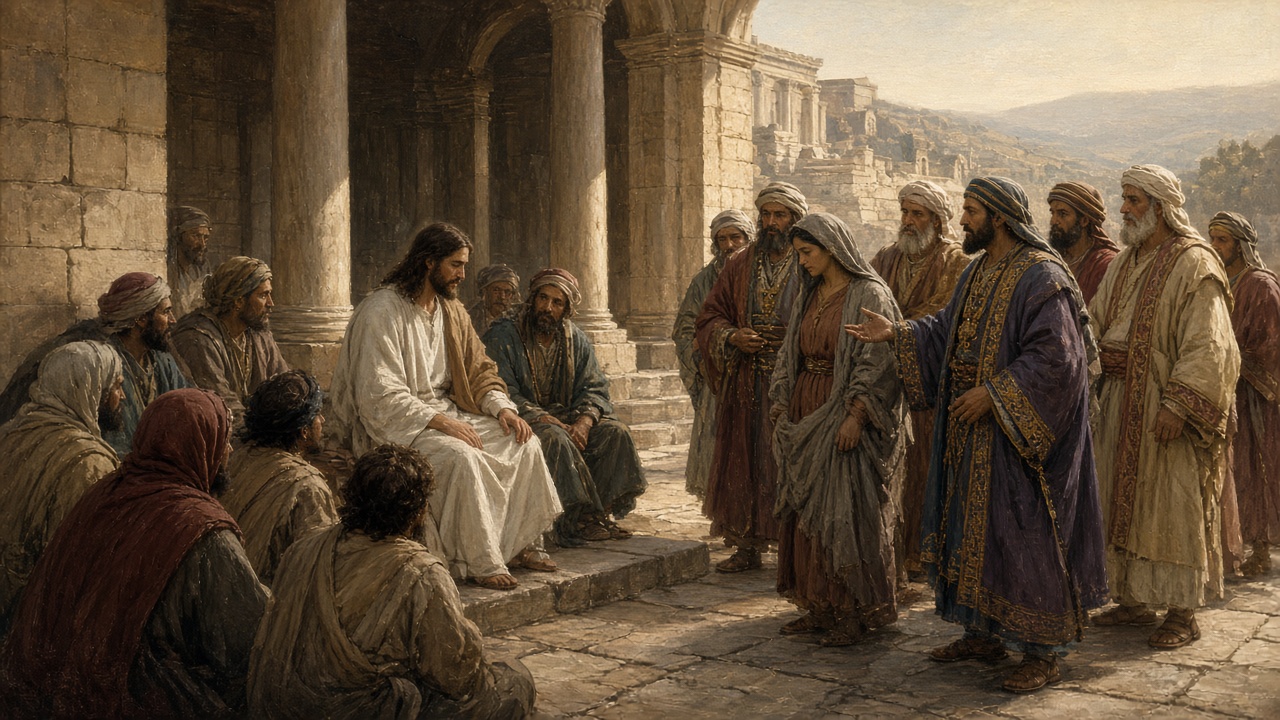
- John 8 opens as Jesus goes to the Mount of Olives and returns early in the morning to the temple courts, where he sits and teaches the people who gather. The Mount of Olives is a ridge east of Jerusalem, separated from the city by the Kidron valley and named for the olive trees that cover its sides.Sources: the Bible text itself · Mount of Olives
- Scribes and Pharisees bring in a woman caught in adultery and ask Jesus what he says about Moses' command in the Law to stone such a woman, seeking to test him and to gain a basis for accusing him. Still in the temple courts, near the treasury, Jesus later says, "I am the light of the world." A dated event list places both episodes in AD 29, each lasting one day.Sources: the Bible text itself · Woman Caught in Adultery · Light of the World/I am discourse
- When Jesus says that the truth will set them free, his hearers answer that they are Abraham's descendants and have never been slaves to anyone. Abraham is called "father of a multitude"; he was the son of Terah and the heir of the promises. After Jesus declares, "before Abraham was born, I am," they pick up stones to throw at him.Sources: the Bible text itself · Abraham
Notes written with AI assistance from open sources (Theographic Bible Metadata, CC BY-SA 4.0; Easton’s Bible Dictionary, public domain) and reviewed before publishing.
Places in this chapter
- Mount of Olives · 31.778, 35.246 · verse 1
Only places identified with high confidence are shown (90% or more according to the scholarly sources compiled by OpenBible). Period map: DARE (Digital Atlas of the Roman Empire), CC BY 4.0; modern map: © OpenStreetMap contributors; places: OpenBible.info (CC BY 4.0).
Credits and license for this translation
Janji Bible
The New Testament in the Janji language of Nigeria
copyright © 2020 Door 43 International Mission Community
Language: Ajanji (Janji)
Translation by: Door 43 International Mission Community
Contributor: Chrispher Ishaya, Daduhus Timothy Danjuma, Danjuma Alfred H, Ishaku B. Kubgak, Timothy Danjuma
This translation is made available to you under the terms of the
Creative Commons Attribution Share-Alike license 4.0.
You have permission to share and redistribute this Bible translation in any format and to make reasonable revisions and adaptations of this translation, provided that:
You include the above copyright and source information.
If you make any changes to the text, you must indicate that you did so in a way that makes it clear that the original licensor is not necessarily endorsing your changes.
If you redistribute this text, you must distribute your contributions under the same license as the original.
Pictures included with Scriptures and other documents on this site are licensed just for use with those Scriptures and documents.
For other uses, please contact the respective copyright owners.
Note that in addition to the rules above, revising and adapting God's Word involves a great responsibility to be true to God's Word. See Revelation 22:18-19.
2024-05-01
Source: http://ebible.org/jni/ · eBible.org