Colossians 3
Janji Bible · Tap a verse to see its cross-references.
1Inge Asere a hirza shi nigome nan vana Asere, i nyari imume sa irani aseseri, aba sa vana Asere ma cikin atari tinanre ta Asere. 2Bassa imumme sa irani aseseri, inzo anice nimumme sa irani adizi ba. 3Irusa shi ya wono, ibe ishime a hunze inni nigome nan vana Asere anyimo Asere. 4Uganiya sa vana Asere ma aye desa memani ibe ishime, uganiya me shi idi ē nigome nan me anyimo ugongon umeme. 5Cekini mei maje sa marani unee, utarsa ahana aruma nan na'e sa daki wamu wuza anya ba, madini mei maje ma zenzen, unyara uzenzen, nan nu yarara, uge sa une uni utarsa umakiri. 6Barki timum tiginome tini ucurnome iruba Asere u eze ace ana gbas. 7Anyimo atimum tigino tini ya zi icikin sa iciki anyimo tini. 8Aname ya cukuno gbas ikari timum tiginome-upazaza iruba, ucurnome iruba, ubasa imum ibur, tizogo nan tize tizenzen anyo ashime. 9Kati iwu acece macico ba, barki sa ya susso unu ukuzu nan katuma kameme. 10Ya kuri ya soki unu uso, de sa aka saki anyimo urusa uzina ude sa ma bari me. 11Abinime ani uheliniyawa nan uyanhuwa marani ba. Una nigbari nan de sa daki agbara me ba, unure, unu zatu uyozo, nani ubasikitiye, urere nani de sa abura me vana Asere memeni vat, ma kuri mara anyimo uvat. 12Sa shi wani ande sa Asere zauka ana lau anu heminmi sokini nibusi, katuma karirin, utuzo unice umeki unice nan iruba ishew. 13Wunani iruba ishew ina cece, i benki acece. Ingi uye mazin nimum wanu henu iveten ka si sa ugomo Asere ma vete ku shi men. 14Timumme sa titeki tigeme vat, cukunoni unu hem uge sa une uni umasirka vat. 15Cekini ticukunum timan ti vana Asere ticukunno amu ruba mu shime, barki tigeno ticukumtiman me tini atiti shi anyimo ani pum ni'inde. Wunani iruba irum. 16Cekini tize ti vana Asere ticukuno anyimo ashi kang. Vat unu rusa, i dungari, ikuri gbari acece inaren, ire nan nire ini nonzoibibe. Izin nuwuza nigome ini ruba irum anyimo atize ta Asere. 17Vat imumme sa idi wuzi anyimo atize nani katuma iwuzi anyimo aniza nu ugomo Asere Yeso. Iwuzi iruba irum ina Asere acu ahira ame. 18Anee tarsani anu ruma ushime menmerum anyimo ugomo Aesre. 19Ahana aruma hemni ina nee ashime, kati ipatilka we ba. 20Ahana tarsani aka co ushime anyimo a kondi nyani, barki anime arumuza ugomo Asere iruba. 21Shi aka co kati ijutiki ahana ashime ba barki kati wa kunna biyau. 22Arere tarsani an sakura ashime anipum anyimo akondi iya imum, sarki unyara uniza nan nyara uruma anu muruba, senke ini ruba inde. Kunna biyau bu ugomo Asere. 23Vat imumme sa iwuza, wuzani katuma ahira iruba barki ugomo Asere, inzo barki unu ba. 24Irusa uguna idi kabi ukalum ukatuma ahira ugomo Asere. Barki ugomo Asere, avna Asere mani itarsa me. 25De sa daki ma wuza iruba ubenki ba madi kabi ukalum iruba uzatu ubenki, usu unuce.
Did you know?
New life in one body and at home
- This chapter pictures a changed life as a change of clothing. Readers are said to have taken off the old self with its practices and put on the new self, which is being renewed in knowledge in the image of its Creator. They are then told to clothe themselves with hearts of compassion, kindness, humility, gentleness, and patience, and to put on love over all these virtues as the bond of perfect unity.Sources: the Bible text itself
- The chapter lists Greek and Jew, circumcised and uncircumcised, barbarian, Scythian, slave and free, and declares that here none of these distinctions remains, because Christ is all and is in all.Sources: the Bible text itself
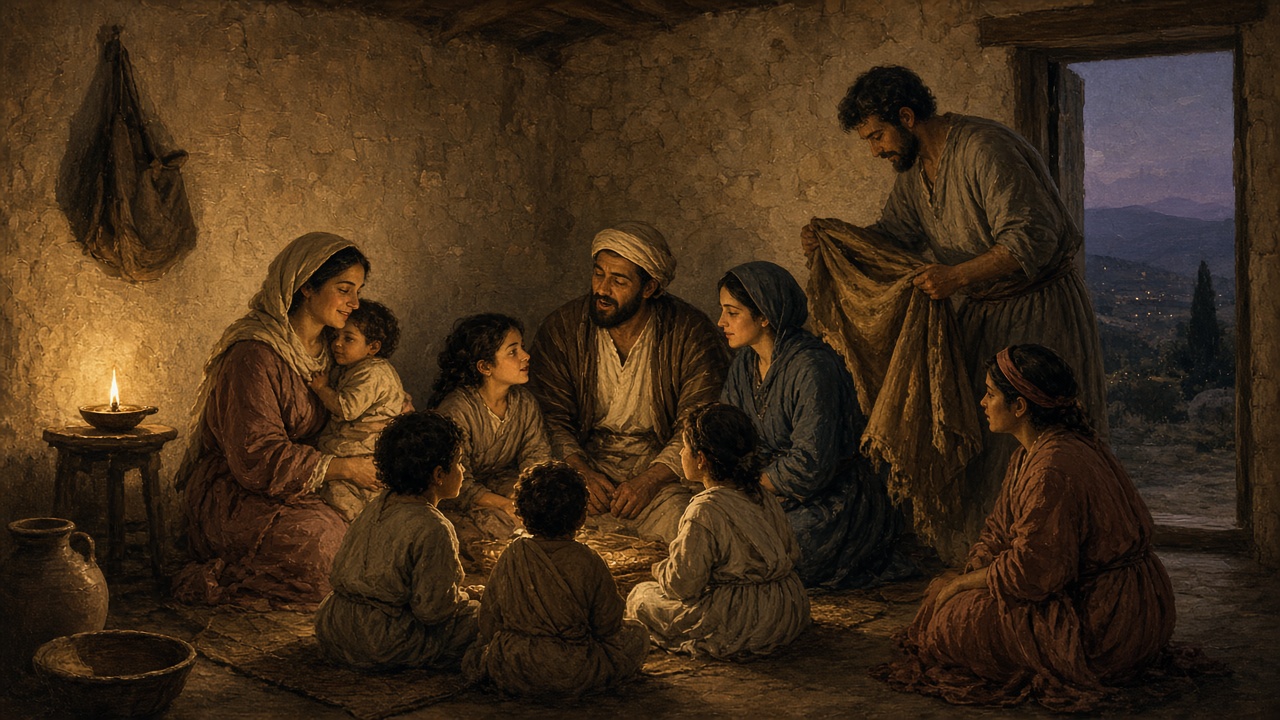
- The chapter then gives instructions for household relationships: wives and husbands, children and parents, and slaves and their earthly masters. Fathers are warned not to provoke their children, so that the children will not become discouraged. Slaves are told to obey with sincerity of heart, not only while they are being watched, and to work with their whole being for the Lord rather than for men, with the promise of an inheritance from the Lord as a reward; whoever does wrong will be repaid, and there is no favoritism.Sources: the Bible text itself
Notes written with AI assistance from open sources (Theographic Bible Metadata, CC BY-SA 4.0; Easton’s Bible Dictionary, public domain) and reviewed before publishing.
Credits and license for this translation
Janji Bible
The New Testament in the Janji language of Nigeria
copyright © 2020 Door 43 International Mission Community
Language: Ajanji (Janji)
Translation by: Door 43 International Mission Community
Contributor: Chrispher Ishaya, Daduhus Timothy Danjuma, Danjuma Alfred H, Ishaku B. Kubgak, Timothy Danjuma
This translation is made available to you under the terms of the
Creative Commons Attribution Share-Alike license 4.0.
You have permission to share and redistribute this Bible translation in any format and to make reasonable revisions and adaptations of this translation, provided that:
You include the above copyright and source information.
If you make any changes to the text, you must indicate that you did so in a way that makes it clear that the original licensor is not necessarily endorsing your changes.
If you redistribute this text, you must distribute your contributions under the same license as the original.
Pictures included with Scriptures and other documents on this site are licensed just for use with those Scriptures and documents.
For other uses, please contact the respective copyright owners.
Note that in addition to the rules above, revising and adapting God's Word involves a great responsibility to be true to God's Word. See Revelation 22:18-19.
2024-05-01
Source: http://ebible.org/jni/ · eBible.org