Matthew 8
Nuevo Testamento yin̈ abxubal · Tap a verse to see its cross-references.
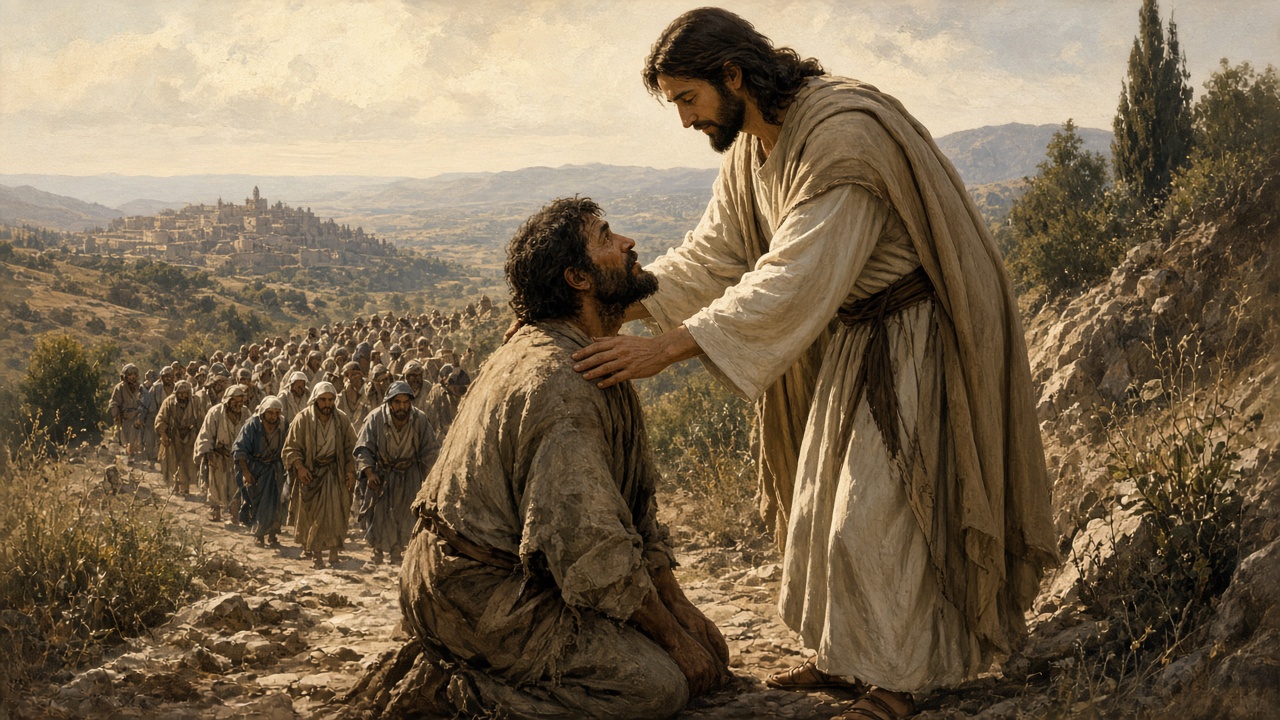
Yakꞌ cawxo Comam Jesús huneꞌ naj ayco lepra yin̈
1Yet ispaxayti Comam Jesús iswiꞌ huneꞌ won̈an tuꞌ, caw hantan̈e anma oc tzujno yinta Comam. 2Yelilo huneꞌ naj yul beh, ayco huneꞌ yabil chiyij lepra yin̈. Ishitzico naj iscꞌatan̈ Comam, yay jahno naj sata Comam, yalni naj:
—Mamin, ta chawoche chu hawinilo huneꞌ yabil tiꞌ win̈an, ẍi naj tet Comam. 3Yanayo Comam iskꞌab yiban̈ naj, yalni Comam:
—Hoꞌ, chiwochehan ta chiel huneꞌ yabil tiꞌ tawin̈, ẍi Comam. Yin̈n̈ena xin yel huneꞌ yabil tuꞌ yin̈ naj. 4Lahwi tuꞌ, yalni Comam tet naj:
—Machi mac tet chawalicꞌo huneꞌ tiꞌ, wal xin as ye haba tet naj sacerdote, cat hawakꞌni haxahanbal hacaꞌ yalni isley naj Moisés, yun̈e yohtan̈encanilo anma tato xaelcano huneꞌ yabil tiꞌ tawin̈, ẍi Comam tet naj.
Yakꞌ cawxo Comam Jesús ischejab huneꞌ naj capitán romano
5Hayet yoc apno Comam Jesús yul con̈ob Capernaum, yapni huneꞌ naj capitán romano iscꞌatan̈ Comam, iskꞌanni naj ta chakꞌ cawxo Comam huneꞌ ischejab naj. 6Yalni naj tet Comam:
—Mamin, ay huneꞌ inchejaban caw yaꞌay, mach chibili isnimanil, caw xin chꞌecꞌyaꞌ yanma naj yu huneꞌ yabil tuꞌ, ẍi naj tet Comam.
7Yalni Comam tet naj:
—Cꞌulticꞌa, chintohan wakꞌaꞌ cawxojan naj, ẍi Comam.
8Istakꞌwi naj capitán tuꞌ tet Comam:
—Mamin, caw mach chu hawapni yul watutan chiwabehan yuto caw matzet welapnojan. Wal xin ton̈e chachtzotelnato yin̈ hacn̈e tiꞌ cat iscawxican̈ inchejabtuꞌan. 9Wohtajan huneꞌ tiꞌ, yuto hanintiꞌan ayinictojan yalan̈ ischejbanil ebnaj wahawan, aypaxo xin ebnaj soldado ayico yalan̈ wipan. Ta chiwalan tet hunu naj: “Asiꞌ bey tuꞌ,” ta quinchiyan, cat isto naj. Taca chiwalan tet hunuxa naj: “Cata,” ta quinchiyan, cat istit naj. Yebpaxo xin ta chiwalan tet hunuxa naj inchejaban: “Watxꞌe huneꞌ tilah,” ta quinchiyan, cat yoc naj iswatxꞌenoj, ẍi naj.
10Hayet yaben Comam yalni naj hacaꞌ tuꞌ, caw cꞌayilo iscꞌul Comam, yalni Comam tet anma tzujanico yinta tuꞌ:
—Yin̈ caw yeli chiwalan teyet, maẍto hunu mac chiwilan yanico yanma yin̈ Comam Dios yul con̈ob Israel hacaꞌ huneꞌ naj tiꞌ. 11Wal xin chiwalan teyet, chitit anma bay chiahilo tzꞌayic, yeb bay chito tzꞌayic cat iscutxbanico isba yeb naj Abraham, naj Isaac yeb naj Jacob sat ismeẍa Comam Dios bey satcan̈. 12Haꞌ anma Israel yetticꞌa ay yoc sat huneꞌ meẍa tuꞌ, yaj ay ebnaj chicancano yintajilo xol kꞌejholo. Haꞌ bey tuꞌ xin chꞌoc okꞌoj cat isn̈etxꞌla yeh yu isyaꞌtajil, ẍi Comam tet anma.
13Lahwi tuꞌ xin, yalni Comam tet naj capitán:
—Paxan̈to hawatut, yubojab hacaꞌ chawoche yuto maxawayto yul hawanma win̈an, ẍi Comam tet naj. Yin̈ticꞌa huneꞌ orahil tuꞌ xin cawxican̈ ischejab naj capitán.
Yakꞌ cawxo Comam Jesús ismiꞌ yixal naj Pedro
14Lahwi tuꞌ xin, isto Comam Jesús yatut naj Pedro. Yet yapni Comam yilni tato hilanto ismiꞌ yixal naj Pedro tuꞌ sat txꞌat yu huneꞌ niman kꞌaꞌ. 15Yoc tzabno Comam yin̈ iskꞌab ixnam, yelna huneꞌ kꞌaꞌ tuꞌ yin̈ ixnam, iscawxican̈ ixnam. Lahwi tuꞌ yahwano ixnam, yoc ixnam iswatxꞌeno tzet chislo Comam.
Caw txꞌiꞌal anma cawxican̈ yu Comam Jesús
16Hayet lan̈anxa yay numnahi caw hantan̈e anma ayco ischejab naj matzwalil yin̈ ilaxto iscꞌatan̈ Comam. Caw xin huneꞌn̈echꞌan tzotiꞌ chal Comam cat yel ischejab naj matzwalil yin̈ anma. Yakꞌnipaxo cawxo Comam anma yaꞌay. 17Yin̈ huntekꞌan iswatxꞌe Comam tuꞌ yijcano isba tzet halbilcano yu naj Isaías, huneꞌ ischejab Comam yet payat, yet yalni naj hacaꞌ tiꞌ: “Yiban̈ naj chitocano yabil ayco jin̈, cat xin yabenpaxo isyaꞌil coseleloj,” ẍi naj Isaías tuꞌ.
Huntekꞌan mac yoche oco tzujno yinta Comam Jesús
18Hayet yilni Comam Jesús tato caw hantan̈e anma hoyanico yin̈, yalni Comam tet ebnaj iscuywom tato chiecꞌto ebnaj yeb Comam iskꞌaxepicꞌto haꞌ lago. 19Yajaꞌ yet yalan̈to maẍto chito Comam yeb ebnaj, ishitzico huneꞌ naj chicuywa yin̈ isley naj Moisés iscꞌatan̈ Comam, yalni naj:
—Mam cuywawom, chinoc tzujnojan tawintaj bajxan̈etuꞌwal chachtohi, ẍi naj.
20Yalni Comam tet naj:
—Noꞌ wech ay isn̈achꞌen noꞌ bay chiwayi, yebpaxo noꞌ chꞌic ay yatut noꞌ. Yajaꞌ Hanin Akꞌbilintijan texol yu Comam Dios, machi watutan bay chinxewninojan, ẍi Comam.
21Yalnipaxo huneꞌxa naj iscuywom Comam:
—Mamin, chinoc tzujnojan tawintaj, yaj estam chawakꞌ inhamanilan chito inmujcano inmaman babel, ẍi naj.
22Yalni Comam tet naj:
—Wal xin ocan̈ tzujno wintajan yuto haꞌ mac camom yul sat Comam Dios, haꞌ chimujni yet camomal, ẍi Comam tet naj.
Yet islin̈ban Comam Jesús huneꞌ jakꞌekꞌ yiban̈ haꞌ mar
23Lahwi tuꞌ xin, yocto Comam Jesús yeb ebnaj iscuywom yul huneꞌ teꞌ barco. 24Hayet lan̈an yecꞌto Comam yeb ebnaj yiban̈ ha haꞌ tuꞌ xin, yichico yecꞌ huneꞌ niman jakꞌekꞌ caw how. Toxan̈e chitiẍla yah ha haꞌ tuꞌ yin̈ teꞌ barco, wal Comam Jesús xin wayo chu yul teꞌ. 25Hayet yilni ebnaj iscuywom Comam huneꞌ tuꞌ, yoc ebnaj yinolo iswayan̈ Comam, yalni ebnaj:
—¡Mamin colon̈an̈, yuto lan̈an coto yich haꞌ! ẍi ebnaj tet Comam.
26Istakꞌwi Comam tet ebnaj:
—¿Tzet yin̈ xin caw chexxiwi? ¡Caw mach cheyaco heyanma yin̈ Comam Dios! ẍi Comam tet ebnaj. Lahwi tuꞌ xin yahwano Comam, iscachni Comam jakꞌekꞌ yeb ha haꞌ. Hac tuꞌ yu islin̈ban isbili ha haꞌ tuꞌ yeb jakꞌekꞌ, ispaxtzꞌin̈nahi. 27Wal ebnaj iscuywom Comam tuꞌ, caw cꞌaycanilo iscꞌul ebnaj, yalni ebnaj tet hunun:
—¿Mac anmahil huneꞌ yaꞌ tiꞌ yuxin chisyije jakꞌekꞌ yeb ha haꞌ tzet chal yaꞌ? ẍi ebnaj yin̈ Comam.
Cawan̈ ebnaj ayco ischejab naj matzwalil yin̈ bey Gadara
28Hayet yapni Comam Jesús yeb ebnaj iscuywom iskꞌaxepicꞌto haꞌ lago bey huneꞌ txꞌotxꞌ chiyij Gadara, yapni cawan̈ ebnaj ayco ischejab naj matzwalil yin̈ iscꞌatan̈ Comam; ispeto ebnaj yul camposanto. Ebnaj cawan̈ tuꞌ caw chixiw anma tet ebnaj yuto caw aycano yip ebnaj. Caw xin machi hunu mac chiecꞌ bay ay ebnaj tuꞌ.
29Yah yaw ebnaj tet Comam yin̈ caw ip:
—¿Tzet hawoc jin̈an̈ hach Jesús Iscꞌahol Dios? ¿Tom chachhul hawakꞌaꞌ ecꞌoyaꞌ janmahan̈ yalan̈to maẍto chiapni istiempohal? ẍi ebnaj tet Comam.
30Iscawilal tuꞌ, ay huntekꞌan noꞌ txitam lan̈an istan̈elaxi, 31yuxin iskꞌan ebnaj ischejab naj matzwalil tuꞌ tet Comam hacaꞌ tiꞌ:
—Tato chon̈hawilojan̈ yin̈ ebnaj tiꞌ, chicokꞌanan̈ tawet, chejon̈tojan̈ yin̈ noꞌ txitam tuꞌ lah, ẍi ebnaj tet Comam.
32Istakꞌwi Comam:
—Cꞌulticꞌa, asiꞌwej, ẍi Comam.
Hac tuꞌ xin yu yel ebnaj ischejab naj matzwalil yin̈ ebnaj cawan̈ tuꞌ, istocano ebnaj yin̈ noꞌ txitam. Lahwi tuꞌ xin yelcan̈ noꞌ txitam tuꞌ, iskꞌojnito isba noꞌ sat pahaw, yay apno noꞌ xol ha haꞌ, ishikꞌnito noꞌ haꞌ.
33Wal ebnaj tan̈em txitam xin elcan̈ ebnaj. Hayet yapni ebnaj yul con̈ob yalni ebnaj tet anma yin̈ tzet yu ebnaj cawan̈ bay ayticꞌaco ebnaj ischejab naj matzwalil. 34Yuxin sunil anma yul con̈ob tuꞌ to ilno Comam. Hayet yapni anma iscꞌatan̈ Comam tuꞌ xin, yoc anma iskꞌanno tet Comam tato chiel Comam yul ismajul istxꞌotxꞌ ebnaj tuꞌ.
Did you know?
Healings, faith, and the sea
- Capernaum, which Jesus enters in this chapter, was a Galilean city not named in the Old Testament. Easton's Bible Dictionary (1897) says it became his “own city” after he left Nazareth, and it lists the centurion’s appeal and the healing at Peter’s house among the events set there.Sources: Capernaum · the Bible text itself
- Jesus says that many will come from east and west to share the banquet with Abraham, Isaac, and Jacob in the kingdom of heaven. Easton's Bible Dictionary (1897) calls Abraham the son of Terah and heir of the promises, Isaac Abraham’s only son by Sarah, and Jacob—also known as Israel—the younger twin son of Isaac and Rebekah.Sources: the Bible text itself · Abraham · Isaac · Jacob (Israel)
- Matthew presents that evening’s healings as fulfilling words spoken through the prophet Isaiah: “He took on our infirmities and carried our diseases.” Easton's Bible Dictionary (1897) identifies Isaiah as the son of Amoz, who prophesied in the reigns of Uzziah, Jotham, Ahaz, and Hezekiah.Sources: the Bible text itself · Isaiah
Notes written with AI assistance from open sources (Theographic Bible Metadata, CC BY-SA 4.0; Easton’s Bible Dictionary, public domain) and reviewed before publishing.
Places in this chapter
- Gadara · Today: Umm Qais · 32.656, 35.679 · verse 28
Only places identified with high confidence are shown (90% or more according to the scholarly sources compiled by OpenBible). Period map: DARE (Digital Atlas of the Roman Empire), CC BY 4.0; modern map: © OpenStreetMap contributors; places: OpenBible.info (CC BY 4.0).
Credits and license for this translation
Nuevo Testamento yin̈ abxubal
New Testament in Jakalteko Eastern; jac (GT:jac:Jakalteko)
copyright © 1997 Wycliffe Bible Translators, Inc.
Language: Jakalteko
Translation by: Wycliffe Bible Translators, Inc.
Copyright Information
© 1997, Wycliffe Bible Translators, Inc. All rights reserved.
This translation text is made available to you under the
terms of the Creative Commons License: Attribution-Noncommercial-No Derivative Works.
( http://creativecommons.org/licenses/by-nc-nd/3.0/ )
In addition, you have permission to port the text to different file formats, as long as you
do not change any of the text or punctuation of the Bible.
You may share, copy, distribute, transmit, and extract portions
or quotations from this work, provided that you include the above copyright
information:
You must give Attribution to the work.
You do not sell this work for a profit.
You do not make any derivative works that change any of the actual words or punctuation of the Scriptures.
Permissions beyond the scope of this license may be
available if you contact
us with your request.
The New Testament
in Jakalteko
© 1997, Wycliffe Bible Translators, Inc. All rights reserved.
This translation is made available to you under the terms of the
Creative Commons Attribution-Noncommercial-No Derivatives license 4.0.
You may share and redistribute this Bible translation or extracts from it in any format, provided that:
You include the above copyright and source information.
You do not sell this work for a profit.
You do not change any of the words or punctuation of the Scriptures.
Pictures included with Scriptures and other documents on this site are licensed just for use with those Scriptures and documents.
For other uses, please contact the respective copyright owners.
2016-05-05
Source: http://ebible.org/jacNT/ · eBible.org