Matthew 11
Nuevo Testamento yin̈ abxubal · Tap a verse to see its cross-references.
Yato naj Juan anican̈ haꞌ iswiꞌ anma cawan̈ iscuywom yakꞌaꞌ iskꞌambebal tet Comam Jesús
1Lahwi yalnicano Comam Jesús ischejbanil ebnaj cablahon̈wan̈ iscuywom, isto Comam cuywal; yecꞌ Comam yalnocꞌo Istzotiꞌ Comam Dios yul hunun con̈ob ayco yin̈ ishoyanil bay ay Comam.
2Yin̈ huneꞌ tiempohal tuꞌ ayicto naj Juan anican̈ haꞌ iswiꞌ anma yul preso. Yabe naj iskꞌumal yin̈ tzettaj chiswatxꞌe Comam Cristo. Ischejnito naj cawan̈ ebnaj iscuywom 3iskꞌambeno tet Comam:
—¿Ham hach tiꞌ Cristo echmabil yul juhan̈, mato chijechmahan̈ yul hunuxa naj? ẍi ebnaj.
4Istakꞌwi Comam:
—As halwe tet naj Juan tuꞌ yin̈ sunil tzet maxeyabe yeb yin̈ tzet maxeyila. 5Halwe tet naj tato haꞌ mac maẍticꞌa chu yilni hajlocanocan̈ sat, haxa mac maẍticꞌa chu yeqꞌui, belwican̈. Haꞌ mac ayco lepra yin̈ xin an̈chacanoj, haꞌ mac maẍticꞌa chabe, hajlo istxiquin. Aypaxo camom hulcan̈ iscꞌul, cat xin yallaxpaxo Tzotiꞌ yet colbanile tet anma machi bay chicawxi iscꞌul. 6¡Sakꞌal yet mac mach chicabcon yanma win̈an! quexchi, ẍi Comam tet ebnaj.
7Hayet lahwi ispaxto ebnaj xin, yichico Comam yalni tet anma yin̈ tzet yelapno ye naj Juan, yalni Comam hacaꞌ tiꞌ:
—Nawetij tzet quexbey heyilaꞌ bey txꞌotxꞌ desierto, ¿tom haꞌ huneꞌ teꞌ ah chꞌecꞌ kꞌelah yu jakꞌekꞌ? 8¿Mato hunu naj caw nanxa yoc xil iskꞌap ayco quexbey heyilaꞌ? ¡Machoj! Yuto ebnaj caw nanxa islow yehico xil iskꞌap yuln̈e yatut ebnaj rey ay ebnaj. 9¿Mac quexbey heyilaꞌ? Wal xin huneꞌ ischejab Comam Dios quexbey heyilaꞌ. Yin̈ caw yeli huneꞌ ischejab Comam Dios quexbey heyilaꞌ tuꞌ caw ecꞌbalto yelapno ye ismunil naj sata ebnaj ischejab Comam Dios ecꞌlena yet payat. 10Yin̈ naj Juan tzꞌibn̈ebilcano yul Yum Comam Dios bay chal hacaꞌ tiꞌ:
Haninan chinchejtojan inchejaban babel tasataj, yun̈e iswatxꞌen habeh yalan̈to maẍto chachapni, ẍiayoj.
11Yin̈ caw yeli chiwalan teyet, xol sunil anma yul sat yiban̈kꞌinal tiꞌ machi hunu mac ecꞌbal yelapno yiban̈ naj Juan tuꞌ. Yajaꞌ wal mac chioc yul iskꞌab Comam Dios xin waxan̈ca caw comonn̈e yeqꞌui, ecꞌbal sakꞌal yet sata naj Juan.
12Yet taxticꞌa yichiti naj Juan tuꞌ yanican̈ haꞌ iswiꞌ anma masanta tinan̈, yin̈ isyaꞌtajil choc anma yul iskꞌab Comam Dios, yajaꞌ han̈cꞌan̈e mac chihti yanma yin̈, haꞌ chitzujcha apno yu yoc yul iskꞌab Comam. 13Sunil tzet yal ebnaj ischejab Comam Dios yet payat yeb sunil tzet yal isley naj Moisés yalan̈to maẍto chiichico ismunil naj Juan, ton̈e bina yin̈ tzet chu yoc anma yul iskꞌab Comam Dios. 14Ta cheyoche cheyayto yul heyanma yin̈ tzet chiwaltiꞌan, txumchaojabilo heyu tato haꞌ naj Juan tuꞌ, haꞌ naj hacaꞌ naj Elías echmabil yul heyu. 15Maquex cheyabe huneꞌ tiꞌ akꞌwe heyanma hetxumniloj.
16Anma ay yul huneꞌ tiempohal tiꞌ, cꞌul inlahbanan yeb niẍte unin chiay tzꞌon̈no yul txon̈bal cat issajchi, cat yahwi tet niẍte yet uninal, chalni: 17“Naban̈e jeta cobahan̈ jokꞌtzenan̈ teꞌ suꞌ, yuto mach quexcan̈alwi. Naban̈e jacojan̈ bit caw biscꞌulal yoqui, yuto mach quexokꞌpaxoj,” ẍi niẍte unin tuꞌ. 18Chiwalan huneꞌ tiꞌ, yuto yet yul naj Juan anican̈ haꞌ iswiꞌ anma mach waꞌ naj yeb anma, yuxin hallaxi tato ayco ischejab naj matzwalil yin̈ naj. 19Haxa Hanin Akꞌbilintijan texol yu Comam Dios, chinwaꞌan yeb anma yuxin chihallax win̈an hacaꞌ tiꞌ: “Wal naj Jesús tiꞌ waꞌon̈eticꞌa chu naj yeb ucꞌu vinon̈eticꞌa chu naj, yamigo isba naj yeb ebnaj txꞌoj chiswatxꞌe yeb ebnaj ikꞌomilo tohlabal chꞌen chito bey Roma,” ẍi anma win̈an. Yajaꞌ wal anma ayco ishelanil Comam Dios yin̈ haban isyenilo isba yin̈ tzettaj iscꞌulal chi-la-iswatxꞌe, ẍi Comam.
Huntekꞌan con̈ob mach yijemo yin̈ tzet chal Comam Jesús
20Yet hunel xin oc Comam Jesús yalaꞌ istxꞌojal huntekꞌan con̈ob bay caw txꞌiꞌal cꞌaybalcꞌule xaisye Comam, yuto anma ay yul huntekꞌan con̈ob tuꞌ maẍticꞌa chisna isba isbejnicano iswatxꞌen istxꞌojal, yuxin yal Comam hacaꞌ tiꞌ:
21—Hex ay yul con̈ob Corazín cꞌanchꞌanex, yeb hex ay yul con̈ob Betsaida, cꞌanchꞌanexpaxoj, yuto ta yul con̈ob Tiro yeb con̈ob Sidón yelax huntekꞌan cꞌaybalcꞌule chiyelax texol tiꞌ, payxam isbejcano anma iswatxꞌen istxꞌojal, yamahto anma tan̈ yin̈ iswiꞌ, yeb yamico anma xil iskꞌap chiyenilo biscꞌulal. 22Yajaꞌ chiwalan teyet, yet chiapni istzꞌayical bay chil Comam Dios yin̈ tzet chielico anma, caw ecꞌbalto isyaꞌtajil chischah huntekꞌan anma tiꞌ sata anma ay yul con̈ob Tiro yeb anma ay yul con̈ob Sidón. 23Haxa hex ay yul con̈ob Capernaum, ham heyalni ta chexilaxcan̈ satcan̈, machoj; wal xin chexkꞌojlaxayto xol camom. Yuto ta yul con̈ob Sodoma yelax huntekꞌan cꞌaybalcꞌule chiyelax texol tiꞌ, isbejmicano anma yanico ismul, aytomicꞌo huneꞌ con̈ob tuꞌ tinan̈. 24Yuxin chiwalan teyet yet chilni Comam Dios yin̈ tzet chielico anma, caw ecꞌbalto isyaꞌtajil chechah sata anma ah Sodoma tuꞌ, ẍi Comam.
Haꞌ Comam Jesús chon̈akꞌni xewoj
25Hayet huneꞌ tiempohal tuꞌ txahli Comam Jesús, yalni Comam:
—Mamin, yahawil satcan̈ yeb txꞌo txꞌotxꞌ, chiwakꞌan yuchꞌandios tawet yuto haweba huntekꞌan tiꞌ tet ebnaj ay ishelanil yeb tet ebnaj ay iscuyu yul sat anma, hawakꞌni yohtan̈elo anma matzet yohtaj. 26Mamin, hac tuꞌ chuhi yuto hac tuꞌ el yin̈ hacꞌul, ẍi Comam.
27Lahwi tuꞌ yalni Comam tet anma:
—Sunil tzet ye tuꞌ ayco yul inkꞌaban yu Inmaman. Machi hunu mac ohtan̈einan hanin Cꞌahole intiꞌan, cachann̈e Inmaman ohtan̈einan. Machi hunu mac ohtan̈e Inmaman, cachann̈e haninan quiniscꞌaholtiꞌan wohtajan, cat wakꞌnihan Inmamtuꞌan yohtan̈elo tet mac bay chiwochehan. 28Maquex sicꞌomexxa yu hemunil yeb hex xatibayo heyu yalan̈ yalil heyijatz, titan̈we incꞌatan̈an, yuto haninan chexwakꞌ xewojan. 29Ijwe huneꞌ ijatz chiwakꞌan heyijaꞌ. Cuywan̈we wintajan haxinwal chixew heyanma, yuto hanintiꞌan cꞌulchꞌan incꞌulal yeb xin ay isnimanil incꞌulan. 30Huneꞌ ijatz chiwakꞌan heyijaꞌ tiꞌ mach aloj, mach yaꞌtajo heyijenpaxoj, ẍi Comam tet anma.
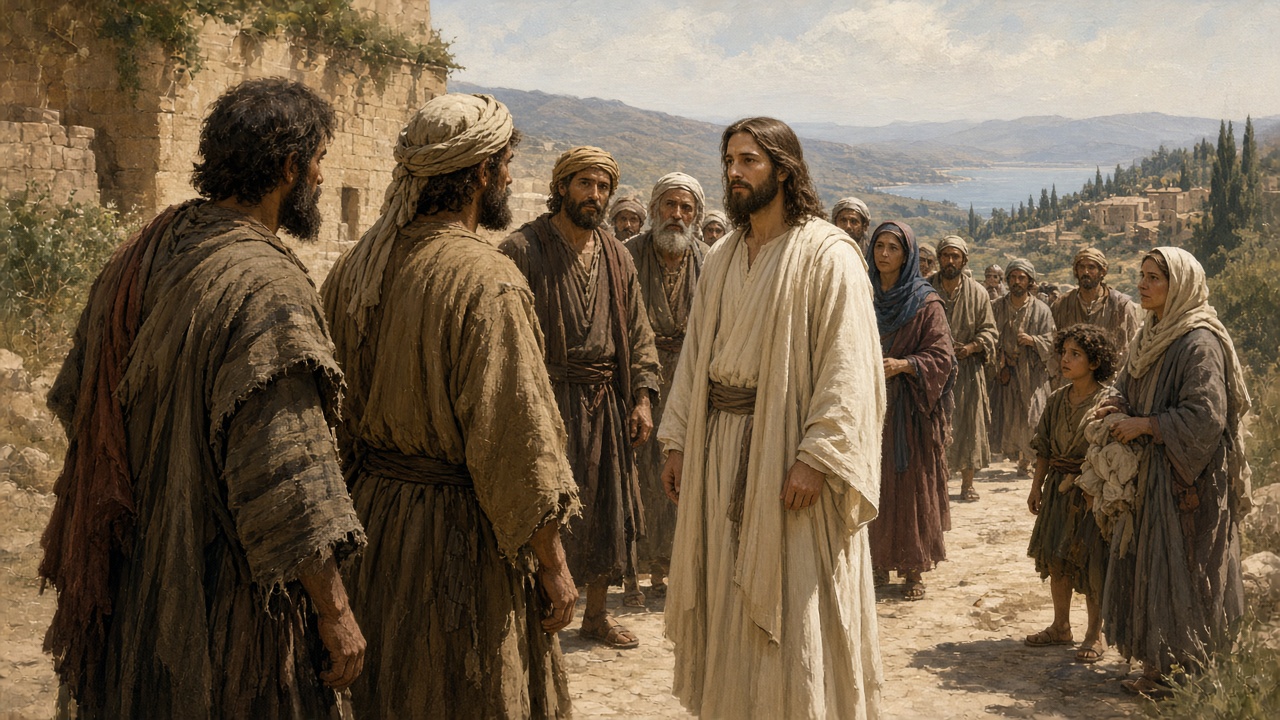
Did you know?
John's question and the cities that did not repent
- From prison, John sent his disciples to ask whether Jesus was the one who was to come. Jesus told the crowds that John was more than a prophet—the messenger sent ahead to prepare the way—and, if they were willing to accept it, the Elijah who was to come. A Bible dictionary calls John the forerunner and says his mission was already the subject of prophecy, citing Isaiah 40:3 and Malachi 3:1; it also introduces Elijah as the Elias of the New Testament.Sources: the Bible text itself · John the Baptist · Elijah
- Jesus then denounced Chorazin, Bethsaida, and Capernaum, where most of his miracles had been performed, because they did not repent. A dictionary identifies Chorazin with modern Kerazeh, about two and a half miles up the Wady Kerazeh from Capernaum, and says that Capernaum, absent from the Old Testament, became Jesus' own city after he left Nazareth. It places Bethsaida on the east side of the lake, two miles up the Jordan in Gaulonitis, enlarged by Philip the tetrarch and named Julias after the emperor's daughter, though some have supposed there was only one Bethsaida, near where the Jordan enters the lake.Sources: the Bible text itself · Chorazin · Capernaum · Bethsaida
- He set those cities against Tyre and Sidon, which he said would have repented long ago in sackcloth and ashes, and against Sodom, which he said would have remained to this day. Sidon, on the Mediterranean coast about twenty-five miles north of Tyre, was the oldest Phoenician city there and the mother city of Tyre. A dictionary says the commerce of the whole world was gathered into Tyre's warehouses, and that Sodom, in the vale of Siddim, was destroyed by fire from heaven so completely that no trace of it has been found.Sources: the Bible text itself · Sidon · Tyre · Sodom
Notes written with AI assistance from open sources (Theographic Bible Metadata, CC BY-SA 4.0; Easton’s Bible Dictionary, public domain) and reviewed before publishing.
Places in this chapter
- Galilee · 32.760, 35.527 · verse 1
- Sidon · Today: Sandikli archaeological site in Sidon · 33.561, 35.372 · verses 21, 22
- Tyre · 33.271, 35.196 · verses 21, 22
Only places identified with high confidence are shown (90% or more according to the scholarly sources compiled by OpenBible). Period map: DARE (Digital Atlas of the Roman Empire), CC BY 4.0; modern map: © OpenStreetMap contributors; places: OpenBible.info (CC BY 4.0).
Credits and license for this translation
Nuevo Testamento yin̈ abxubal
New Testament in Jakalteko Eastern; jac (GT:jac:Jakalteko)
copyright © 1997 Wycliffe Bible Translators, Inc.
Language: Jakalteko
Translation by: Wycliffe Bible Translators, Inc.
Copyright Information
© 1997, Wycliffe Bible Translators, Inc. All rights reserved.
This translation text is made available to you under the
terms of the Creative Commons License: Attribution-Noncommercial-No Derivative Works.
( http://creativecommons.org/licenses/by-nc-nd/3.0/ )
In addition, you have permission to port the text to different file formats, as long as you
do not change any of the text or punctuation of the Bible.
You may share, copy, distribute, transmit, and extract portions
or quotations from this work, provided that you include the above copyright
information:
You must give Attribution to the work.
You do not sell this work for a profit.
You do not make any derivative works that change any of the actual words or punctuation of the Scriptures.
Permissions beyond the scope of this license may be
available if you contact
us with your request.
The New Testament
in Jakalteko
© 1997, Wycliffe Bible Translators, Inc. All rights reserved.
This translation is made available to you under the terms of the
Creative Commons Attribution-Noncommercial-No Derivatives license 4.0.
You may share and redistribute this Bible translation or extracts from it in any format, provided that:
You include the above copyright and source information.
You do not sell this work for a profit.
You do not change any of the words or punctuation of the Scriptures.
Pictures included with Scriptures and other documents on this site are licensed just for use with those Scriptures and documents.
For other uses, please contact the respective copyright owners.
2016-05-05
Source: http://ebible.org/jacNT/ · eBible.org