2 Timothy 4
Nuevo Testamento yin̈ abxubal · Tap a verse to see its cross-references.
1Yin̈ sat Comam Dios yeb yin̈ sat Comam Jesucristo, Comam chul Jahawiloj, yeb chul ilno ismul macta itzitz yeb macta camomxa, chintakꞌetojan 2ta chawalicꞌo cuybanile yet Comam xol anma. Ta choche anma yabeꞌ, maca mach choche anma yabeꞌ, yajaꞌ masan chawalicꞌoj. Akꞌ yohtan̈elo yin̈ istxꞌojal chiswatxꞌe, cat xin hacachwa yin̈. Chawiptzenpaxoj, yeb niman chawute hacꞌul hacuynipaxo yin̈ cuybanile. 3Yuto ay huneꞌ tiempohal chuli bay matxa chischah yabeꞌ anma cuybanile caw yel chala. Haxan̈e comon tzotiꞌ choche yabeꞌ. Yuxin hantan̈e ebnaj cuywawom chiscutxbaco anma, cat yoc cuywal yin̈ anma tuꞌ, yajaꞌ cachann̈e tzotiꞌ caw choche iscꞌul anma tuꞌ chal ebnaj. 4Anma tuꞌ chismajche istxiquin yin̈ cuybanile yel chala, yin̈xan̈e xin comon icꞌtiꞌ bay chaco yanma anma tuꞌ. 5Yajaꞌ wal hach tiꞌ, toholojabn̈eticꞌa chawute hanabal, techahojab isyaꞌtajil hawu, ecꞌan̈ hawalaꞌcꞌo Tzotiꞌ yet colbanile, yije hamunil tzabiloco hawu.
6Yaj wal hanintiꞌan toxa chinpotxꞌlaxan hacaꞌ huno no nokꞌ chioc yin̈ xahanbalil, caw cawilxa yeti istzꞌayical bay chincaman. 7Hacaꞌ hunu mac chioc yin̈ hunu an̈e, hac tuꞌ yu wakꞌni wanmahan inmunlahan yin̈ ismunil Comam Dios. Tinan̈ xin xaquinkꞌojihan inlahnihan inmunilan yin̈ caw cꞌul, caw inyaꞌiln̈ehan cuybanile bay ayco janma. 8Wal tinan̈ cꞌuwanxa huneꞌ sabehal chiakꞌlax wetan ispaj selel inmunilan. Huneꞌ chakꞌ Comam wetan yet chiapni istzꞌayical bay chul Comam istoholaln̈eticꞌa chiswatxꞌe, cat yilni yin̈ tzet chielico anma. Maẍn̈etajinan xin chinchahan inmatanan tet Comam, to chischahpaxo sunil anma yin̈ sunil iscꞌul chiechmali yin̈ yulbal Comam yet iscayelal.
Huneꞌ colwal iskꞌan naj Pablo tet naj Timoteo
9Chiwochehan ta chawaco yin̈ hacꞌul hawul quinhawilnojan yin̈ an̈e, 10yuto naj Demas xaquinisbejcanojan naj, xato naj bey Tesalónica, yuto ecꞌbal ayco yanma naj yin̈ tzet ay yul sat yiban̈kꞌinal tiꞌ. Wal juẍta Crescente xin, hata bey Galacia to naj. Walpaxo juẍta Tito xin, hata bey Dalmacia topaxo naj. 11Cachanxan̈e naj Lucas aycꞌo incꞌatan̈an. Wal xin ecꞌan̈ hawikꞌa naj Marcos cat hawiniti naj tawintaj, yuto chiwochehan chicolwa naj wintajan yin̈ ismunil Comam Dios. 12Wal naj juẍta Tíquico, xainchejtojan naj bey Efeso. 13Yet chaẍtita, chawiti huneꞌ incapahan wacanojan bey yatut juẍta Carpo, bey con̈ob Troas, yeb huntekꞌan inlibrohan, yeb huntekꞌan wuman caw yilal yehi.
14Naj Alejandro, naj chacꞌom chꞌen, tzetcꞌaxa ismachiswalilal xaiswatxꞌe naj win̈an. Haꞌ Comam Dios chipajtzeno tet naj, hacaꞌticꞌa ismachiswalilal naj tuꞌ. 15Chawil haba tet naj, yuto caw chiscaj naj cuybanile chijalicꞌo tiꞌ.
16Yet wocan babel sata ebnaj yahaw yu yillaxi ta ay inmulan, caw machi hunu mac quincolnihan. Sunil ebnaj quinbejnicanojan; machojab xin chitit ishowal Comam Dios yiban̈ ebnaj yu huneꞌ tuꞌ. 17Yajaꞌ wal Comam Dios colwa win̈an, yakꞌnipaxo wipan yun̈e yijni isba walnicꞌojan cuybanile yet colbanile xol sunil anma mach Israeloj, hac tuꞌ yu yabencantoj. Caw colwa Comam win̈an hacaꞌtan̈e quiniscolan Comam yul iskꞌab noꞌ balam. 18Haꞌ Comam Dios chincolnihan tet sunil ismachiswalilal, cat xin quiniscꞌubanan Comam yun̈e quinyinitojan iscꞌatan̈ yul satcan̈. ¡Alaxojabico ismay Comam Dios yin̈ sunilbal tiempo! Hacojab tuꞌ.
Yet yalnito naj Pablo ta chil isba ebnaj juẍtaj
19Chawal tet ix janab Prisca yeb tet juẍta Aquila ta chil isba. Chawalpaxo tet yuninal juẍta Onesíforo ta chilpaxo isba. 20Wal naj juẍta Erasto wacanojan naj yul con̈ob Corinto, walpaxo juẍta Trófimo yabi ay naj, yuxin wacanojan naj yul con̈ob Mileto. 21Chawaco yin̈ hacꞌul hatit yin̈ an̈e yalan̈to maẍto chioc haꞌ n̈ab. Chalto juẍta Eubulo yeb juẍta Pudente yeb juẍta Lino yeb ix janab Claudia ta chawil haba yin̈ hacawil. Yeb sunil mac ayxaco yul iskꞌab Comam bey tiꞌ chalpaxtoj ta chawil haba.
22Haꞌojab Comam Jesucristo chioc hawetbihoj, cat xin yakꞌni Comam iscꞌulchꞌanil iscꞌul teyet hesunil bey tuꞌ. ¡Hacojab tuꞌ!
Did you know?
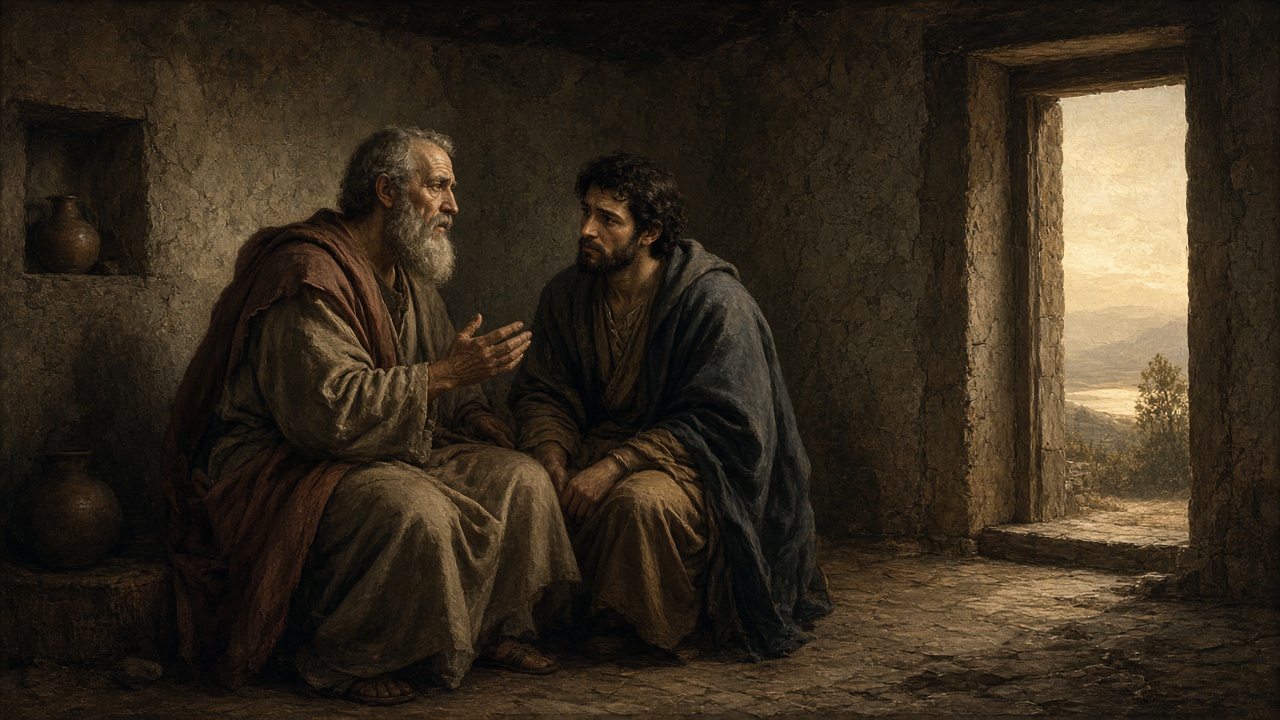
Paul's Final Charge and Farewell
- Paul urges Timothy to come quickly. Demas, whom Easton's Bible Dictionary (1897) describes as a companion and fellow worker during Paul's first imprisonment at Rome, has deserted him out of love for this world and gone to Thessalonica, a large city on the Thermaic bay and the capital of one of Macedonia's four Roman districts. Crescens has gone to Galatia and Titus to Dalmatia, a mountainous country on the eastern shore of the Adriatic and part of the Roman province of Illyricum; Paul has sent Tychicus to Ephesus, and only Luke remains with him.Sources: Demas · Thessalonica · Dalmatia · the Bible text itself
- Easton's Bible Dictionary (1897) identifies Alexander the coppersmith as a man who, with Hymenaeus and others, taught certain views about the resurrection, and says that Paul excommunicated him. In this chapter Paul writes that Alexander did him great harm, tells Timothy to beware of him because he vigorously opposed our message, and says the Lord will repay him according to his deeds.Sources: Alexander · the Bible text itself
- Paul asks Timothy to bring the cloak he left with Carpus at Troas, together with his scrolls, especially the parchments, and to arrive before winter. Troas was a city on the coast of Mysia, in the northwest of Asia Minor, named after ancient Troy, which lay about four miles to the north.Sources: Troas · the Bible text itself
Notes written with AI assistance from open sources (Theographic Bible Metadata, CC BY-SA 4.0; Easton’s Bible Dictionary, public domain) and reviewed before publishing.
Places in this chapter
- Dalmatia · 43.813, 16.219 · verse 10
- Galatia · 39.267, 32.983 · verse 10
- Thessalonica · Today: Thessaloniki · 40.638, 22.946 · verse 10
- Ephesus · 37.939, 27.341 · verse 12
- Troas · Today: Alexandria Troas · 39.752, 26.159 · verse 13
- Corinth · 37.906, 22.879 · verse 20
- Miletus · 37.531, 27.276 · verse 20
Only places identified with high confidence are shown (90% or more according to the scholarly sources compiled by OpenBible). Period map: DARE (Digital Atlas of the Roman Empire), CC BY 4.0; modern map: © OpenStreetMap contributors; places: OpenBible.info (CC BY 4.0).
Credits and license for this translation
Nuevo Testamento yin̈ abxubal
New Testament in Jakalteko Eastern; jac (GT:jac:Jakalteko)
copyright © 1997 Wycliffe Bible Translators, Inc.
Language: Jakalteko
Translation by: Wycliffe Bible Translators, Inc.
Copyright Information
© 1997, Wycliffe Bible Translators, Inc. All rights reserved.
This translation text is made available to you under the
terms of the Creative Commons License: Attribution-Noncommercial-No Derivative Works.
( http://creativecommons.org/licenses/by-nc-nd/3.0/ )
In addition, you have permission to port the text to different file formats, as long as you
do not change any of the text or punctuation of the Bible.
You may share, copy, distribute, transmit, and extract portions
or quotations from this work, provided that you include the above copyright
information:
You must give Attribution to the work.
You do not sell this work for a profit.
You do not make any derivative works that change any of the actual words or punctuation of the Scriptures.
Permissions beyond the scope of this license may be
available if you contact
us with your request.
The New Testament
in Jakalteko
© 1997, Wycliffe Bible Translators, Inc. All rights reserved.
This translation is made available to you under the terms of the
Creative Commons Attribution-Noncommercial-No Derivatives license 4.0.
You may share and redistribute this Bible translation or extracts from it in any format, provided that:
You include the above copyright and source information.
You do not sell this work for a profit.
You do not change any of the words or punctuation of the Scriptures.
Pictures included with Scriptures and other documents on this site are licensed just for use with those Scriptures and documents.
For other uses, please contact the respective copyright owners.
2016-05-05
Source: http://ebible.org/jacNT/ · eBible.org