2 Corinthians 8
Nuevo Testamento yin̈ abxubal · Tap a verse to see its cross-references.
Jofrenda chijakꞌ tet Comam Dios
1Tinan̈ xin hex wuẍtaj hex wanab, chijaltojan̈ teyet yin̈ tzet yu isyeni isba iscꞌulchꞌanil iscꞌul Comam Dios yin̈ hunun majan ebnaj juẍtaj ay yul ismajul Macedonia tiꞌ.
2Waxan̈ca caw ay ilwebal chihul yiban̈ ebnaj, yajaꞌ caw chitzala yanma ebnaj, yeb xin waxan̈ca caw mebaꞌ ebnaj, yajaꞌ caw chipalcꞌon ebnaj yakꞌni yofrenda, hacaꞌtan̈e caw kꞌalom ebnaj. 3Hanintiꞌan chiwakꞌ inbahan walnihan ta caw yin̈ sunil yanma ebnaj chꞌakꞌ ebnaj yofrenda, hataticꞌa hanta ay yul iskꞌab ebnaj, ay bay tiꞌ xin chipalcꞌon yakꞌni ebnaj. 4Caw oc ebnaj yalaꞌ jetan̈ tato chicochahan̈ yofrenda ebnaj, yuto choche ebnaj chicolwa ebnaj yin̈ ebnaj juẍta ay bey Jerusalén. 5Caw ecꞌbalcano yakꞌ ebnaj yiban̈ hacaꞌ conanihan̈. Yuto yin̈ babelal ishin isba ebnaj yin̈ ismunil Comam Dios Jahawil, lahwi tuꞌ xin yanipaxico isba ebnaj yijemal jetan̈ hacaꞌ choche Comam. 6Yuxin xajalan̈ tet naj Tito ta chito naj ilwal teyin̈, cat ischahni naj hecolwal cheyakꞌ yu iscꞌulchꞌanil hecꞌul, yuto haꞌ naj ichico ischahni hecolwal yet babelal. 7Hacaꞌojab ispalcꞌon iscawxi hecꞌul yin̈ Comam Dios yeb hehelanil hetzoteli, yeb yitzꞌatil hewiꞌ, yeb yin̈ sunil heyanma chewatxꞌen hunu tzet ye tuꞌ, yeb con̈hexahann̈enpaxojan̈; hacojab tuꞌ ispalcꞌon heyakꞌni heyofrenda tet Comam Dios.
8Mach chejbanile huneꞌ chiwaltiꞌan, wal xin ton̈e chiwochehan chiwalan teyet yin̈ iscꞌulchꞌanil iscꞌul huntekꞌanxa ebnaj juẍtaj. Haquexpax tuꞌ yet cheyakꞌni heyofrenda chohtan̈elo ebnaj bay chiakꞌlax huneꞌ heyofrenda tuꞌ ta xahan cheyil ebnaj. 9Han̈on̈ tiꞌ johtaj ta Comam Jesucristo caw cꞌulchꞌancano iscꞌul. Caw tzetcꞌa iskꞌalomal Comam ay bey satcan̈, yajaꞌ yute isba Comam mebaꞌil yuto caw xahan ayon̈ yu yun̈e joc kꞌalomal yul sat Comam Dios.
10Chiwaltojan teyet tzet chiecꞌ yin̈ innabalan yin̈ heyofrenda, yuto yettax hunbi hex babel quexichico heyakꞌni heyofrenda, caw xin yin̈ sunil heyanma heyakꞌa. 11Wal tinan̈ xin mach chebej heyakꞌni heyofrenda tuꞌ. Wal xin akꞌwe yin̈ sunil heyanma hacaꞌojab yu heyichenicoj, hacojab tuꞌ xin cheyute tinan̈, hataticꞌa tzet ayex. 12Yuto ta yin̈ sunil janma chijakꞌ jofrenda, caw chitzala Comam Dios jin̈, hataticꞌa tzet ay yul cokꞌab. Wal xin mach chiskꞌan Comam hunu tzet ye tuꞌ jet ta machi yul cokꞌab.
13Mach chiwochehan ta chexcan yin̈ man̈tzetal yu heyakꞌni hecolwal. 14Yajaꞌ chiwochehan tato lahanojab tzet ayon̈ cosunil. Yuxin tinan̈, hex ay tzet ay yul hekꞌab colwahan̈we yin̈ ebnaj matzet aya, haxinwal haxa yet matzet ayex haxa ebnaj chicolwa teyin̈. Ta hac tuꞌ lahan chicocolle coba. 15Hacaꞌ yalni yul Yum Comam Dios, bay chala: “Haꞌ mac tzetcꞌa yet iscꞌutxbacan̈, mach palcꞌoncan̈ yul iskꞌab. Haxa mac hanicꞌn̈e yet iscutxbacan̈ xin, cꞌuxann̈e ecꞌ yu,” ẍiayoj.
Yet isto naj Tito yeb huntekꞌan ebnaj juẍta bey Corinto
16Chiwakꞌan yuchꞌandiosal tet Comam Dios, yuto haꞌ Comam anico yul yanma naj Tito quexyanico yin̈ iscꞌul, hacaꞌticꞌa heyeco yin̈ incꞌulan. 17Yuxin hayet walnihan tet naj tato chito naj ilwal teyin̈, caw yin̈ an̈e istakꞌwe naj istohi yuto ayco yin̈ iscꞌul naj isto quexyilnoj.
18Ay xin huneꞌ naj juẍta tiꞌ chijatojan̈ yetbiho naj Tito. Haꞌ huneꞌ naj tiꞌ caw cꞌul istzotel ebnaj juẍtaj yul huntekꞌanxa con̈ob yin̈ naj, yuto caw cꞌul ismunil naj yin̈ yalnicꞌo Tzotiꞌ cꞌul yet colbanile yin̈ Comam Jesucristo. 19Haꞌ naj xin saybil yu ebnaj juẍtaj yu yoc naj jetbiojan̈, cat iscolwa naj jin̈an̈ iscutxbancan̈ chꞌen yofrenda ebnaj juẍtaj. Hac tuꞌ xin chiꞌilchalo iscꞌulchꞌanil iscꞌul Comam Dios jin̈, cat yilchapaxilo iscꞌulchꞌanil hecꞌul. 20Hac tuꞌ chijutehan̈ yun̈e machi hunu mac chihobnican̈ lekꞌtiꞌal jin̈an̈ yin̈ chꞌen colwal caw ay yelapno chicocutxbacan̈tuꞌan̈. 21Yuxin chijaco yin̈ cocꞌulan̈ ta cꞌul chijute cobahan̈ yin̈ huneꞌ munil tiꞌ; maẍn̈etaj sata Comam Dios, walxinto cꞌul chijutepaxo cobahan̈ sata anma.
22Ay xin huneꞌxa naj juẍta chijatojan̈ yinta ebnaj tiꞌ, huneꞌ naj juẍta tiꞌ txꞌiꞌalxa el chijilan̈ tato caw chitzala naj iscolwahi bajxan̈eticꞌa yin̈ tzet ye tuꞌ. Yuxin tinan̈ caw ecꞌbalto chitzala naj yuto ayexico yipo yanma naj. 23Ta ay mac chikꞌamben teyet tzet ye naj Tito tiꞌ, cheyala ta wetbi inbahan yeb naj, yuxin chinchejtojan naj yu iscolwa naj teyin̈. Yeb xin ta ay mac chikꞌambenpaxo yin̈ ebnaj cawan̈, cheyala tato chejbilto ebnaj yu ebnaj juẍtaj ay yul huntekꞌanxa con̈ob ay bey tiꞌ. Ebnaj tiꞌ caw chisyelo ebnaj iscꞌulchꞌanil Comam Cristo yu tzet chiswatxꞌe ebnaj. 24Caw chiwochehan tato cꞌul chu hechahni ebnaj, haxinwal chil huntekꞌanxa ebnaj juẍtaj tato yeli cꞌulex, hacaꞌ yu walnitojan teyin̈.
Did you know?
Generosity and the Jerusalem Collection
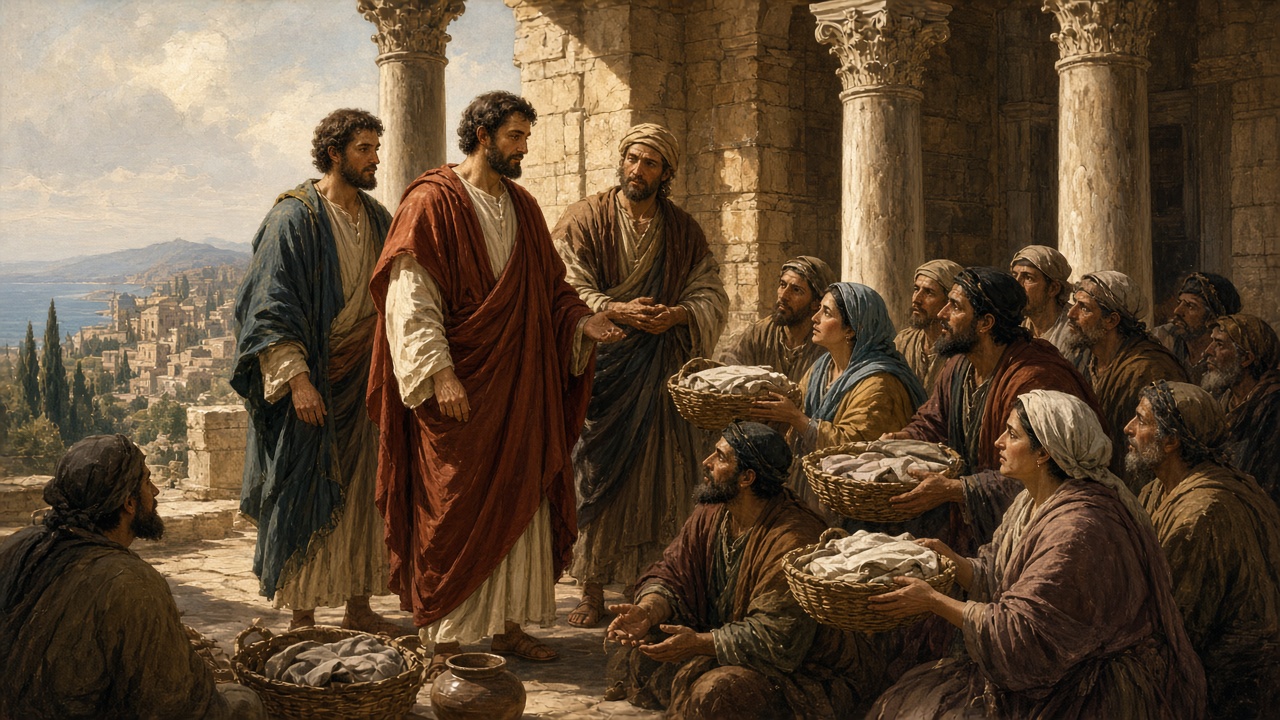
- In New Testament times Macedonia was a Roman province north of Greece. Paul was summoned by the vision of a man of Macedonia to preach the gospel there, and this chapter tells the Corinthians how those churches, in a terrible ordeal and deep poverty, gave joyfully and even beyond their ability.Sources: Macedonia · the Bible text itself
- Titus, whose name nowhere occurs in Acts, appears to have been a Gentile chiefly engaged in ministering to Gentiles. From Ephesus, Paul sent him to Corinth to forward the church's contributions for the poor saints at Jerusalem; in this chapter Paul urges him to complete that work, and Titus is coming eagerly of his own accord.Sources: Titus · the Bible text itself
- Along with Titus, Paul is sending a brother praised by all the churches for his work in the gospel and chosen by them to accompany the offering, and another brother whose earnestness has been proven many times and in many ways. He explains that this care is meant to avoid criticism of how the generous gift is administered, so that they do what is right not only in the eyes of the Lord but also in the eyes of other people.Sources: the Bible text itself
Notes written with AI assistance from open sources (Theographic Bible Metadata, CC BY-SA 4.0; Easton’s Bible Dictionary, public domain) and reviewed before publishing.
Places in this chapter
Only places identified with high confidence are shown (90% or more according to the scholarly sources compiled by OpenBible). Period map: DARE (Digital Atlas of the Roman Empire), CC BY 4.0; modern map: © OpenStreetMap contributors; places: OpenBible.info (CC BY 4.0).
Credits and license for this translation
Nuevo Testamento yin̈ abxubal
New Testament in Jakalteko Eastern; jac (GT:jac:Jakalteko)
copyright © 1997 Wycliffe Bible Translators, Inc.
Language: Jakalteko
Translation by: Wycliffe Bible Translators, Inc.
Copyright Information
© 1997, Wycliffe Bible Translators, Inc. All rights reserved.
This translation text is made available to you under the
terms of the Creative Commons License: Attribution-Noncommercial-No Derivative Works.
( http://creativecommons.org/licenses/by-nc-nd/3.0/ )
In addition, you have permission to port the text to different file formats, as long as you
do not change any of the text or punctuation of the Bible.
You may share, copy, distribute, transmit, and extract portions
or quotations from this work, provided that you include the above copyright
information:
You must give Attribution to the work.
You do not sell this work for a profit.
You do not make any derivative works that change any of the actual words or punctuation of the Scriptures.
Permissions beyond the scope of this license may be
available if you contact
us with your request.
The New Testament
in Jakalteko
© 1997, Wycliffe Bible Translators, Inc. All rights reserved.
This translation is made available to you under the terms of the
Creative Commons Attribution-Noncommercial-No Derivatives license 4.0.
You may share and redistribute this Bible translation or extracts from it in any format, provided that:
You include the above copyright and source information.
You do not sell this work for a profit.
You do not change any of the words or punctuation of the Scriptures.
Pictures included with Scriptures and other documents on this site are licensed just for use with those Scriptures and documents.
For other uses, please contact the respective copyright owners.
2016-05-05
Source: http://ebible.org/jacNT/ · eBible.org