Song of Songs 7
Riveduta Bibbia 1927 · Tap a verse to see its cross-references.
1(H7-2) Come son belli i tuoi piedi ne’ loro calzari, o figliuola di principe! I contorni delle tue anche son come monili, opera di mano d’artefice. 2(H7-3) Il tuo seno e una tazza rotonda, dove non manca mai vino profumato. Il tuo corpo è un mucchio di grano, circondato di gigli. 3(H7-4) Le tue due mammelle paion due gemelli di gazzella. 4(H7-5) Il tuo collo è come una torre d’avorio; i tuoi occhi son come le piscine d’Heshbon presso la porta di Bath-Rabbim. Il tuo naso e come la torre del Libano, che guarda verso Damasco. 5(H7-6) Il tuo capo s’eleva come il Carmelo, e la chioma del tuo capo sembra di porpora; un re è incatenato dalle tue trecce! 6(H7-7) Quanto sei bella, quanto sei piacevole, o amor mio, in mezzo alle delizie! 7(H7-8) La tua statura è simile alla palma, e le tue mammelle a de’ grappoli d’uva. 8(H7-9) Io ho detto: “Io salirò sulla palma, e m’appiglierò ai suoi rami”. Siano le tue mammelle come grappoli di vite, il profumo del tuo fiato, come quello de’ pomi, 9(H7-10) e la tua bocca come un vino generoso, che cola dolcemente per il mio amico, e scivola fra le labbra di quelli che dormono. 10(H7-11) Io sono del mio amico, e verso me va il suo desiderio. 11(H7-12) Vieni, amico mio, usciamo ai campi, passiam la notte ne’ villaggi! 12(H7-13) Fin dal mattino andremo nelle vigne; vedremo se la vite ha sbocciato, se il suo fiore s’apre, se i melagrani fioriscono. Quivi ti darò le mie carezze. 13(H7-14) Le mandragole mandano profumo, e sulle nostre porte stanno frutti deliziosi d’ogni sorta, nuovi e vecchi, che ho serbati per te, amico mio.
Did you know?
Poetry of Love and Landscape
- The poem describes the woman's beauty using prominent landmarks of the region. Her eyes are compared to the calm pools of Heshbon near the gate of Bath-rabbim east of the Jordan, while her profile is likened to a majestic tower in the mountain range of Lebanon overlooking Damascus.Sources: the Bible text itself · Heshbon · Bath-rabbim · Lebanon
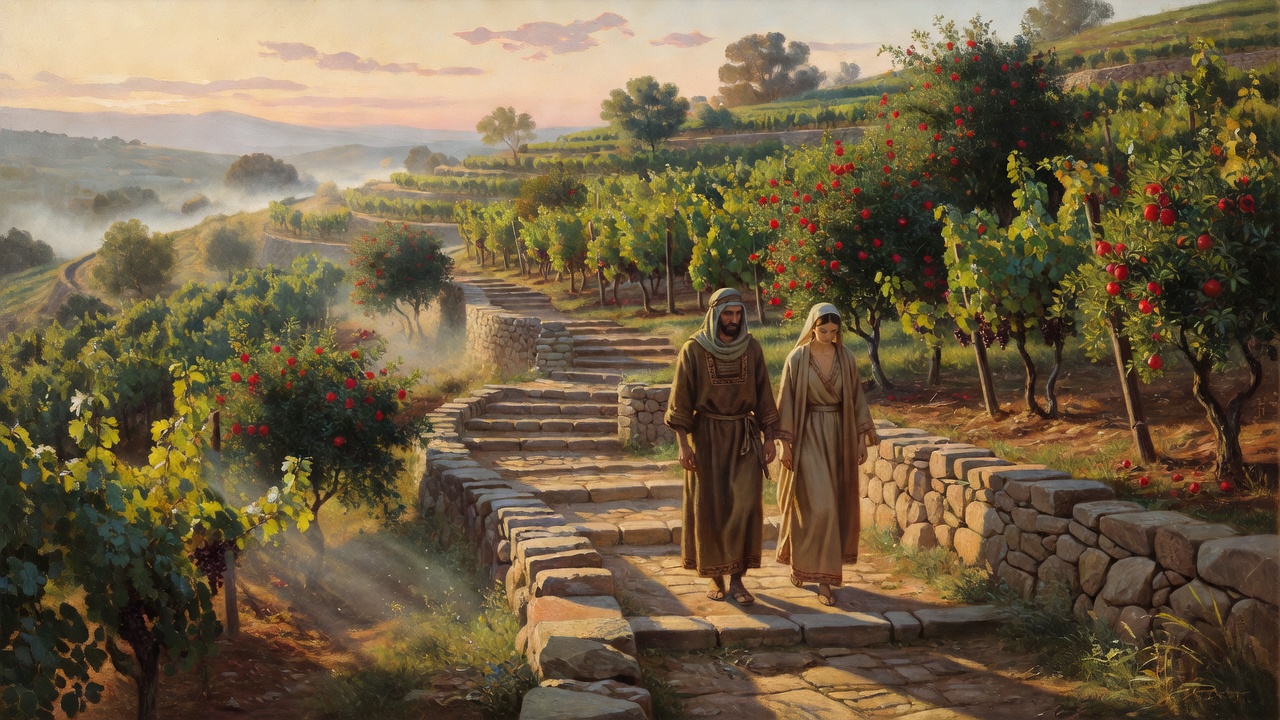
- The chapter concludes with an invitation to the countryside during the renewal of spring. The lovers seek out budding grapevines, blooming pomegranates, and fragrant mandrakes, reflecting the close connection in ancient Hebrew poetry between romantic intimacy and the vitality of the natural world.Sources: the Bible text itself
Notes written with AI assistance from open sources (Theographic Bible Metadata, CC BY-SA 4.0; Easton’s Bible Dictionary, public domain) and reviewed before publishing.
Places in this chapter
- Bath-rabbim · Today: in Tell Hesban · 31.801, 35.809 · verse 4
- Damascus · 33.511, 36.306 · verse 4
- Lebanon · 33.540, 35.584 · verse 4
- Mount Carmel · 32.672, 35.023 · verse 5
Only places identified with high confidence are shown (90% or more according to the scholarly sources compiled by OpenBible). Period map: DARE (Digital Atlas of the Roman Empire), CC BY 4.0; modern map: © OpenStreetMap contributors; places: OpenBible.info (CC BY 4.0).
Credits and license for this translation
Riveduta Bibbia 1927
The Holy Bible in Italian, Riveduta 1927
Public Domain
Language: lingua italiana (Italian)
Contributor: Bible Society in Italy
The Diodati Bible was published in 1885
2019-12-17
Source: http://ebible.org/ita1927/ · eBible.org