Jonah 4
Riveduta Bibbia 1927 · Tap a verse to see its cross-references.
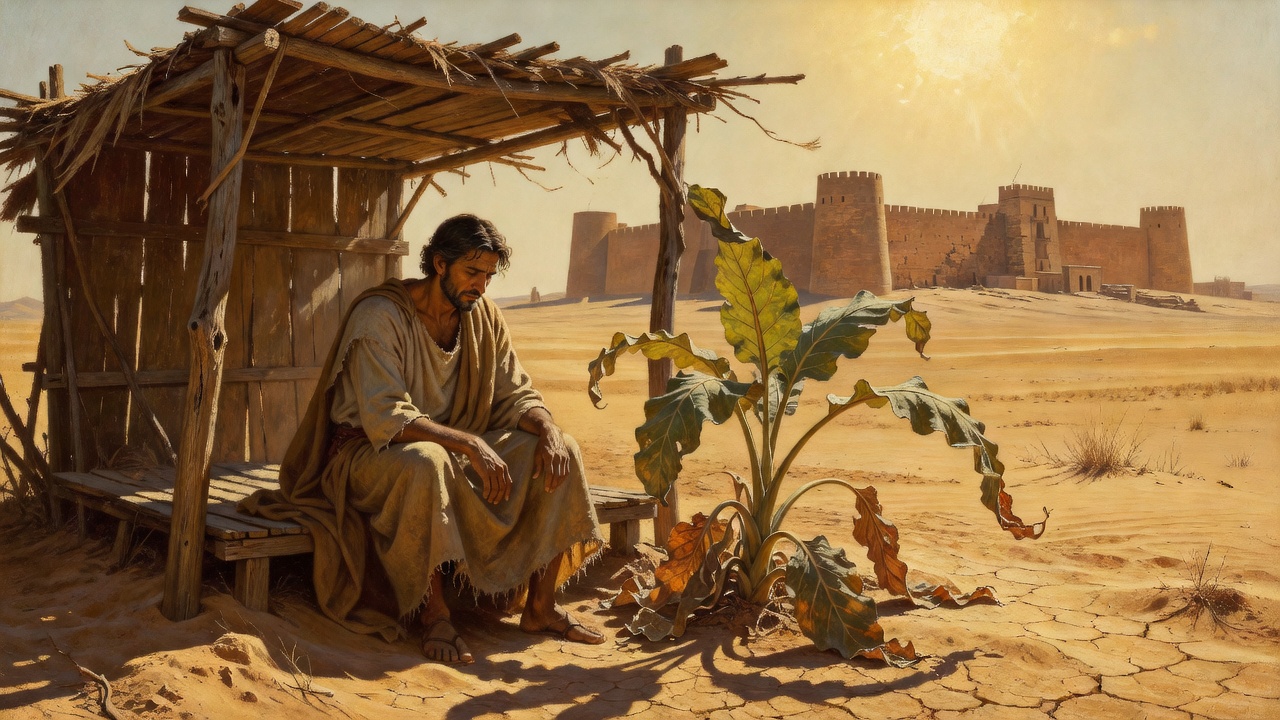
1Ma Giona ne provò un gran dispiacere, e ne fu irritato; e pregò l’Eterno, dicendo: 2“O Eterno, non è egli questo ch’io dicevo, mentr’ero ancora nel mio paese? Perciò m’affrettai a fuggirmene a Tarsis; perché sapevo che sei un Dio misericordioso, pietoso, lento all’ira, di gran benignità, e che ti penti del male minacciato. 3Or dunque, o Eterno, ti prego, riprenditi la mia vita; perché per me val meglio morire che vivere”. 4E l’Eterno gli disse: “Fai tu bene a irritarti così?” 5Poi Giona uscì dalla città, e si mise a sedere a oriente della città; si fece quivi una capanna, e vi sedette sotto, all’ombra, stando a vedere quello che succederebbe alla città. 6E Dio, l’Eterno, per guarirlo dalla sua irritazione, fece crescere un ricino, che montò su di sopra a Giona, per fargli ombra al capo; e Giona provò una grandissima gioia a motivo di quel ricino. 7Ma l’indomani, allo spuntar dell’alba, Iddio fece venire un verme, il quale attaccò il ricino, ed esso si seccò. 8E come il sole fu levato, Iddio fece soffiare un vento soffocante d’oriente, e il sole picchiò sul capo di Giona, sì ch’egli venne meno, e chiese di morire, dicendo: “Meglio è per me morire che vivere”. 9E Dio disse a Giona: “Fai tu bene a irritarti così a motivo del ricino?” Egli rispose: “Sì, faccio bene a irritarmi fino alla morte”. 10E l’Eterno disse: “Tu hai pietà del ricino per il quale non hai faticato, e che non hai fatto crescere, che è nato in una notte e in una notte è perito: 11e io non avrei pietà di Ninive, la gran città, nella quale si trovano più di centoventimila persone che non sanno distinguere la loro destra dalla loro sinistra, e tanta quantità di bestiame?”
Did you know?
Jonah's Anger and God's Compassion
- Jonah admits that he originally attempted to flee toward Tarshish precisely because he knew God is gracious, compassionate, slow to anger, and relents from sending disaster. His distress arose when God chose to spare Nineveh rather than destroy it.Sources: the Bible text itself · Tarshish
- Nineveh, the flourishing capital of the Assyrian empire, is described at the conclusion of the book as home to more than 120,000 people who cannot discern between their right and left hand, along with many cattle. God highlights this massive population to contrast divine compassion with Jonah's concern for a single withered plant.Sources: the Bible text itself · Nineveh
Notes written with AI assistance from open sources (Theographic Bible Metadata, CC BY-SA 4.0; Easton’s Bible Dictionary, public domain) and reviewed before publishing.
Places in this chapter
- Nineveh · 36.359, 43.153 · verse 11
Only places identified with high confidence are shown (90% or more according to the scholarly sources compiled by OpenBible). Period map: DARE (Digital Atlas of the Roman Empire), CC BY 4.0; modern map: © OpenStreetMap contributors; places: OpenBible.info (CC BY 4.0).
Credits and license for this translation
Riveduta Bibbia 1927
The Holy Bible in Italian, Riveduta 1927
Public Domain
Language: lingua italiana (Italian)
Contributor: Bible Society in Italy
The Diodati Bible was published in 1885
2019-12-17
Source: http://ebible.org/ita1927/ · eBible.org