Jeremiah 47
Riveduta Bibbia 1927 · Tap a verse to see its cross-references.
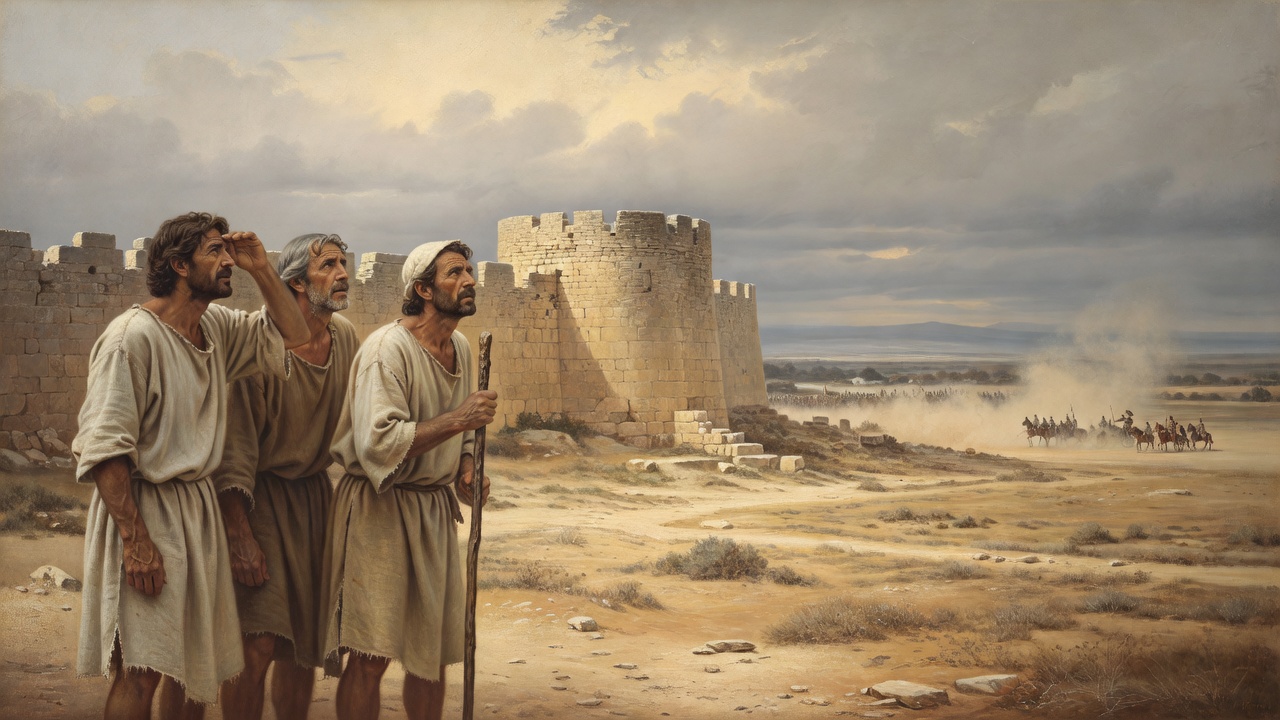
1La parola dell’Eterno che fu rivolta al profeta Geremia riguardo ai Filistei prima che Faraone colpisse Gaza. 2Così parla l’Eterno: Ecco, delle acque salgono dal settentrione; formano un torrente che straripa; esse inondano il paese e tutto ciò che contiene, le città e i loro abitanti; gli uomini mandano grida, tutti gli abitanti del paese urlano. 3Per lo strepito dell’unghie de’ suoi potenti destrieri, per il rumore de’ suoi carri e il fracasso delle ruote, i padri non si voltan verso i figliuoli, tanto le lor mani son divenute fiacche, 4perché giunge il giorno in cui tutti i Filistei saranno devastati, in cui saran soppressi i restanti ausiliari di Tiro e di Sidone, poiché l’Eterno devasterà i Filistei, ciò che resta dell’isola di Caftor. 5Gaza è divenuta calva, Askalon è ridotta al silenzio. Resti degli Anakim, fino a quando vi farete delle incisioni? 6O spada dell’Eterno, quando sarà che ti riposerai? Rientra nel tuo fodero, fermati e rimani tranquilla! 7Come ti potresti tu riposare? L’Eterno le dà i suoi ordini le addita Askalon e il lido del mare.
Did you know?
Judgment on the Philistines
- Jeremiah refers to the Philistines as the remnant from the coasts of Caphtor. Biblical traditions identify Caphtor as the place of origin of the Philistines, a location widely associated by scholars with Crete or parts of the eastern Mediterranean coast.Sources: the Bible text itself · Caphtor
- The chapter directs its warnings against Gaza and Ashkelon, two of the five prominent Philistine cities along the Mediterranean coast. Both were ancient centers known for their strategic position and trade links connecting Egypt and the surrounding regions.Sources: the Bible text itself · Gaza · Ashkelon
- The prophecy notes that the coming destruction would cut off every remaining ally from Tyre and Sidon. These two major Phoenician ports to the north were key maritime centers whose interests were closely intertwined with the coastal region.Sources: the Bible text itself · Tyre · Sidon
Notes written with AI assistance from open sources (Theographic Bible Metadata, CC BY-SA 4.0; Easton’s Bible Dictionary, public domain) and reviewed before publishing.
Places in this chapter
- Gaza · Today: Tell Harube · 31.504, 34.464 · verses 1, 5
- Sidon · Today: Sandikli archaeological site in Sidon · 33.561, 35.372 · verse 4
- Tyre · 33.271, 35.196 · verse 4
- Ashkelon · Today: Tel Ashkelon · 31.664, 34.546 · verses 5, 7
- Great Sea · Today: Mediterranean Sea · 31.805, 34.170 · verse 5
- Philistia · 31.664, 34.546 · verse 5
Only places identified with high confidence are shown (90% or more according to the scholarly sources compiled by OpenBible). Period map: DARE (Digital Atlas of the Roman Empire), CC BY 4.0; modern map: © OpenStreetMap contributors; places: OpenBible.info (CC BY 4.0).
Credits and license for this translation
Riveduta Bibbia 1927
The Holy Bible in Italian, Riveduta 1927
Public Domain
Language: lingua italiana (Italian)
Contributor: Bible Society in Italy
The Diodati Bible was published in 1885
2019-12-17
Source: http://ebible.org/ita1927/ · eBible.org