Psalms 87
Diodati Bibbia 1885 · Tap a verse to see its cross-references.
Dio prende il suo diletto in Sion ed ivi riunirà tutti i popoli
Salmo di Cantico de' figliuoli di Core
1LA fondazione del Signore è ne' monti santi.
2Il Signore ama le porte di Sion,
Sopra tutte le stanze di Giacobbe.
3O Città di Dio,
Cose gloriose son dette di te. (Sela.)
4Io mentoverò, dice al Signore, Rahab, e Babilonia,
Fra quelli che mi conoscono;
Ecco, i Filistei ed i Tiri insieme con gli Etiopi,
De' quali si dirà: Costui è nato quivi.
5E si dirà di Sion: Questi e quegli è nato in essa;
E l'Altissimo stesso la stabilirà.
6Il Signore, rassegnando i popoli, annovererà coloro,
Dicendo: Un tale è nato quivi. (Sela.)
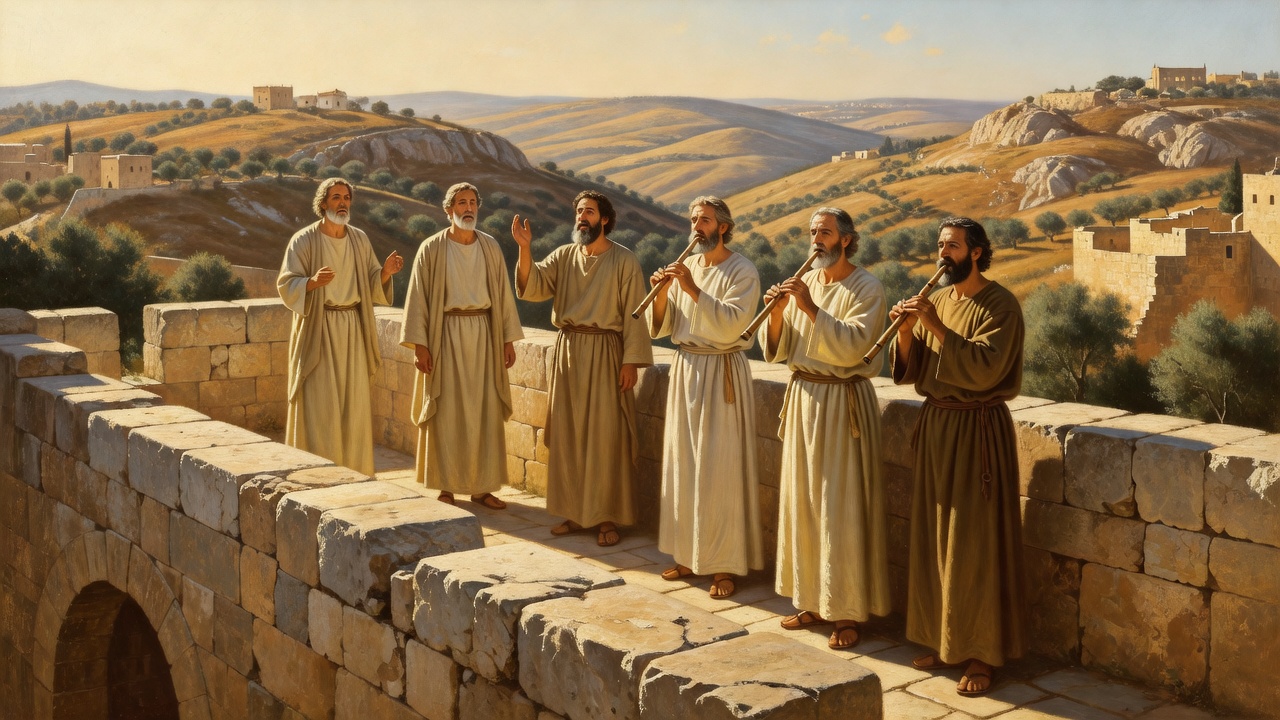
7E cantori, e suonatori,
E tutte le mie fonti, saranno in te.
Did you know?
Zion and the Nations
- In Psalm 87, foreign and historically rival regions—including Babylon, Philistia, Tyre, and Cush—are depicted as being registered as native citizens born in Zion, the city of God.Sources: the Bible text itself · Zion · Tyre · Babylon
- The name 'Rahab' in verse 4 is a poetic Hebrew term meaning insolence or pride, used in biblical poetry as a symbolic designation for Egypt.Sources: Rahab · the Bible text itself
- The psalm is attributed to the 'sons of Korah,' a Levitical group that provided musical leadership in Jerusalem centuries after their ancestor Korah led a rebellion in the wilderness.Sources: Korah (Levite) · the Bible text itself
Notes written with AI assistance from open sources (Theographic Bible Metadata, CC BY-SA 4.0; Easton’s Bible Dictionary, public domain) and reviewed before publishing.
Places in this chapter
- Zion · Today: Jerusalem · 31.777, 35.234 · verses 2, 5
- Babylon · 32.543, 44.422 · verse 4
- Cush · Today: Cush 1 · 16.935, 33.751 · verse 4
- Egypt · 30.129, 31.308 · verse 4
- Jerusalem · 31.777, 35.234 · verses 4, 6, 7
- Philistia · 31.664, 34.546 · verse 4
- Tyre · 33.271, 35.196 · verse 4
Only places identified with high confidence are shown (90% or more according to the scholarly sources compiled by OpenBible). Period map: DARE (Digital Atlas of the Roman Empire), CC BY 4.0; modern map: © OpenStreetMap contributors; places: OpenBible.info (CC BY 4.0).
Credits and license for this translation
Diodati Bibbia 1885
The Holy Bible in Italian, translated by Giovanni Diodati in 1641 and revised in 1821
Public Domain
Language: Italiano (Italian)
Contributor: United Bible Societies
Diodati Bibbia 1885
2025-05-03
Source: http://ebible.org/ita1885/ · eBible.org