Psalms 53
Diodati Bibbia 1885 · Tap a verse to see its cross-references.
Estrema depravazione di quelli che negano Iddio
Maschil di Davide, dato al Capo de' Musici, sopra Mahalat
1LO stolto ha detto nel suo cuore: Non vi è Dio.
Si son corrotti, e resi abbominevoli in perversità;
Non vi è niuno che faccia bene.
2Iddio ha riguardato dal cielo sopra i figliuoli degli uomini.
Per vedere se vi fosse alcuno che avesse intelletto,
Che cercasse Iddio.
3Tutti son corrotti, tutti son divenuti puzzolenti;
Non vi è niuno che faccia bene,
Non pur uno.
4Non hanno essi alcuno intendimento, questi operatori d'iniquità,
Che mangiano il mio popolo, come se mangiassero del pane,
E non invocano Iddio?
5Là saranno spaventati di grande spavento,
Ove però non sarà cagion di spavento;
Perciocchè il Signore dissipa le ossa di coloro
Che si accampano contro a te, o Sion;
Tu li hai svergognati; perciocchè Iddio li sdegna.
6Oh! vengano pur da Sion le salvazioni d'Israele!
Quando Iddio trarrà di cattività il suo popolo,
Giacobbe festeggerà, Israele si rallegrerà.
Did you know?
A Reflection on Folly and Deliverance
- The psalm depicts God observing humanity from heaven to see if any seek Him, observing that all have turned aside and become corrupt.Sources: the Bible text itself
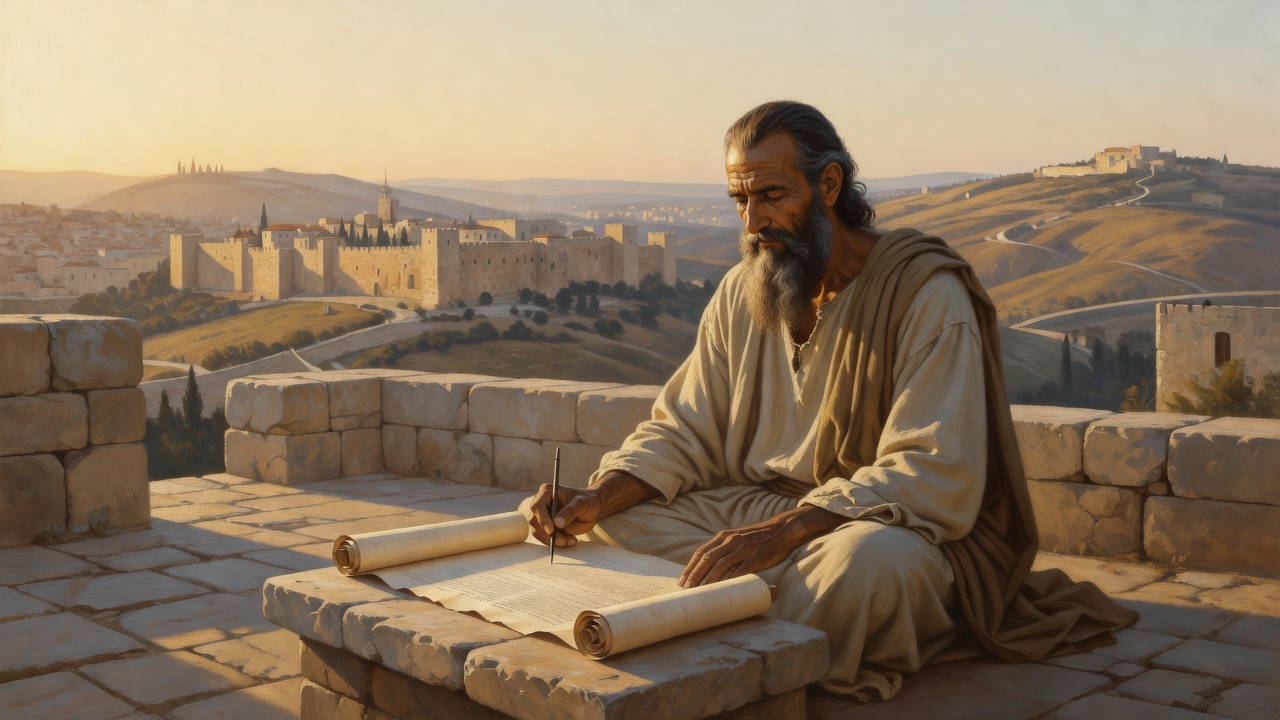
- The closing verse calls for salvation to come from Zion, the south-eastern hill of Jerusalem where David established his citadel and palace after capturing it from the Jebusites.Sources: the Bible text itself · Zion
- The poem concludes by pairing the names Jacob and Israel in a call for rejoicing, recalling the patriarch Jacob, the son of Isaac, who also bore the name Israel.Sources: the Bible text itself · Jacob (Israel)
Notes written with AI assistance from open sources (Theographic Bible Metadata, CC BY-SA 4.0; Easton’s Bible Dictionary, public domain) and reviewed before publishing.
Places in this chapter
- Zion · Today: Jerusalem · 31.777, 35.234 · verse 6
Only places identified with high confidence are shown (90% or more according to the scholarly sources compiled by OpenBible). Period map: DARE (Digital Atlas of the Roman Empire), CC BY 4.0; modern map: © OpenStreetMap contributors; places: OpenBible.info (CC BY 4.0).
Credits and license for this translation
Diodati Bibbia 1885
The Holy Bible in Italian, translated by Giovanni Diodati in 1641 and revised in 1821
Public Domain
Language: Italiano (Italian)
Contributor: United Bible Societies
Diodati Bibbia 1885
2025-05-03
Source: http://ebible.org/ita1885/ · eBible.org