Psalms 48
Diodati Bibbia 1885 · Tap a verse to see its cross-references.
Bellezza e privilegi di Gerusalemme
Cantico di Salmo, de' figliuoli di Core
1IL Signore è grande, e molto glorioso
Nella Città dell'Iddio nostro, nel monte della sua santità.
2Il monte di Sion, il fondo verso il Settentrione,
La Città del gran Re
È in bella contrada, è la gioia di tutta la terra.
3Iddio è riconosciuto ne' palazzi di essa, per alta fortezza.
4Perciocchè ecco, i re si erano adunati,
Ed erano tutti insieme passati oltre.
5Come prima la videro, furono attoniti,
Si smarrirono, si affrettarono a fuggire.
6Tremore li colse quivi;
Doglia, come di donna che partorisce.
7Furono rotti come per lo vento orientale
Che rompe le navi di Tarsis.
8Come avevamo udito, così abbiam veduto,
Nella Città del Signor degli eserciti,
Nella Città dell'Iddio nostro;
Iddio la stabilirà in perpetuo. (Sela.)
9O Dio, noi abbiamo, chetamente aspettata la tua benignità
Dentro al tuo Tempio.
10O Dio, quale è il tuo Nome,
Tale è la tua lode, infino all'estremità della terra;
La tua destra è piena di giustizia.
11Il monte di Sion si rallegrerà,
Le figliuole di Giuda festeggeranno, per li tuoi giudicii.
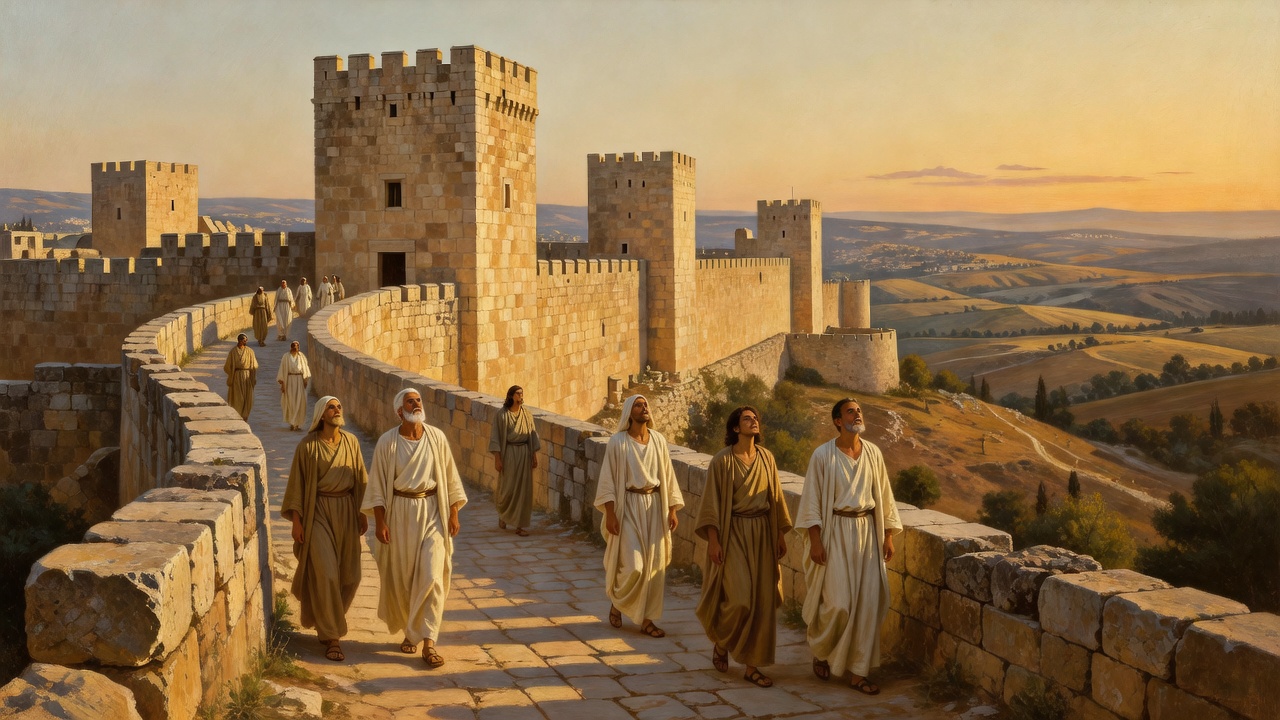
12Circuite Sion, e andate attorno a lei,
Contate le sue torri.
13Ponete mente alle bastie,
Mirate l'altezza de' suoi palazzi;
Acciocchè lo raccontiate all'età a venire.
14Perciocchè questo Dio è il nostro Dio in sempiterno;
Egli ci giuderà infino alla morte.
Did you know?
Zion, the City of the Great King
- Mount Zion, originally the fortified southeastern hill of Jerusalem captured by David from the Jebusites, became known as the City of David and the site of his citadel. In Psalm 48, it is celebrated as God's holy mountain, elevated and fortified against advancing enemy kings.Sources: the Bible text itself · Mount Zion · Zion
- The psalm depicts God's power shattering enemy forces like an east wind wrecking the ships of Tarshish. Many scholars identify Tarshish with a distant Phoenician trading port in southwestern Spain, while other ancient traditions proposed locations such as Carthage or ports in the east.Sources: the Bible text itself · Tarshish
- Worshippers are invited to walk around the perimeter of Zion to inspect its ramparts, count its towers, and view its citadels. This survey of the city's defenses was meant to be recounted to future generations as a witness of God's steadfast protection.Sources: the Bible text itself
Notes written with AI assistance from open sources (Theographic Bible Metadata, CC BY-SA 4.0; Easton’s Bible Dictionary, public domain) and reviewed before publishing.
Places in this chapter
- Mount Zion · 31.772, 35.229 · verses 2, 11
- Zaphon · Today: Jebel Aqra · 35.953, 35.969 · verse 2
- Jerusalem · 31.777, 35.234 · verse 3
- Zion · Today: Jerusalem · 31.777, 35.234 · verse 12
Only places identified with high confidence are shown (90% or more according to the scholarly sources compiled by OpenBible). Period map: DARE (Digital Atlas of the Roman Empire), CC BY 4.0; modern map: © OpenStreetMap contributors; places: OpenBible.info (CC BY 4.0).
Credits and license for this translation
Diodati Bibbia 1885
The Holy Bible in Italian, translated by Giovanni Diodati in 1641 and revised in 1821
Public Domain
Language: Italiano (Italian)
Contributor: United Bible Societies
Diodati Bibbia 1885
2025-05-03
Source: http://ebible.org/ita1885/ · eBible.org