Psalms 129
Diodati Bibbia 1885 · Tap a verse to see its cross-references.
La chiesa perseguitata, ma non distrutta
Cantico di Maalot
1OR dica Israele:
Mi hanno molte volte assalito dalla mia fanciullezza;
2Mi hanno spesse volte assalito dalla mia fanciullezza;
E pure ancora non hanno potuto vincermi.
3Degli aratori hanno arato sopra il mio dosso;
V'hanno tirati i lor solchi.
4Il Signore è giusto;
Egli ha tagliate le funi degli empi.
5Tutti quelli che odiano Sion
Sieno confusi, e voltin le spalle.
6Sieno come l'erba de' tetti,
Che si secca avanti che sia tratta;
7Della quale il mietitore non empie la sua mano,
Nè il suo grembo colui che lega le manelle;
8Per la quale eziandio i passanti non dicono:
La benedizione del Signore sia sopra voi;
Noi vi benediciamo nel Nome del Signore.
Did you know?
Endurance in Affliction and the Fate of Zion’s Foes
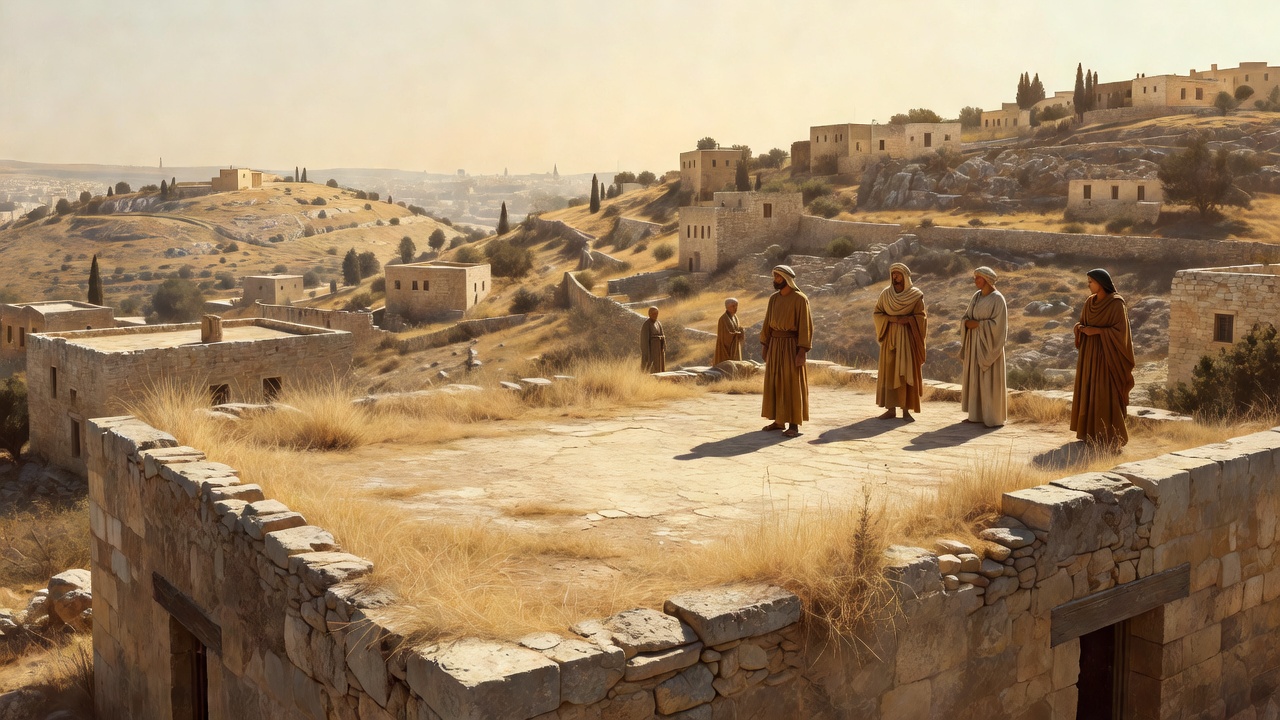
- The imagery of grass growing on rooftops reflects ancient construction, where flat roofs were often covered with packed earth. Seeds might sprout there after rains, but because the soil layer was shallow and exposed to the sun, the grass withered before it could mature or produce a harvest.Sources: the Bible text itself
- The phrase spoken by passersby in verse 8 mirrors the traditional agricultural greetings exchanged in ancient Israel, where travelers routinely blessed reapers and laborers working in the fields.Sources: the Bible text itself
- Zion was the prominent hill in Jerusalem where King David built his citadel, and in biblical poetry it often stands as a representation of God’s dwelling place and His people.Sources: the Bible text itself · Zion
Notes written with AI assistance from open sources (Theographic Bible Metadata, CC BY-SA 4.0; Easton’s Bible Dictionary, public domain) and reviewed before publishing.
Places in this chapter
Only places identified with high confidence are shown (90% or more according to the scholarly sources compiled by OpenBible). Period map: DARE (Digital Atlas of the Roman Empire), CC BY 4.0; modern map: © OpenStreetMap contributors; places: OpenBible.info (CC BY 4.0).
Credits and license for this translation
Diodati Bibbia 1885
The Holy Bible in Italian, translated by Giovanni Diodati in 1641 and revised in 1821
Public Domain
Language: Italiano (Italian)
Contributor: United Bible Societies
Diodati Bibbia 1885
2025-05-03
Source: http://ebible.org/ita1885/ · eBible.org