Malachi 1
Diodati Bibbia 1885 · Tap a verse to see its cross-references.
About this book
About Malachi
- Easton's Bible Dictionary (1897) presents Malachi, a name meaning "messenger" or "angel," as the last of the minor prophets and the writer of the last book of the Old Testament canon. Nothing is known of him beyond what is contained in his book of prophecies.Sources: Easton: Malachi · Malachi
- Some have supposed that the name is simply a title for a messenger of Jehovah, not a proper name. Easton's Bible Dictionary (1897) concludes, however, that there is reason to regard Malachi as the prophet's ordinary name.Sources: Easton: Malachi · Malachi
- Easton's Bible Dictionary (1897) dates the prophecies to about 420 B.C., after Nehemiah's second return from Persia, or possibly before that return. Because Ezra does not mention him and he does not mention the restoration of the temple, the dictionary infers that he prophesied after Haggai and Zechariah.Sources: Easton: Malachi
- Easton's Bible Dictionary (1897) treats Malachi as a contemporary of Nehemiah, comparing Malachi 2:8 with Nehemiah 13:15 and Malachi 2:10-16 with Nehemiah 13:23. It also notes that the temple services were still in existence, citing Malachi 1:10, 3:1 and 3:10.Sources: Easton: Malachi
Notes written with AI assistance from open sources (Theographic Bible Metadata, CC BY-SA 4.0; Easton’s Bible Dictionary, public domain) and reviewed before publishing.
1Il carico della parola del Signore, indirizzata ad Israele, per Malachia.
Ingratitudine del popolo; formalismo dei sacerdoti
2IO vi ho amati, ha detto il Signore. E voi avete detto: In che ci hai amati? Non era Esaù fratello di Giacobbe? dice il Signore. Or io ho amato Giacobbe; 3ed ho odiato Esaù, ed ho messi i suoi monti in desolazione, ed ho abbandonata la sua eredità agli sciacalli del deserto. 4Se pure Edom dice: Noi siamo impoveriti, ma torneremo a edificare i luoghi deserti; coseì ha detto il Signor degli eserciti: Essi edificheranno, ma io distruggerò; e saranno chiamati: Contrada d'empietà; e: Popolo contro al quale il Signore è indegnato in perpetuo. 5E gli occhi vostri lo vedranno, e voi direte: Il Signore sia magnificato dalla contrada d'Israele.
6Il figliuolo deve onorare il padre, e il servitore il suo signore; se dunque io son Padre, ov' è il mio onore? e se son Signore, ov' è il mio timore? ha detto il Signor degli eserciti a voi, o sacerdoti che sprezzate il mio Nome. E pur dite: In che abbiamo noi sprezzato il tuo Nome? 7Voi offerite sul mio altare del cibo contaminato. E pur dite: In che ti abbiamo noi contaminato? In ciò, che voi dite: La mensa del Signore è spregevole. 8E quando adducete un animale cieco, per sacrificar lo, non vi è male alcuno? parimente, quando adducete un animale zoppo, o infermo, non vi è male alcuno? presentalo pure al tuo governatore; te ne saprà egli grado, o gli sarai tu accettevole? ha detto il Signor degli eserciti. 9Ora dunque, supplicate pure a Dio, ch'egli abbia pietà di noi; questo essendo prodeduto dalle vostre mani, sarebbegli alcun di voi accettevole? ha detto il Signor degli eserciti.
10Chi è eziandio d'infra voi colui che serri le porte? E pur voi non accendete il fuoco sopra il mio altare per nulla. Io non vi gradisco, ha detto il Signor degli eserciti; e non accetterò alcuna offerta dalle vostre mani. 11Ma dal sol levante fino al ponente, il mio Nome sarà grande fra le genti; e in ogni luogo si offerirà al mio Nome profumo, ed offerta pura; perciocchè il mio Nome sarà grande fra le genti, ha detto il Signor degli eserciti. 12Ma quant'è a voi, voi lo profanate, dicendo: La mensa del Signore è contaminata; e quant'è alla sua rendita, il suo cibo è spregevole. 13Voi avete eziandio detto: Ecco, quanta fatica! E pure a lui avete dato l'affanno, ha detto il Signor degli eserciti; mentre adducete animali rapiti, e zoppi, ed infermi; e li adducete per offerta, li gradirei io dalla vostra mano? ha detto il Signore. 14Or maledetto sia il frodolente, il quale, avendo nella sua mandra un maschio, vota, e sacrifica al Signore un animale difettoso; conciossiachè io sia il gran Re, ha detto il Signor degli eserciti; e il mio Nome sia tremendo fra le genti.
Did you know?
Honoring God and Defective Offerings
- The name Malachi means messenger or angel. While some have suggested it was a title rather than a proper name, scholars and traditions widely treat it as the prophet's personal name, placing his ministry during the period of Nehemiah, after Haggai and Zechariah.Sources: Malachi
- The opening dispute recalls the twin brothers Jacob and Esau, the ancestors of Israel and Edom. The text contrasts God's covenant love for Israel with the judgment and desolation coming upon the mountainous region of Edom.Sources: Esau (Edom) · Jacob (Israel) · Edom · the Bible text itself
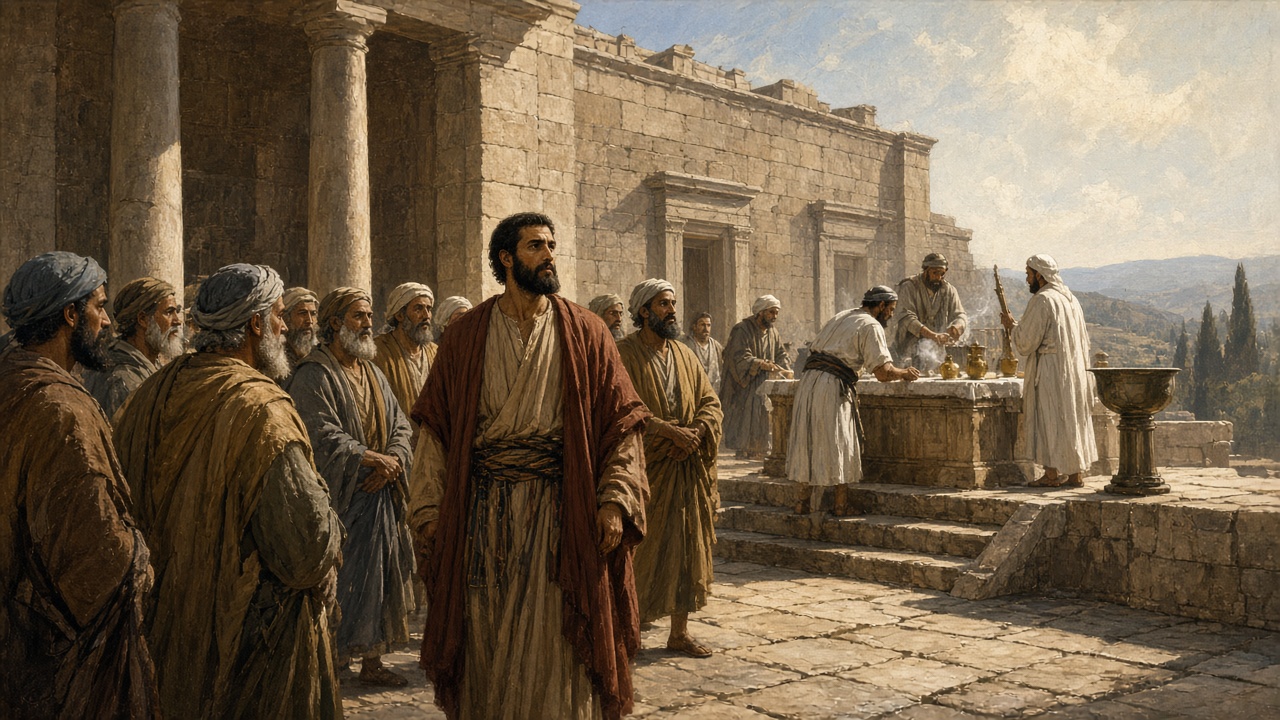
- The priests are rebuked for offering blind, lame, and diseased animals on the altar rather than unblemished livestock. Malachi exposes their disrespect by asking whether a civil governor would accept such inferior gifts.Sources: the Bible text itself
Notes written with AI assistance from open sources (Theographic Bible Metadata, CC BY-SA 4.0; Easton’s Bible Dictionary, public domain) and reviewed before publishing.
Places in this chapter
- Edom · 30.746, 35.604 · verse 4
Only places identified with high confidence are shown (90% or more according to the scholarly sources compiled by OpenBible). Period map: DARE (Digital Atlas of the Roman Empire), CC BY 4.0; modern map: © OpenStreetMap contributors; places: OpenBible.info (CC BY 4.0).
Credits and license for this translation
Diodati Bibbia 1885
The Holy Bible in Italian, translated by Giovanni Diodati in 1641 and revised in 1821
Public Domain
Language: Italiano (Italian)
Contributor: United Bible Societies
Diodati Bibbia 1885
2025-05-03
Source: http://ebible.org/ita1885/ · eBible.org