Leviticus 1
Diodati Bibbia 1885 · Tap a verse to see its cross-references.
About this book
About Leviticus
- Easton's Bible Dictionary (1897) presents Leviticus as the third book of the Pentateuch and as the third book of Moses. The name, used in the Vulgate following the LXX, reflects the book's chief concern: the Levitical service.Sources: Easton: Leviticus
- Easton states that every ordinance in the book was delivered within one month, the first month of the second year after the Exodus. His entry on Sinai, also called Horeb, says the Hebrews reached that mountain district in the third month after the Exodus and remained encamped for about a whole year, and that the whole of Leviticus records what occurred there.Sources: Easton: Leviticus · Mount Sinai
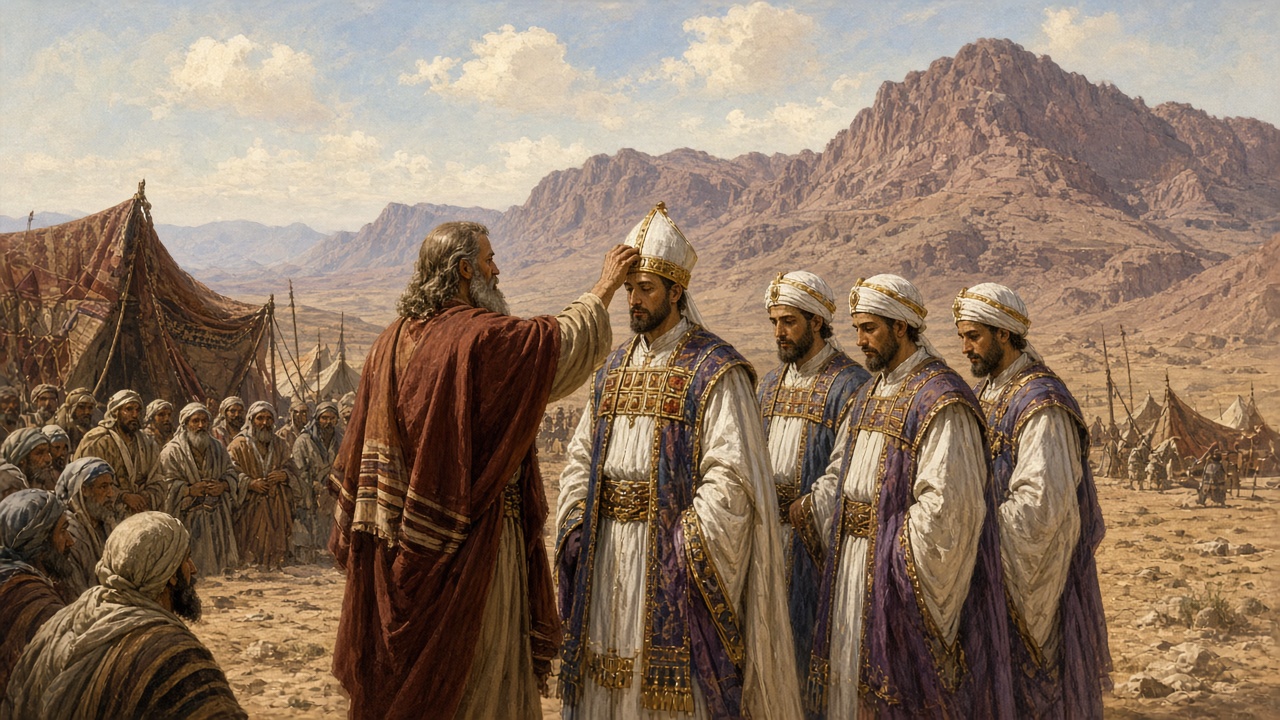
- Chapters 1–7 give laws for burnt offerings, meat offerings, and thank offerings, then for sin offerings and trespass offerings, and for the priests' duties in offering sacrifice. Chapters 8–10 recount the consecration of Aaron and his sons, Aaron's first offering for himself and the people, and the death of Nadab and Abihu, who were struck dead and buried outside the camp after offering strange, or common, fire not taken from the great brazen altar. Chapters 11–16 concern purity and the sacrifices and ordinances for putting impurity away.Sources: Easton: Leviticus · Nadab · Abihu
- Easton describes chapters 17–20 as laws marking the separation between Israel and other peoples. Further laws concern the priests' personal purity and their eating of holy things, offerings without blemish, and the due celebration of the great festivals in chapters 23 and 25. Promises and warnings about obedience follow, the book closes with a section on vows, and Easton notes that God is the direct speaker through almost the whole of it.Sources: Easton: Leviticus
- In the rites of chapter 16, one goat is associated with Azazel, which the Authorized Version renders scapegoat and the Revised Version leaves as Azazel. Easton reports that some Jewish interpreters take it as a place in the wilderness about twelve miles east of Jerusalem, while others take it as an evil spirit or even Satan, and he also notes a root meaning of separation.Sources: Azazel
Notes written with AI assistance from open sources (Theographic Bible Metadata, CC BY-SA 4.0; Easton’s Bible Dictionary, public domain) and reviewed before publishing.
Regole generali degli olocausti
1OR il Signore chiamò Mosè, e parlò a lui dal Tabernacolo della convenenza, dicendo: 2Parla a' figliuoli d'Israele, e di' loro:
Quando alcun di voi offerirà un'offerta al Signore, se quella è di animali, offerite le vostre offerte di buoi, o di pecore, o di capre.
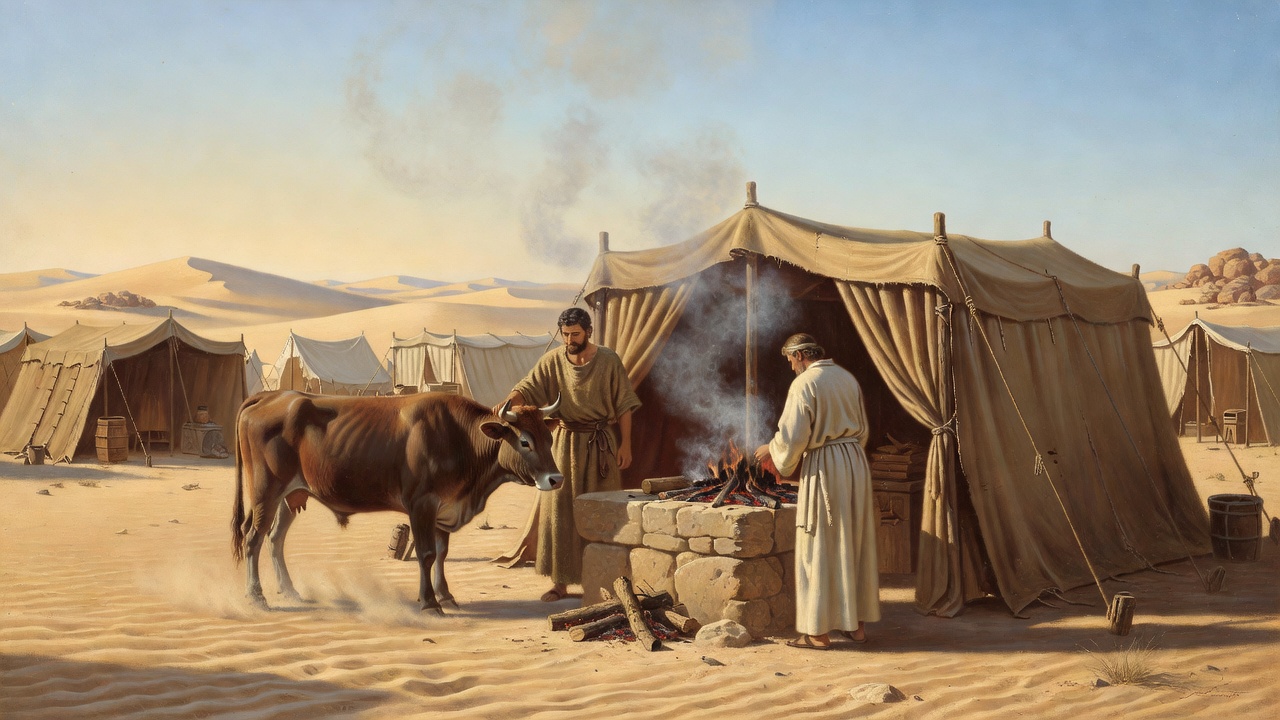
3Se la sua offerta è olocausto di buoi, offerisca quell'animale maschio, senza difetto; offeriscalo all'entrata del Tabernacolo della convenenza; acciocchè quello sia gradito per lui davanti al Signore. 4E posi la mano in su la testa dell'olocausto; ed esso sarà gradito, per far purgamento del peccato per lui. 5Poi quel bue sarà scannato davanti al Signore; e i figliuoli di Aaronne, sacerdoti, ne offeriranno il sangue, e lo spanderanno in su l'Altare ch' è all' entrata del Tabernacolo della convenenza, attorno attorno. 6Poi l'olocausto sarà scorticato, e tagliato a pezzi. 7E i figliuoli del Sacerdote Aaronne metteranno il fuoco sopra l'Altare, e ordineranno le legne in sul fuoco. 8E poi i figliuoli di Aaronne, sacerdoti, ordineranno que' pezzi, il capo, e la corata, sopra le legne, che saranno in sul fuoco, il qual sarà sopra l'Altare. 9Ma si laveranno l'interiora, e le gambe di quel bue. E il sacerdote farà ardere tutte queste cose sopra l'Altare, in olocausto, in offerta soave fatta per fuoco, di soave odore al Signore.
10E se l'offerta di esso per l'olocausto è del minuto bestiame, di pecore, o di capre, offerisca quell' animale maschio, senza difetto. 11E scannisi dal lato settentrionale dell'Altare, davanti al Signore; e spandanne e figliuoli d'Aaronne, sacerdoti, il sangue sopra l'Altare, attorno attorno. 12Poi taglisi a pezzi, i quali, insieme con la testa, e la corata, il sacerdote metterà per ordine sopra le legne che saranno in sul fuoco, il qual sarà sopra l'Altare. 13Ma lavinsi le interiora, e le gambe, con acqua; e il sacerdote offerirà tutte queste cose, e le farà ardere sopra l'Altare. Quest' è un olocausto un'offerta fatta per fuoco, di soave odore al Signore.
14E se la sua offerta al Signore è olocausto di uccelli, offerisca la sua offerta di tortole, ovvero di pippioni. 15E offerisca il sacerdote quell' olocausto sopra l'Altare; e, torcendogli il collo, gli spicchi il capo, e faccialo ardere sopra l'Altare; e spremasene il sangue all'un dei lati dell'Altare. 16Poi tolgasene il gozzo, e la piuma, e gittinsi quelle cose allato all'Altare, verso Oriente nel luogo delle ceneri. 17Poi fenda il sacerdote l'uccello per le sue ale, senza partirlo in due; e faccialo ardere sopra l'Altare, sopra le legne che saranno in sul fuoco. Quest' è un olocausto, un'offerta fatta per fuoco, di soave odore al Signore.
Did you know?
The Burnt Offering
- The instructions for the burnt offering accommodate different economic means by allowing offerings from the herd, the flock (sheep or goats), or birds (turtledoves or young pigeons). For livestock, the animal was required to be a male without blemish.Sources: the Bible text itself
- The ritual required a clear division of roles between the worshiper and the priests. The worshiper brought the animal, laid a hand on its head for atonement, slaughtered it, skinned it, and washed its inner parts, while the sons of Aaron sprinkled the blood and burned the entire offering on the altar.Sources: the Bible text itself · Aaron
Notes written with AI assistance from open sources (Theographic Bible Metadata, CC BY-SA 4.0; Easton’s Bible Dictionary, public domain) and reviewed before publishing.
Credits and license for this translation
Diodati Bibbia 1885
The Holy Bible in Italian, translated by Giovanni Diodati in 1641 and revised in 1821
Public Domain
Language: Italiano (Italian)
Contributor: United Bible Societies
Diodati Bibbia 1885
2025-05-03
Source: http://ebible.org/ita1885/ · eBible.org