Jonah 1
IPILI NUTESAMENE · Tap a verse to see its cross-references.
About this book
About Jonah
- Jonah, whose name means “a dove,” was the son of Amittai of Gath-hepher and a prophet of Israel. Easton's Bible Dictionary (1897) holds that he wrote the book himself. His ministry is placed very early in the reign of Jeroboam II: he was contemporary with Hosea and Amos, or possibly earlier, and so may have been the oldest of the prophets whose writings survive.Sources: Jonah · Amittai · Easton: Jonah, Book of
- The book professes to tell what actually happened to the prophet. Some critics have read it as a parable or allegory rather than history, because miracle is so prominent and the form is narrative rather than prophecy, or because they deny miracles altogether. Easton's Bible Dictionary (1897) instead treats it as history, attaching great weight to the mention of Jonah in Matthew 12:39-40 and Luke 11:29.Sources: Easton: Jonah, Book of
- Jonah was commissioned to go to Nineveh, described as a great and populous city and the flourishing capital of the Assyrian empire, but he sailed from Joppa, Judea's chief seaport, to flee toward Tarshish. Where Tarshish lay is disputed: some place it in the east, on the Indian coast, some identify it with Carthage, and Easton's dictionary takes it to be a Phoenician port in Spain.Sources: Easton: Jonah, Book of · Nineveh · Joppa · Tarshish
- Easton's outline has four movements: the divine commission, disobedience, and punishment; Jonah's prayer and deliverance; a second commission, the Ninevites' repentance, and God's sparing mercy; and Jonah's anger at that mercy, followed by a rebuke. The same dictionary notes that Nineveh was spared for more than a century after his mission.Sources: Easton: Jonah, Book of
- As a prophet of Israel, Jonah foretold the restoration of the kingdom's ancient borders. A biographical note presents him both as a missionary to Nineveh and as a type of the Son of man. The book of Nahum is taken up almost entirely with denunciations of that city, and Zephaniah also predicts its destruction.Sources: Jonah · Nineveh
Notes written with AI assistance from open sources (Theographic Bible Metadata, CC BY-SA 4.0; Easton’s Bible Dictionary, public domain) and reviewed before publishing.
Jonato Gote Tepa Alu Palaka Poyale Peane Oko
Sapeta 1-2
Jona Palaka Peane Oko
1Ole mindi Gote-to akali Amaita iwanane Jona bala lamawuato, Ninipe tano andane okona tane wandakali tupamane koo andane wetete pua atapiai tupa nambato wamba andawuako. Mana koo utupane konda yakale nimbato nambana pii oko tailo lamalu puu leae-pia. 3Jona-to Gote-na pii lamaulu pupe-pene tekeko, Gote tepa alu, palaka Tasisa tano okonena poyale, solewata ayatenenga Jopa tano okona peae-pia. Poto sipi mindi Tasisa poyale pea okonena sipi anduane okonenga yole mayu, bala sipi okonena pekayu lo peteae-pia.
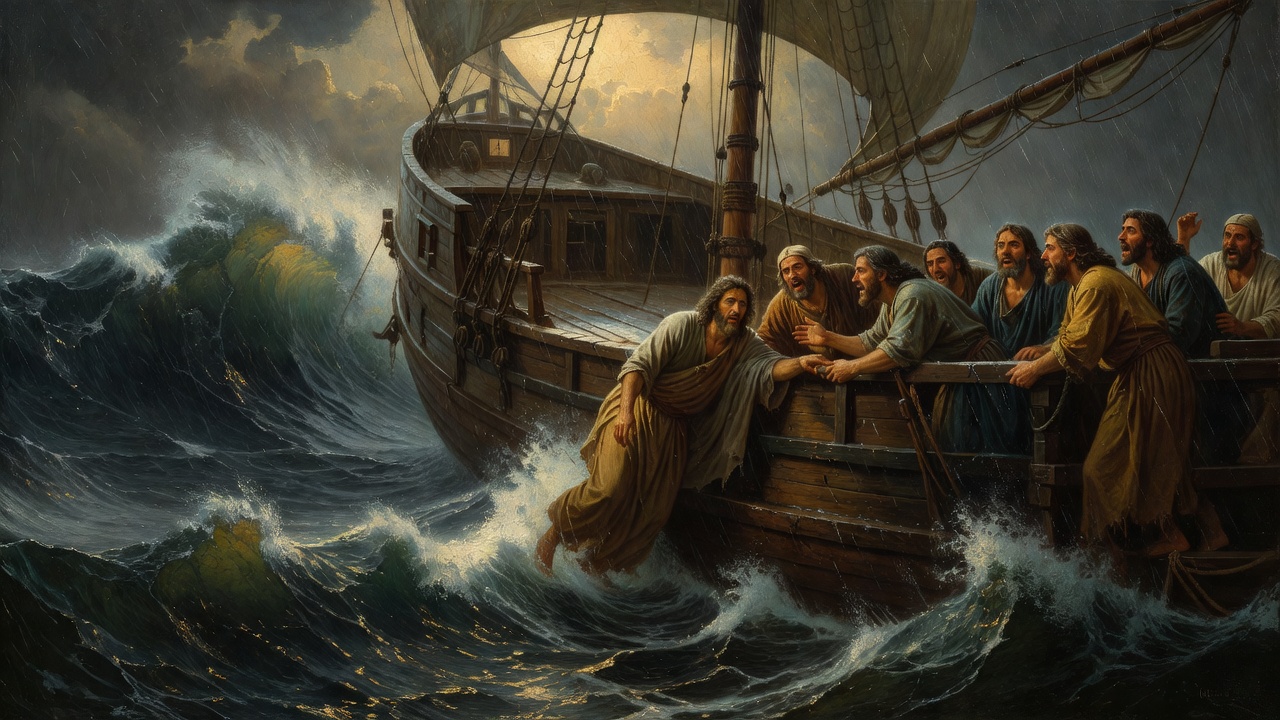
4Jona bala limu wato, sipi okonena tene anda-pangosa poto, limu paliondowa paleae-pia. Limu paliondo ya-kola, matili Gote-to popo tai andane wete mindi epeakale leae-pia. Popo okone-mane sipi okone peyo-keao laka peae-pia. Piape akali tupamane sipi okone keao leya-lo andoto, yakama yuku yaini-pia. Yuku wato, yakamana gote tupamane yakama moyakale loto yale-yale pote laka peaini-pia. Wuane piyu, pinju kenda peane mandeaini okomane sipi okone landa peyoto ipa pangosa polane lo yuku wato, pinju yane tupa solewatanga moo tepaka peaini-pia. Jona 1:4|alt="Ship in storm" src="HK074G.tif" size="col" copy="Horace Knowles © The British & Foreign Bible Society, 1954, 1967, 1972, 1995." ref="1:4"
6Wuane pua ateai-kola, sipi ingane minalane akali okomane Jona ayia pua andoto, anu piakale nimba pali-ondowa elepe leae-pia. Nanima omolomane nimbato pote laa. Nanimanga kendane epeyako nimbana gote okomane andoto nanima ondo wato moyakale, nimba ika loto, nimbana gote oko-lo ee-lo pote laa leae-pia. 7Okone angi, piape akali tupamane wua leaini-pia. Kendapene nanimanga epeya okona tene oko apinga eyape-lo andamakale, nanima pitakana gene tupa yale-yale pepa tupana peyoto, pene mindina aindaka lamakale. Pene okonena gene molomane akali okone balanga tene atola-kola, nanimanga kendapene mee epeya-lo nanimato katulo andolo-peyama leaini-pia. Utupane-mane wuane peai-kola Jona balana gene oko epeanga andeaini-pia.
8Andoto, utupane-mane Jona lamawuato, kenda-pene nanimanga epeya okona tene oko nimbato nanima langi. Nimba onga aki pua atalepe, nimba akali ani-tanepe. Nimba akali yame andokope-lo tipa peaini-pia. 9Wuane lo tipa peai-kola, Jona-to utupanena pii yano peyoto, namba akali yame Iputu. Ati-kenga Gote ateya okomane yuu-pi, ipa solewata-pi, yakale lalane, Gote okone tungi peyo nambato lotu lo atalawane. 10Gote okone tepa alu, namba palaka poyale epo peteyoko leae-pia. Wuane lea-kola, akali utupane yakama yuku wete yaini-pia. Yuku wato, utupane-mane Jona lamawuato nimbato kopeta pipi-kola, Gote-to solewata mina ika loto nimba peyo ome loyale peyape leaini-pia.
11Popo tai towa-towa ipa sii andane ika leayako tepa ola-kola nanima kuilo makale nanimato nimbanga anu pimape-lo akali utupane-mane Jona tipa peaini-pia. 12Balato pii okone yano peyoto, popo andane tai oko towa-towa ipa kingi epeya okona tene oko nambanga ateya. Popo kingi okolapo tepa ola-kola, yakama epene pulupalenga yakamato namba ipa solewata okona awua aindaka lalapa leae-pia.
13Piape akali tupa mane sipi okone ingane minu-awua ayatenenga makale nembo toto makande peaini tekeko, sii-andane wete ika lea-kola utupane-mane katulo ipa ayatenenga napupe-pene guu leae-pia. 14Utupane mane katulo ipa ayatenenga napolo-peyama yaa-lo andoto, Gote ee loto, wua leaini-pia. Gote nimba tane pukale-lo nembo tapi pua teke pele oko. Akali okomane koo mindi napiya-kola nanimato bala ipa solewata okona omea-kale loto aindaka leyama. Bala omola okonena tene oko nanimanga eya loto, nimbato nanima omamakale-lo ando konda napipe-lo pote leyama leaini-pia.
15Utupane-mane wuane lo pote lokoyo piyu, Jona minoto, ipa solewatanga awua aindaka leai-kola, sii andane ika leane okone kapoyale okone angi teke tepa yae-pia. 16Akali utupane mane ipa solewata ika lea oko kapoyale tepaya-kola andoto Gote yukuwa, opa maiyu, potomisa loto, balana pii wato minamakale leaini-pia. 17Oto okone angi, Gote-to pisa andane wetete mindimane Jona goae leakale laya ya-kola, Jona bala pisa andane wetete okonena ini andapangosa utulu otongapi, ole tepoi paleae-pia.
Did you know?
Jonah Flees from the Lord
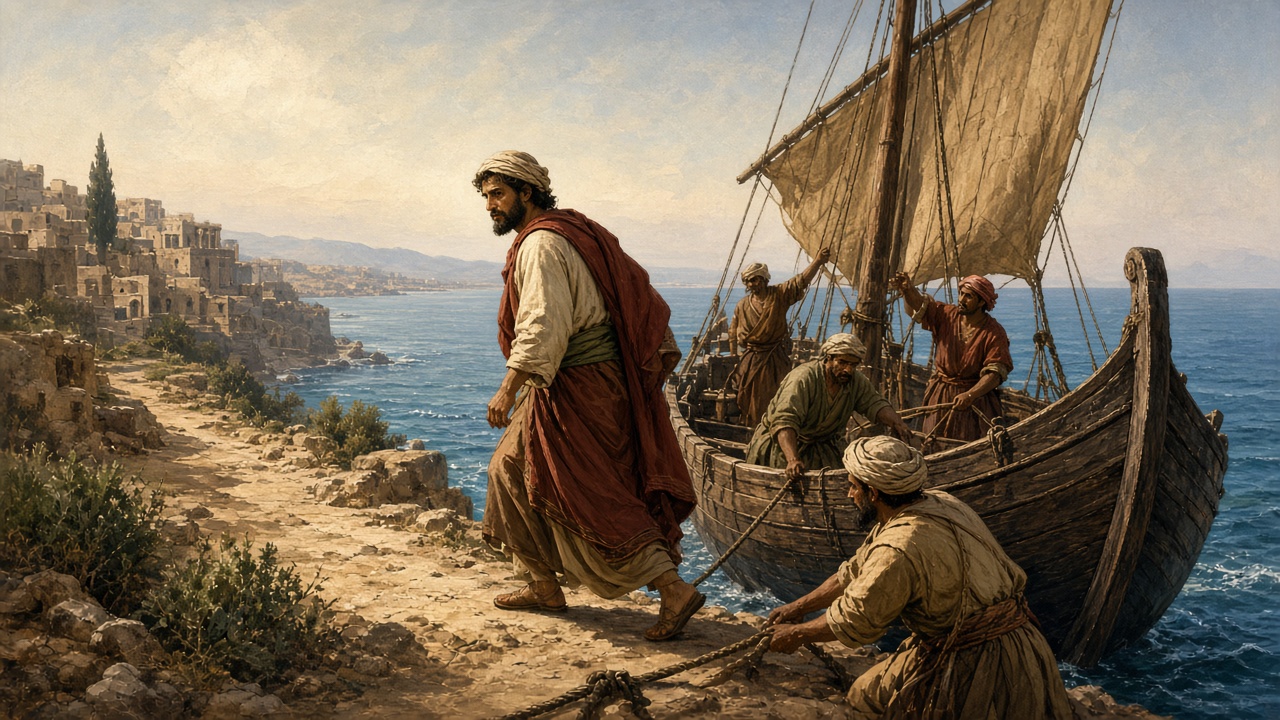
- Jonah, the son of Amittai from Gath-hepher, is also recorded in 2 Kings 14:25 as a prophet active in the northern kingdom of Israel during the reign of Jeroboam II. God instructed him to travel east to Nineveh, the prominent and populous capital of the Assyrian empire, to preach against its wickedness.Sources: Jonah · Amittai · Nineveh · the Bible text itself
- Rather than traveling northeast overland to Nineveh, Jonah journeyed down to the Mediterranean seaport of Joppa to board a ship for Tarshish. Tarshish is traditionally identified as a Phoenician trading port located far to the west in southern Spain, representing the exact opposite direction.Sources: Joppa · Tarshish · the Bible text itself
- The sailors aboard the cargo ship came from polytheistic backgrounds, each calling out to his own deity during the violent tempest. After throwing the ship's cargo overboard to lighten the vessel, they turned to the ancient practice of casting lots to determine who was responsible for the calamity.Sources: the Bible text itself
Notes written with AI assistance from open sources (Theographic Bible Metadata, CC BY-SA 4.0; Easton’s Bible Dictionary, public domain) and reviewed before publishing.
Places in this chapter
Only places identified with high confidence are shown (90% or more according to the scholarly sources compiled by OpenBible). Period map: DARE (Digital Atlas of the Roman Empire), CC BY 4.0; modern map: © OpenStreetMap contributors; places: OpenBible.info (CC BY 4.0).
Credits and license for this translation
IPILI NUTESAMENE
The New Testament and portions of the Old Testament in the Ipili Language of Papua New Guinea
Nupela Testamen na sampela hap long Olpela Testamen long tokples Ipili long Niugini
Copyright © 2008-2023 Bible Society of Papua New Guinea
℗ Faith Comes by Hearing
Language: Ipili
Translation by: Wycliffe Bible Translators
This translation is made available to you under the terms of the
Creative Commons Attribution-Noncommercial-No Derivatives license 4.0.
You may share and redistribute this Bible translation or extracts from it in any format, provided that:
You include the above copyright and source information.
You do not sell this work for a profit.
You do not change any of the words or punctuation of the Scriptures.
Pictures included with Scriptures and other documents on this site are licensed just for use with those Scriptures and documents.
For other uses, please contact the respective copyright owners.
2023-10-09
Source: http://png.bible/ipi/ · eBible.org