Malachi 1
Alkitab Yang Terbuka · Tap a verse to see its cross-references.
About this book
About Malachi
- Easton's Bible Dictionary (1897) presents Malachi, a name meaning "messenger" or "angel," as the last of the minor prophets and the writer of the last book of the Old Testament canon. Nothing is known of him beyond what is contained in his book of prophecies.Sources: Easton: Malachi · Malachi
- Some have supposed that the name is simply a title for a messenger of Jehovah, not a proper name. Easton's Bible Dictionary (1897) concludes, however, that there is reason to regard Malachi as the prophet's ordinary name.Sources: Easton: Malachi · Malachi
- Easton's Bible Dictionary (1897) dates the prophecies to about 420 B.C., after Nehemiah's second return from Persia, or possibly before that return. Because Ezra does not mention him and he does not mention the restoration of the temple, the dictionary infers that he prophesied after Haggai and Zechariah.Sources: Easton: Malachi
- Easton's Bible Dictionary (1897) treats Malachi as a contemporary of Nehemiah, comparing Malachi 2:8 with Nehemiah 13:15 and Malachi 2:10-16 with Nehemiah 13:23. It also notes that the temple services were still in existence, citing Malachi 1:10, 3:1 and 3:10.Sources: Easton: Malachi
Notes written with AI assistance from open sources (Theographic Bible Metadata, CC BY-SA 4.0; Easton’s Bible Dictionary, public domain) and reviewed before publishing.
1Inilah nubuat firman TUHAN kepada Israel melalui Maleakhi.
TUHAN Mengasihi Israel
2“‘Aku mengasihi kamu,’ firman TUHAN.
Namun, kamu berkata, ‘Bagaimana Engkau mengasihi kami?’
‘Bukankah Esau itu kakak Yakub?’, TUHAN berfirman. ‘Namun, Aku mengasihi Yakub, 3sedangkan Aku membenci Esau, dan meratakan gunung-gunungnya, lalu menyerahkan pusakanya kepada serigala-serigala padang belantara.’
4Apabila Edom berkata, ‘Kami telah hancur, tetapi kami akan kembali dan membangun reruntuhan itu,’
inilah firman TUHAN semesta alam, ‘Mereka akan membangun, tetapi Aku akan meruntuhkannya. Mereka akan menyebutnya wilayah kejahatan dan bangsa yang TUHAN murkai sampai selama-lamanya.’
5Matamu akan melihat dan kamu akan berkata, ‘TUHAN dimuliakan sampai di luar perbatasan Israel.’”
Teguran untuk Menghormati Allah
6“‘Seorang anak laki-laki menghormati ayahnya dan seorang hamba menghormati tuannya. Jika Aku adalah Bapa, di manakah hormatmu terhadap-Ku? Jika Aku adalah Tuan, di manakah takutmu terhadap-Ku,’ firman TUHAN semesta alam, ‘hai para imam yang telah menghina nama-Ku?’
Namun, kamu bertanya, ‘Dalam hal apa kami telah menghina nama-Mu?’
7‘Kamu membawa roti yang cemar di atas mazbah-Ku.’
Lalu, kamu bertanya, ‘Bagaimana kami sudah mencemari Engkau?’
Dengan ucapanmu ini, ‘Meja TUHAN itu boleh dihina!’ 8‘Jika kamu mempersembahkan yang buta sebagai kurban, bukankah itu jahat? Jika kamu mempersembahkan yang timpang dan sakit, bukankah itu jahat? Sekarang, persembahkanlah itu kepada gubernurmu, apakah dia akan berkenan kepadamu atau memandang wajahmu?’ firman TUHAN semesta alam.
9‘Namun, sekarang, aku minta kepadamu, memohonlah di hadapan Allah supaya Dia mengasihani kita. Karena hal ini terjadi akibat ulahmu, apakah Dia akan mengindahkanmu?’ firman TUHAN semesta alam.
10‘Ah, siapakah di antara kamu yang mau menutup pintu sehingga kamu tidak menyalakan api di mazbah-Ku dengan sembarangan! Tidak ada kesukaan bagi-Ku di dalam kamu,’ TUHAN semesta alam berfirman, ‘Aku juga tidak akan menerima persembahan dari tanganmu.’
11‘Sebab, dari terbitnya matahari dan sampai terbenamnya, nama-Ku besar di antara bangsa-bangsa dan di setiap tempat akan dipersembahkan dupa bagi nama-Ku dan juga persembahan yang tahir, sebab nama-Ku besar di antara bangsa-bangsa,” TUHAN semesta alam berfirman.
12‘Namun, kamu mencemarinya dengan mengatakan bahwa meja Tuhan itu tercemar dan buahnya dan makanannya boleh dihina!’ 13Kamu berkata, ‘Lihat, alangkah susahnya!’ Lalu, kamu mendengus atasnya. TUHAN semesta alam berfirman, ‘Dan, kamu membawa hewan rampasan, hewan yang timpang, dan hewan yang sakit sebagai persembahan. Apakah Aku harus menerimanya dari tanganmu?’ TUHAN berfirman. 14‘Terkutuklah penipu yang mempunyai seekor yang jantan di antara kawanan dombanya, lalu dia menazarkannya, tetapi mempersembahkan yang cacat kepada TUHAN sebab Akulah Raja Yang Mahabesar,’ TUHAN semesta alam berfirman, ‘dan nama-Ku ditakuti di antara bangsa-bangsa.’”
Did you know?
Honoring God and Defective Offerings
- The name Malachi means messenger or angel. While some have suggested it was a title rather than a proper name, scholars and traditions widely treat it as the prophet's personal name, placing his ministry during the period of Nehemiah, after Haggai and Zechariah.Sources: Malachi
- The opening dispute recalls the twin brothers Jacob and Esau, the ancestors of Israel and Edom. The text contrasts God's covenant love for Israel with the judgment and desolation coming upon the mountainous region of Edom.Sources: Esau (Edom) · Jacob (Israel) · Edom · the Bible text itself
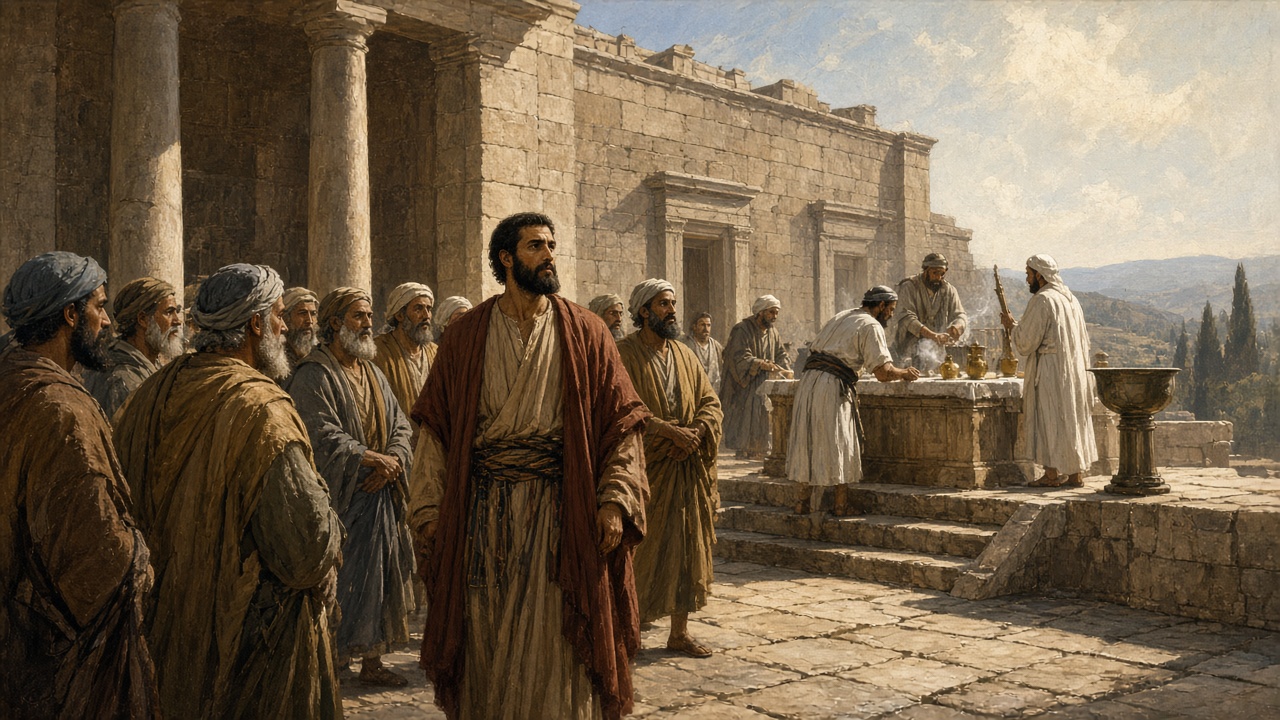
- The priests are rebuked for offering blind, lame, and diseased animals on the altar rather than unblemished livestock. Malachi exposes their disrespect by asking whether a civil governor would accept such inferior gifts.Sources: the Bible text itself
Notes written with AI assistance from open sources (Theographic Bible Metadata, CC BY-SA 4.0; Easton’s Bible Dictionary, public domain) and reviewed before publishing.
Places in this chapter
- Edom · 30.746, 35.604 · verse 4
Only places identified with high confidence are shown (90% or more according to the scholarly sources compiled by OpenBible). Period map: DARE (Digital Atlas of the Roman Empire), CC BY 4.0; modern map: © OpenStreetMap contributors; places: OpenBible.info (CC BY 4.0).
Credits and license for this translation
Alkitab Yang Terbuka
The Holy Bible in Indonesian, Alkitab Yang Terbuka (AYT) translation
copyright © 2011-2024 YLSA-AYT
Language: bahasa Indonesia (Indonesian)
AYT (Alkitab Yang Terbuka)
AYT is Alkitab Yang Terbuka, PB (2010,..-2024) and PL (2014,...2024).
AYT - text is Copyrighted, YLSA-AYT 2011,2024© -- this is to preserve and protect the quality of the Text.
Suggestions, Comments, Changes, Corrections are encouraged, and can be submitted to YLSA-AYT.
AYT - usage (non-commercial) is CopyLefted, 2011 -- this is to allow free usage/distribution of the text
AYT - derivatives (form, format, media, tools, resources) is CC, YLSA-AYT 2011(cc) -- we encourage you to use the AYT in creative ways, and to share the results. Creative Commons(CC) type is Credit(BY), Non-Commercial(NC), Shareable(SA)
AYT - translation license is freely given, 2011-2024 -- information and/or reporting is appreciated, but not required.
AYT permissions are managed by YLSA.
AYT (and Alkitab Yang Terbuka) name are Trademarks associated with the AYT Bible, and AYT ecosystem/tools.
URL: AYT: https://ayt.co
YLSA : https://ylsa.org
Email : [email protected]
This translation is made available to you under the terms of the
Creative Commons Attribution-No Derivatives license 4.0.
You may share, redistribute, or adapt this Bible translation or extracts from it in any format, provided that:
You include the above copyright and source information.
You do not use this work for commercial purposes.
Pictures included with Scriptures and other documents on this site are licensed just for use with those Scriptures and documents.
For other uses, please contact the respective copyright owners.
2024-07-26
Source: http://ebible.org/indayt/ · eBible.org