Numbers 1
Alkitab Terjemahan Sederhana Indonesia, Edisi Ketiga · Tap a verse to see its cross-references.
About this book
About Numbers
- Numbers is the fourth book of the Pentateuch. In Hebrew it is called be-midbar, “in the wilderness”; the Greek Septuagint called it Numbers, the name still usual, because it records a census in the wilderness of Sinai and a later census on the plain of Moab.Sources: Easton: Numbers, Book of
- Easton's Bible Dictionary (1897) presents Numbers, like the other books of the Pentateuch, as written by Moses. The history it contains runs from the second month of the second year after the Exodus to the beginning of the eleventh month of the fortieth year, about thirty-eight years and ten months.Sources: Easton: Numbers, Book of
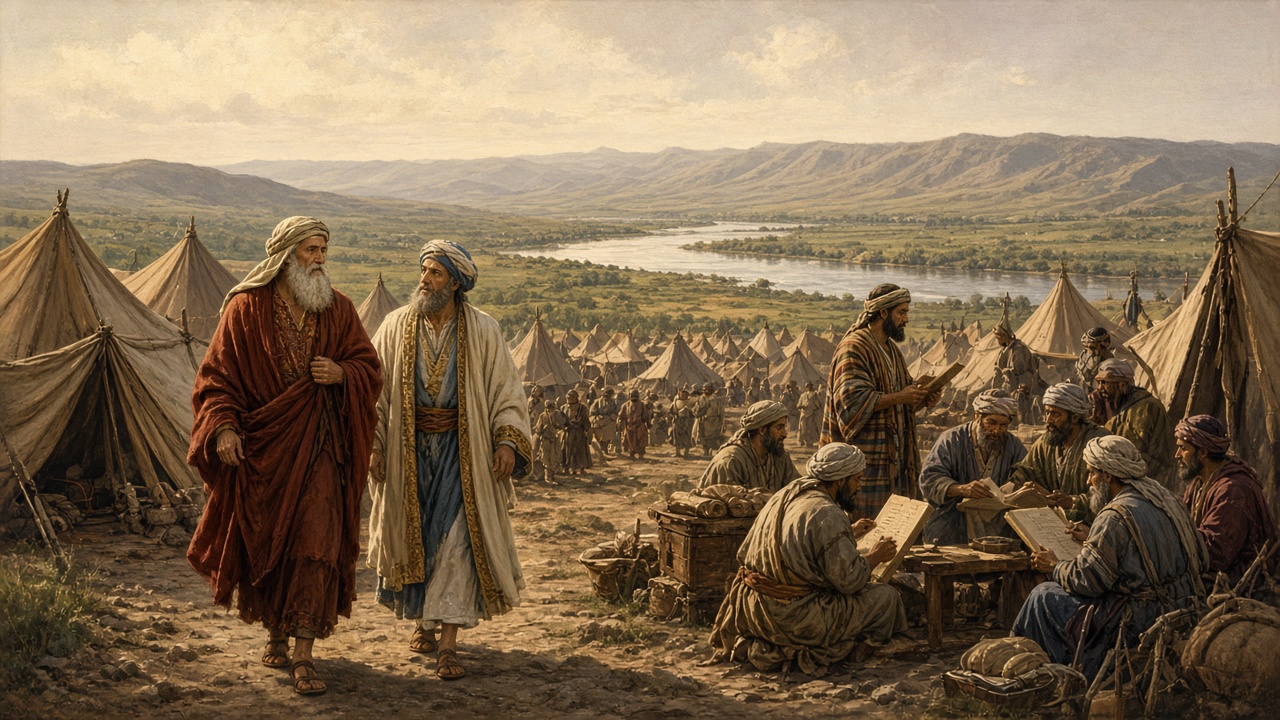
- The narrative begins at Sinai, the mountain district Israel reached in the third month after the Exodus and where they camped for about a year, and follows their route and encampments through the wilderness. It ends on the plains of Moab, east of the Jordan and the Dead Sea, opposite Jericho, their last camp before entering Canaan, the country west of the Jordan. Easton describes those years as a time of wandering in which that generation died in the wilderness, and notes that the people were fewer then than when they left Egypt.Sources: Easton: Numbers, Book of · Sinai · Moab · Canaan
- Easton divides the book into three parts: the census at Sinai and preparations to resume the march, including the Nazirite vow (1–10:10); the journey from Sinai to Moab, the sending of the spies and the report they brought back, and the people’s murmurings, eight times, at the hardships of the way (10:11–21:20); and the events on the plain of Moab before the crossing of the Jordan (21:21–36).Sources: Easton: Numbers, Book of
- While Israel was camped on the plains of Moab, Balak, son of Zippor and king of Moab, fearing them, sent to Pethor in Mesopotamia for Balaam, son of Beor, to curse them; the narrative says Balaam was unable to do so. Numbers 21:14 also cites “the book of the wars of the Lord,” a work that Easton says is uncertain, perhaps a lost writing of Israel or an Amorite record of the victories of their king Sihon.Sources: Easton: Numbers, Book of · Balaam · Balak
Notes written with AI assistance from open sources (Theographic Bible Metadata, CC BY-SA 4.0; Easton’s Bible Dictionary, public domain) and reviewed before publishing.
Sensus pasukan Israel
1Pada hari pertama, bulan kedua, pada tahun kedua sejak bangsa Israel keluar dari Mesir, TUHAN berkata kepada Musa di dalam kemah-Nya di padang belantara Sinai, 2“Kamu dan Harun harus mengadakan sensus seluruh rakyat Israel menurut marga dan keluarga mereka, kecuali suku Lewi. Catatlah nama semua laki-laki 3yang berumur dua puluh tahun ke atas yang sanggup berperang, berdasarkan regu mereka masing-masing.
4“Kalian akan dibantu oleh para kepala suku ini: Suku Kepala suku Ruben Elizur anak Syedeur Simeon Selumiel anak Zurisyadai Yehuda Nahason anak Aminadab Isakar Netanel anak Zuar Zebulon Eliab anak Helon
10Suku Kepala suku Benyamin Abidan anak Gideoni Dan Ahiezer anak Amisydai Asyer Pagiel anak Okran Gad Eliasaf anak Rehuel Naftali Ahira anak Enan Efraim Elisama anak Amihud Manasye Gamaliel anak Pedazur
(Suku Efraim dan Manasye adalah keturunan Yusuf.)
16Orang-orang itu adalah kepala setiap suku di Israel.”
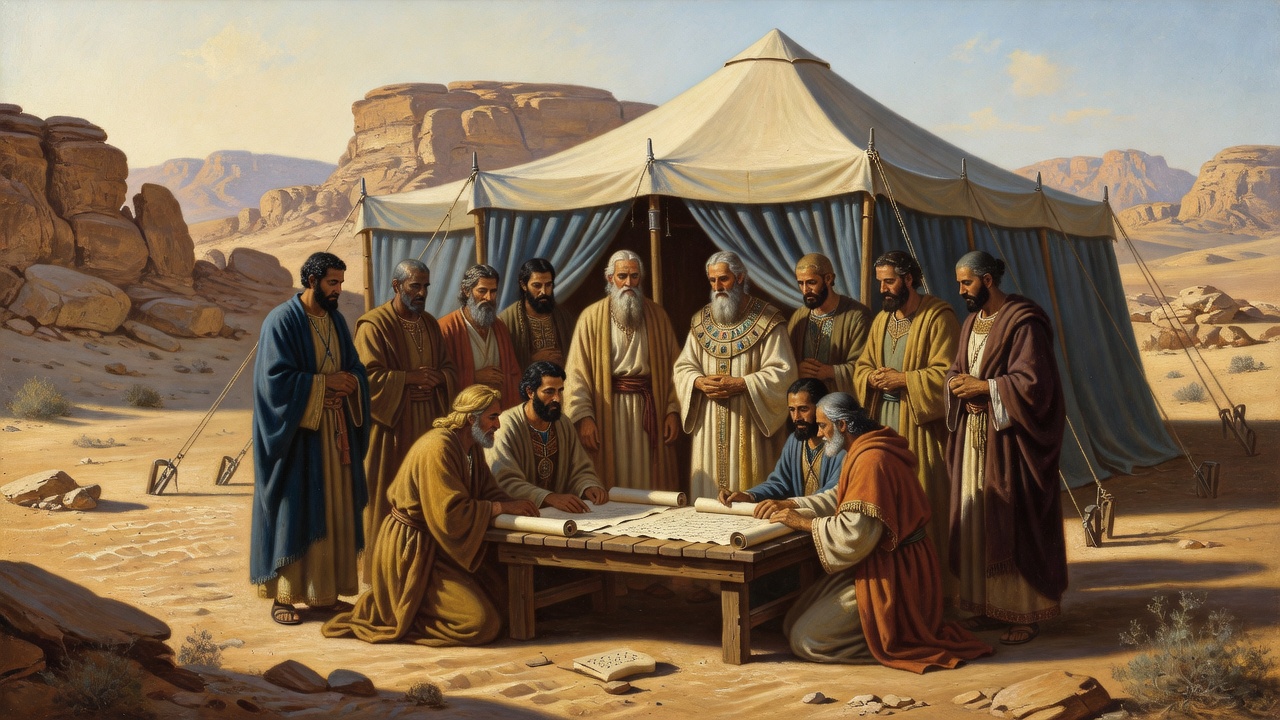
17Sesuai perintah TUHAN, Musa dan Harun memanggil kedua belas orang yang dipilih tadi. Kemudian, pada hari itu juga para kepala suku mengumpulkan seluruh umat Israel. Nama setiap laki-laki yang berumur dua puluh tahun ke atas dicatat menurut marga dan keluarga masing-masing. Pencatatan itu dilakukan di padang belantara Sinai.
20Berikut ini hasil sensus laki-laki yang berumur dua puluh tahun ke atas yang sanggup berperang, berdasarkan catatan marga dan keluarga mereka. Suku Jumlah orang Ruben (anak sulung Yakub) 46.500 Simeon 59.300 Gad 45.650 Yehuda 74.600 Isakar 54.400 Zebulon 57.400 Efraim 40.500 Menasye 32.200 Benyamin 35.400 Dan 62.700 Asyer 41.500 Naftali 53.400
44Itulah jumlah orang yang dicatat di bawah pengawasan Musa, Harun, dan kedua belas kepala suku. 45Dengan demikian, jumlah keseluruhan laki-laki yang berumur dua puluh tahun ke atas yang sanggup berperang, berdasarkan catatan marga dan keluarga mereka, 46adalah 603.550 orang.
Tugas khusus suku Lewi
47Jumlah itu tidak termasuk suku Lewi 48karena TUHAN sudah berkata kepada Musa, 49“Ketika menghitung jumlah pasukan suku-suku Israel, janganlah menghitung suku Lewi, 50sebab mereka ditugaskan untuk mengurus kemah-Ku, tempat peti perjanjian-Ku disimpan. Mereka bertanggungjawab atas pengangkutan kemah-Ku dan semua perlengkapannya. Mereka akan berkemah di sekelilingnya dan merawatnya. 51Setiap kali kemah-Ku dipindahkan, hanya orang Lewi yang bertugas membongkar dan mendirikannya kembali. Selain mereka, siapa pun yang mendekati kemah-Ku akan dihukum mati. 52Setiap suku Israel yang lain akan berkemah di lingkungan perkemahan masing-masing, yang ditandai dengan bendera lambang pasukan mereka. 53Tetapi orang Lewi akan berkemah di sekeliling kemah-Ku untuk menjaganya, supaya umat Israel yang lain tidak mendekati kemah-Ku dan ditimpa murka-Ku.”
54Maka bangsa Israel melakukan semua itu sesuai perintah TUHAN kepada Musa.
Did you know?
The Census in the Wilderness of Sinai
- The census was ordered in the Wilderness of Sinai on the first day of the second month in the second year after the Israelites departed Egypt. It counted every male aged twenty or older who was able to serve in the army, arriving at a total of 603,550 fighting men.Sources: the Bible text itself · Sinai
- Moses and Aaron conducted the registration alongside twelve appointed tribal leaders. Joseph was represented as two distinct tribal divisions named after his sons, Ephraim and Manasseh.Sources: the Bible text itself · Ephraim · Manasseh (son of Joseph)
- The tribe of Levi was entirely exempted from the military count. Instead, the Levites were assigned exclusively to care for, transport, assemble, and guard the tabernacle of the Testimony and its furnishings.Sources: the Bible text itself
Notes written with AI assistance from open sources (Theographic Bible Metadata, CC BY-SA 4.0; Easton’s Bible Dictionary, public domain) and reviewed before publishing.
Places in this chapter
- Egypt · 30.129, 31.308 · verse 1
- Wilderness of Sinai · Today: about 50 km around Jebel Musa · 28.540, 33.973 · verses 1, 19
Only places identified with high confidence are shown (90% or more according to the scholarly sources compiled by OpenBible). Period map: DARE (Digital Atlas of the Roman Empire), CC BY 4.0; modern map: © OpenStreetMap contributors; places: OpenBible.info (CC BY 4.0).
Credits and license for this translation
Alkitab Terjemahan Sederhana Indonesia, Edisi Ketiga
The New Testament in the Indonesian language, Perjanjian Baru dalam Terjemahan Sederhana Indonesia Edisi Kedua translation
copyright © 2021 oleh Yayasan Alkitab BahasaKita (Albata) dan Pioneer Bible Translators International
Language: bahasa Indonesia (Indonesian)
Translation by: Albata
Contributor: Pioneer Bible Translators
© 2021 oleh Yayasan Alkitab Bahasa Kita (Albata) dan Pioneer Bible Translators International
This translation is made available to you under the terms of the
Creative Commons Attribution Share-Alike license 4.0.
You have permission to share and redistribute this Bible translation in any format and to make reasonable revisions and adaptations of this translation, provided that:
You include the above copyright and source information.
If you make any changes to the text, you must indicate that you did so in a way that makes it clear that the original licensor is not necessarily endorsing your changes.
If you redistribute this text, you must distribute your contributions under the same license as the original.
Pictures included with Scriptures and other documents on this site are licensed just for use with those Scriptures and documents.
For other uses, please contact the respective copyright owners.
Note that in addition to the rules above, revising and adapting God's Word involves a great responsibility to be true to God's Word. See Revelation 22:18-19.
2025-05-03
Source: http://ebible.org/ind/ · eBible.org