Leviticus 1
Alkitab Terjemahan Sederhana Indonesia, Edisi Ketiga · Tap a verse to see its cross-references.
About this book
About Leviticus
- Easton's Bible Dictionary (1897) presents Leviticus as the third book of the Pentateuch and as the third book of Moses. The name, used in the Vulgate following the LXX, reflects the book's chief concern: the Levitical service.Sources: Easton: Leviticus
- Easton states that every ordinance in the book was delivered within one month, the first month of the second year after the Exodus. His entry on Sinai, also called Horeb, says the Hebrews reached that mountain district in the third month after the Exodus and remained encamped for about a whole year, and that the whole of Leviticus records what occurred there.Sources: Easton: Leviticus · Mount Sinai
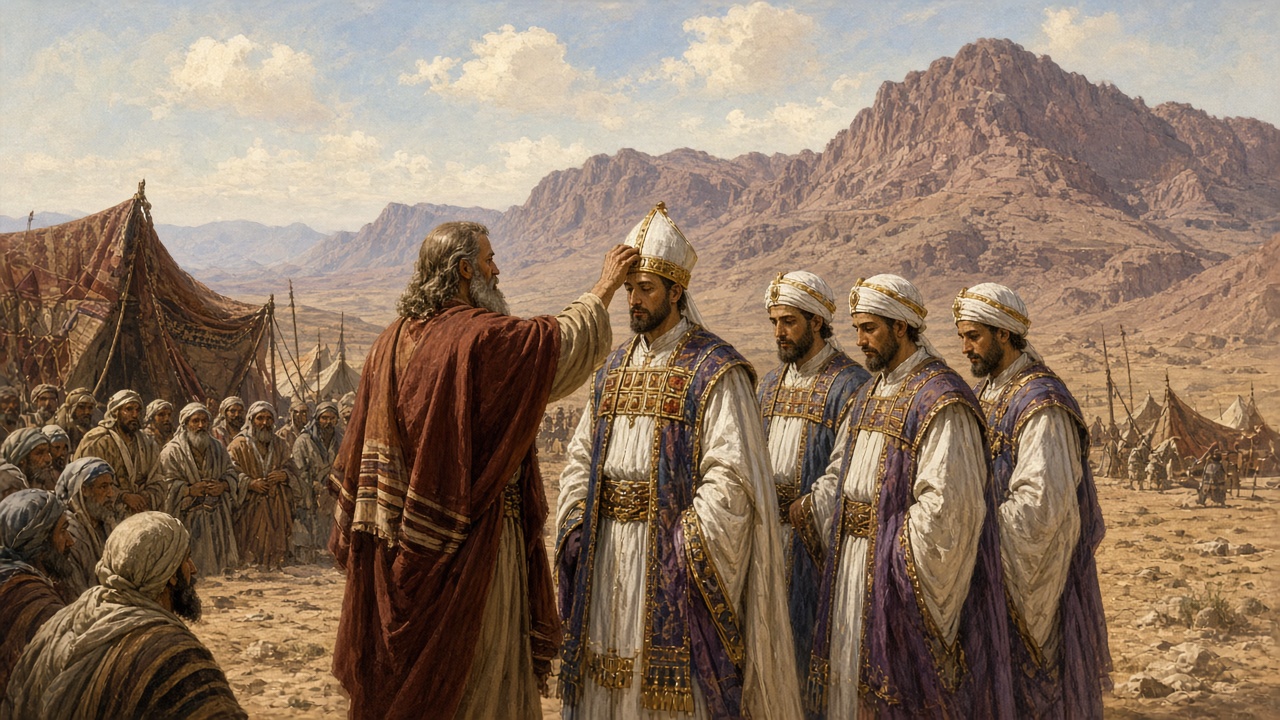
- Chapters 1–7 give laws for burnt offerings, meat offerings, and thank offerings, then for sin offerings and trespass offerings, and for the priests' duties in offering sacrifice. Chapters 8–10 recount the consecration of Aaron and his sons, Aaron's first offering for himself and the people, and the death of Nadab and Abihu, who were struck dead and buried outside the camp after offering strange, or common, fire not taken from the great brazen altar. Chapters 11–16 concern purity and the sacrifices and ordinances for putting impurity away.Sources: Easton: Leviticus · Nadab · Abihu
- Easton describes chapters 17–20 as laws marking the separation between Israel and other peoples. Further laws concern the priests' personal purity and their eating of holy things, offerings without blemish, and the due celebration of the great festivals in chapters 23 and 25. Promises and warnings about obedience follow, the book closes with a section on vows, and Easton notes that God is the direct speaker through almost the whole of it.Sources: Easton: Leviticus
- In the rites of chapter 16, one goat is associated with Azazel, which the Authorized Version renders scapegoat and the Revised Version leaves as Azazel. Easton reports that some Jewish interpreters take it as a place in the wilderness about twelve miles east of Jerusalem, while others take it as an evil spirit or even Satan, and he also notes a root meaning of separation.Sources: Azazel
Notes written with AI assistance from open sources (Theographic Bible Metadata, CC BY-SA 4.0; Easton’s Bible Dictionary, public domain) and reviewed before publishing.
Kurban yang dibakar habis
1Dari kemah-Nya, TUHAN memanggil Musa dan berkata kepadanya, 2“Sampaikanlah kepada bangsa Israel: Pada waktu seseorang di antara kalian hendak mempersembahkan ternak kepada-Ku, kurban itu bisa berupa sapi, kambing, atau domba.
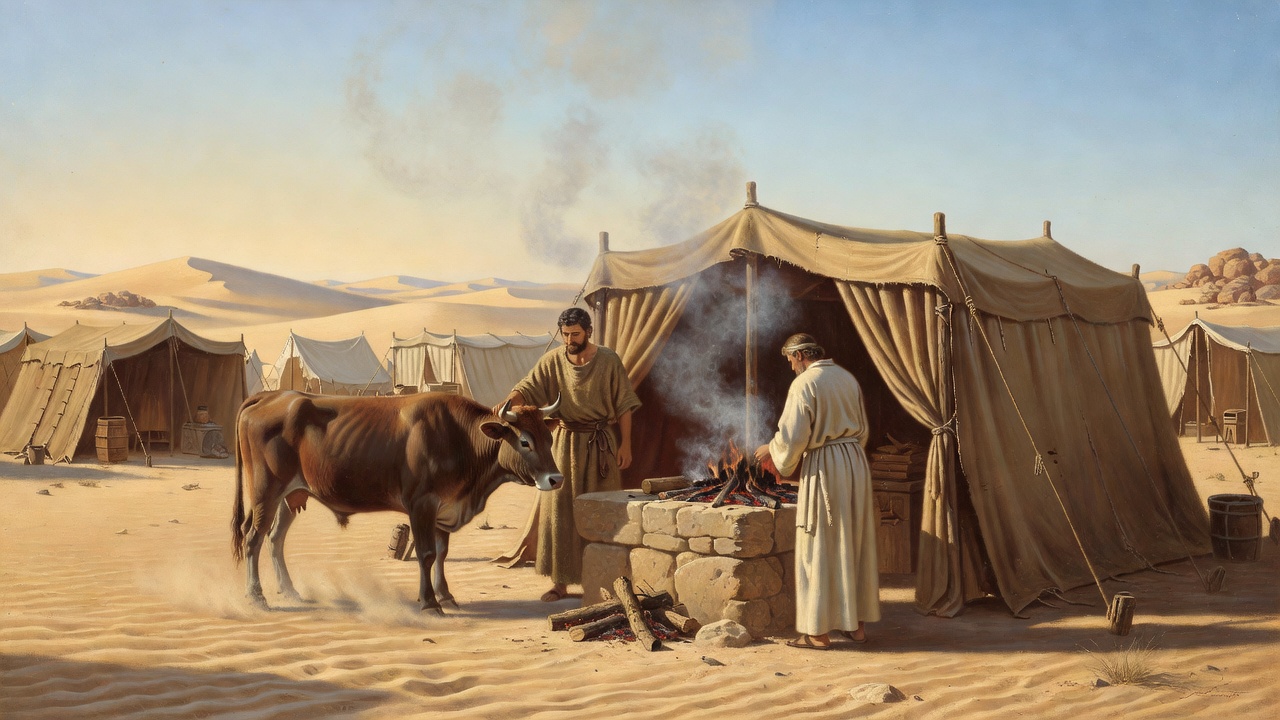
3“Apabila kamu mempersembahkan sapi sebagai kurban yang dibakar habis, sapi itu haruslah jantan, muda, dan tidak bercacat. Supaya persembahanmu diterima, bawalah itu ke depan kemah-Ku. 4Letakkanlah tanganmu di atas kepala kurban itu, dan Aku akan menganggapnya layak untuk memulihkan hubunganmu dengan-Ku. 5Lalu sembelihlah sapi itu di hadapan-Ku. Darahnya akan ditampung dan disiramkan oleh imam yang bertugas pada keempat sisi mezbah di depan kemah-Ku. 6Lalu kamu akan menguliti dan memotongnya menjadi beberapa bagian, serta mencuci kaki dan seluruh isi perut kurban itu. Para imam bertanggung jawab mengurus api di mezbah. Mereka akan menyusun semua potongan kurban itu beserta kepala dan lemaknya di atas api mezbah. Selanjutnya, imam yang bertugas akan membakar semuanya itu sampai habis. Bau harum asap persembahan itu akan menyenangkan Aku.
10“Apabila kamu mempersembahkan domba atau kambing sebagai kurban yang dibakar habis, hewan itu haruslah jantan dan tidak bercacat. 11Saat kamu membawa hewan itu, kamu akan menyembelihnya di hadapan-Ku di sebelah utara mezbah. Darah kurban itu akan ditampung dan disiramkan pada keempat sisi mezbah oleh imam. 12Lalu kamu akan memotong kurban itu menjadi beberapa bagian, serta mencuci kaki dan seluruh isi perutnya. Imam akan menyusun semua potongan itu beserta kepala dan lemaknya di atas api di mezbah. Semuanya akan dibakar habis, dan bau harum asap persembahan itu akan menyenangkan Aku.
14“Apabila kamu mempersembahkan burung sebagai kurban yang dibakar habis, burung itu haruslah burung tekukur atau anak burung merpati. 15Imam yang bertugas akan membawa burung itu ke mezbah, memelintir lehernya sampai terkoyak, dan membakarnya di atas mezbah itu. Darah burung itu haruslah dibiarkan mengalir sampai habis pada sisi mezbah. 16Imam akan mengambil kantong makanan yang ada pada leher burung itu beserta seluruh isinya, lalu melemparkannya ke sebelah timur mezbah, yaitu tempat abu dibuang. 17Selanjutnya, imam akan memegang burung itu pada kedua sayapnya dan menarik sayap itu dari badan, tetapi tidak boleh sampai putus. Imam kemudian membakar seluruhnya di atas mezbah. Bau harum asap saat persembahan itu dibakar akan menyenangkan Aku.”
Did you know?
The Burnt Offering
- The instructions for the burnt offering accommodate different economic means by allowing offerings from the herd, the flock (sheep or goats), or birds (turtledoves or young pigeons). For livestock, the animal was required to be a male without blemish.Sources: the Bible text itself
- The ritual required a clear division of roles between the worshiper and the priests. The worshiper brought the animal, laid a hand on its head for atonement, slaughtered it, skinned it, and washed its inner parts, while the sons of Aaron sprinkled the blood and burned the entire offering on the altar.Sources: the Bible text itself · Aaron
Notes written with AI assistance from open sources (Theographic Bible Metadata, CC BY-SA 4.0; Easton’s Bible Dictionary, public domain) and reviewed before publishing.
Credits and license for this translation
Alkitab Terjemahan Sederhana Indonesia, Edisi Ketiga
The New Testament in the Indonesian language, Perjanjian Baru dalam Terjemahan Sederhana Indonesia Edisi Kedua translation
copyright © 2021 oleh Yayasan Alkitab BahasaKita (Albata) dan Pioneer Bible Translators International
Language: bahasa Indonesia (Indonesian)
Translation by: Albata
Contributor: Pioneer Bible Translators
© 2021 oleh Yayasan Alkitab Bahasa Kita (Albata) dan Pioneer Bible Translators International
This translation is made available to you under the terms of the
Creative Commons Attribution Share-Alike license 4.0.
You have permission to share and redistribute this Bible translation in any format and to make reasonable revisions and adaptations of this translation, provided that:
You include the above copyright and source information.
If you make any changes to the text, you must indicate that you did so in a way that makes it clear that the original licensor is not necessarily endorsing your changes.
If you redistribute this text, you must distribute your contributions under the same license as the original.
Pictures included with Scriptures and other documents on this site are licensed just for use with those Scriptures and documents.
For other uses, please contact the respective copyright owners.
Note that in addition to the rules above, revising and adapting God's Word involves a great responsibility to be true to God's Word. See Revelation 22:18-19.
2025-05-03
Source: http://ebible.org/ind/ · eBible.org